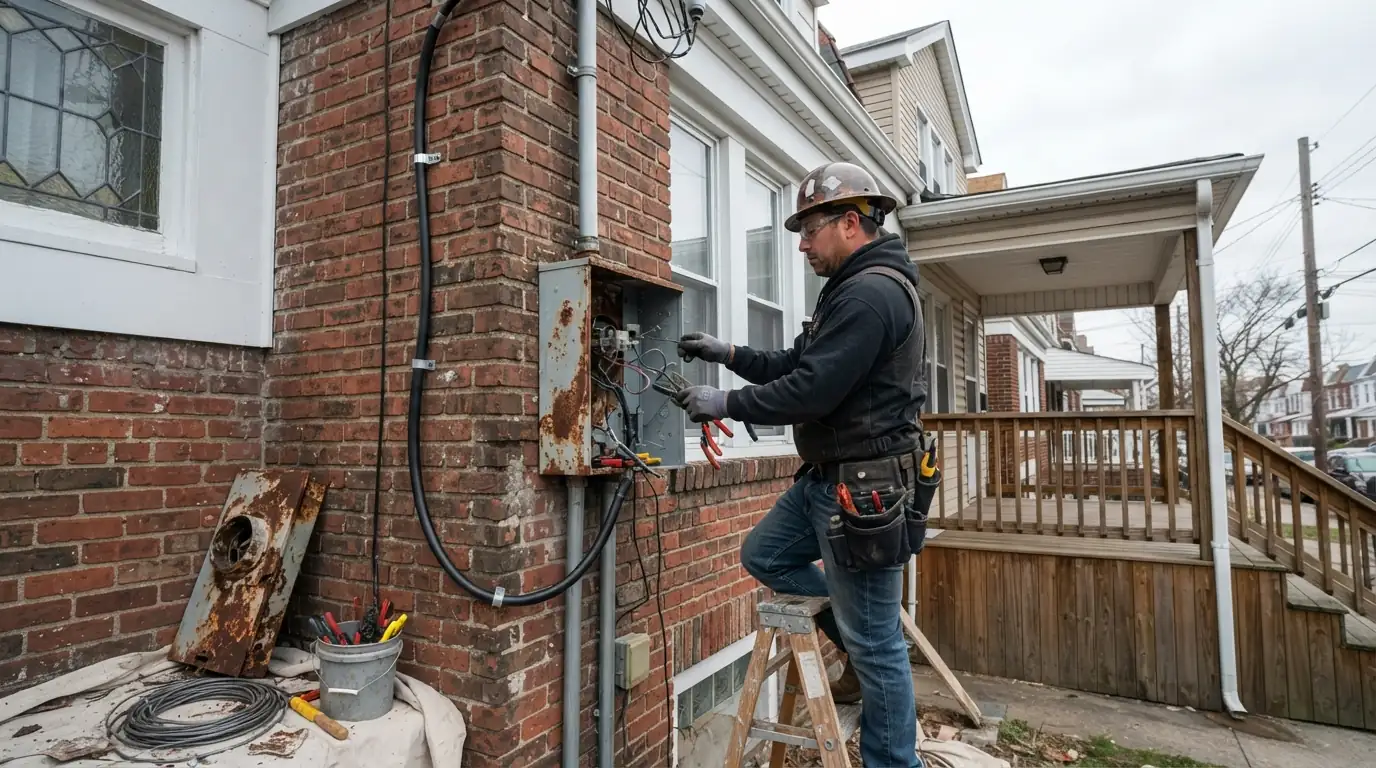
An electrical service upgrade in a New York City replaces the equipment between Con Edison's supply and your panel: the service entrance cable, the meter pan or meter bank, and sometimes the riser. It needs a DOB permit, a Con Edison service request and a cutover date, and all-in NYC figures for a 100 to 200-amp job run about $1,500 to $4,000.
Updated September 2026
A new panel can only use what the service delivers. If the meter pan, the service cable or the riser feeding your unit is rated for 60 or 100 amps, a 200-amp panel behind it changes nothing. That's why we look at the service before we quote the panel.
Service work is the one job where the utility sits in the middle of the schedule. We file the DOB permit, submit the Con Edison request, and plan the cutover so the building is dark for hours, not days.
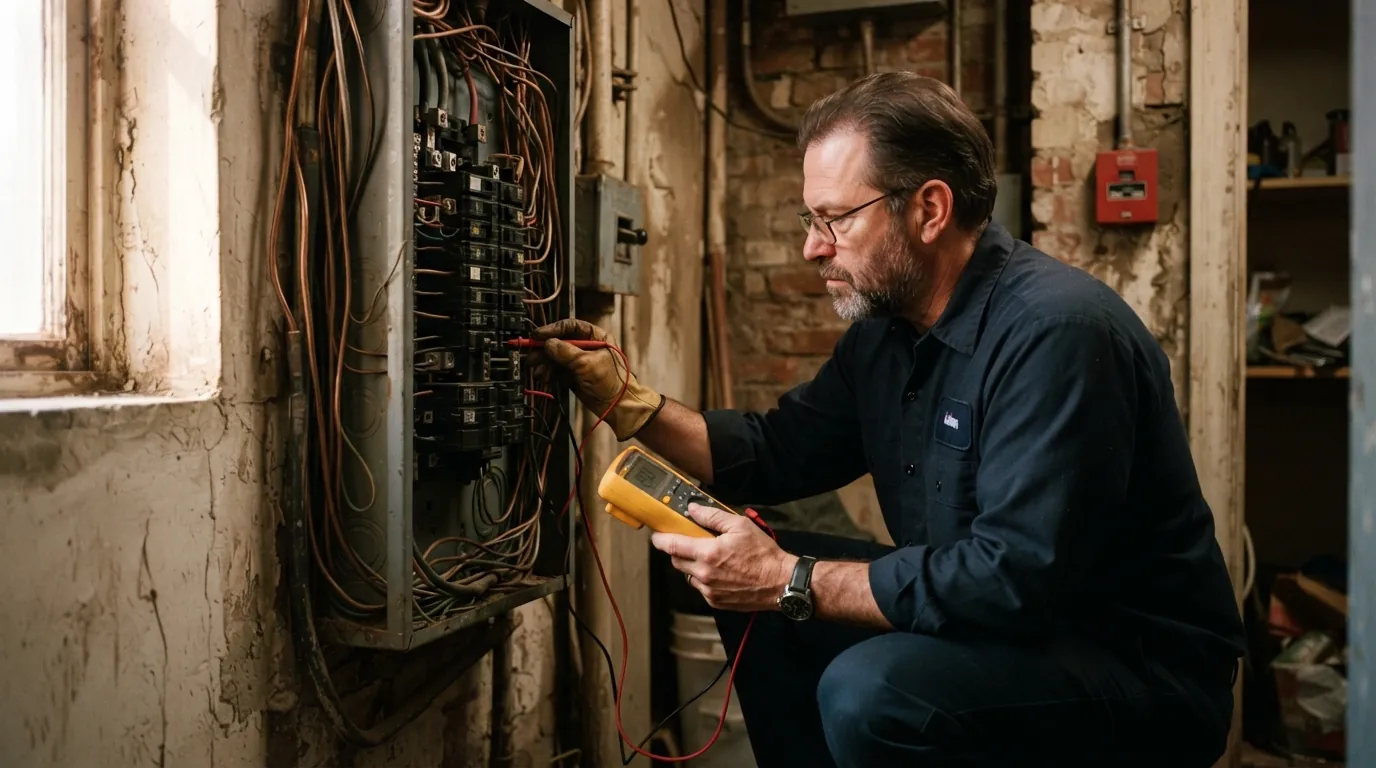
Which upgrade does your building need?
| Scope | Typical trigger | What changes |
|---|---|---|
| Panel only | Full or obsolete panel, adequate service | Panel and breakers; meter and riser stay |
| Unit service upgrade | Charger, heat pump or all-electric renovation | Meter, service cable and panel for one unit |
| Building service upgrade | Adding units or electrifying the building | Meter bank, main disconnect and risers |
Con Edison service coordination
Con Edison owns the service up to the point of connection and sets the cutover date. We submit the service request with the load calculation, answer the utility's questions about the new equipment, and schedule our crew for the day the meter is pulled. On the day, the old service is de-energized, the new equipment is landed and inspected, and Con Edison reconnects. Delays almost always come from missing paperwork, so we send a complete package the first time and track it until the date is set.
$1,500 to $4,000 all-in; older buildings needing a service entrance upgrade $3,500 to $6,000. Source: aecontractorsnyc.com, 2026-09. Published market range for budgeting only, not our quote.
Meter pan and riser replacement
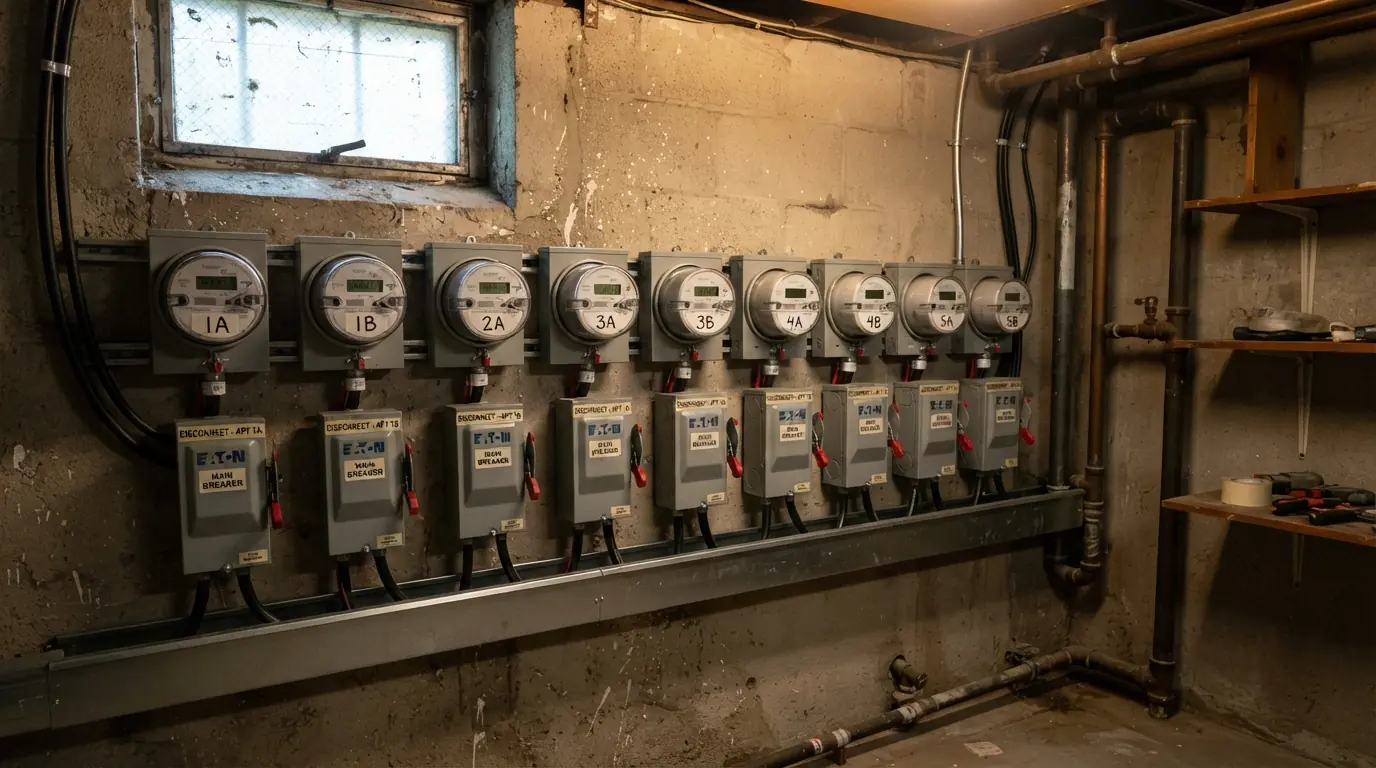
In a house the meter pan is on the outside wall; in a walk-up it's usually a bank in the basement feeding risers to each floor. A corroded or undersized pan, or a riser with cloth-insulated conductors, limits every unit it serves. We replace pans with current Con Edison-approved equipment and pull new riser conductors sized to the load letter. In occupied buildings we phase the work so only the units being cut over lose power, and we tell tenants the window in advance.
Service entrance cable replacement
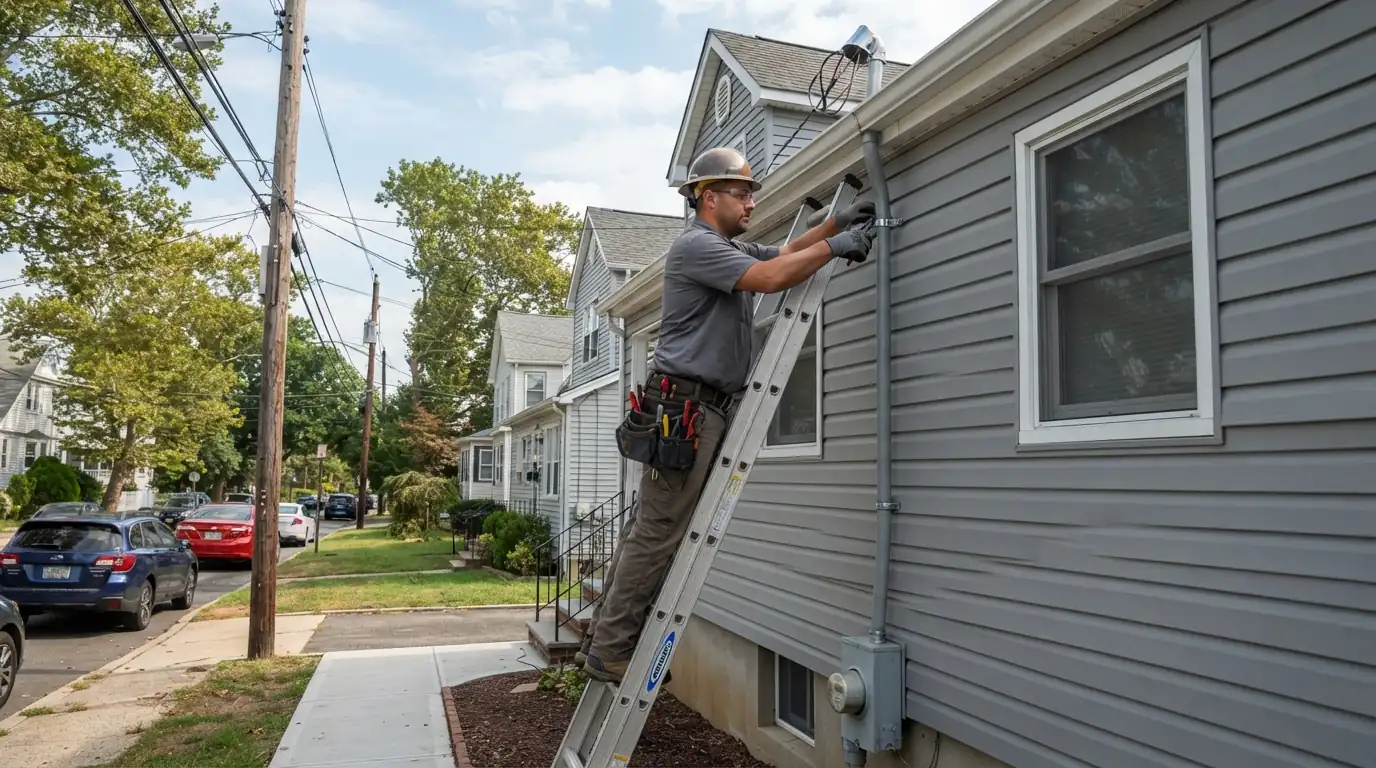
The service entrance cable runs from the utility's connection point to the meter and then to the main. On older houses it's often cloth-jacketed SE cable that has cracked where it enters the weatherhead or the wall. Water gets in, the conductors corrode, and the voltage starts sagging under load. Replacing it means a new weatherhead or entrance fitting, new cable or conduit, and new connections at both ends, done on the same cutover as the meter so the house only goes dark once.
Multi-meter bank upgrades
Two-family houses and small apartment buildings often have a meter bank that was sized for gas stoves and window fans. Adding a unit, converting to electric heat, or giving each apartment its own charger circuit usually outgrows it. We lay out the new bank with a meter position for every unit plus house power, size the main disconnect, and label every meter to its unit and panel. Correct labeling sounds minor until a fire department or a Con Edison crew needs to kill one apartment in a hurry.
What moves the price
- Service size: 100, 150, 200 or 400 amps
- Single meter versus a multi-meter bank
- Riser length and conductor size in apartment buildings
- Service entrance cable and weatherhead condition
- Con Edison requirements for the meter location
- Masonry, trenching or conduit work on the service path
- DOB filing and Con Edison scheduling
$1,500 to $4,000 all-in; older buildings needing a service entrance upgrade $3,500 to $6,000. Source: aecontractorsnyc.com, 2026-09. Published market range for budgeting only, not our quote.
What we see in New York buildings
The utility side of the city is changing too. For summer 2026 Con Edison put $3.9 billion into its system, including four new cables feeding Williamsburg, Greenpoint, Fort Greene, Clinton Hill and Bedford-Stuyvesant and load shifting in Harlem and the East Village. That added street capacity doesn't reach your apartment until the building's own service, meter and riser are sized to take it, which is where a service upgrade comes in.
What happens after you call
- 1
Load letter and site survey
We calculate the load and look at the meter, service cable and riser.
- 2
Design and filing
DOB permit filed, Con Edison service request submitted with the load letter.
- 3
Cutover scheduled
We book the crew for Con Edison's date and notify tenants of the outage window.
- 4
Cutover day
Old service out, new meter, cable and riser in, landed and tested.
- 5
Inspection and reconnect
DOB inspection passed and Con Edison reconnects the new service.
How long a service upgrade takes
The electrical work itself is short: a single-family service is usually changed in one day and a small meter bank in one or two. The calendar is set by the paperwork. DOB filing and Con Edison scheduling take longer than the cutover, which is why we start both as soon as the load letter is done and give you a realistic date instead of a guess.
Signs the service is the problem
Lights dim across the unit
The whole service sags when a big load starts.
New panel, same trips
The service behind it is undersized.
Cracked entrance cable
Water is getting into the service conductors.
Rusted meter pan
Corrosion at the connection point.
Warm meter socket
Loose or failing jaws in the pan.
Board rejected a load letter
The riser can't carry the added load.
Fuses at the meter
An old building service that predates breakers.
Questions about electrical service upgrade in New York
The panel distributes power inside the unit. The service is everything upstream: meter, entrance cable and riser. A service upgrade raises how much power the building can draw.
It varies with the job and the season. We submit a complete request so the schedule isn't held up on our side, and we tell you the date as soon as it's set.
Usually only the units on the equipment being replaced, for part of the cutover day. We plan the phasing with the super.
Sometimes. The load calculation tells us whether the existing service carries a charger or whether a load-managed unit avoids the upgrade.
Con Edison sets its own charges for work on its equipment. We cover the customer side and tell you what the utility asks for.
Yes. We phase it unit by unit so the building stays mostly powered during the work.