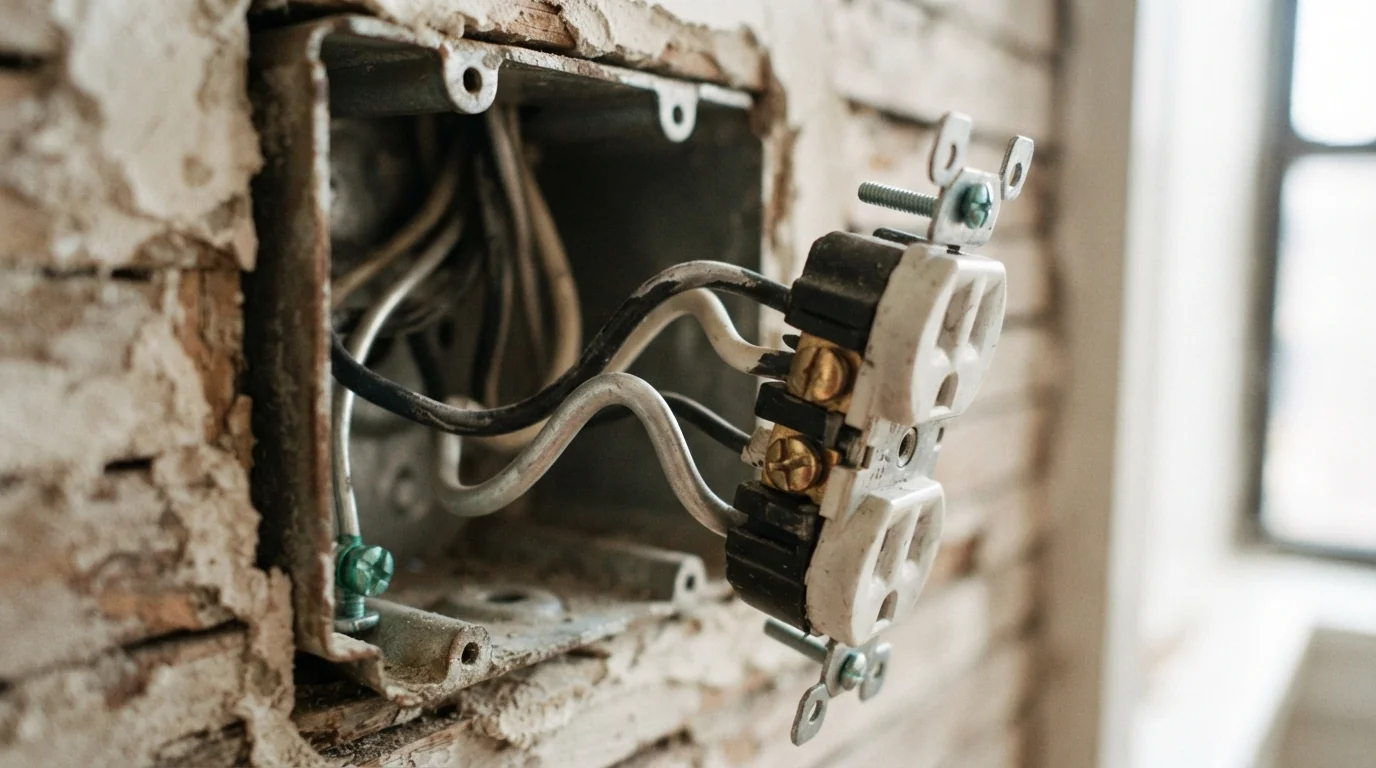
Aluminum wiring remediation in New York City fixes the connection points of solid aluminum branch circuits, the weak spot where aluminum expands, oxidizes and loosens. The accepted repairs are approved connectors that join a short copper pigtail to the aluminum, or full replacement with copper; simply swapping outlets doesn't fix it.
Updated September 2026
Solid aluminum branch wiring was used for a few years around the late 1960s and early 1970s when copper was expensive. The wire itself is fine inside the wall. The problem is every termination: outlets, switches, splices and breakers.
Each connection is a potential hot spot. Remediation means finding every one of them, not just the outlet that scorched, and fixing each with a method that's approved for aluminum.
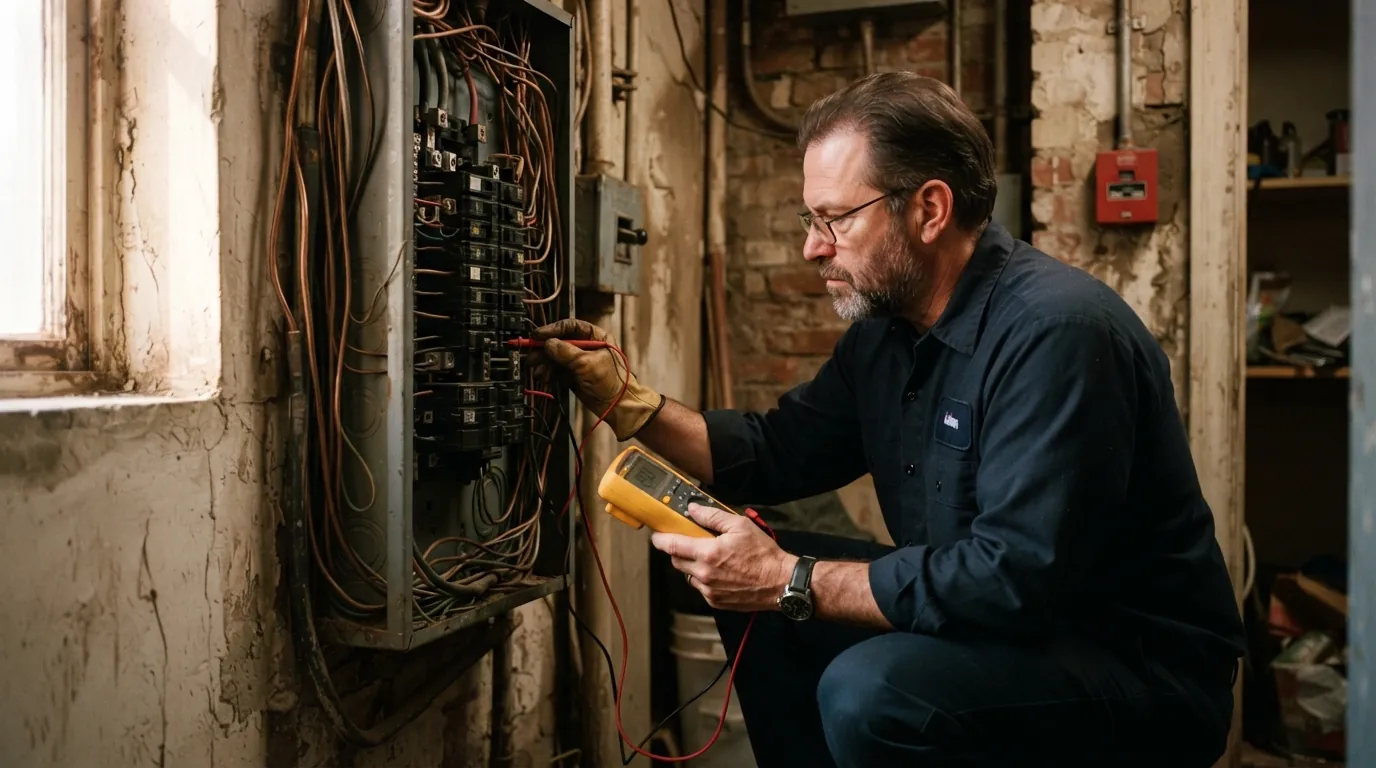
Repair or replace?
| Method | Best when | Trade-off |
|---|---|---|
| COPALUM crimps | Long-term repair without opening walls | Special tool and trained installer |
| AlumiConn pigtails | Tight boxes, many devices | Must be torqued correctly |
| Copper replacement | Renovating or heavy heat damage | Most work; removes the issue |
COPALUM and AlumiConn connectors
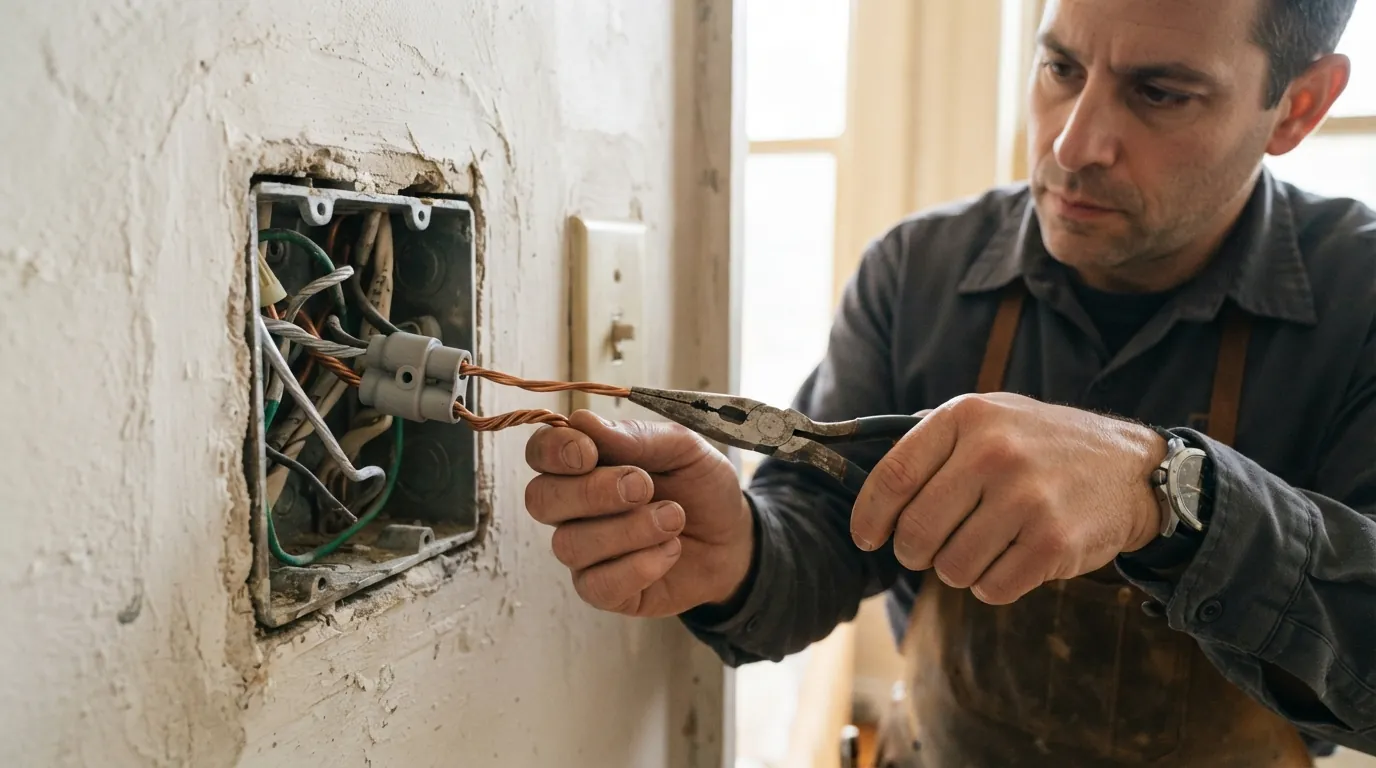
COPALUM crimps are a permanent cold-weld connection made with a special tool by a trained installer, and they're regarded as the most durable repair. AlumiConn connectors are small set-screw lugs rated for aluminum to copper, easier to install in tight boxes when done with the correct torque. Both join a short copper pigtail to the aluminum conductor, and the device is then connected to copper. We choose the method box by box, depending on space, access and the condition of the aluminum we find there.
GFCI replacement about $100 to $200; standard outlet $100 to $150; three-way switch $200 to $225; 220V outlet $120 to $170. Source: www.homeyou.com, 2026-06-14. Published market range for budgeting only, not our quote.
Full copper replacement
Replacing the aluminum with copper removes the problem instead of managing it. It's the right call when the house is being renovated anyway, when many connections already show heat damage, or when an insurer won't accept connector repairs. We replace circuits in the same phased way as any rewire, fishing new cable through existing walls and opening only where needed. If most circuits are sound, a combination works well: copper in the rooms being opened, connectors everywhere else, all listed on one repair record.
Aluminum-rated devices
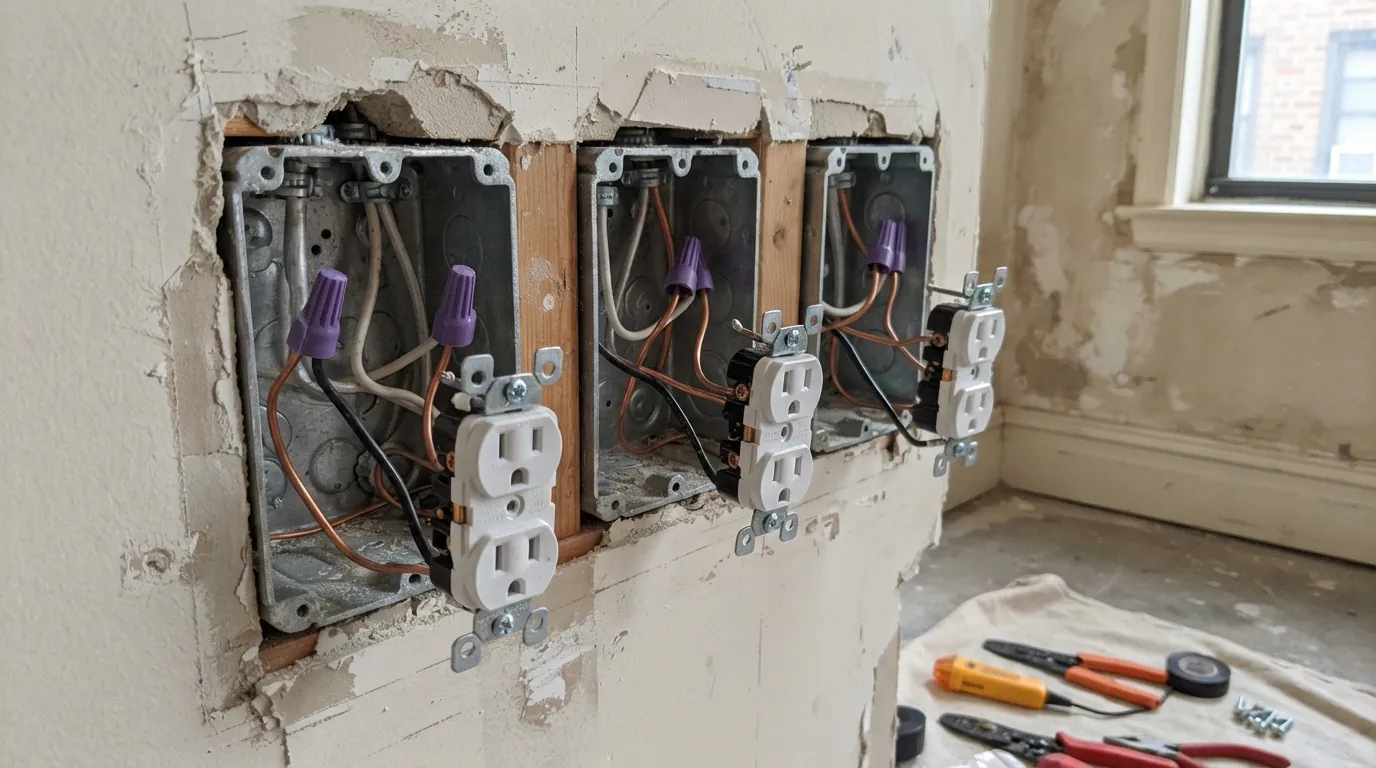
Outlets and switches marked CO/ALR are rated for direct aluminum connection, and they were the common fix for years. They're better than standard devices, which should never be connected to aluminum, but they only address the device itself. Splices inside boxes, connections at light fixtures and the breaker terminals still need attention. We use rated devices where they're the practical option, and we still inspect and correct every other termination on the circuit rather than treating a new outlet as a finished repair.
Pigtailing at outlets and switches
Pigtailing means joining a short length of copper wire to the aluminum inside the box with an approved connector, then connecting the outlet or switch to the copper. Done right, it lets you use ordinary devices, including GFCI and AFCI outlets, on an aluminum circuit. Done with ordinary twist-on connectors, it creates exactly the failure it was meant to prevent. We use connectors listed for aluminum to copper, torque them to spec and fold everything back without damaging the brittle old insulation.
What moves the price
- Number of outlets, switches, fixtures and splices
- COPALUM crimps versus AlumiConn connectors
- Rooms where copper replacement makes sense
- Box size and space for pigtails
- Heat-damaged connections found
- Breaker terminals and panel connections
- Permit where circuits are replaced
GFCI replacement about $100 to $200; standard outlet $100 to $150; three-way switch $200 to $225; 220V outlet $120 to $170. Source: www.homeyou.com, 2026-06-14. Published market range for budgeting only, not our quote.
What you can check yourself
| Check | Safe to do | Call us if |
|---|---|---|
| Cable jackets | Look near the panel for AL markings | You find them |
| Plates | Touch outlet and switch plates under load | Any plate is warm |
| Devices | Look for discoloration | Any outlet is browned |
| Smell | Notice burning plastic near outlets | You smell it at all |
What we see in New York buildings
More than 80 percent of New York City housing was built more than 50 years ago, and that includes the late-1960s and early-1970s houses and garden apartments where aluminum branch wiring turns up. Repairs are regulated too: like-for-like minor replacements are still regulated work, and filings since December 21, 2025 fall under the 2025 code's new GFCI, AFCI and service requirements.
What happens after you call
- 1
Confirm the wiring
We check for AL markings on cable jackets at the panel and in boxes.
- 2
Survey every termination
Outlets, switches, fixtures and splices counted and inspected.
- 3
Plan the repair
Connectors, rated devices or copper replacement chosen box by box.
- 4
Repair and replace
Each connection corrected with an approved method.
- 5
Test and document
Circuits tested and a list of repaired points left with you.
Signs aluminum connections are failing
Warm outlet or switch plates
A connection behind them is heating.
Flickering on one circuit
A loose termination somewhere on the run.
Burning plastic smell
Insulation or a device overheating.
Discolored outlets
Heat has already marked the device.
Dead outlets that come back
An intermittent loose connection.
AL printed on cable jackets
The circuits are aluminum.
Older rewire with standard devices
Aluminum on devices not rated for it.
Questions about aluminum wiring remediation in New York
Look for AL or ALUMINUM printed on cable jackets near the panel. We can confirm on site.
The wire isn't the issue. The connections loosen and can overheat if they aren't corrected.
Standard devices on aluminum make it worse. Every connection needs an approved method.
COPALUM crimps are the most durable; AlumiConn is practical in tight boxes; copper replacement removes the issue.
Many insurers want documented remediation. We give you a list of every repaired point.
Larger aluminum service and feeder cables are common and fine when installed correctly. The concern is small branch circuits.