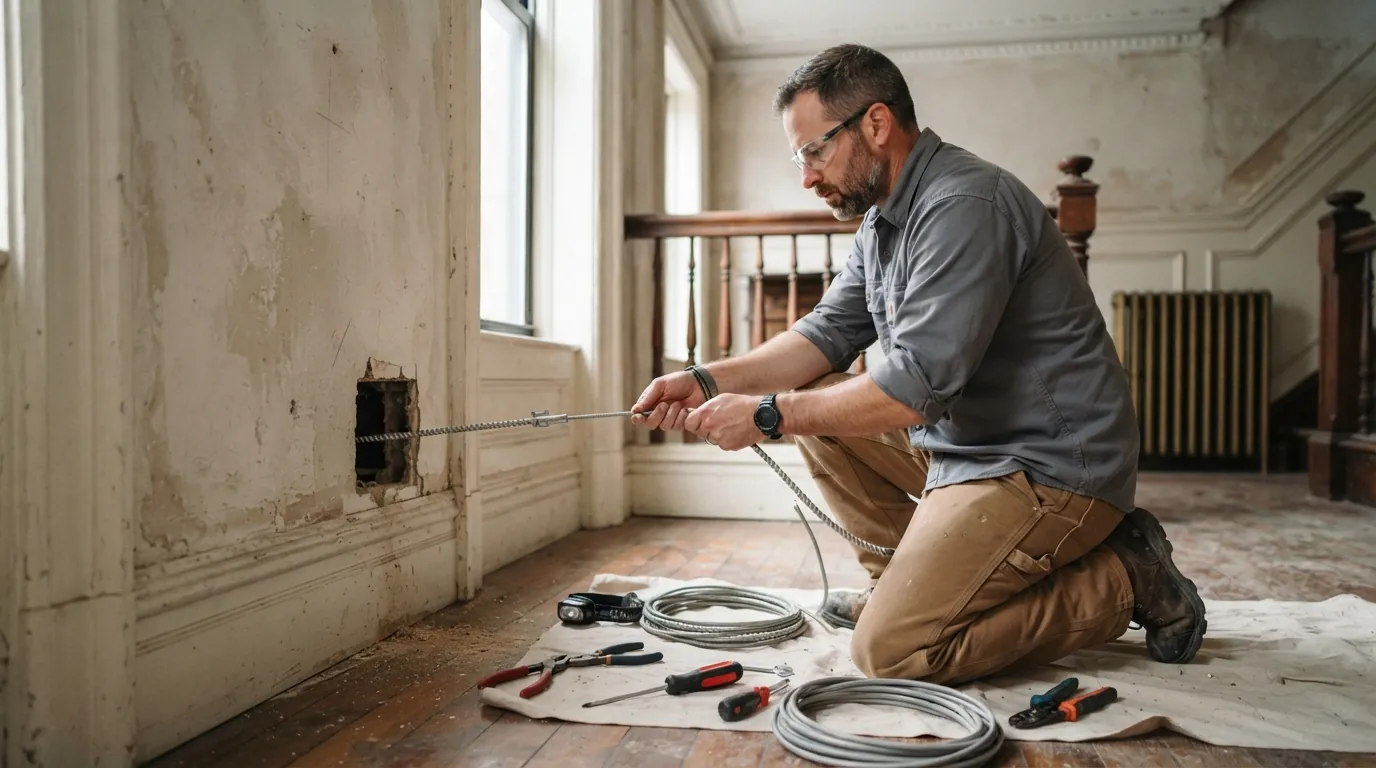
Rewiring a New York City apartment or house means replacing the branch circuits from the panel to every outlet, switch and fixture, usually with armored cable fished through existing walls. Published New York figures put a whole-house rewire around $2,500 to $5,000 for 1,600 square feet, rising with plaster repair, access and panel work, and every rewire needs a DOB permit.
Updated September 2026
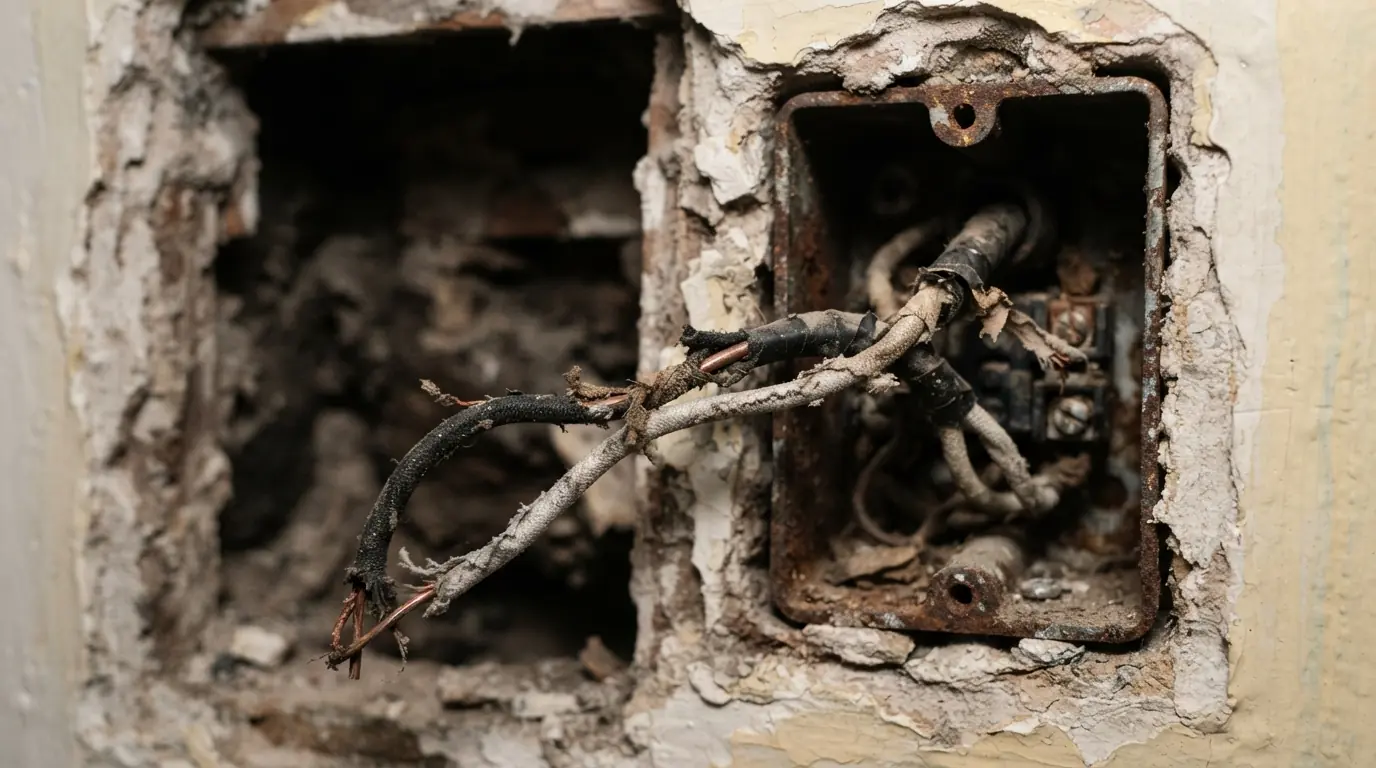
Wire doesn't fail on a schedule, but insulation does. Cloth and early rubber jackets from before the 1960s turn brittle, crack when they're moved, and leave bare copper in the box. Two-wire circuits have no ground at all, so a three-prong outlet on one is a false promise.
Most rewires in the city are done in occupied homes, so we work room by room, keep a working circuit in every room at the end of each day, and open walls only where a fish can't get through.
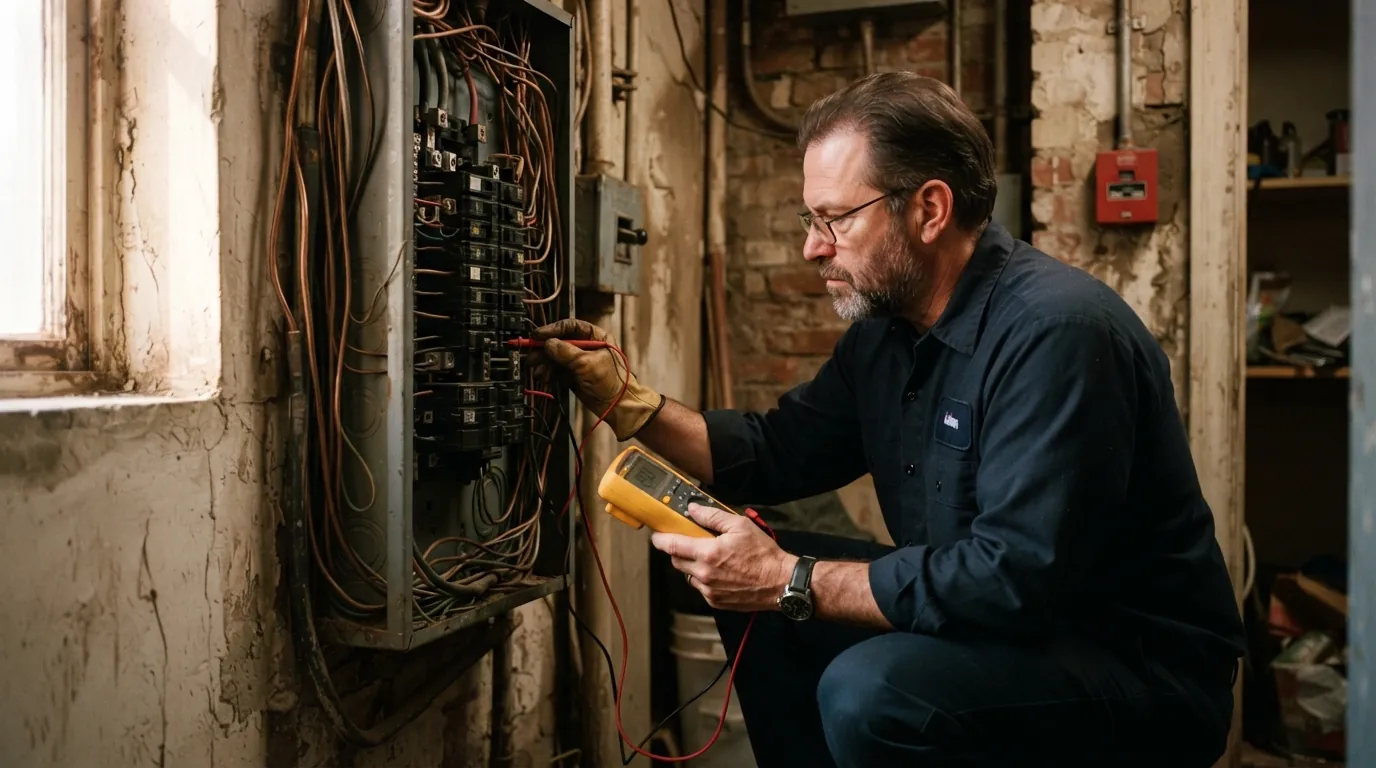
Full rewire or partial?
| Approach | Best when | Trade-off |
|---|---|---|
| Full rewire | Cloth or two-wire throughout, panel being replaced | Largest job, one inspection covers it all |
| Partial by room | Renovating a kitchen or bath now | Cheaper now; rest of the unit stays old |
| GFCI protection first | Tight budget, circuits sound but ungrounded | Protects people; not a long-term rewire |
Full rewire of brownstones and row houses
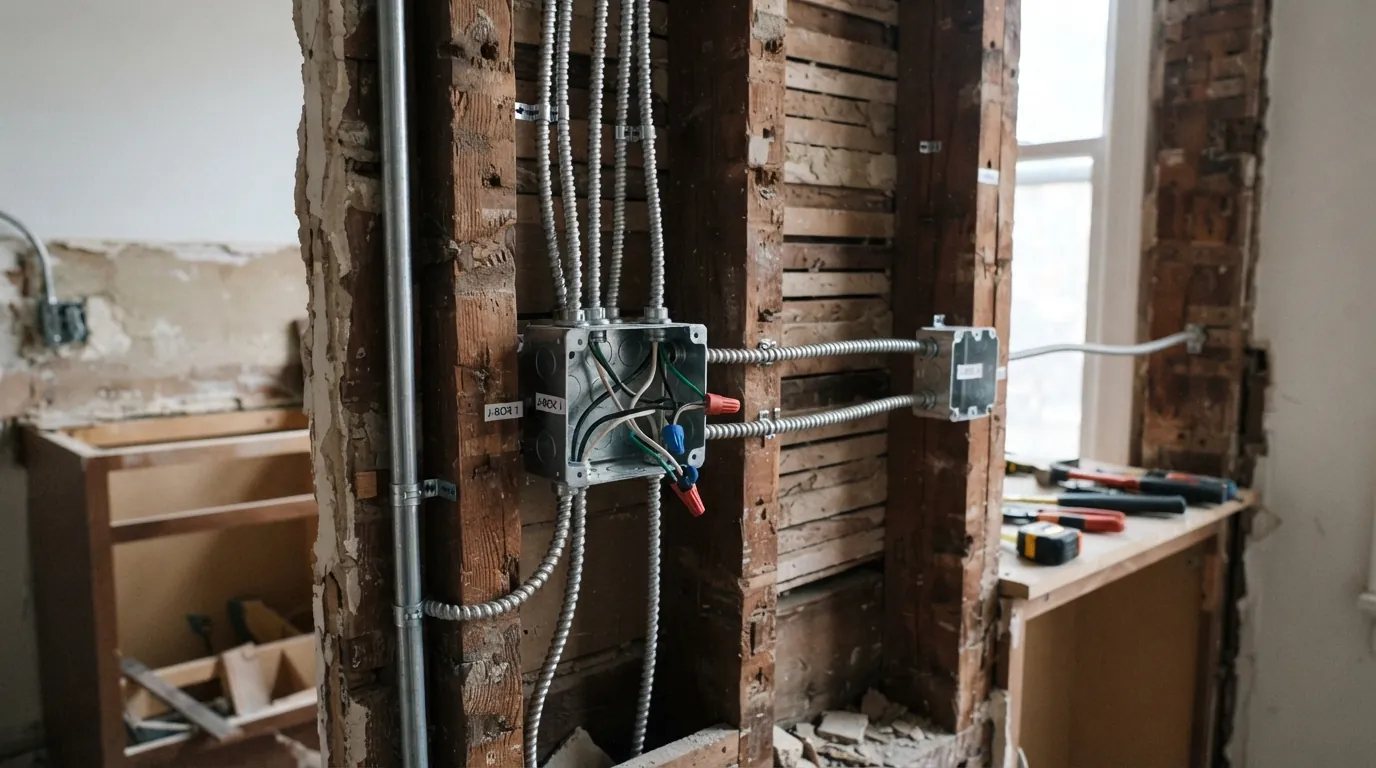
A full rewire replaces every branch circuit from the panel out. In a brownstone the runs go up through chases, closets and the rear wall, and floor by floor through the ceiling below. We map the existing circuits first, then plan new ones by use: kitchen, bath, bedrooms, heating and cooling. Armored cable is fished through the plaster where possible and surface openings are kept small and square so they patch cleanly. The panel usually changes too, since a new wiring system on an old panel only moves the weak point.
approximately $2,500 to $5,000 for a 1,600 sq ft house (homeyou); national $1,500 to $10,000 (HomeAdvisor). Source: www.homeyou.com, 2026-06-14. Published market range for budgeting only, not our quote.
Partial rewire during renovation
When a kitchen or bath is opened for renovation, rewiring that room while the walls are down costs a fraction of doing it later. We replace everything inside the renovated space back to the panel, add the circuits current code requires for kitchens and baths, and leave the rest of the apartment as it was. It's also the moment to decide on lighting layout, outlet counts and any 240-volt appliance, because moving a box after the tile goes up is where budgets go wrong.
Cloth-covered and deteriorated wiring
Cloth-covered cable can look fine until it's disturbed. Pull a receptacle forward and the jacket flakes off in pieces. That makes even small jobs on old wiring risky, because the act of working on it damages it. We test insulation where we can, but for circuits with visibly brittle jackets the honest answer is replacement. We start with the circuits carrying the heaviest loads, usually the kitchen and any room with an air conditioner, and work outward from there, room by room.
Grounding added to two-wire circuits
Two-prong outlets mean the circuit behind them has no equipment ground. Swapping in three-prong outlets without a ground is a code violation and a real shock hazard for anything with a metal case. There are two legitimate fixes: pull new grounded cable, or protect the ungrounded circuit with GFCI and label the outlets. We'll tell you which circuits can take new cable easily and which make sense to GFCI-protect for now, so the spend goes where it matters most for safety.
What moves the price
- Square footage and number of circuits
- Plaster and lath versus drywall access
- Floors and fire walls the runs have to cross
- Occupied home phasing versus an empty unit
- Panel replacement at the same time
- Wall and ceiling patching after the fish
- DOB permit, plan review and inspection
approximately $2,500 to $5,000 for a 1,600 sq ft house (homeyou); national $1,500 to $10,000 (HomeAdvisor). Source: www.homeyou.com, 2026-06-14. Published market range for budgeting only, not our quote.
What you can check before you call
| Check | You can do it | Call us if |
|---|---|---|
| Outlet type | Count two-prong outlets | Several rooms have no grounded outlets |
| Cable jacket | Look at exposed cable in the basement | Jacket is cloth or crumbling |
| Panel | Read the brand and main size | It's a fuse box or under 100 amps |
| Behavior | Note flicker or warm plates | Any plate is warm or discolored |
What we see in New York buildings
Just over 64 percent of New York City's housing was built before 1960, which is why brittle cloth-jacketed cable and two-wire circuits are the norm on rewires here rather than the exception. City inspectors also check box fill, conduit fill and firestopping at every penetration, so a rewire in a multi-story building is judged on how every opening through a floor or fire wall is sealed, not just on whether the lights come on.
What happens after you call
- 1
Survey and circuit map
Every circuit traced and tested so we know what's live and what's already dead.
- 2
Phased plan and permit
Rooms grouped into phases, permit filed before the first wall is opened.
- 3
Cable fished room by room
Armored cable through plaster, boxes replaced, one working circuit per room at day's end.
- 4
Panel and terminations
New circuits landed in a new or existing panel, labeled and tested.
- 5
Inspection and patching
DOB inspection passed, openings patched and ready for paint.
How long a rewire takes
A one-bedroom apartment is usually one to two weeks of work in phases, a larger apartment two to three, and a brownstone longer depending on floors and access. Plan review can add time for complex filings, so we file early and tell you the inspection window. Patching follows the inspection, since the inspector needs to see the work before walls close.
Questions about house & apartment rewiring in New York
Usually not. We phase the work so each room has power at the end of each day.
Most apartments take one to two weeks of work, plus inspection. A brownstone takes longer.
No. We fish cable through existing cavities and open only where a run can't pass.
New outlets on brittle old wire don't fix the risk. We'll show you what we find.
Armored cable or conduit is the normal wiring method here; it's what we install.
Often. A new wiring system on an old panel keeps the weakest point in place.