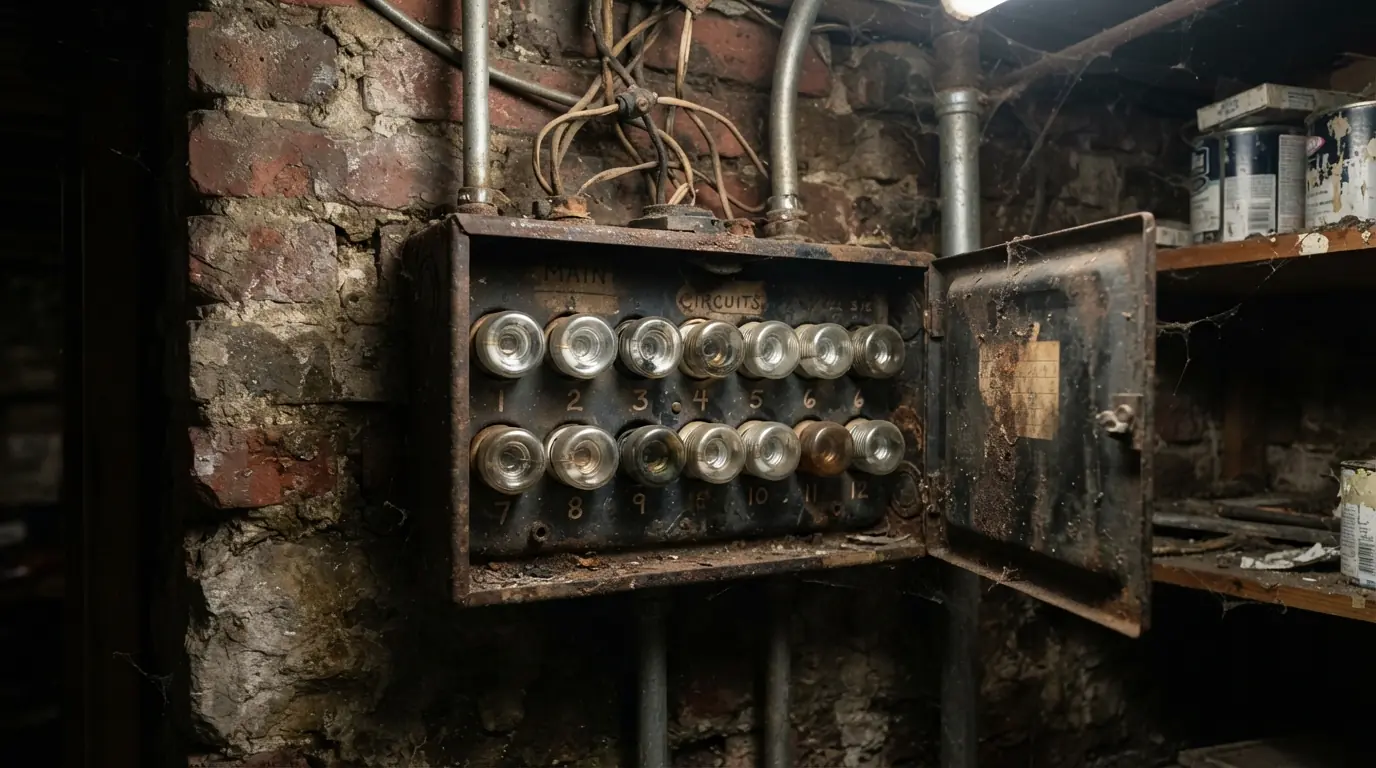
A fuse box conversion in New York City replaces a screw-in or cartridge fuse panel with a modern breaker panel, corrects the grounding and labels every circuit. It needs a DOB permit and inspection, and NYC figures for replacing a breaker box run from about $751 to $2,323, more when the service has to be upgraded at the same time.
Updated September 2026
Fuses aren't unsafe by themselves. The trouble is what happens around them: oversized fuses screwed in to stop nuisance blowing, no ground, no room for new circuits, and insurers who won't write a policy until the box is gone.
A conversion is usually a one-day job once the permit is in. We confirm the service can support the new panel, swap the equipment, correct the grounding and bonding, and leave a directory that matches every circuit.
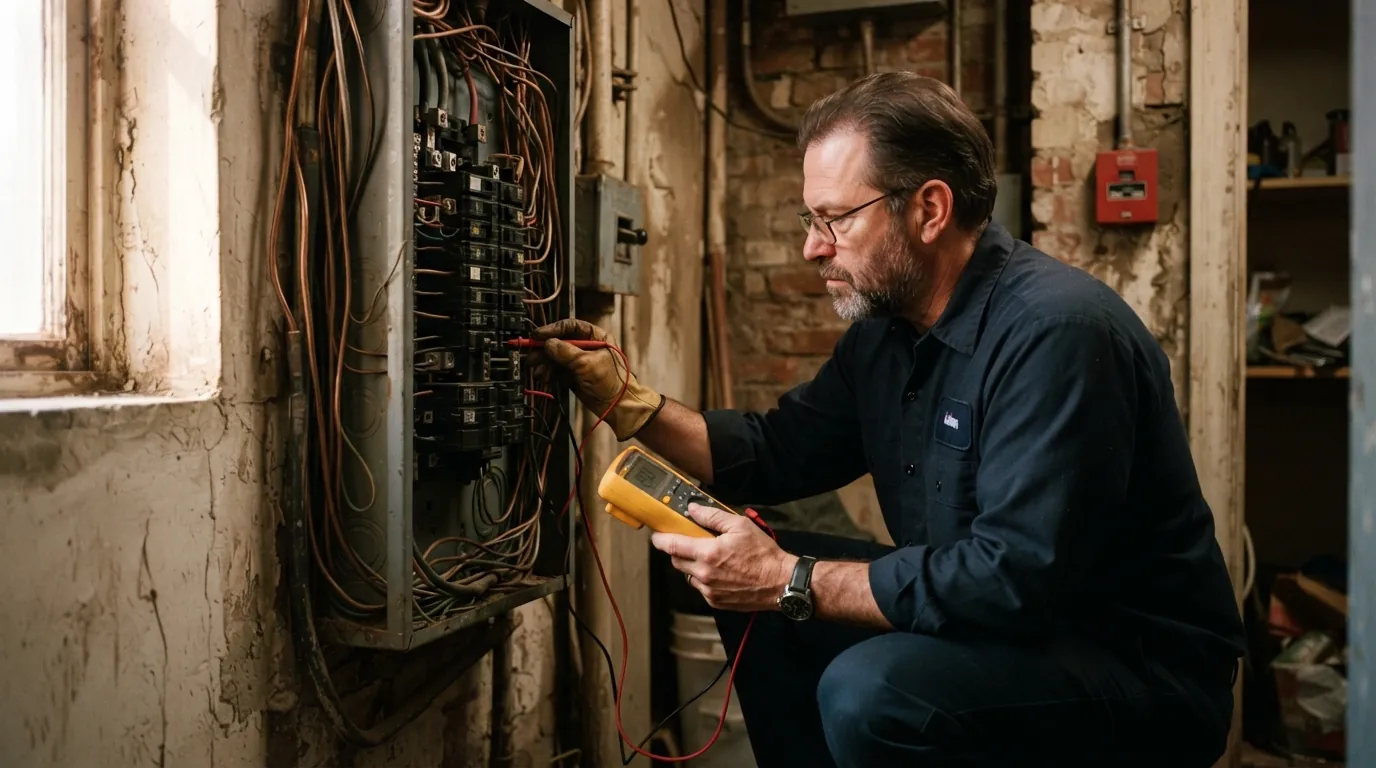
Convert now or with a service upgrade?
| Approach | Best when | What it costs you |
|---|---|---|
| Panel conversion only | Service is 100 amps or more and in good shape | One permit, one day of downtime |
| Conversion with service upgrade | Service is 60 amps or the meter is failing | More work up front; done once |
| Conversion with rewiring plan | Cloth or ungrounded wiring throughout | Panel now, circuits replaced in phases |
Screw-in fuse boxes
Screw-in Edison-base fuses are the classic setup in older houses and walk-ups. The telltale problems are 30-amp fuses on circuits wired for 15, scorched fuse sockets and a main that's only 60 amps. We replace the box with a breaker panel sized to a load calculation, match each breaker to the wire it protects, and install AFCI and GFCI protection where the current code calls for it. If a circuit's wire is too small or damaged, we tell you before we land it.
average $1,535, most paying $751 to $2,323; a few breakers as low as $200; labor $1,000 to $4,500 at $50 to $150 per hour. Source: www.angi.com, 2026-07-08. Published market range for budgeting only, not our quote.
Cartridge fuse disconnects
Many buildings feed each apartment through a cartridge-fuse disconnect with a pull-out block, often in the basement or a hallway closet. The cartridges and clips corrode, and replacement parts are getting harder to find. We replace the disconnect with a breaker or fused switch rated for the feeder, coordinate with the super when it's in a common area, and make sure the unit panel downstream is properly protected. It's often done the same day as the unit conversion, so the apartment only loses power once and the super only has to open the room once.
Grounding brought to code
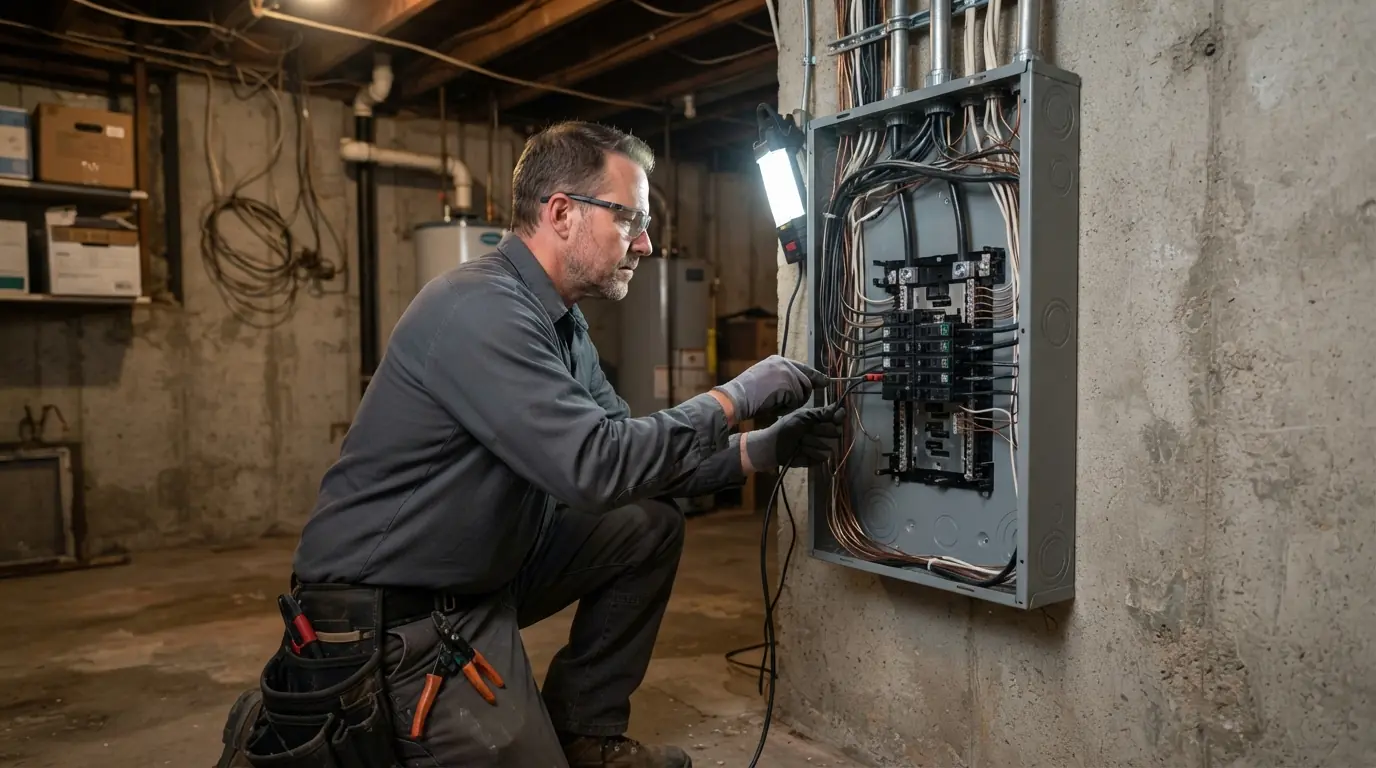
Fuse boxes predate modern grounding practice. Many are bonded to a water pipe that was later replaced with plastic, or not grounded at all. Part of every conversion is checking the grounding electrode conductor, the bond to the water service and the neutral and ground separation in any subpanel. We correct what's wrong so the new breakers and any GFCI protection can do their job. It's also one of the first things an inspector looks at, so getting it right keeps the sign-off on schedule.
Labeling and circuit mapping
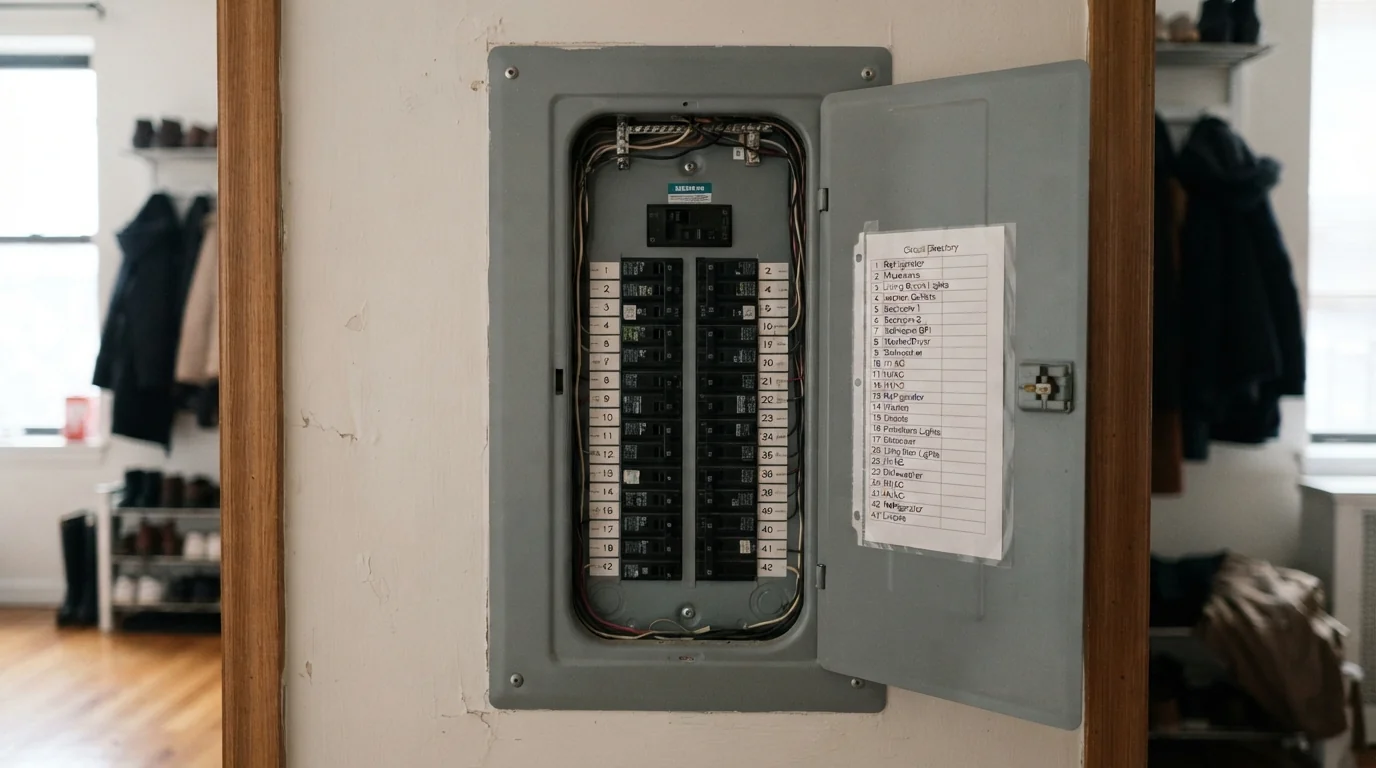
A fuse box rarely has an accurate directory. Before we move a single wire, we trace every circuit to what it feeds, note shared neutrals and multi-wire circuits, and plan the new breaker layout. The finished panel gets a typed directory that matches reality, so the next time a breaker trips you know which room it is. It also makes future work cheaper, because nobody has to trace the house again. Shared neutrals are paired on handle-tied breakers as the code requires.
What moves the price
- Panel size and number of breaker spaces
- Whether the service or meter must be upgraded too
- Cartridge disconnects in common areas
- Grounding and bonding corrections
- AFCI and GFCI breakers the code requires
- Circuit tracing and labeling
- DOB permit and inspection
average $1,535, most paying $751 to $2,323; a few breakers as low as $200; labor $1,000 to $4,500 at $50 to $150 per hour. Source: www.angi.com, 2026-07-08. Published market range for budgeting only, not our quote.
What we see in New York buildings
Just over 64 percent of the city's housing was built before 1960, before breaker panels were standard, and over 60 percent of Staten Island units are single-family homes that often kept their original boxes. Converting one is permitted work: the Department of Buildings requires it to be filed through DOB NOW, and it's reviewed and inspected before the box is signed off.
What happens after you call
- 1
Load and service check
We confirm the service can support a breaker panel of the size you need.
- 2
Circuits traced
Every fuse mapped to what it feeds before anything is disconnected.
- 3
Permit filed
The conversion is filed in DOB NOW before work day.
- 4
Panel swapped
Fuse box out, breaker panel in, grounding corrected, circuits landed.
- 5
Inspection and directory
DOB inspection passed and a typed directory left in the door.
Brands we install and service include Square D and Eaton panels, Leviton and Lutron devices, and Tesla and ChargePoint chargers.
Signs the fuse box is due
Fuses blow every week
Circuits are loaded beyond what they were built for.
Oversized fuses installed
Someone screwed in 30 amps on a 15-amp circuit.
Scorched fuse sockets
Heat damage at the connection.
No room for a new circuit
Every position is already used.
Insurer asking about fuses
Underwriting has flagged the box.
Two-prong outlets throughout
The system likely has no ground.
Main is 60 amps or less
Too small for modern appliances.
Questions about fuse box to breaker panel conversion in New York
No, but they're often undersized, ungrounded and hard to insure, which is why most owners replace them.
Usually most of one working day for a single panel.
Sometimes. A 60-amp service often needs to go to 100 or 200 amps to be worth converting.
No. A fuse larger than the wire rating removes the protection and is a fire risk.
Insurers generally want fuse boxes gone. We give you the permit sign-off for your file.
Yes. It's removed and disposed of as part of the job.