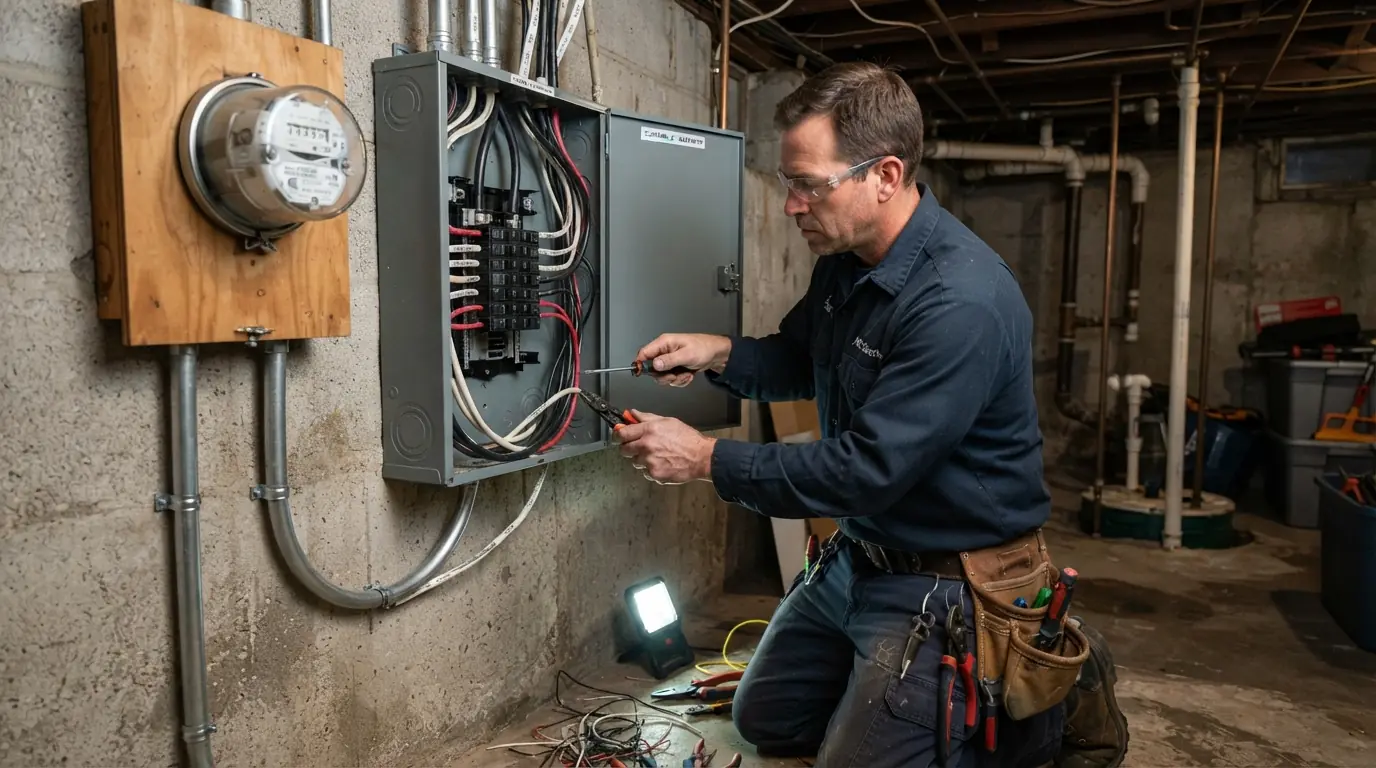
Wiring a basement apartment in a New York City house means giving the unit its own metered service or subpanel, lighting the path out, protecting every circuit to the current code and powering the sump pump and dehumidifier on dedicated circuits. It's permitted work, and the DOB filing fee for a panel job runs about $300 to $600, separate from the installation itself.
Updated September 2026
A basement apartment is a separate home under the same roof, and the electrical has to treat it that way. The tenant needs their own panel they can reach, the owner needs to know the unit won't overload the house, and the inspector needs to see protection that fits a below-grade space.
Many basement units were wired informally years ago. We start by tracing what's there, then design the electrical so it can be filed with the rest of the conversion or legalization.
Separate meters and subpanels
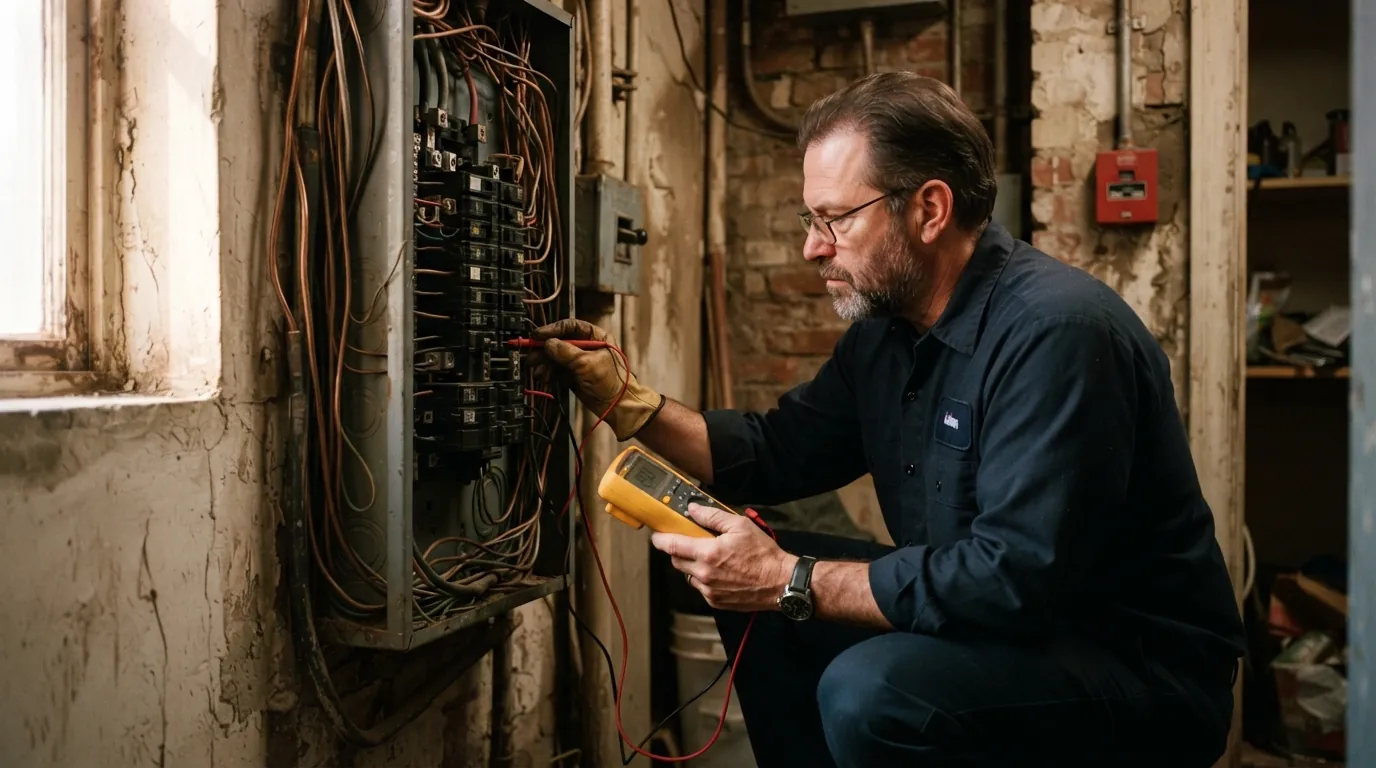
A separately metered unit gets its own meter position, service conductors and panel, so the tenant pays for what they use and can reset their own breakers. Where a separate meter isn't practical, a subpanel fed from the house panel is the other option, with the load calculation showing both units fit on the service. We lay out the meter bank or subpanel, coordinate the Con Edison side when a new meter is added, and label every panel so the owner and the tenant always know which one is theirs.
$150 to $300 for a new circuit or minor work; $300 to $600 for a panel upgrade. Source: aecontractorsnyc.com, 2026-09. Published market range for budgeting only, not our quote.
Egress and emergency lighting
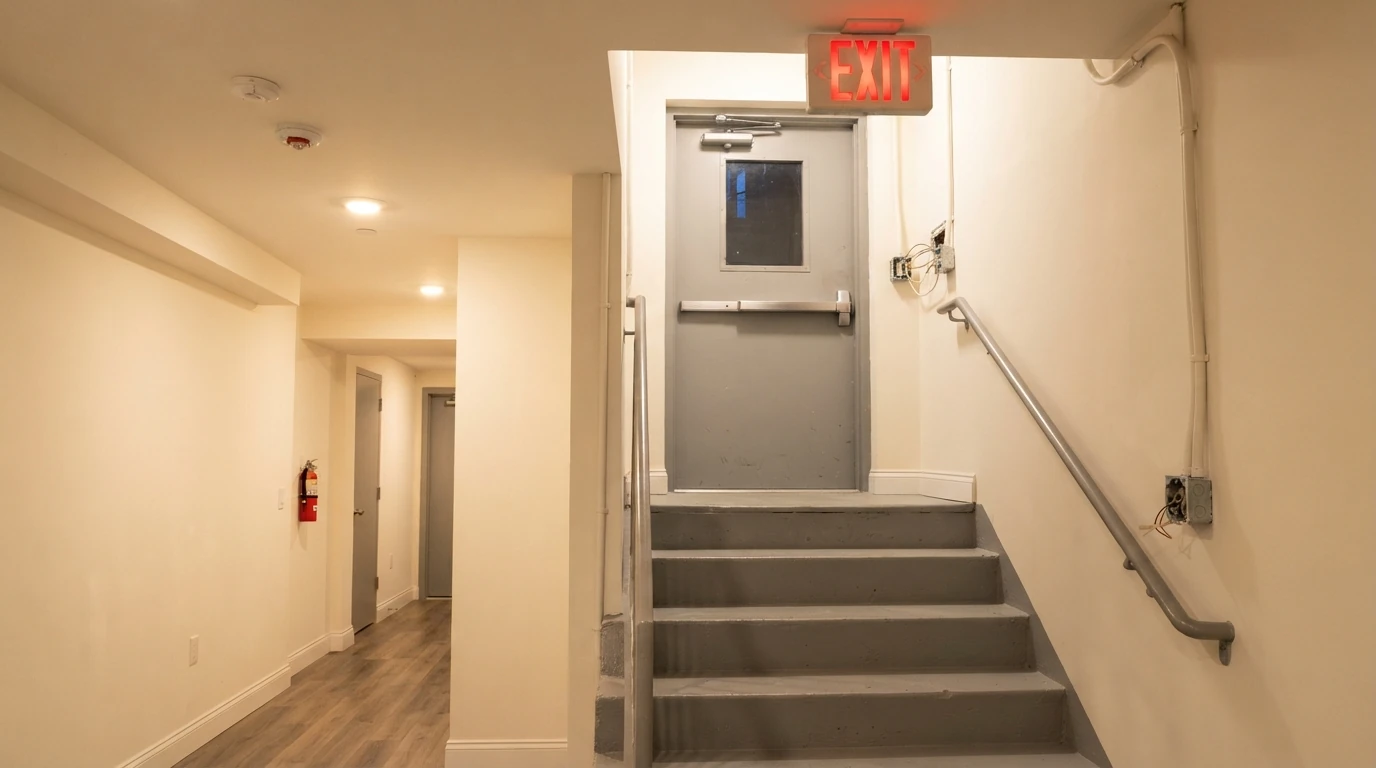
The way out of a basement unit has to be lit, and the lighting has to keep working when it's needed. We light the path from the bedroom to the exit door or egress window, put switches where someone finds them in the dark, and add battery-backup fixtures where the plans call for them. Stair lighting gets switches at the top and bottom. It's a small part of the budget and one of the items plan examiners and inspectors look at closely in below-grade units.
Legalization filings
Legalizing an existing basement unit means the electrical has to match drawings the DOB will accept. We survey what's in the walls, identify what can stay and what must be replaced, and prepare the electrical portion of the filing with the architect or engineer handling the rest. Informal wiring, like extension cords run through walls or circuits tapped off the house lighting, is replaced. The goal is a unit whose wiring matches the filing exactly, so the final inspection is a formality rather than a list of corrections.
Sump pump and dehumidifier circuits
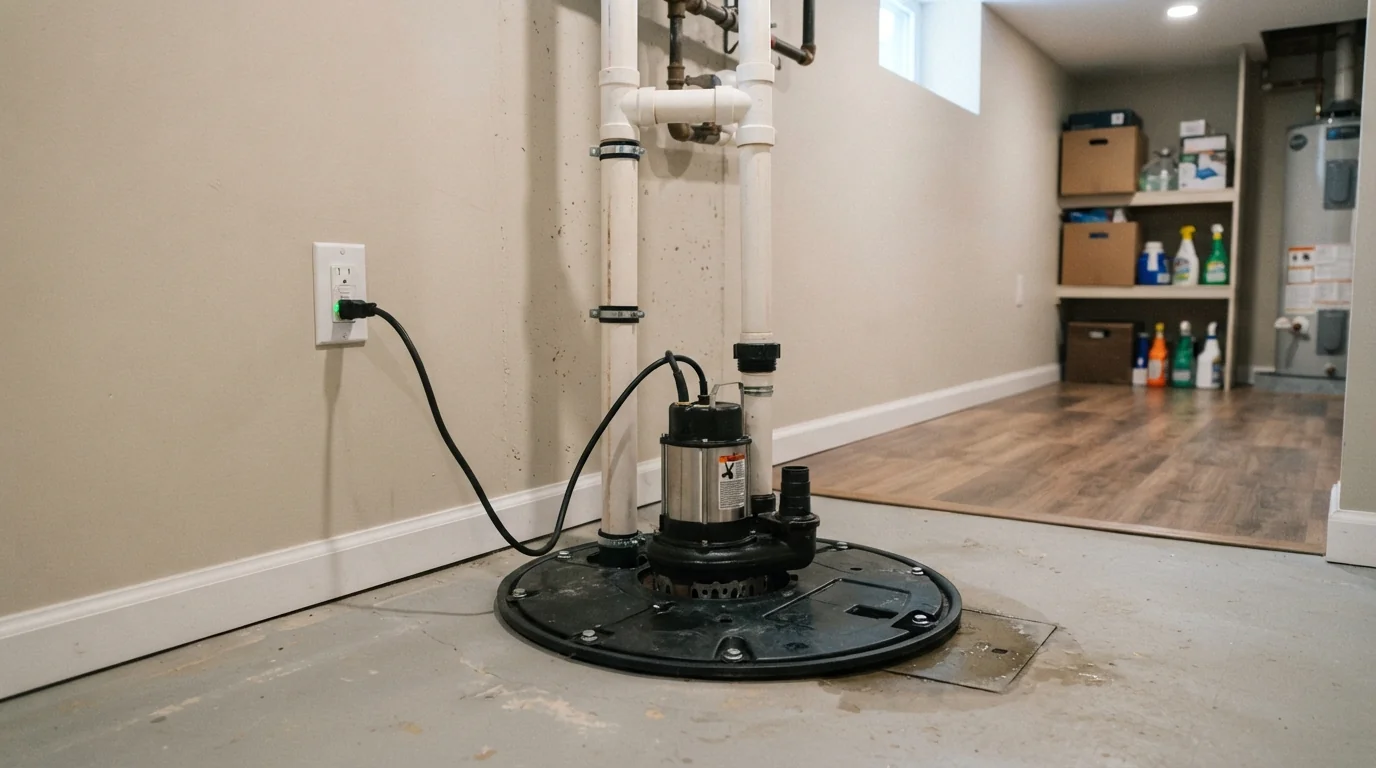
Below-grade units live or die by the sump pump and the dehumidifier. Each gets its own GFCI-protected circuit so a tripped kitchen outlet can't shut down the pump in a storm. Where outages are a worry, we add an inlet for a portable generator or a battery backup for the pump. Dehumidifiers get a dedicated outlet near the drain, and we keep all receptacles above the likely water line, so a small leak doesn't take the whole circuit down with it.
What moves the price
- Separate meter versus a subpanel
- Con Edison work for a new meter
- Existing wiring that must be replaced
- Egress and battery-backup lighting
- Sump pump and dehumidifier circuits
- Filing with the architect or engineer
- DOB permit and inspection
$150 to $300 for a new circuit or minor work; $300 to $600 for a panel upgrade. Source: aecontractorsnyc.com, 2026-09. Published market range for budgeting only, not our quote.
What basement apartment wiring includes
- Survey of existing basement circuits
- Load calculation for both units
- Separate meter or subpanel
- Con Edison request for a new meter
- GFCI and AFCI protection to the 2025 code
- Egress path and stair lighting
- Battery-backup lighting where planned
- Dedicated sump and dehumidifier circuits
- Panels labeled for owner and tenant
What we see in New York buildings
About 63 percent of Queens housing sat in one- and two-family structures by 1960, and since 1961 zoning locked that in, much of the borough's added density has come through converted basements and partitioned attics, around Woodhaven, Richmond Hill and Rego Park among other areas. Power matters below grade: the Fourth of July 2026 storms left about 1,000 Queens customers still out late on July 5.
What happens after you call
- 1
Survey existing wiring
Every basement circuit traced to see what can stay.
- 2
Design with the filing
Meter or subpanel, lighting and circuits laid out with the architect.
- 3
Permit and utility requests
DOB filing submitted, Con Edison contacted for a new meter.
- 4
Wiring installed
Panel, circuits, protection and egress lighting in place.
- 5
Inspection and labeling
Inspected, panels labeled for owner and tenant.
How long basement wiring takes
The wiring itself usually takes one to two weeks for a typical basement unit, less when the walls are already open. A new meter adds Con Edison's schedule on top, and legalization filings move at the pace of plan review. We start the filing and the utility request as soon as the design is set, so the electrical isn't what holds up the certificate.
Questions about basement apartment wiring in New York
Not always. A subpanel can work if the load calculation shows the service can carry both units.
We survey it, keep what meets code and replace what doesn't, then file it.
They should. A dedicated GFCI circuit keeps the pump running when other outlets trip.
We prepare the request and coordinate the new meter.
Yes. We prepare the electrical portion alongside their drawings.
Mostly. Cutovers are short and scheduled in advance.