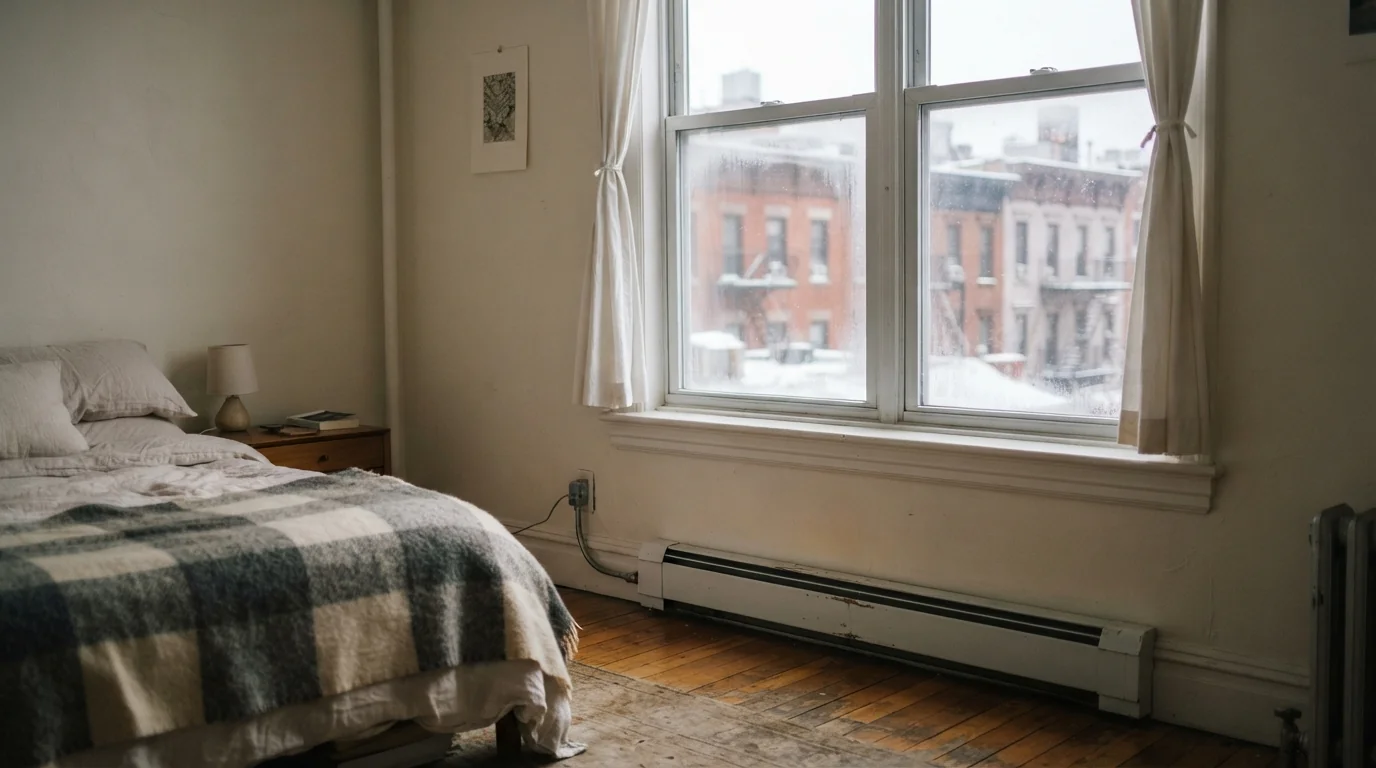
Electric heater installation in New York City means hardwired baseboard, wall or kick-space heaters on dedicated 120 or 240-volt circuits with a thermostat, sized for the room. It replaces space heaters on extension cords, which the city warns can be dangerous. Each new circuit is permitted work, and the DOB filing fee for a new circuit runs about $150 to $300.
Updated September 2026
Space heaters are the most common way people fix a cold room, and one of the riskiest: they draw close to what a circuit can carry, run for hours, and often sit on extension cords or near bedding.
A hardwired heater on its own circuit, controlled by a thermostat, does the same job without the risk. We size it for the room, place it where furniture won't block it, and check the panel can carry it.
Which heater fits the room?
| Heater | Best for | Trade-off |
|---|---|---|
| Baseboard | Bedrooms and living rooms with open wall space | Needs clear space in front |
| Wall heater with fan | Bathrooms and small rooms | Some fan noise |
| Kick-space heater | Kitchens under cabinets | Limited output |
Baseboard and wall heaters
Baseboard heaters run along the bottom of an outside wall and heat by convection; wall heaters are compact units with a fan, useful where wall space is short. Both are sized by the room's area and how exposed it is. We choose the unit and wattage, run a dedicated 240-volt circuit where the heater needs it, mount it with the clearances the manufacturer requires, and place it where curtains and furniture won't sit against it. In bathrooms, heaters are chosen and placed for wet-area rules.
$150 to $300 for a new circuit or minor work; $300 to $600 for a panel upgrade. Source: aecontractorsnyc.com, 2026-09. Published market range for budgeting only, not our quote.
Supplemental heat for cold rooms
In many buildings one room is always colder: the corner bedroom, the room over the garage, the finished basement or the addition the boiler never reached. Supplemental electric heat solves that room without rebalancing the whole system. We look at why the room is cold first, since a draft or missing insulation is sometimes the real fix, then size a heater that brings it up to temperature without running flat out all day. We also check the circuit that the room's current space heater has been using.
Thermostats and controls
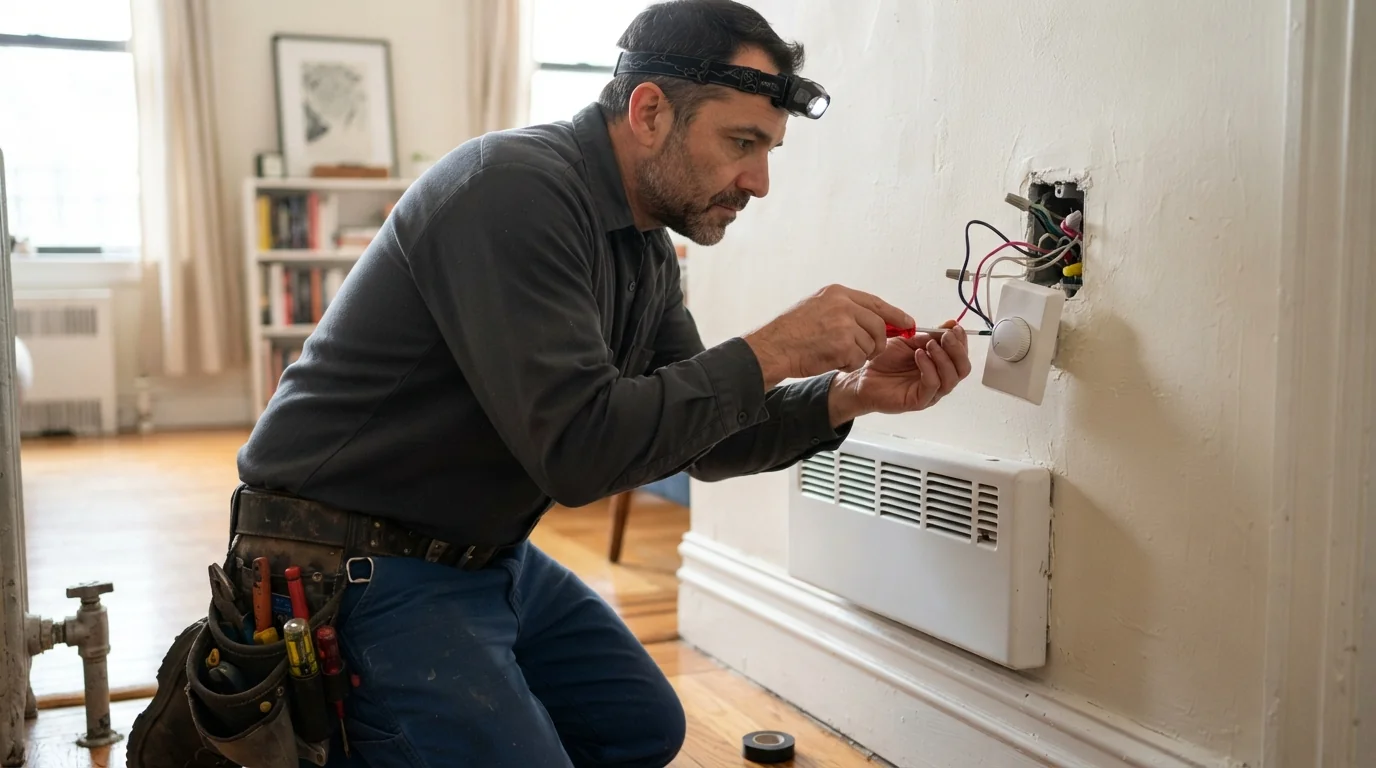
A heater without good control wastes power and overheats rooms. Wall-mounted line-voltage thermostats are more accurate than the dials built into baseboards, and programmable or smart models set back the temperature overnight or when the room is empty. We install the thermostat where it reads the room rather than the heater, wire several heaters in one room to a single control, and set the schedule with you before we leave. Smart models can be added to the same app as your other controls, and the setpoints are shown to everyone in the home.
Replacing space heaters with hardwired units
If a space heater is running every day, it's time to replace it. A portable heater near the limit of a shared circuit trips breakers, heats cords and plugs, and is too easy to leave near something that burns. We replace it with a hardwired unit on its own circuit, remove the extension cords that fed it, and check the outlet it was using for heat damage. It's usually a one-day job and a lasting fix. Any scorched receptacle found is replaced on the spot.
What moves the price
- Heater type, size and number of units
- Dedicated circuit length and voltage
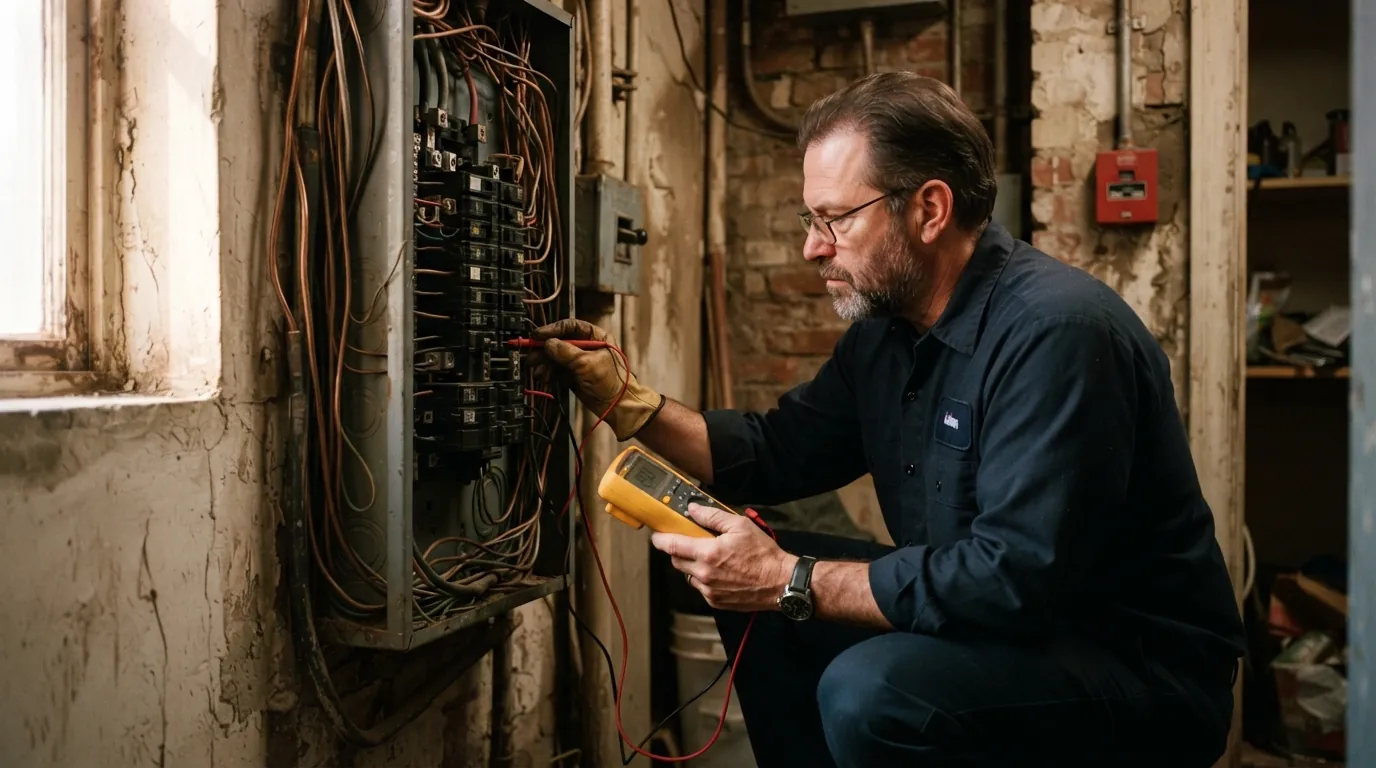
- Panel space and remaining capacity
- Line-voltage or smart thermostat
- Wall construction for mounting and wiring
- Bathroom or wet-location requirements
- DOB permit for new circuits
$150 to $300 for a new circuit or minor work; $300 to $600 for a panel upgrade. Source: aecontractorsnyc.com, 2026-09. Published market range for budgeting only, not our quote.
What to note before we visit
| Detail | Why it matters | How to check |
|---|---|---|
| Room size | Sets the heater wattage | Measure length and width |
| Outside walls and windows | Adds heat loss | Count exterior walls and windows |
| Space heater use | Shows the need | Note wattage on its label |
| Panel spaces | A new circuit needs one | Count empty spaces or take a photo |
What we see in New York buildings
Heat season in New York City runs from October 1 to May 31. Residential owners must keep indoor temperatures at least 68 degrees from 6 a.m. to 10 p.m. when it's below 55 outside, and at least 62 degrees overnight. HPD received about 144,000 heat-related problem reports in the 2023-24 season, and the city warns that auxiliary heating can be dangerous, which is why hardwired heat beats a space heater for a room that's always cold.
What happens after you call
- 1
Look at the cold room
Why it's cold, how big it is, where a heater fits.
- 2
Size the heater
Wattage chosen for the room and its exposure.
- 3
Check the panel
Capacity and a space for the new circuit.
- 4
Install and wire
Dedicated circuit, heater mounted, thermostat set.
- 5
Test and set schedule
Heater run up to temperature, schedule programmed.
Questions about electric heater installation in New York
Yes. It has its own circuit, no cord and fixed clearances.
Most do; some smaller units run on 120 volts.
Yes, when they're wired to the same control.
New circuits are permitted work in the city.
Yes, with a unit and placement suited to a wet area.
It depends on use; a thermostat and schedule keep it in check.