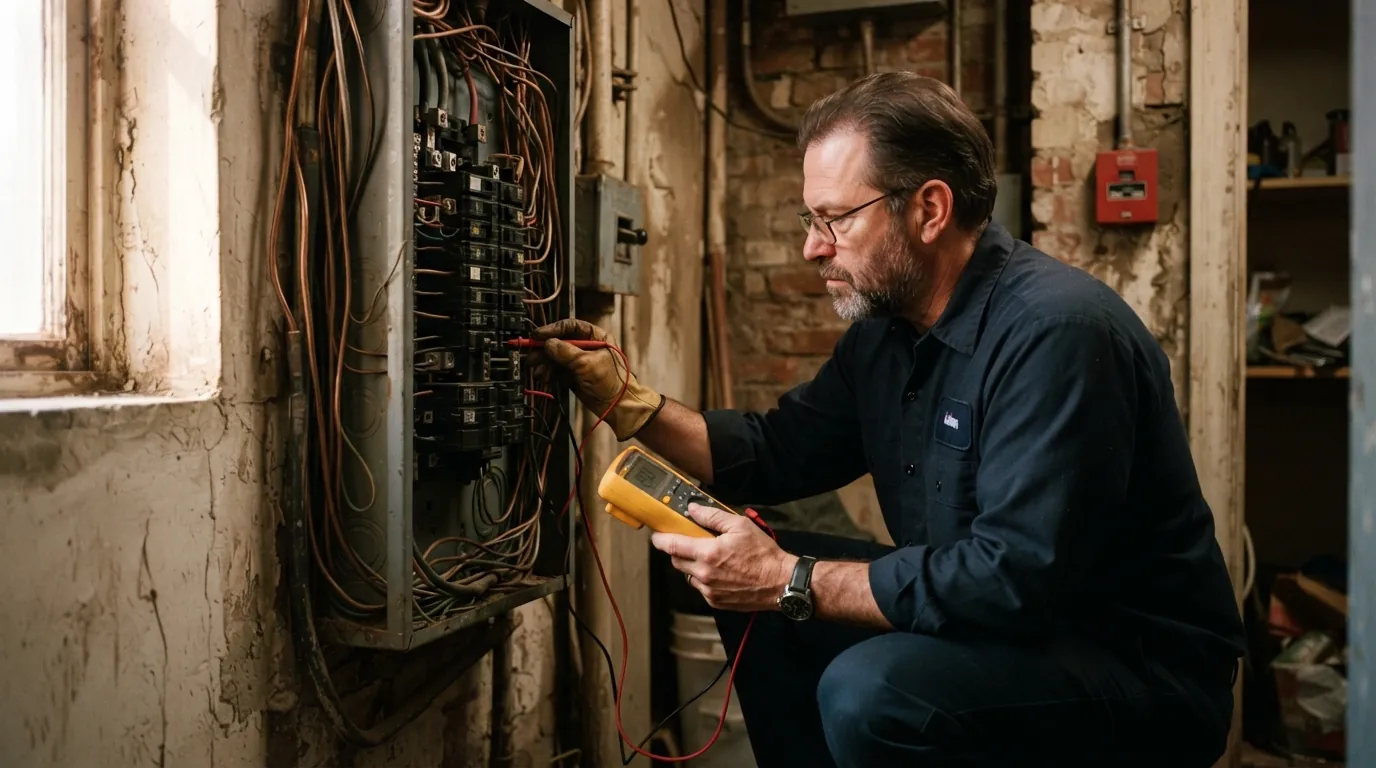
Pool and hot tub wiring in New York City covers dedicated circuits for the pump, heater and lights, GFCI protection, a disconnect within sight of the spa, and equipotential bonding that ties the water, the shell and nearby metal together. It is permitted electrical work, and the inspection focuses on the bonding and the clearances.
Updated September 2026
Most pool and spa problems we see come from shortcuts: a pump on an extension cord, a hot tub on a circuit that was never meant for it, or bonding that was skipped because nobody would see it.
We wire the equipment to the manufacturer's requirements and the code, bond everything that needs it, and file the work so it is inspected before anyone gets in the water.
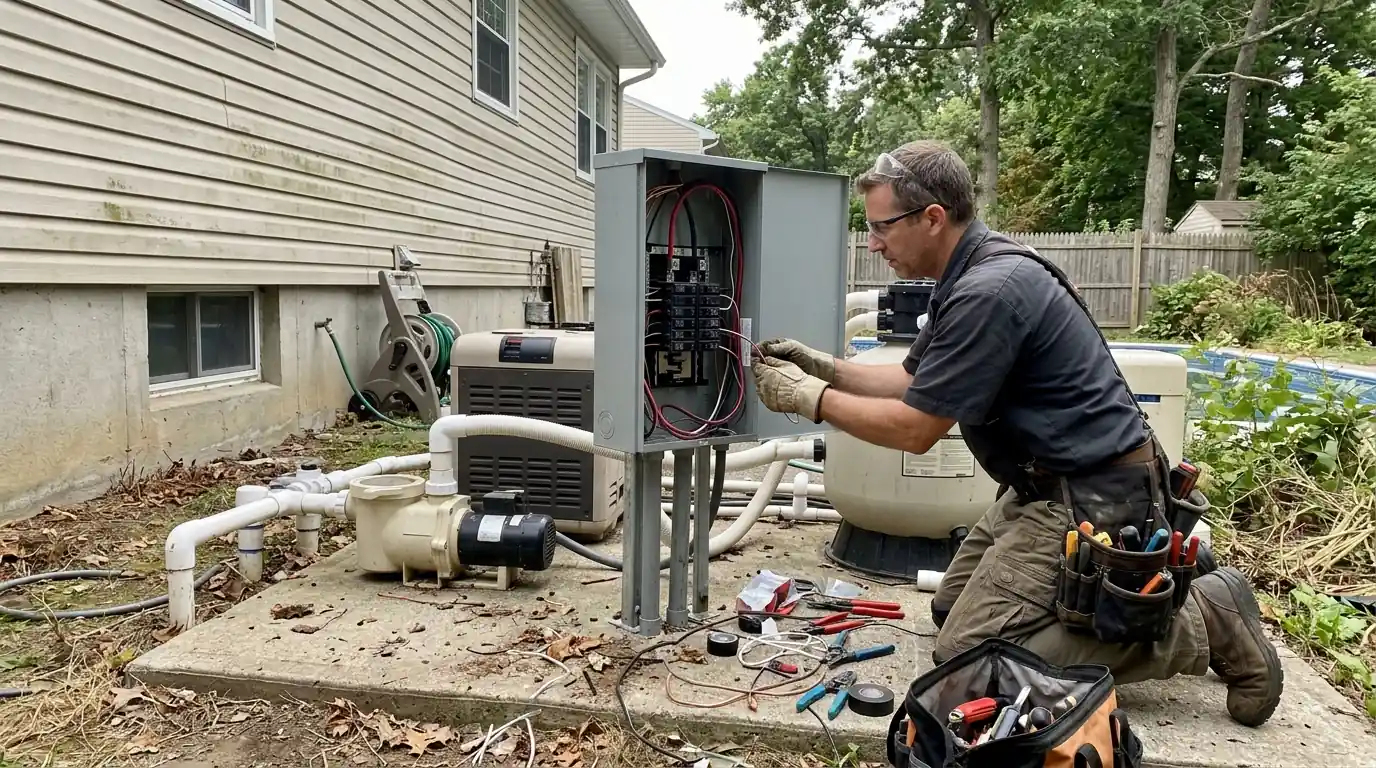
Pool pump and heater circuits
Pumps, heaters, salt systems and automation each need their own protected circuits, usually from a subpanel near the equipment pad. We size the feeder to the full equipment list, install the subpanel and GFCI protection, and run each circuit in the right wiring method for an outdoor, wet location. Timers and controls are wired so the pump runs on schedule, and everything is labeled at the subpanel for whoever services the equipment later. Equipment from different suppliers is wired to each one's installation manual, not a generic layout.
GFCI replacement about $100 to $200; standard outlet $100 to $150; three-way switch $200 to $225; 220V outlet $120 to $170. Source: www.homeyou.com, 2026-06-14. Published market range for budgeting only, not our quote.
Equipotential bonding
Bonding ties the pool water, the shell's steel, the pump motor, ladders, rails and nearby metal into one connected grid, so there is no voltage difference anyone in or around the pool could feel. It is the part of the job you never see and the part inspectors check most carefully. We install the bonding conductor and connections to the code, make sure the water itself is bonded, and leave it accessible for inspection before decks and finishes cover it. Photos of the bonding are kept for your records.
Hot tub and spa disconnects
A hot tub needs a dedicated circuit sized to its heater, GFCI protection and a disconnect within sight of the tub but at a safe distance from it. Plug-and-play spas still need the right outlet in the right place. We read the manufacturer's requirements, run the circuit from your panel or a subpanel, mount the disconnect where the code requires, and test the GFCI before the tub is filled. Older spas being replaced get their circuit checked against the new tub's needs. If the existing circuit is too small, it is upgraded before delivery day.
Pool lighting and outdoor receptacles
Underwater lights, landscape lighting around the pool and receptacles on the deck all have distance rules from the water and protection requirements. We install low-voltage pool lighting with the right transformers, keep receptacles at the required distances with GFCI protection and in-use covers, and plan switching so lights can be controlled from the house. Overhead wires near the pool are checked too, because they have clearance limits of their own. Fixtures are chosen for wet locations from the start, and every transformer is placed where it can be reached for service.
What moves the price
- Pool, hot tub or both
- Equipment list and heater size
- Subpanel and feeder length
- Bonding scope and access
- Lighting and outdoor receptacles
- Service capacity at the house
- Permit filing and inspection
GFCI replacement about $100 to $200; standard outlet $100 to $150; three-way switch $200 to $225; 220V outlet $120 to $170. Source: www.homeyou.com, 2026-06-14. Published market range for budgeting only, not our quote.
What pool and spa wiring includes
- Equipment list and load review
- Service capacity check
- Subpanel and feeder
- Dedicated GFCI circuits
- Equipotential bonding grid
- Spa disconnect within sight
- Pool and deck lighting
- Outdoor receptacles at code distances
- Permit, inspection and GFCI test
What we see in New York buildings
Con Edison counts more than 750,000 buildings and about three million housing units in New York City, and 30 percent of residences are one- and two-family homes while two-thirds are in multifamily buildings. Pools and hot tubs live almost entirely in that first group, in houses with yards, which is why this work concentrates in the city's house neighborhoods and why the backyard service and panel usually need checking before the equipment arrives.
What happens after you call
- 1
Read the equipment list
Pump, heater, lights and controls.
- 2
Check the service
Capacity for the new loads.
- 3
Plan the layout
Subpanel, disconnect and clearances.
- 4
Wire and bond
Circuits, GFCI and the bonding grid.
- 5
Inspect and test
Inspection before filling and a GFCI test.
How long pool and spa wiring takes
A hot tub on a new circuit is usually a one-day job once the pad is ready. A full pool equipment pad with a subpanel, bonding and lighting takes several days spread across the construction schedule, because bonding has to be inspected before decks and finishes cover it. We plan the electrical visits around your pool builder's schedule.
Questions about pool & hot tub wiring in New York
Yes, sized to its heater, with GFCI protection and a disconnect.
Connecting the water, shell and nearby metal so there is no voltage difference.
Yes. It is permitted electrical work with an inspection.
Only the right GFCI outlet at the right distance.
Yes, low-voltage pool and landscape lighting with the required protection.
It depends on the equipment; we check before you buy.