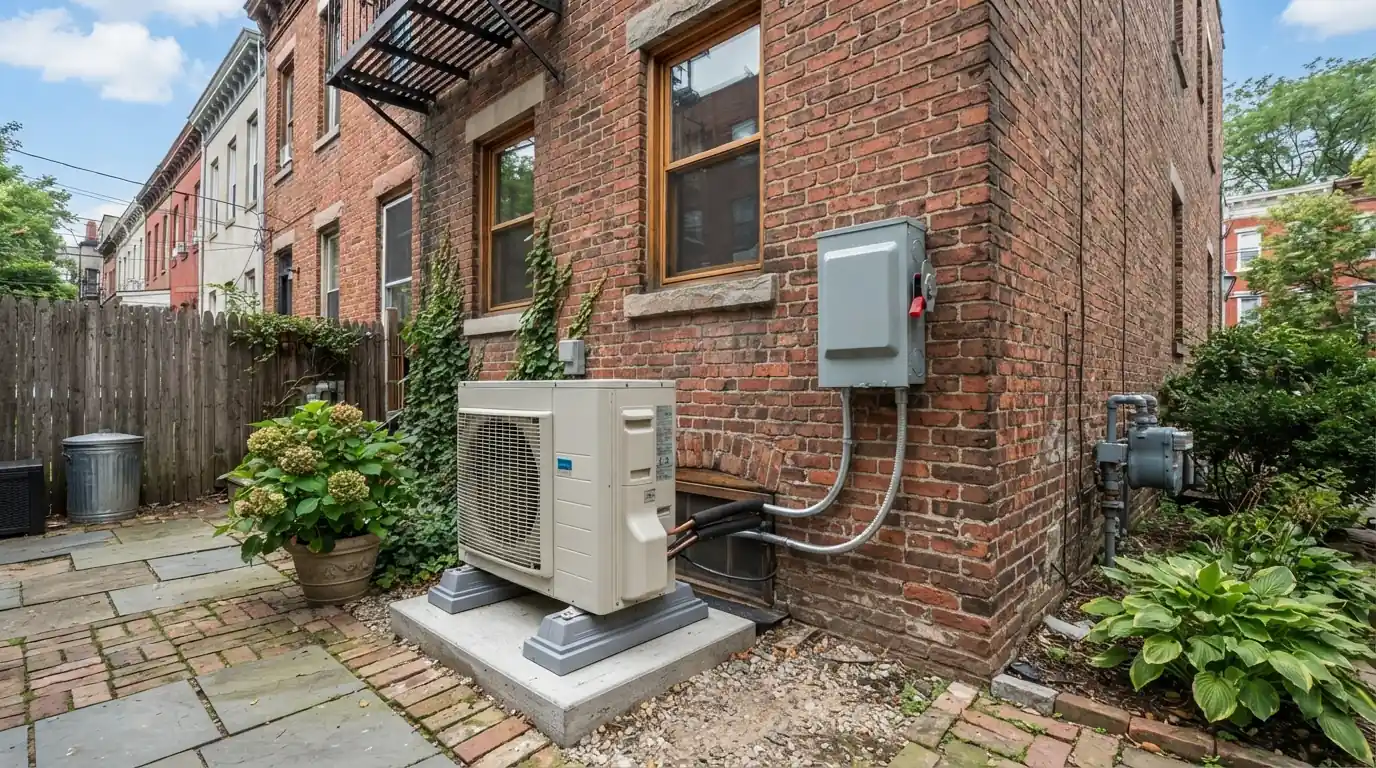
Going all-electric moves heating, hot water, cooking and often driving onto your electrical service. Start with a load calculation that adds up the equipment you plan, then decide whether the panel, the service or load management covers it, and only then order equipment. In apartments, the building's riser and the board's load letter set the limit.
Why it is happening now
The city is moving buildings off fossil fuels. Local Law 154 has required new buildings under seven stories to be all-electric since 2024, with taller buildings following from July 2, 2027, and the law's deadlines reach hot-water systems by the end of 2027. Existing homes are not forced to switch, but equipment choices, incentives and co-op rules increasingly point the same way.
Many owners go electric one appliance at a time: a heat pump when the boiler fails, induction during a kitchen renovation, a charger with a new car. Planning the whole path first avoids paying for the same panel work twice.

Add it up first
A whole-home heat pump, a heat pump water heater, an induction range, an electric dryer and an EV charger can together double the load a panel was sized for. The load calculation adds the nameplate ratings of the equipment you actually plan, using the method the code requires, and compares the total with your service.
The result tells you which of three paths you are on: the existing service carries it, load management makes it fit, or the service has to grow. Knowing that before you shop keeps you from buying equipment the building cannot feed.
- Heat pump or mini-splits
- Heat pump water heater
- Induction range or cooktop
- Electric dryer
- EV charger
- Anything already on the panel
The order to do the work in
Do the capacity work first: the panel or service upgrade, or the load-management device, and the circuits for everything planned. Then install equipment as it arrives or as old appliances fail. Running the circuits for the charger and the dryer while the panel is open costs far less than coming back for each one.
In a renovation, rough in the circuits for future equipment even if you are not buying it yet. A capped 240-volt circuit behind the future induction range, or conduit to the garage, is cheap now and expensive later.
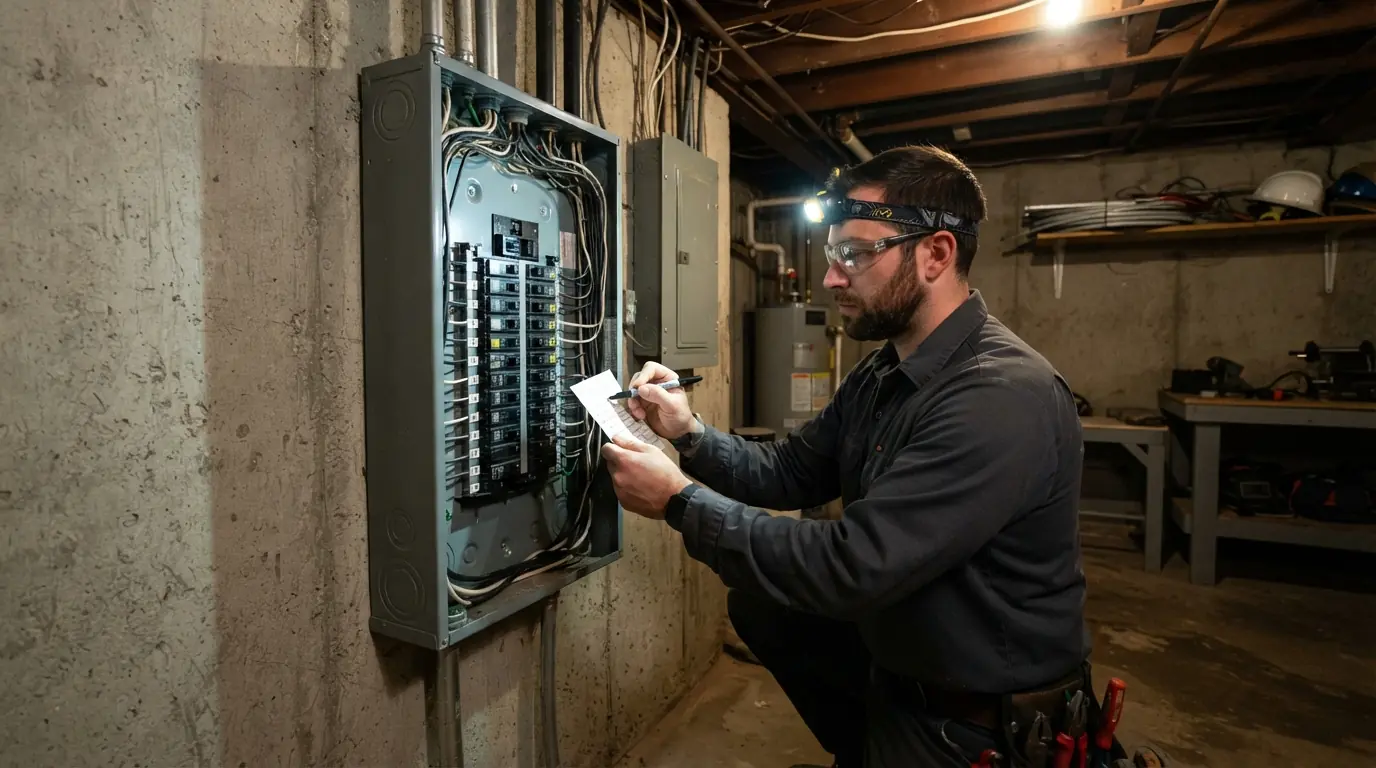
Panel, service or load management
If the calculation fits within the service but the panel has no room, a new panel or a subpanel solves it. If the total exceeds the service, the choice is between upgrading the service, which involves Con Edison and the meter, and load management, which lets large loads share capacity so they never all run at full power at once.
Load management is often enough for a charger and a dryer. It is harder to rely on for heating in the coldest weeks, when the heat pump needs its full capacity for hours. Our panel cost guide covers what the upgrade paths cost.

Apartments are different
In a co-op or condo, the limit is often the building rather than the unit. The riser feeding your apartment and the meter bank in the basement decide how much power you can add, and the board will want a load letter before approving an induction range, a heat pump or a dryer.
When several shareholders want the same upgrades, a building-wide assessment of the risers and service is usually the better route. Our load letter guide explains how boards handle requests.
What it costs
The electrical side is usually the smaller part of the budget, but it decides whether the rest can happen. Published New York figures put all-in panel upgrades at about $1,500 to $4,000, and older buildings needing a new service entrance at $3,500 to $6,000. Each new circuit adds a DOB filing of roughly $150 to $300 if filed separately, which is one reason to group them.
Doing the capacity work once, sized for the whole plan, is almost always cheaper than upgrading in stages as each appliance arrives.
A phased plan that works
Most homes electrify over several years, and a written plan keeps each step from undoing the last. A typical sequence starts with the load calculation and any capacity work, adds circuits for everything planned while the panel is open, then replaces equipment as it reaches the end of its life.
The plan does not need to be elaborate: a one-page list of what is coming, the circuit each item needs and the order it will happen in. It also gives a co-op board or an insurer a clear picture of what you intend, which makes approvals easier.
- Load calculation for the full plan
- Panel, service or load-management work
- Circuits for every planned appliance
- Heat pump before the heating season
- Induction and dryer at renovation or replacement
- Charger when the car arrives
Services this guide covers
Related guides
Frequently asked questions
Existing homes are not required to switch; new buildings are, under Local Law 154.
It depends on the load calculation and whether load management fits.
Whatever is due for replacement, after the capacity work is planned.
Often, if the riser allows it; the board's load letter decides.
Sometimes, but heating loads in cold weather are hard to share.
A panel upgrade is usually a day; service upgrades depend on Con Edison.