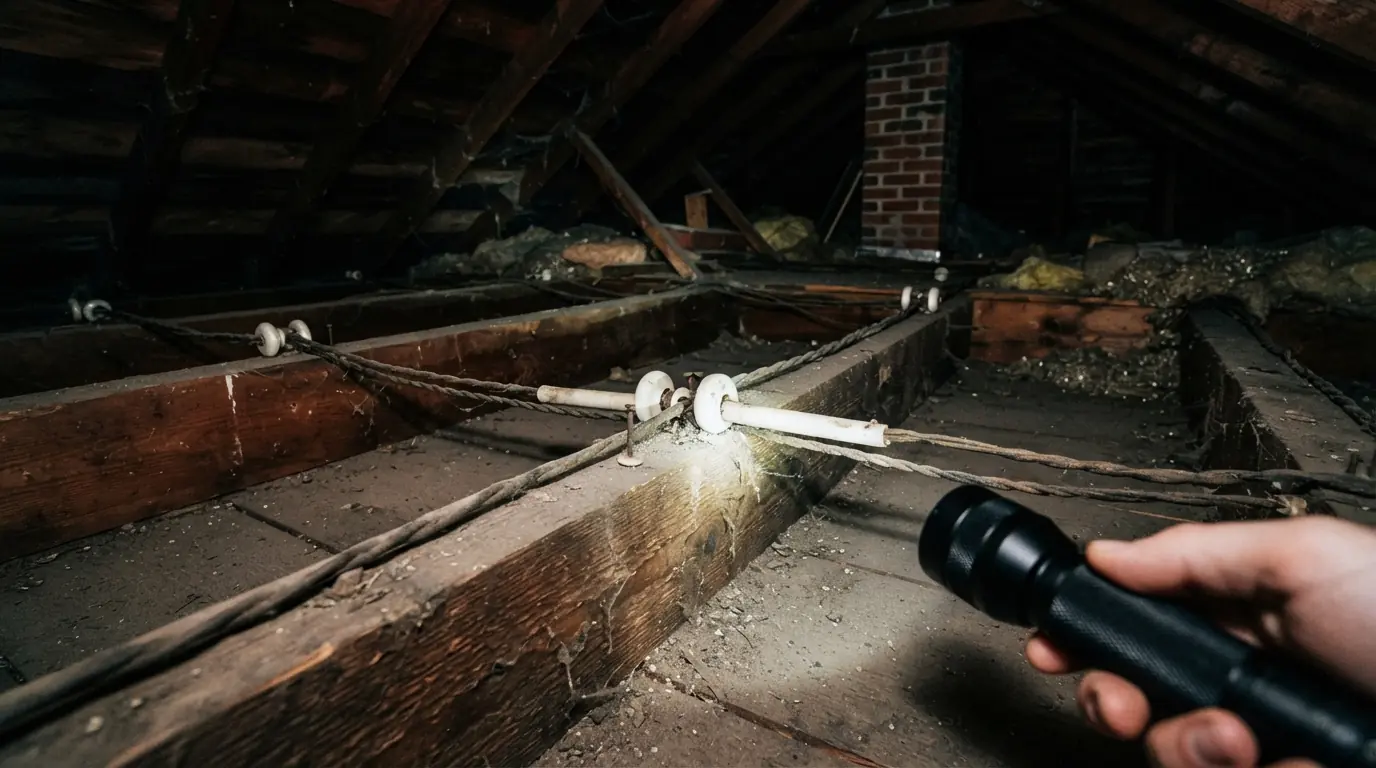
Knob and tube is the earliest wiring system in New York homes: single conductors on porcelain knobs and tubes, with no ground and insulation that has aged for a century. Replacing it means rewiring those circuits with grounded armored cable; published national figures put knob and tube rewiring at $10,000 to $30,000 when paired with a service upgrade on pre-1960 homes.
Updated September 2026
Knob and tube wasn't unsafe when it was installed. It becomes unsafe with age, with insulation packed around it, and with a century of splices added by whoever needed an outlet. It also has no ground, and many insurers won't write a policy on a house that still has it live.
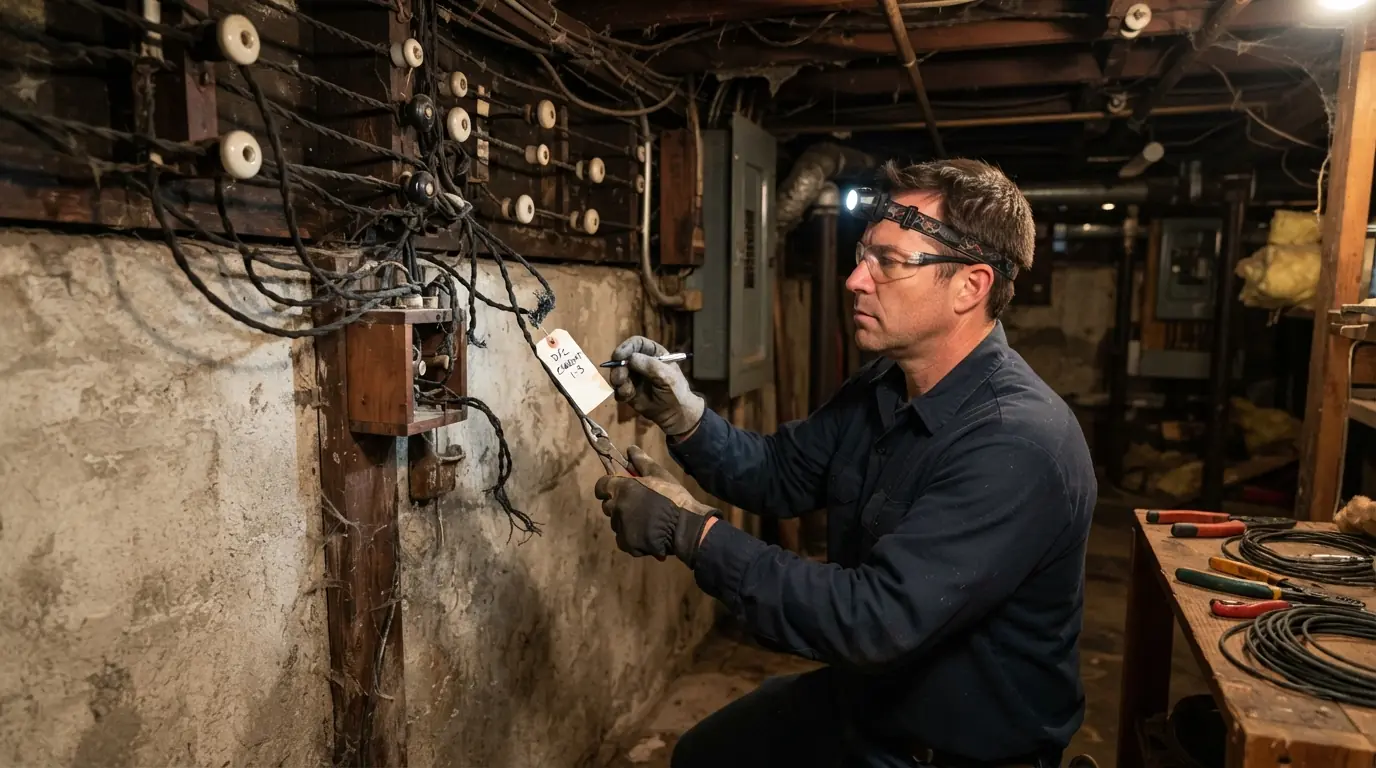
We find every live knob and tube run, replace those circuits with grounded cable, and disconnect and tag what's left so nobody mistakes it for live wiring later.
Full knob-and-tube removal
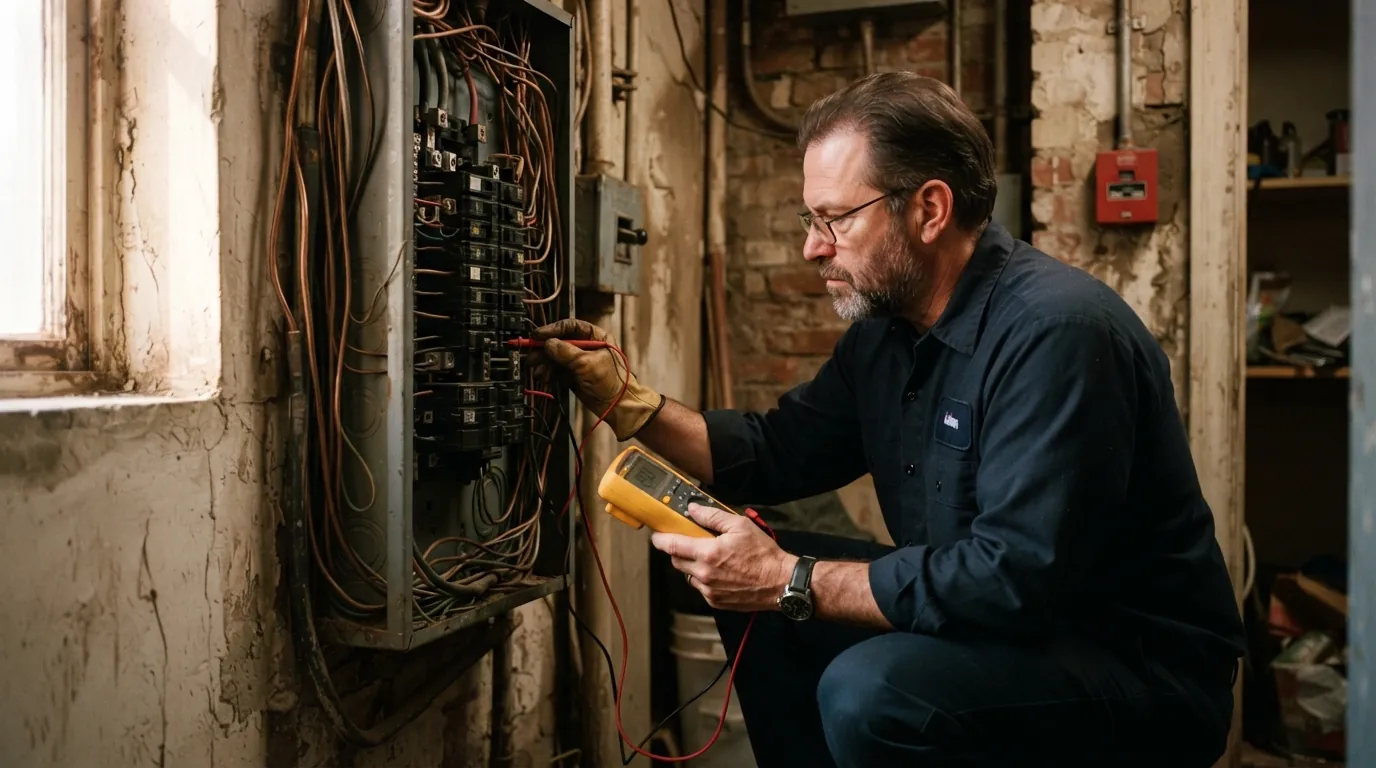
Full removal means every live knob and tube circuit is replaced and the old conductors are disconnected at both ends. Pulling the old wire out of the walls isn't required and often damages plaster, so abandoned runs are cut back, tagged and left in place where they're hidden. We trace each circuit from the panel or fuse box, confirm which runs are still live, and replace them in a planned order. The job usually pairs with a panel change, because knob and tube houses rarely still have an adequate service.
pre-1960 homes with 60-amp service: $4,000 to $8,000 upgrades, knob-and-tube rewiring adding $10,000 to $30,000. Source: caudills.com, 2026-01-26. Published market range for budgeting only, not our quote.
Insurance-driven replacements
Many insurers ask homeowners to remove knob and tube within a set period or decline coverage outright. What they usually want is a letter from the electrician stating that no live knob and tube remains, backed by the permit sign-off. We scope the job to what the insurer requires, complete it, and give you the documentation in a form their underwriters accept. If only part of the house has it, we'll show you where it is so you're not paying to rewire circuits that are already modern.
Working around plaster and lath
Knob and tube houses are plaster houses. The cavities are narrow, full of old blocking, and the lath doesn't forgive a careless cut. We route new cable through basements, attics and closets where we can, and cut small, square access holes at top and bottom plates where we can't. Those holes are placed so they patch cleanly behind trim or at the ceiling line. The goal is a house that needs a skim coat in a few places, not new walls or a replastered room.
Attic and basement runs
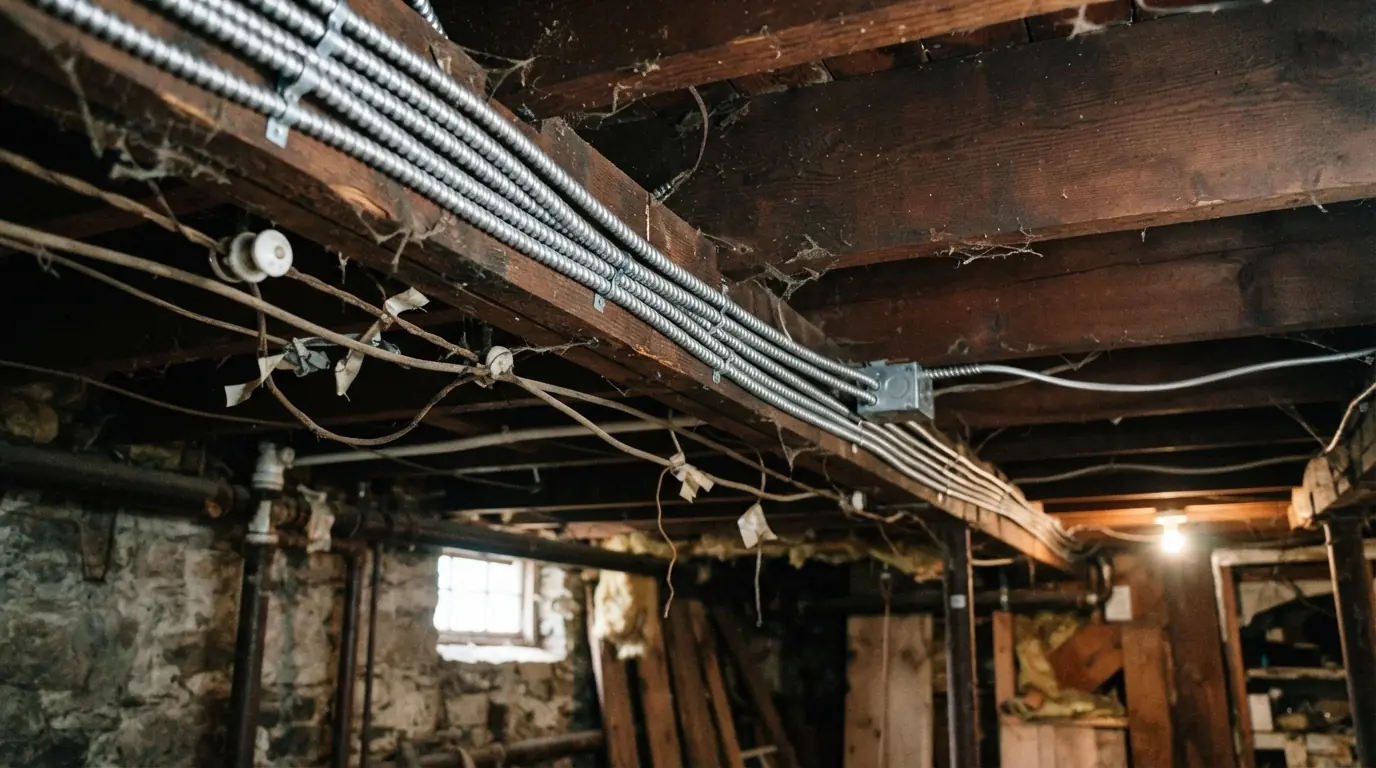
Attics are where knob and tube is most dangerous, because decades of insulation have been blown or laid over conductors designed to shed heat into open air. Basement runs get damaged by storage, water and whoever hung shelves from the joists. Both are also the easiest places to replace it, since the framing is exposed. We start there, reroute new circuits along the joists in protected runs, and clear the old conductors so future insulation work doesn't bury live wire or trap heat around it.
What moves the price
- How many circuits are still live on knob and tube
- Attic and basement access versus closed walls
- Plaster patching after access holes
- Panel or service upgrade at the same time
- Insulation that must be moved to reach old runs
- Documentation the insurer requires
- DOB permit and inspection
pre-1960 homes with 60-amp service: $4,000 to $8,000 upgrades, knob-and-tube rewiring adding $10,000 to $30,000. Source: caudills.com, 2026-01-26. Published market range for budgeting only, not our quote.
What you can check yourself
| Check | Safe to do | Call us if |
|---|---|---|
| Attic | Look with a flashlight, don't touch | You see porcelain knobs or tubes |
| Basement | Look along the joists | Single wires run on insulators |
| Outlets | Count two-prong outlets | Most of the house has them |
| Panel | Read the label | It's a fuse box |
What knob and tube replacement includes
- Every run traced and tested live or dead
- Written list of circuits to replace
- DOB permit filed before work
- New grounded armored cable on each circuit
- Old conductors disconnected and tagged at both ends
- Access holes placed for clean patching
- New grounded outlets and switches on replaced circuits
- Inspection scheduled and attended
- Completion letter for your insurer
What we see in New York buildings
Queens is where knob and tube tends to turn up. By 1960 about 63 percent of the borough's housing sat in one- and two-family structures, much of it built before modern wiring, and density since arrived through converted basements and partitioned attics. Those conversions are exactly where old runs get buried under insulation or spliced into new circuits, in blocks around Woodhaven, Richmond Hill, Kew Gardens and Jackson Heights.
What happens after you call
- 1
Trace and tag
Every knob and tube run found and tested live or dead.
- 2
Scope and permit
Live circuits listed, replacement plan written, permit filed.
- 3
Attic and basement first
New grounded runs along exposed framing.
- 4
Wall circuits through access holes
Armored cable fished, old conductors disconnected and tagged.
- 5
Inspection and letter
DOB sign-off plus a letter for your insurer.
Signs knob and tube is still live
Porcelain knobs in the attic
Single conductors on insulators.
Porcelain tubes through joists
The same system passing through framing.
Fuse box or 60-amp service
Common with original knob and tube.
Two-prong outlets everywhere
No ground on the circuits.
Insulation over old wiring
Heat can't escape the conductors.
Insurer asking about wiring type
Underwriting has flagged it.
Splices hanging in open air
Later additions tapped into old runs.
Questions about knob & tube wiring replacement in New York
Existing knob and tube isn't automatically illegal, but it has no ground and many insurers won't cover a house with it live.
Only where it's exposed. Hidden runs are disconnected, tagged and left in place so walls aren't torn open.
Yes, once live knob and tube is gone. That's one of the main reasons to remove it.
Look in the attic or basement for single wires on white porcelain knobs or through porcelain tubes.
Yes, once the work is complete and inspected.
Usually. Knob and tube houses often still have a fuse box or a small service.