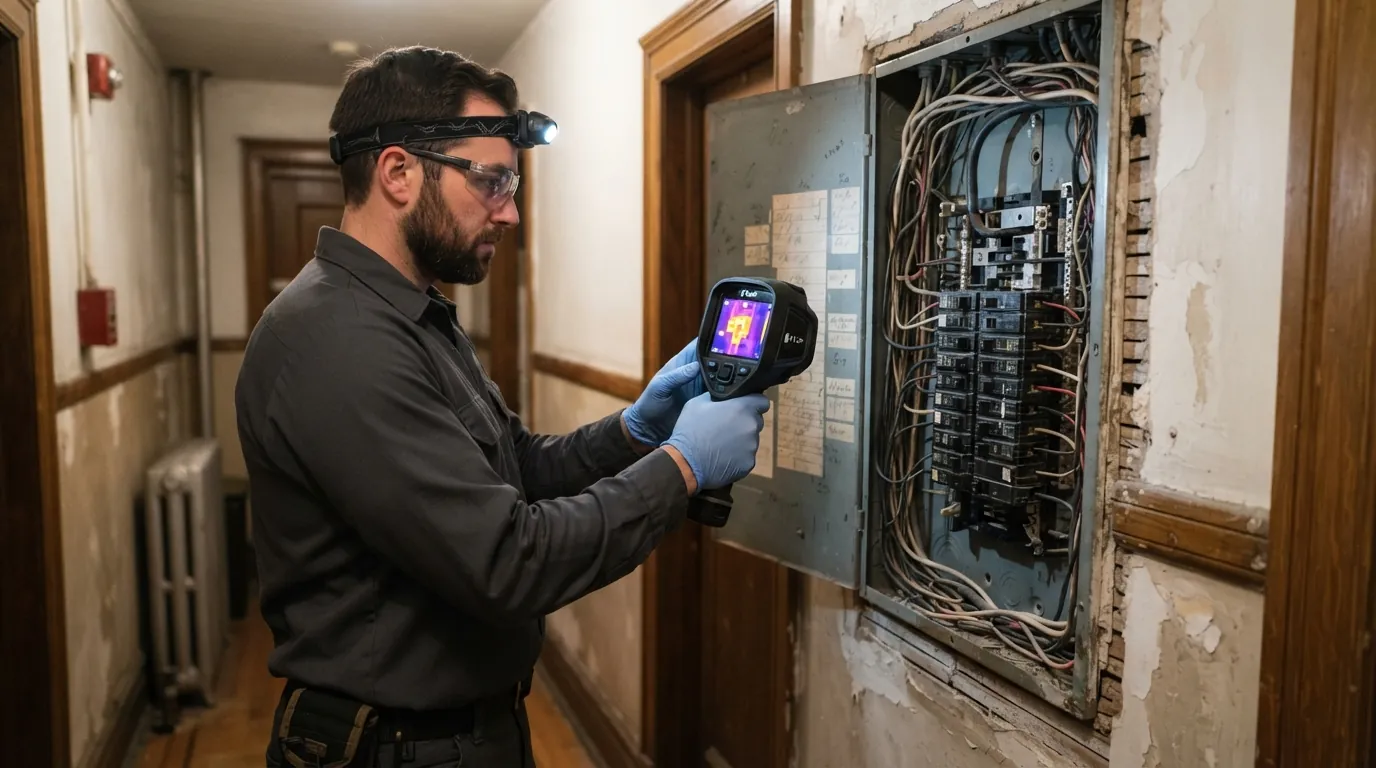
An electrical safety inspection in New York City is a visual and instrument check of the panel, branch circuits, grounding, GFCI and AFCI protection and smoke and CO detectors, ending in a written report that ranks what to fix now and what can wait. It isn't DOB permit work, and a typical NYC service call starts around $150 to $300.
What the inspection covers
- Panel brand, main size and condition
- Every accessible breaker and connection
- Grounding and bonding at the service
- Wiring type and visible condition
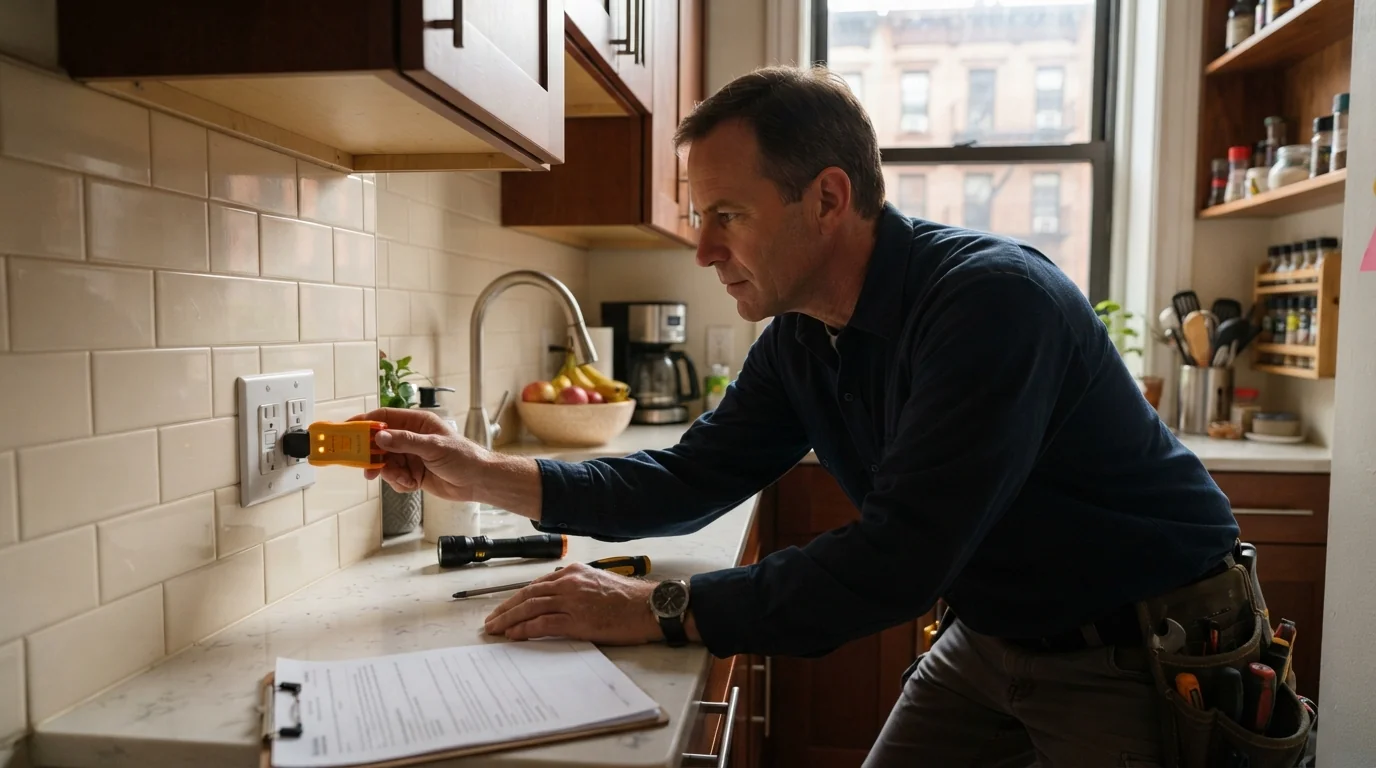
- GFCI protection in kitchens, baths and laundry
- AFCI protection where the code requires it
- Smoke and CO detectors tested
- Thermal scan of the panel under load
- Written report with photos and price ranges
Updated September 2026
Most people book an inspection because someone asked for one: a buyer's attorney, a co-op board, an insurer or a lender. The value is the same either way. You find out what's in the walls before it turns into an emergency call or a failed closing.
We open the panel, test a sample of every circuit type, scan connections for heat under load, and check detectors and protection devices against the 2025 code. The report separates safety items from upgrades so you can budget in the right order.
Pre-purchase and co-op board inspections
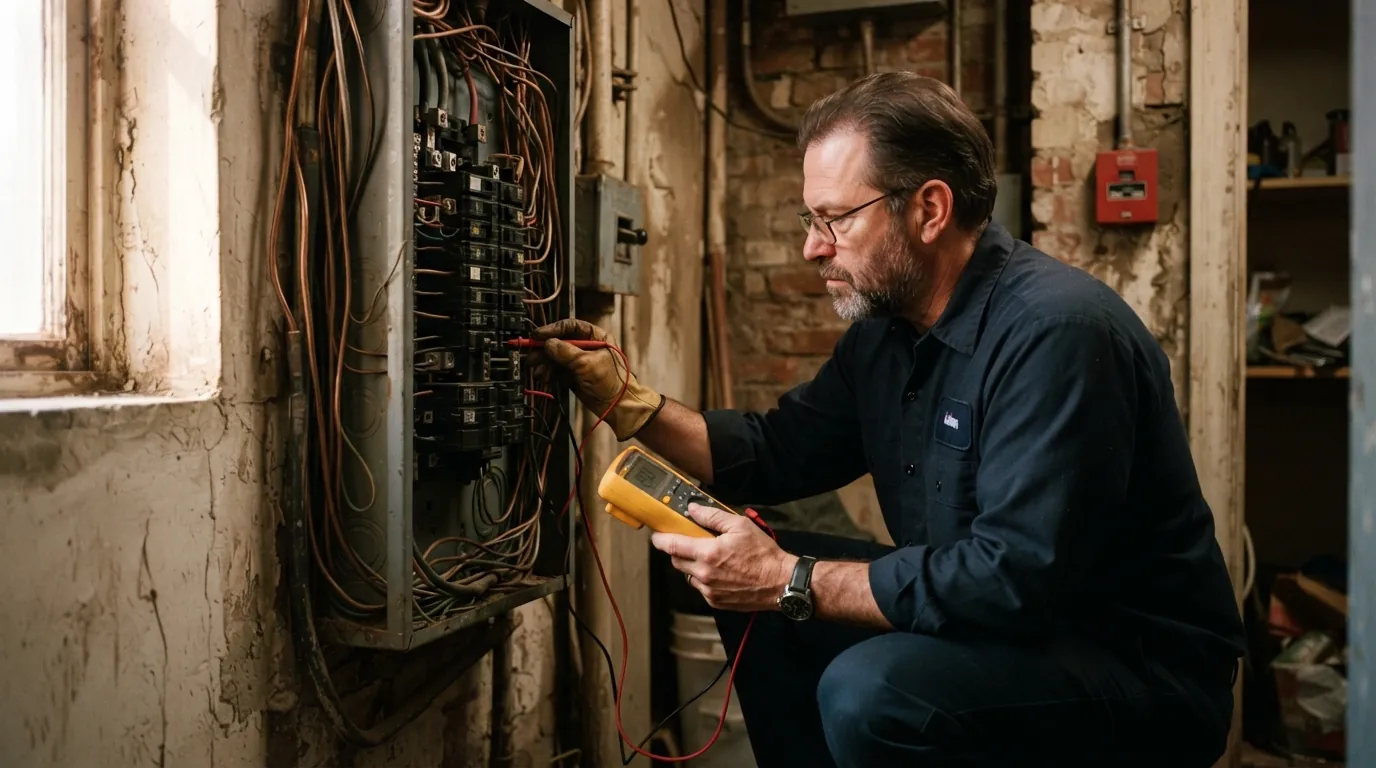
Buyers want to know whether the panel and wiring will carry what they plan to install, and boards want to know the unit won't overload a shared riser. We check the panel brand, the main size, the wiring type and the condition of every accessible connection, then note what a renovation would trigger. If the apartment will need a load letter for an induction range, a charger or new air conditioning, we say so in the report so the purchase price and the renovation budget reflect it.
$100 to $200 per hour standard; $200 to $400 per hour emergency or after hours; service call minimum $150 to $300. Source: aecontractorsnyc.com, 2026-09. Published market range for budgeting only, not our quote.
Insurance and rental turnover inspections
Insurers ask about fuse boxes, recalled panels, aluminum branch wiring and knob and tube, and a clean answer often decides the premium. Landlords turning over a unit want the outlets, detectors and protection devices working before the next tenant moves in. We check exactly the items the questionnaire or the lease covers, test every smoke and CO detector, confirm GFCI protection in kitchens and baths, and give you a signed summary you can attach to the file. If anything fails, the fix is priced on the spot.
Thermal scan of panels and connections
Loose and corroded connections don't show up until they fail, but they run hot long before that. With the main loads running, we scan the panel, the busbar, each breaker and the heaviest circuits with a thermal camera. A lug or breaker that runs noticeably warmer than its neighbors gets opened, torqued or replaced. The scan images go into the report, which gives an insurer or a board something more concrete than a checkbox. Cool, tight connections are noted as clean.
Written report and priority list
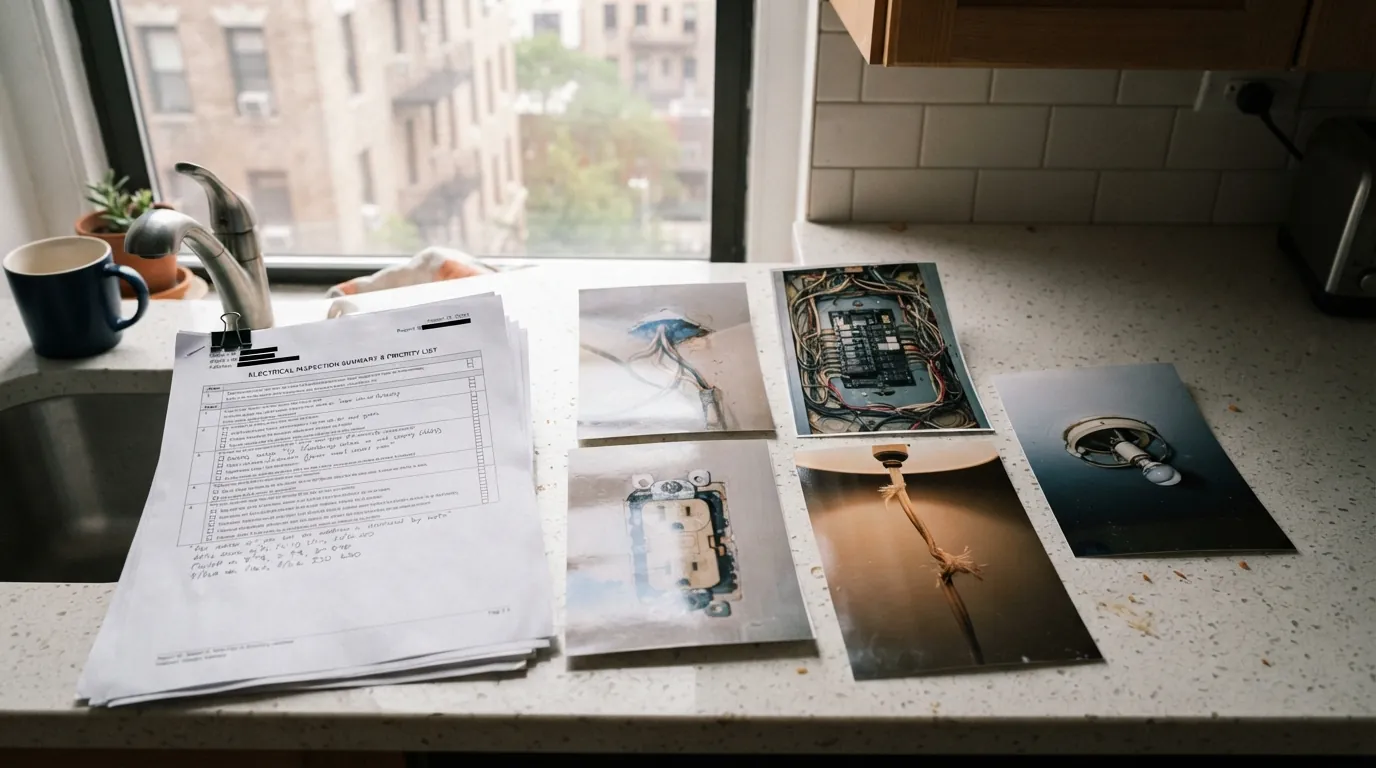
The report ranks every finding. Safety items come first: scorching, double taps, missing grounds, open junction boxes and anything a DOB inspector would flag. Code upgrades come second, and nice-to-haves last. Each item has a plain description, a photo where it helps and a price range for the fix. You can hand it to a seller, a board or a contractor, and you're under no obligation to have us do the work. Questions about any line are answered by phone at no charge.
What we see in New York buildings
More than 80 percent of New York City housing was built more than 50 years ago, and in Manhattan about 97 percent of units sit in buildings of six or more units. That combination is why an inspection here looks past the apartment: a sound unit panel can still be fed by an aging riser, and the building's shared equipment decides what a board will approve.
What happens after you call
- 1
Scope agreed
Buyer, board, insurer or landlord checklist confirmed on the call.
- 2
Panel and service checked
Cover off, brand and main size noted, every connection inspected.
- 3
Circuits and devices tested
Outlets, GFCI, AFCI and detectors tested room by room.
- 4
Thermal scan under load
Heavy loads running while we scan the panel and connections.
- 5
Report delivered
Ranked findings with photos and price ranges for each fix.
How soon you get the report
The site visit is usually one to two hours for an apartment and a half day for a large house. The written report follows within a day or two, faster when there's a closing or a board deadline. If we find something urgent on site, like a scorched connection or an overheating breaker, we tell you before we leave rather than waiting for the report.
What moves the price
- Size of the home or unit
- Number of panels and subpanels
- Thermal scan of loaded circuits
- Access to the panel, riser and meter
- Detector and protection-device testing
- Written report format the buyer or insurer needs
- Scheduling around a closing deadline
$100 to $200 per hour standard; $200 to $400 per hour emergency or after hours; service call minimum $150 to $300. Source: aecontractorsnyc.com, 2026-09. Published market range for budgeting only, not our quote.
Questions about electrical safety inspection in New York
No. A DOB inspection signs off permitted work. Ours is a condition report you can use for a sale, a board or an insurer.
Most apartments take one to two hours on site. Larger houses take longer.
Yes. Federal Pacific, Zinsco and similar panels are called out at the top of the report.
No. The report stands on its own, and any electrician can price from it.
Usually. Tell us the date when you call and we'll schedule around it.
Yes. Every detector is tested and noted in the report.