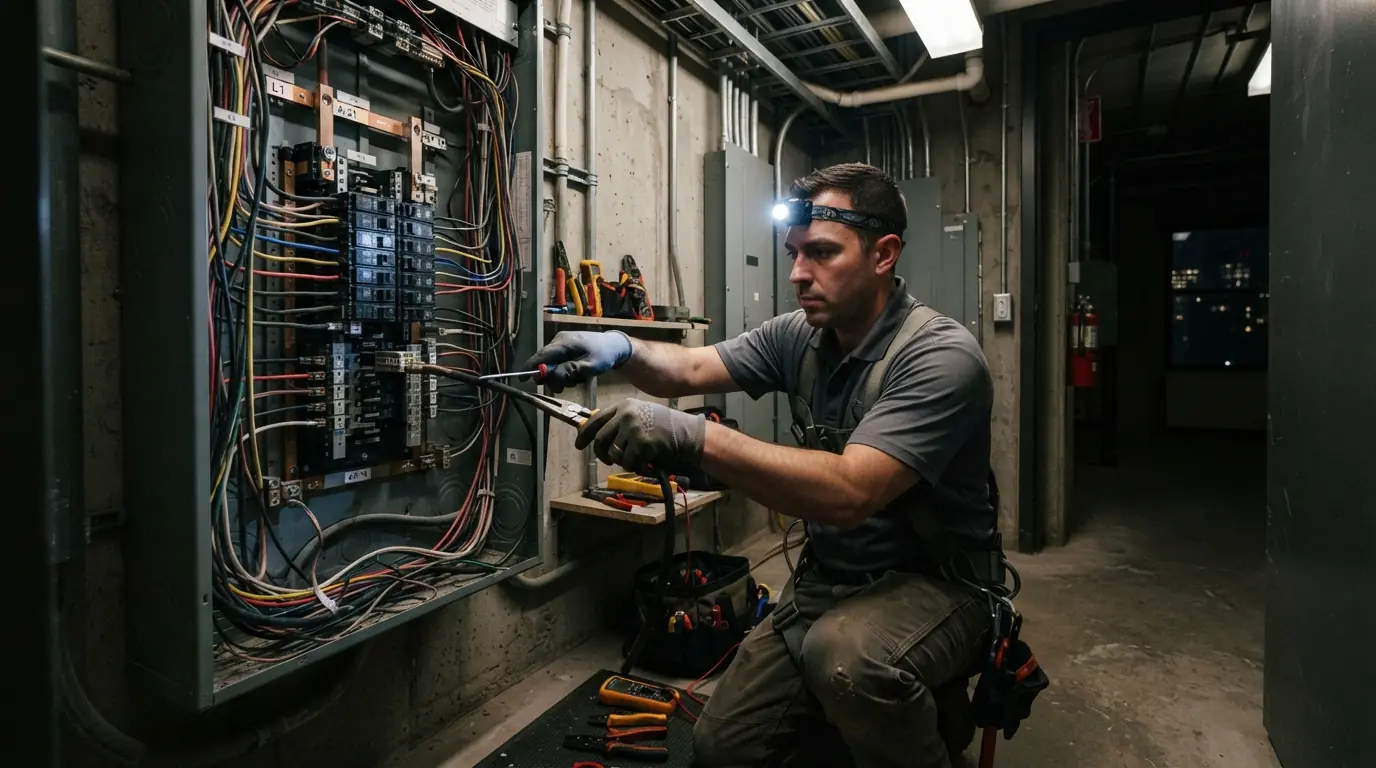
A commercial electrician in New York City handles power, lighting and distribution for offices, retail stores and mixed-use buildings, from emergency repairs to planned panel work and ongoing maintenance. Permitted work is filed with the DOB, and NYC service calls typically run $100 to $200 an hour standard and $200 to $400 after hours.
Updated September 2026
Commercial electrical problems cost money by the hour. A dark storefront or a floor without power is lost business, so the job is to find the fault fast and schedule the rest around the people using the space.
We work nights and weekends when the space is empty, coordinate with building management on shutdowns, and leave a written record of what was done for the landlord's files.
Call-out or ongoing service?
| Arrangement | Best for | What you get |
|---|---|---|
| Single call-out | Occasional repairs | Fix and a written record |
| Scheduled maintenance | Buildings with common areas | Periodic checks and testing |
| Portfolio arrangement | Several sites or tenants | One contact and priority response |
Office and retail electrical service
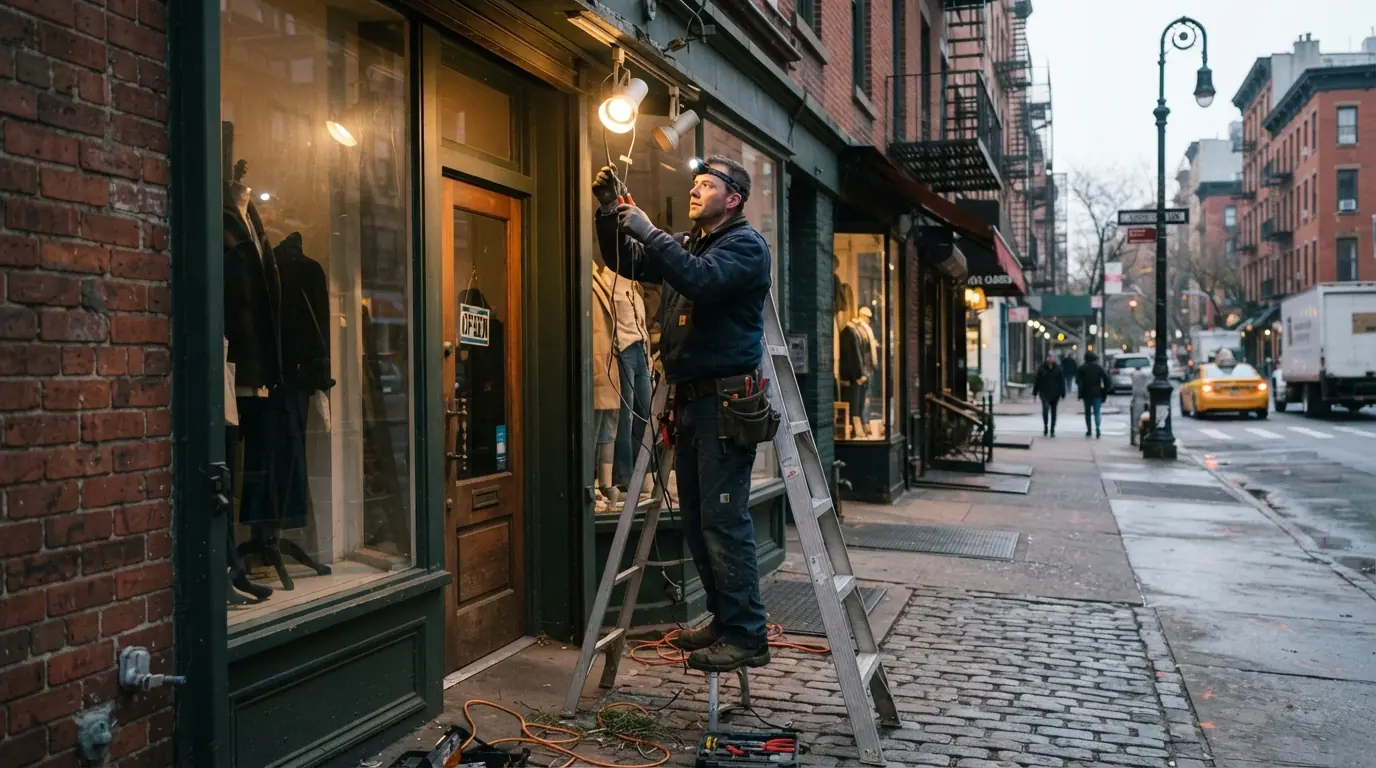
Offices and stores run on a mix of general power, dedicated circuits for equipment, lighting and signage. We add and move circuits for new workstations, point-of-sale counters and displays, install dedicated lines for copiers, servers and refrigeration cases, and repair storefront and sign lighting. Where a tenant space shares a panel with others, we coordinate with the building before any shutdown. Work is scheduled before opening or after closing, so customers and staff never see the electrician on the floor. Receipts and notes go to the manager the same day.
$100 to $200 per hour standard; $200 to $400 per hour emergency or after hours; service call minimum $150 to $300. Source: aecontractorsnyc.com, 2026-09. Published market range for budgeting only, not our quote.
Property maintenance contracts
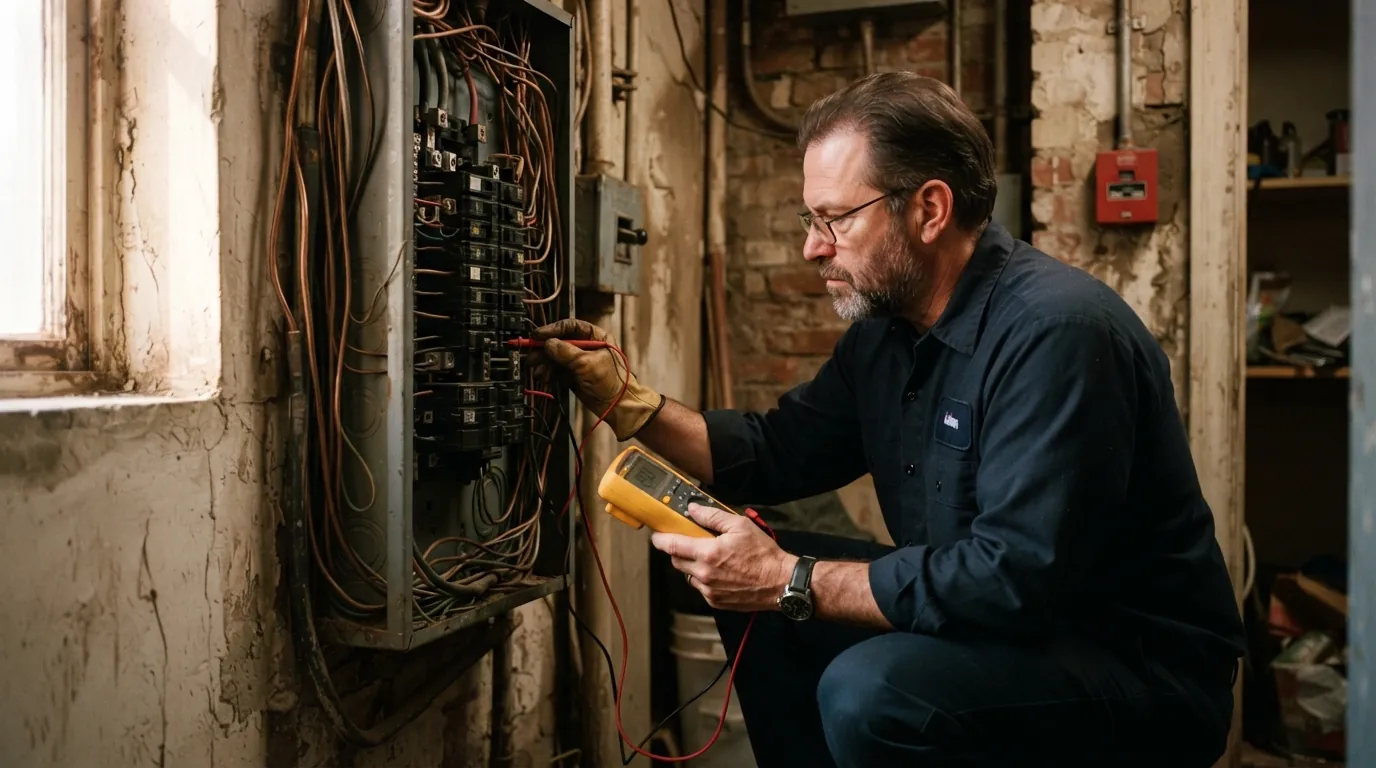
Property managers and owners with several buildings or tenant spaces often want one electrician on call rather than a new one for every problem. A maintenance arrangement covers scheduled checks of panels, emergency lighting, exit signs and common-area lighting, plus a standing priority for repairs. We keep records by building, flag items before they become violations, and give the manager one point of contact. The schedule and scope are set to your portfolio, not a fixed package. Emergency calls from covered buildings go straight to the front of the queue.
Power and lighting repairs
Commercial repairs are usually a failed breaker, an overloaded circuit, a loose connection at a busy outlet or a lighting driver that's given out. We trace the fault with the space occupied if we have to, isolate the affected circuit, and restore everything else first. Temporary power can keep a register, a refrigeration case or a server running while the permanent fix is made. Every repair is documented, which matters when the landlord or an insurer asks what happened. Photos of the fault go into the same record.
Panel and distribution work
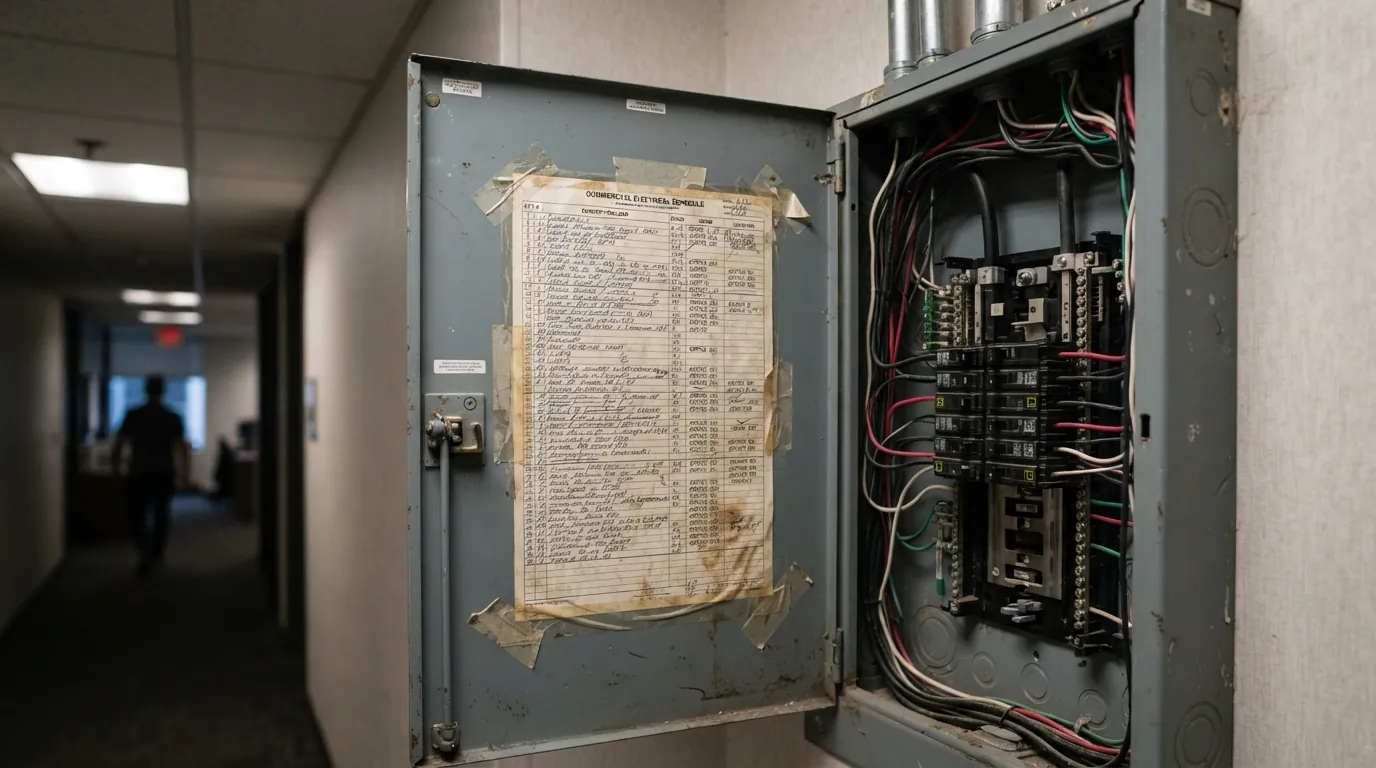
Commercial spaces often outgrow their panels as tenants add equipment. We survey the distribution, run a load calculation, and replace or add panels, transformers and feeders where they're needed. Shutdowns are planned with building management, usually overnight or on a weekend, and the work is filed with the DOB. Panel schedules are updated and labeled so the next time someone needs a breaker at 7 a.m. they can find it without a flashlight and a guess. Tenants get notice of any shutdown well ahead of the date.
What moves the price
- Emergency or scheduled visit
- After-hours and weekend scheduling
- Size of the space and number of circuits
- Panel, feeder or transformer work
- Building management shutdown requirements
- Permits and filings
- Maintenance arrangement across several sites
$100 to $200 per hour standard; $200 to $400 per hour emergency or after hours; service call minimum $150 to $300. Source: aecontractorsnyc.com, 2026-09. Published market range for budgeting only, not our quote.
What we see in New York buildings
Two city laws shape commercial electrical work here. Local Law 97 puts carbon caps on buildings over 25,000 square feet that tighten every five years, with annual fines. Local Law 88 required the same size buildings to bring lighting up to the energy code by January 1, 2025, and to sub-meter large tenant spaces. For owners and tenants, that makes lighting, controls and metering part of routine electrical planning.
What happens after you call
- 1
Call and triage
We find out what's down and what must stay running.
- 2
Scheduled around hours
Work set before opening, after closing or overnight.
- 3
Fault found and isolated
Affected circuits isolated; everything else restored first.
- 4
Repair or upgrade
Permanent fix made, filed where required.
- 5
Records left
Written notes for management and updated panel schedules.
Signs a commercial space needs attention
Breakers trip at peak hours
Circuits are loaded past their rating.
Warm panel or breaker
A connection is overheating.
Flickering fixtures
Failing drivers or loose connections.
Outlets dead after a move
Circuits weren't rebalanced for the new layout.
Exit signs dark
Battery or fixture has failed.
Burning smell in a closet
Stop and call immediately.
No panel schedule
Nobody knows which breaker feeds what.
Questions about commercial electrician in New York
Yes. Most commercial work is done before opening, after closing or overnight.
Yes. Shutdowns and access are arranged with the manager or super.
We set up ongoing arrangements scoped to your buildings.
Often, with temporary power while the fix is made.
Yes. Permitted work is filed with the DOB.
The line is answered 24/7 and emergencies are dispatched at any hour.