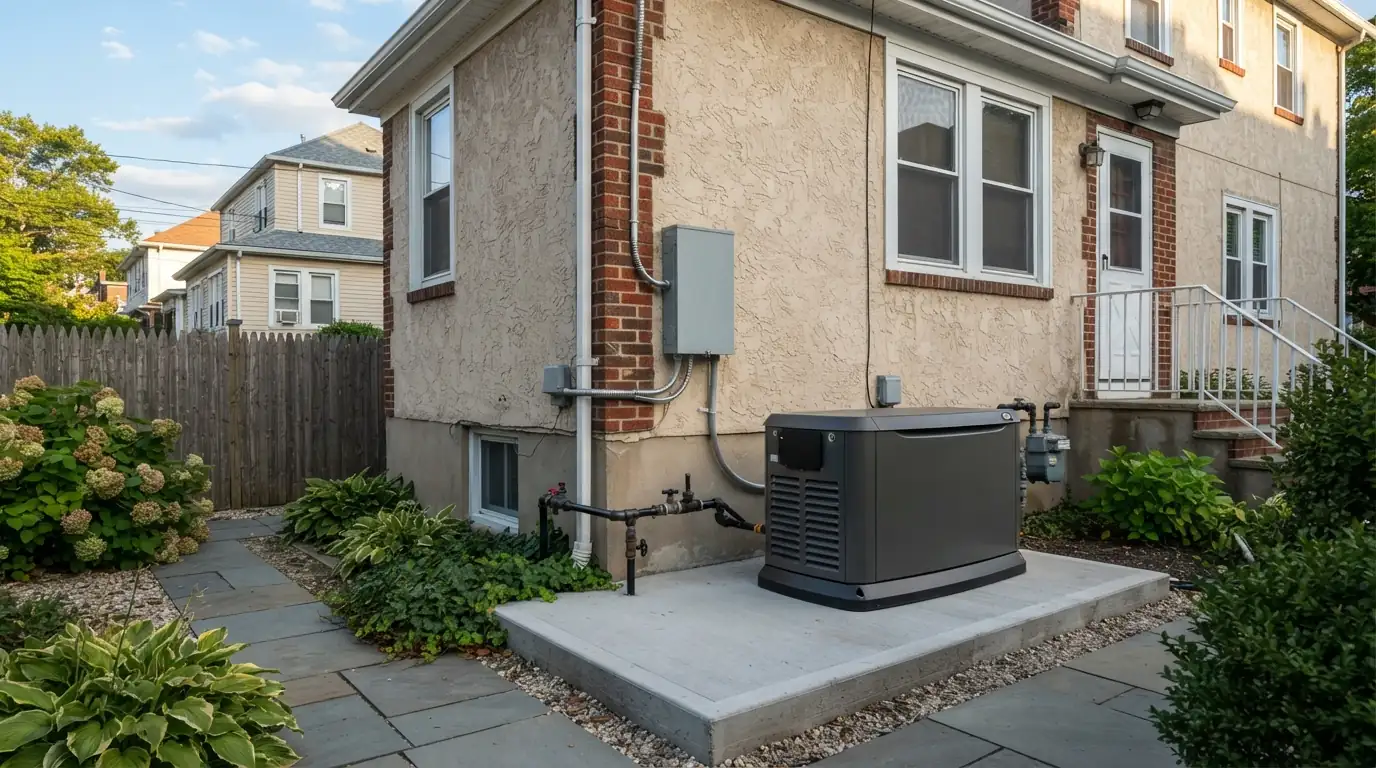
A standby generator in New York City is a permanently installed natural-gas or propane unit that starts on its own through an automatic transfer switch when the grid fails. It suits one- and two-family houses with outdoor space; national figures put the electrical installation labor at about $1,540 to $1,870, on top of the unit, the gas work and the pad.
Updated September 2026
Most apartments can't host a generator, but plenty of houses can. If you have a yard, a side setback or a driveway, and a gas service or room for propane, a standby unit is practical.
The generator is only half the job. The transfer switch decides what it powers and keeps it from backfeeding the grid, and it's where most of the electrical design sits. A portable generator with a proper inlet and interlock is the lower-cost alternative.
Standby or portable?
| Option | Best for | Trade-off |
|---|---|---|
| Whole-house standby | Houses that need everything running | Largest unit and highest cost |
| Load-managed standby | Most houses | Smaller unit; big loads shed automatically |
| Portable with inlet and interlock | Occasional outages, tighter budgets | Manual start and circuit selection |
Automatic transfer switches
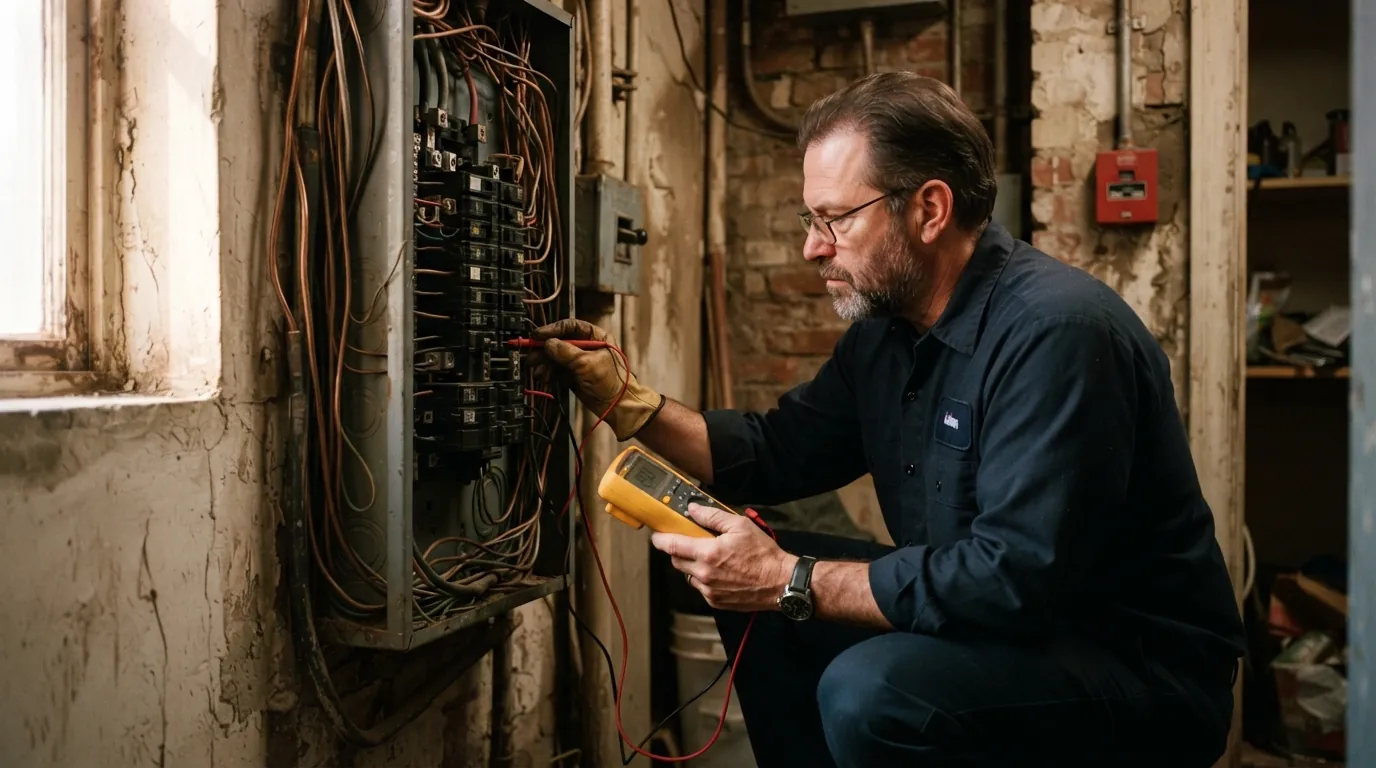
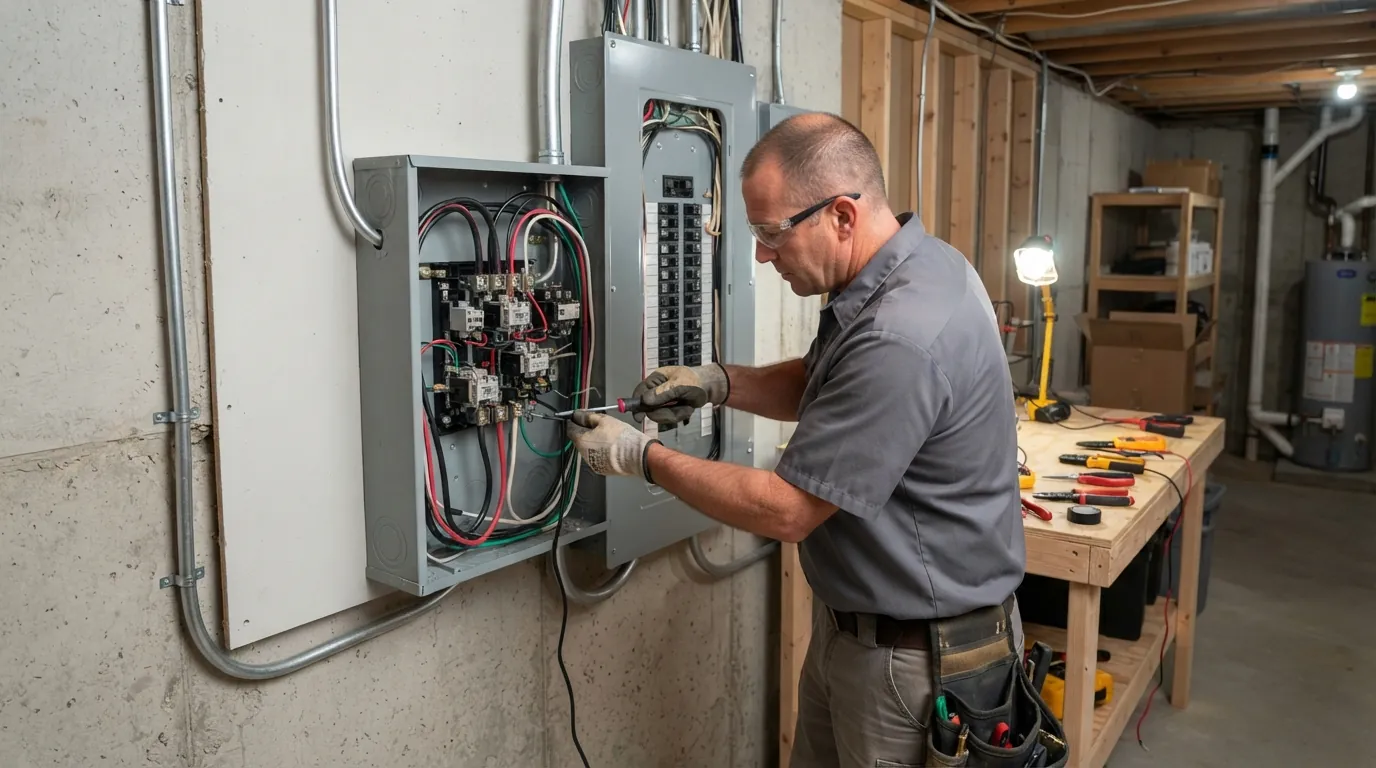
An automatic transfer switch senses the outage, signals the generator to start, and moves the load from the grid to the generator in seconds. When utility power returns it switches back and lets the generator cool down. Whole-house switches need a generator big enough for everything; load-managed switches shed big loads like the dryer or the AC so a smaller unit can carry the house. We size the switch and the generator together from your load calculation, not from the brochure. Undersized systems stall on a compressor start; oversized ones waste money.
$1,540 to $1,870 installation labor (HomeAdvisor national). Source: www.homeadvisor.com, 2025. Published market range for budgeting only, not our quote.
Portable generator inlets and interlocks
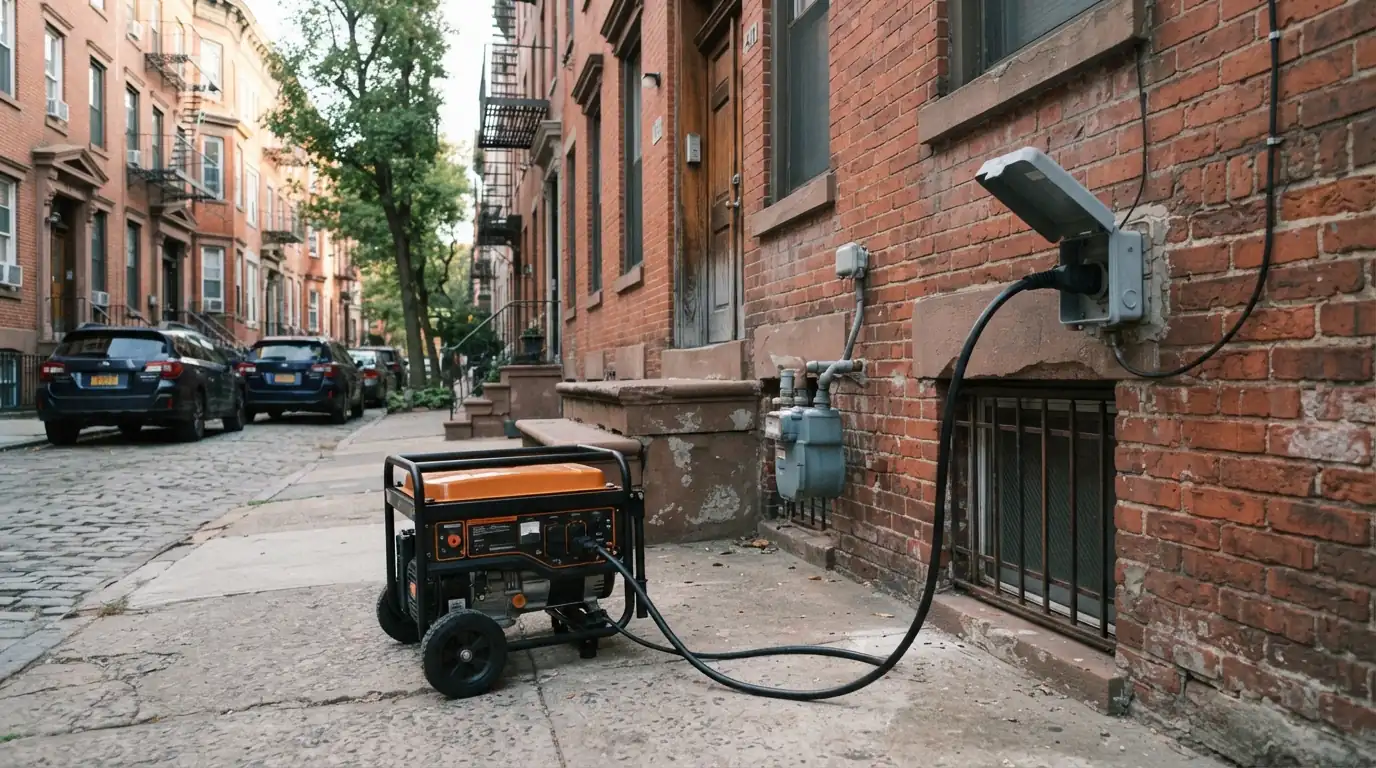
If a permanent unit isn't practical, a portable generator can still power the panel safely. We install a weatherproof inlet outside and a listed interlock kit on the panel, so the main must be off before the generator breaker can be turned on. That arrangement makes backfeeding the street impossible, which protects the utility crews working on the line. You choose which circuits to run by switching breakers, and the generator never has to come inside or near a window, where exhaust can reach the house.
Gas and propane unit coordination
A standby unit needs fuel, a level pad and clearances from windows, doors and property lines. We coordinate the pad location with you, run the electrical from the transfer switch to the unit, and work alongside the licensed plumber who handles the gas connection under a separate filing. On propane jobs, the tank size and location are set with the supplier. We schedule the trades so the unit can be started and tested the day everything is connected, with you there to see the transfer happen.
Annual generator service
Generators fail when they're needed most if they sit untested. An annual visit checks the battery, oil, filters and spark plugs, runs the unit under load through the transfer switch, and confirms the exercise cycle is set. We also look at the switch contacts and the connections in the panel for heat. It's a short visit, and it's the difference between a generator that starts at 2 a.m. in a storm and one that doesn't. We log each visit so the next one starts where the last left off.
What moves the price
- Generator size and fuel type
- Whole-house or load-managed transfer switch
- Distance from the unit to the panel
- Pad, clearances and site preparation
- Gas or propane work by the plumber
- Panel or service changes needed
- Electrical permit and inspection
$1,540 to $1,870 installation labor (HomeAdvisor national). Source: www.homeadvisor.com, 2025. Published market range for budgeting only, not our quote.
What a standby installation includes
- Load calculation and essential-circuit list
- Generator and transfer switch sized together
- Site check for pad location and clearances
- Electrical permit filed
- Transfer switch wired to the panel
- Feeder and control wiring to the unit
- Coordination with the gas plumber or propane supplier
- Live transfer test under load
- Weekly exercise schedule set
What we see in New York buildings
July 2026 made the case for backup power in the house boroughs. Heat-related outages concentrated in Queens with more than 15,000 customers, Brooklyn with more than 7,000 and Staten Island with more than 6,000, with Richmond Hill and Flushing among the hardest hit. The Fourth of July storms then left more than 2,300 Brooklyn and about 1,000 Queens customers still out late on July 5.
What happens after you call
- 1
Load and site review
Essential loads listed and the unit location checked for clearances.
- 2
System designed
Generator and transfer switch sized together from the load calculation.
- 3
Permits filed
Electrical filed by us; gas filed by the licensed plumber.
- 4
Installation
Pad set, transfer switch wired, unit connected and fueled.
- 5
Start-up and test
Live transfer test under load and exercise schedule set.
Questions about standby generator installation in New York
Almost never. Standby units need outdoor space and a fuel source, so they suit houses.
It depends on what you want to run. A load calculation sets it.
Yes, with a listed interlock that prevents backfeeding the grid.
A licensed plumber under a separate filing. We coordinate the schedule.
Most modern units run at conversation level at a distance, and exercise briefly once a week.
Yes. We test the unit and the transfer switch once a year.