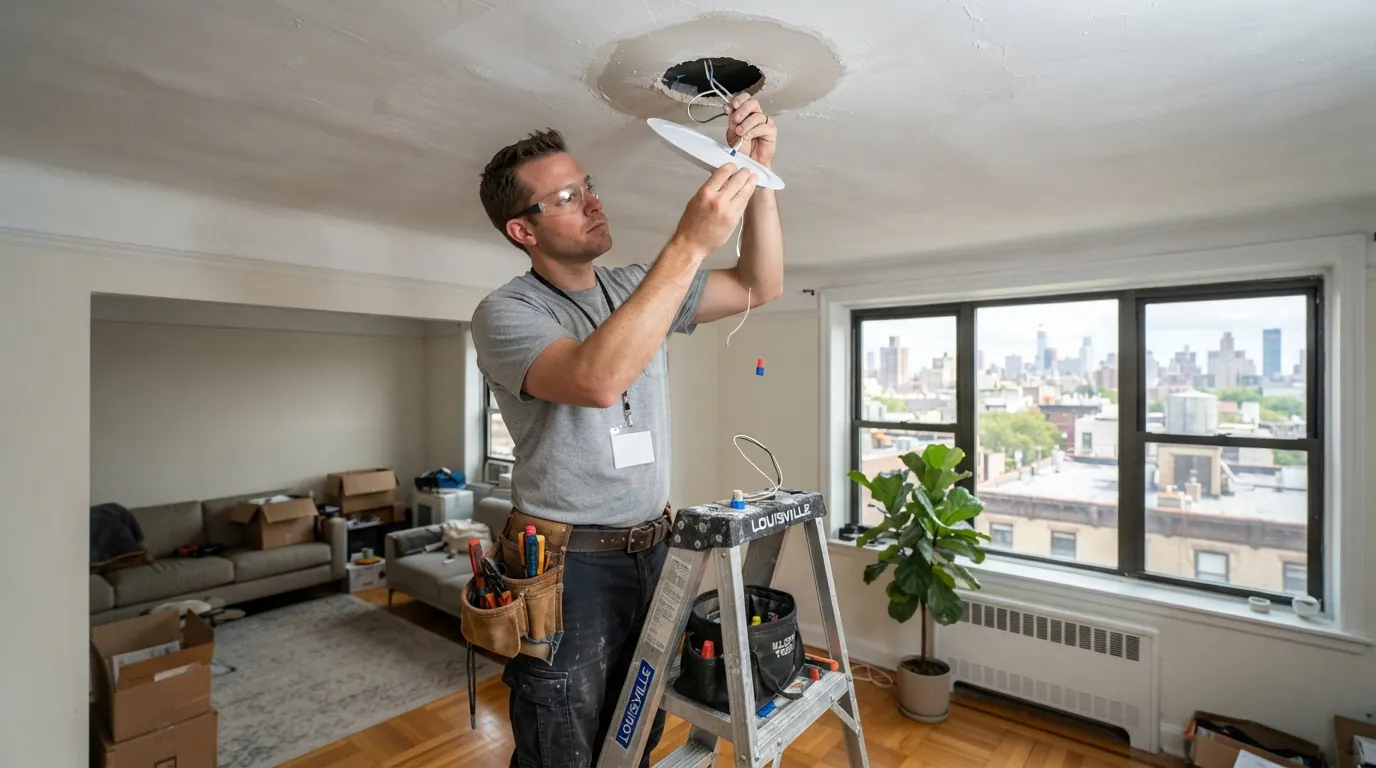
Recessed lighting in New York City is now mostly canless LED wafers: thin fixtures with a remote junction box that fit into shallow ceilings, which suits apartments with concrete slabs above plaster. National figures put light fixture installation at about $155 to $955 per fixture depending on access, and every new fixture in a home has to be high-efficacy.
Updated September 2026
Old-style cans needed deep ceilings and often wouldn't fit under a concrete slab. Canless wafers are about an inch thick, which makes recessed lighting possible in far more New York apartments.
The layout matters more than the fixture. We plan spacing from the room size and ceiling height, split lights into zones you'll actually switch separately, and choose dimmers matched to the drivers.
Canless LED wafer lights
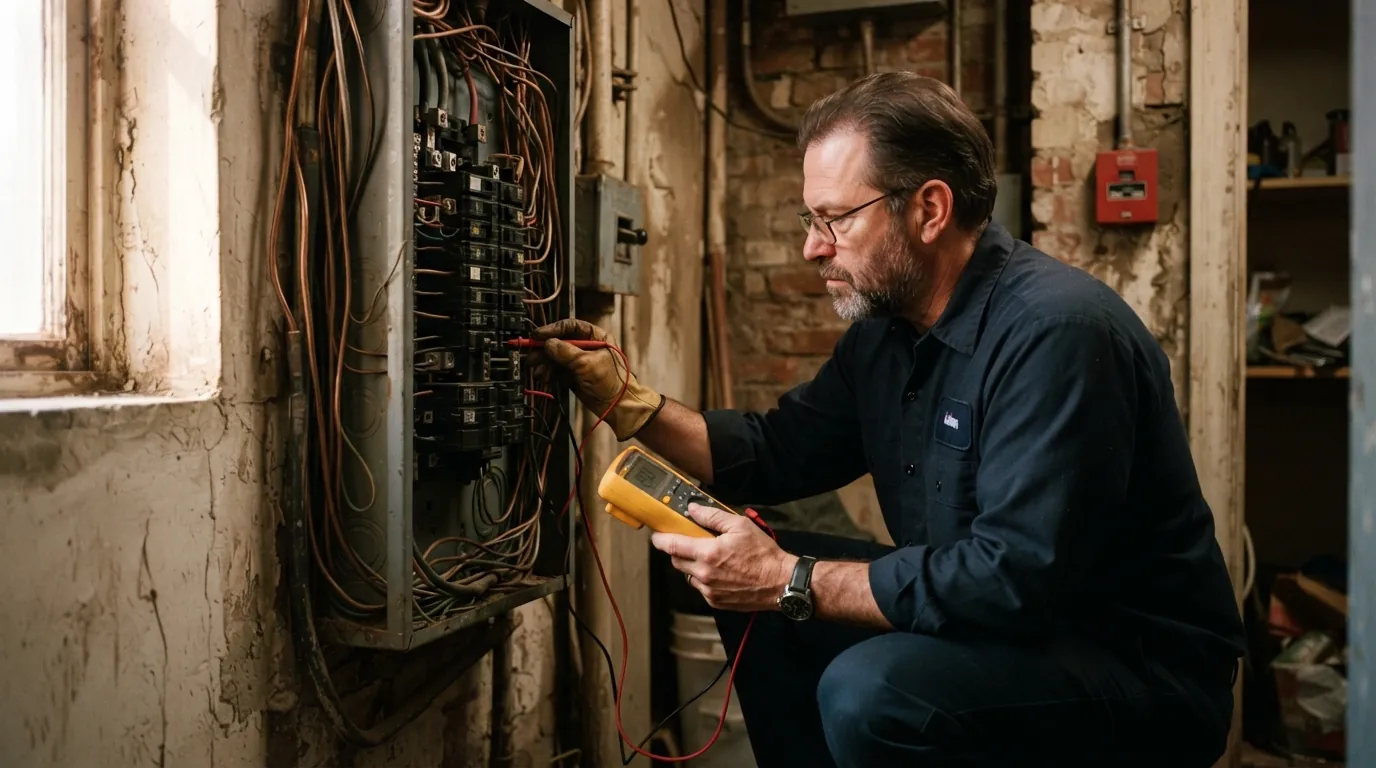
Canless wafers mount directly in the ceiling with spring clips, and their driver sits in a small junction box that passes through the same hole. They need only an inch or two of depth, run cool, and come in selectable color temperatures, so you can set warm light in bedrooms and a crisper tone in kitchens. Because each has its own junction box, they can be daisy-chained along a joist bay with less cutting than older cans required, which keeps ceiling repair to a minimum.
light fixture $155 to $955; ceiling fan $140 to $350; outlets $200 to $300; switches $85 to $200. Source: www.homeadvisor.com, 2025. Published market range for budgeting only, not our quote.
Retrofit into plaster ceilings
Plaster ceilings are harder to cut and to fish through than drywall, and they crack if they're treated like drywall. We score each opening, cut with the right blade, and support the lath around it. Cable is fished along the joists from hole to hole, and where a run has to cross joists we plan small access openings that land where the next fixture will cover them. The goal is a finished ceiling that needs touch-up paint, not replastering. Dust is contained with drop cloths and a vacuum at each hole.
Dimmer and zoning layout
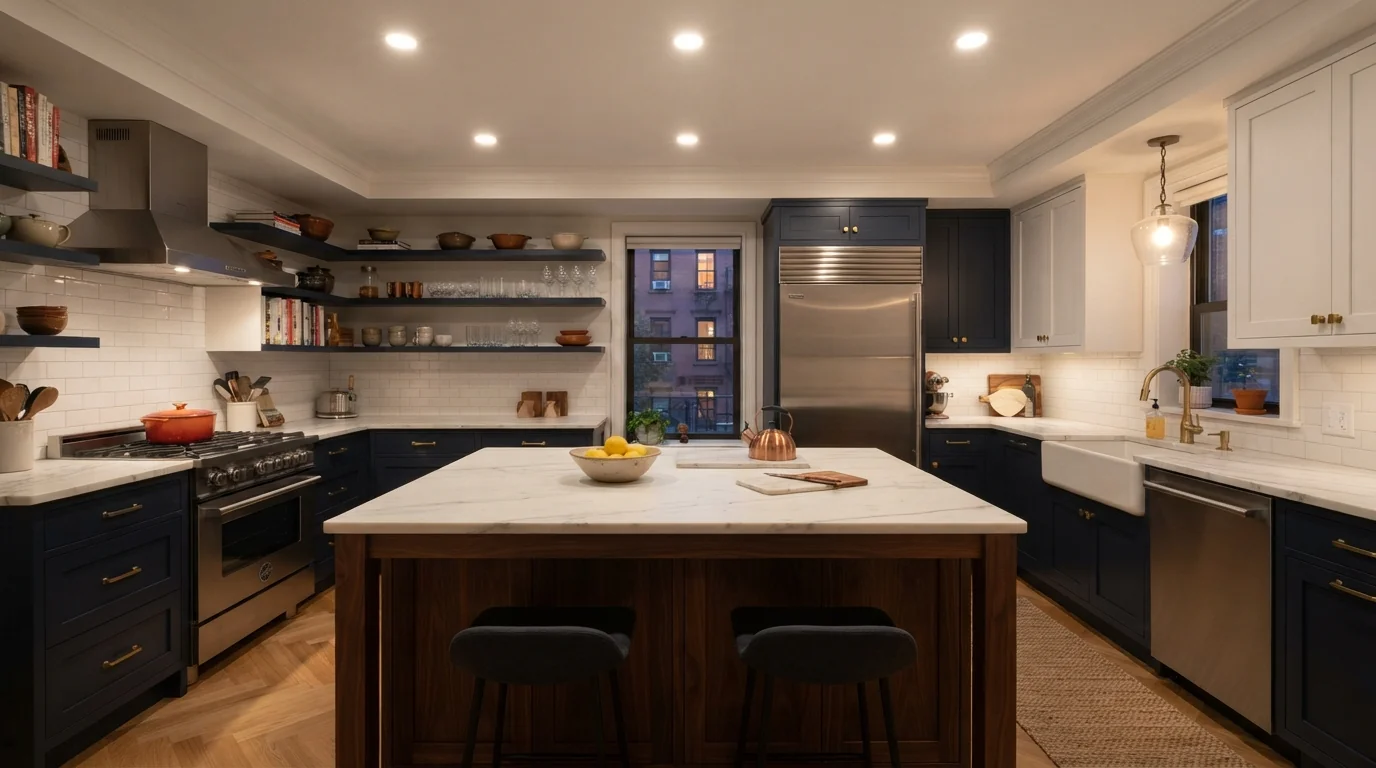
A kitchen might have three zones: perimeter lights, the island and the dining area. A living room might have general light and a wall-wash zone for art. We plan the zones with you, place the switches at the entries where you'd reach for them, and pick dimmers rated for the LED drivers so the lights dim smoothly without flicker or buzz. Where you want scenes or schedules, we set the zones up on smart dimmers from the start, so nothing has to be rewired later.
Sloped and insulated ceilings
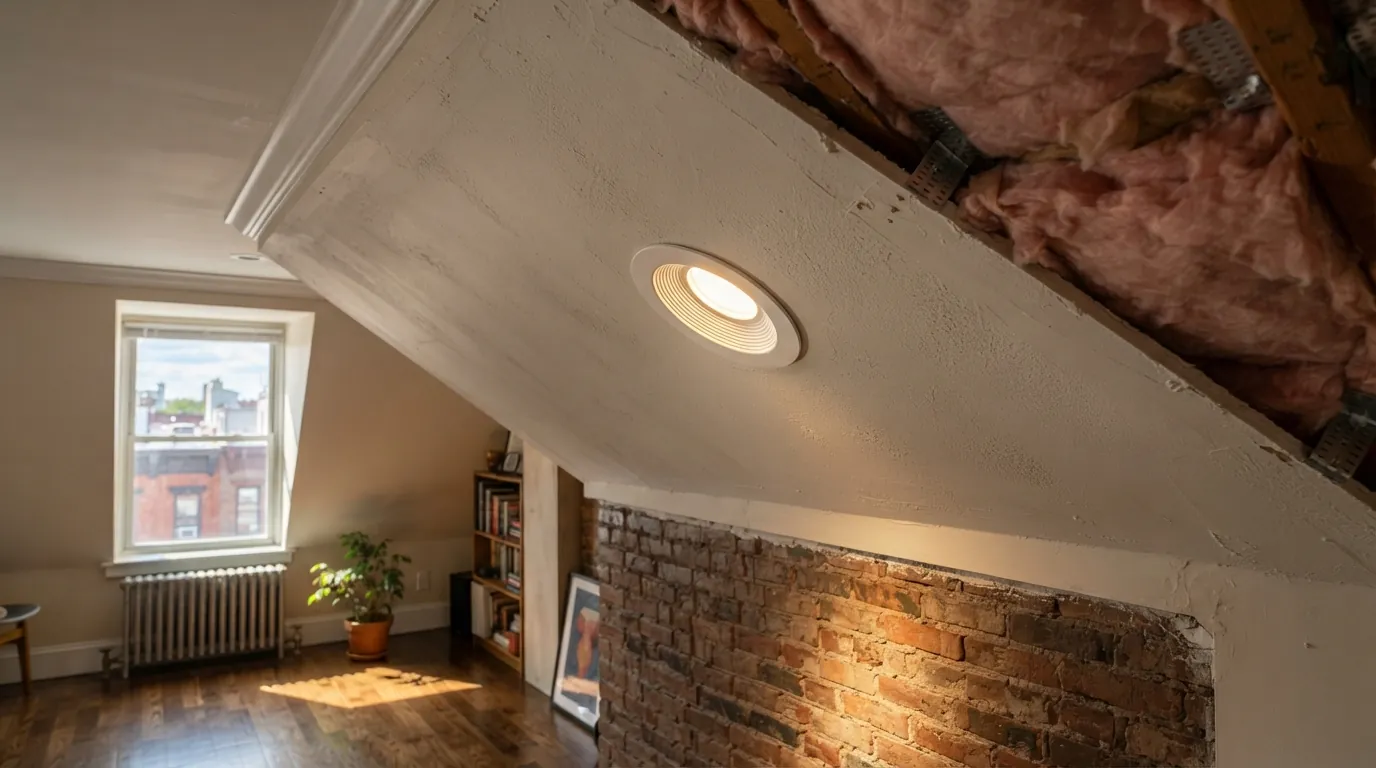
Top-floor apartments and houses often have sloped ceilings or insulation directly above the drywall. Recessed fixtures there need to be rated for insulation contact and airtight, so they don't become heat and air leaks, and sloped ceilings need trims that aim light down rather than at the wall. We check the ceiling assembly before choosing fixtures, use IC-rated airtight models where insulation is present, and seal the openings so the energy rating of the ceiling isn't compromised and drafts don't come through the fixtures.
What moves the price
- Number of fixtures and zones
- Plaster or drywall ceiling
- Ceiling depth and concrete slab above
- Access from an attic or the floor above
- Dimmers and smart controls
- IC-rated airtight fixtures for insulated ceilings
- Ceiling patching after the fish
light fixture $155 to $955; ceiling fan $140 to $350; outlets $200 to $300; switches $85 to $200. Source: www.homeadvisor.com, 2025. Published market range for budgeting only, not our quote.
What to decide before we cut
| Decision | Options | Why it matters |
|---|---|---|
| Color temperature | Warm (2700K) to cool (4000K) | Sets the feel of each room |
| Zones | One switch or several | Hard to add after ceilings are patched |
| Controls | Standard dimmer or smart | Some smart dimmers need a neutral |
| Trim | Round or square, flush or regressed | Matches the room's other fixtures |
What we see in New York buildings
New York City's energy code sets a firm rule for new home lighting. DOB guidance requires 100 percent of the permanently installed fixtures in residential buildings and dwelling units to be high-efficacy: lamps of at least 65 lumens per watt, or whole fixtures of at least 45. Current canless LED wafers meet that easily, which is why they have replaced older recessed cans on most apartment renovations here.
What happens after you call
- 1
Layout with you
Spacing and zones planned from the room and ceiling height.
- 2
Ceiling check
Depth, plaster, slab and insulation confirmed.
- 3
Cut and fish
Openings cut cleanly, cable fished along the joists.
- 4
Install fixtures and dimmers
Wafers set, zones wired, dimmers matched to drivers.
- 5
Test and aim
Every zone tested and color temperature set.
How long a recessed lighting job takes
A typical room of six to eight wafers takes most of a day, including cutting, fishing and dimmers. Plaster ceilings and rooms with joists running the wrong way take longer. A full apartment is usually two to three days. We schedule painting after the install, since touch-up around the openings is the last step.
Brands we install and service include Square D and Eaton panels, Leviton and Lutron devices, and Tesla and ChargePoint chargers.
Questions about recessed lighting installation in New York
Often, with thin canless wafers that need only an inch or two of depth.
We cut and fish carefully. Expect touch-up, not replastering.
It depends on size and ceiling height. We lay it out with you.
The dimmer usually isn't matched to the LED drivers.
Many wafers have a switch for warm to cool color temperature.
New circuits and larger lighting jobs do. We tell you what applies.