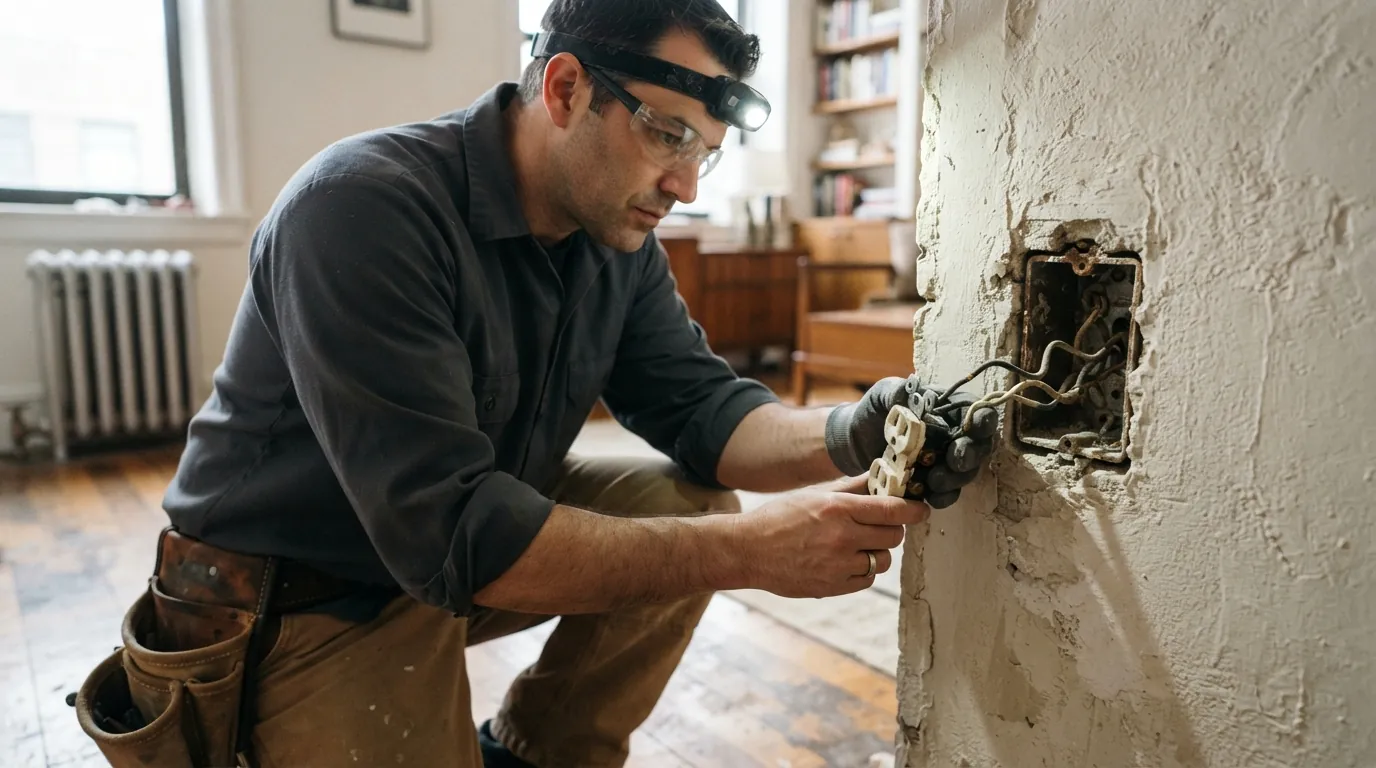
Electrical repair in a New York City starts at the panel, because most symptoms in a room trace back to a loose neutral, a failed breaker or an overloaded circuit rather than the device you can see. We meter the circuit, open the panel and the last working device, and replace only what's actually failed.
Signs it is time to call
Outlet dead, breaker fine
A tripped GFCI or a failed connection upstream.
Lights flicker when a motor starts
Loose neutral or overloaded circuit.
Breaker warm to the touch
Arcing or overload at the breaker. Shut it off.
Buzzing at a switch or panel
Arcing. Stop using that circuit.
Cover plates discolored
Heat behind the device.
Outlet holds plugs loosely
Worn contacts that arc under load.
Intermittent power in one room
A broken conductor or a chewed cable in the wall.
Updated September 2026
A dead outlet is rarely a dead outlet. It's usually the device upstream on the same circuit, a backstabbed connection that let go, or a GFCI in another room that tripped. Chasing it from the wrong end wastes an hour, so we start with a circuit map from the panel.
Older New York wiring adds its own faults: cloth-covered cable with brittle insulation, ungrounded two-wire circuits, and boxes packed past their fill limit by decades of additions. Repairing those correctly means a rated box and new cable, not tape.
Like-for-like device and breaker repairs don't need a DOB inspection. When the repair grows into a new circuit or a rewired run, we file the permit and tell you before the scope changes.
Dead outlets and switches
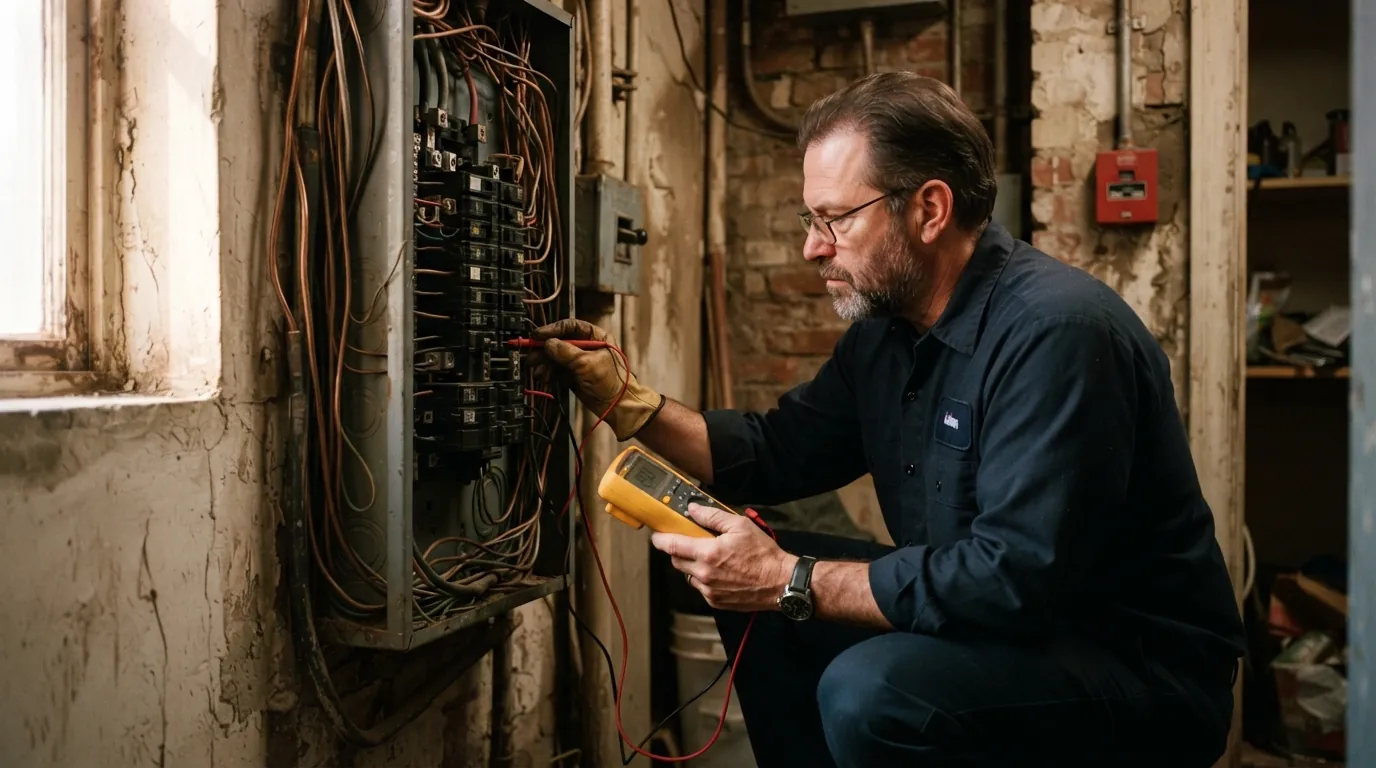
We check the breaker, then the GFCI outlets in the kitchen, bathrooms and basement, since a tripped one kills everything downstream of it. If those are fine, we open the dead device and the last working one on the circuit and look for a failed backstab connection or a broken neutral. The fix is a new device wired to the screw terminals, or a replaced section of cable if the conductor has broken inside the box. Two-prong outlets get replaced with grounded or GFCI-protected ones rather than another two-prong.
Flickering or dimming lights
Lights that flicker across the whole apartment when a motor starts point to a loose neutral at the panel or the meter, and that's a fault that can burn out electronics. Flicker on one circuit is usually a bad connection at a switch or a dimmer that doesn't match the LED bulbs. We meter voltage at the panel under load, tighten or replace the neutral connection, and swap incompatible dimmers. If the sag shows up on both legs at once, the problem is upstream and may be Con Edison's.
Buzzing panel or hot breaker
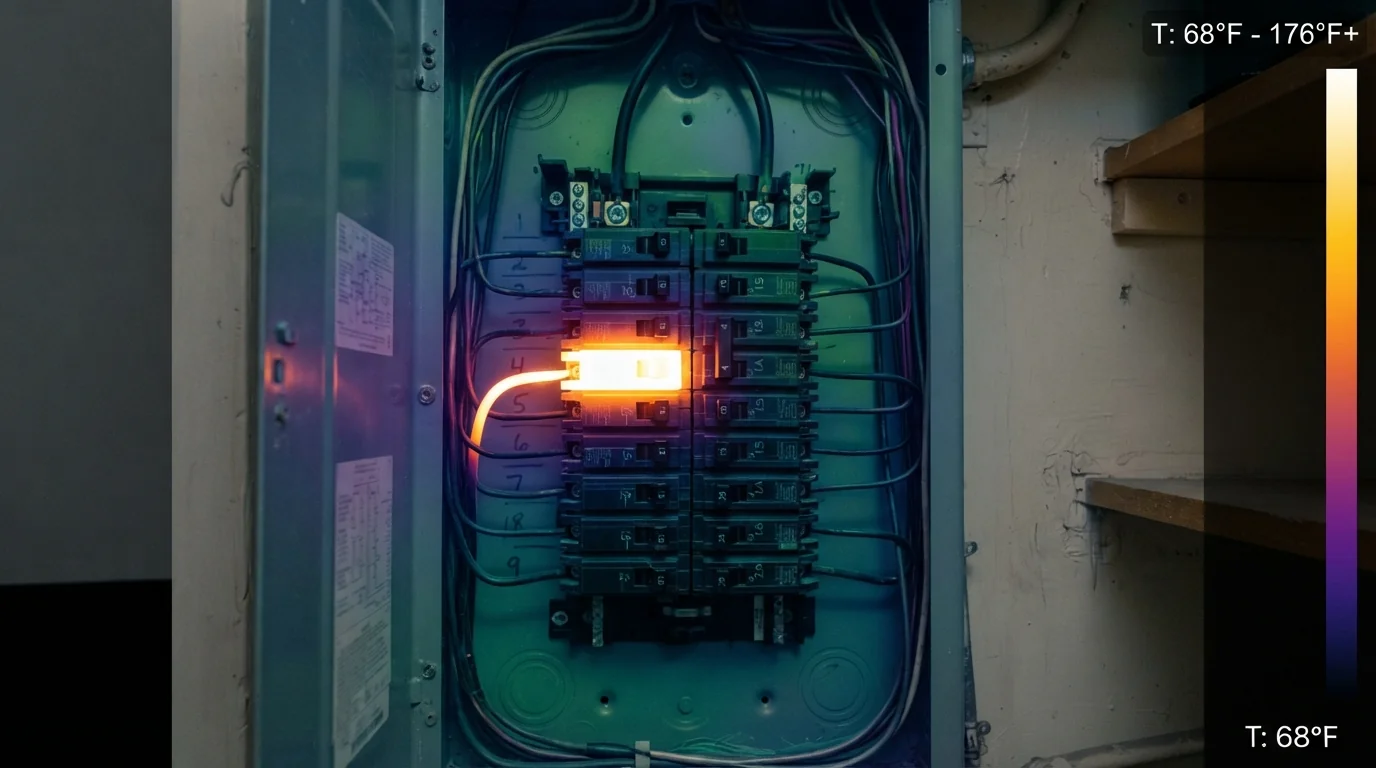
A breaker that's warm to the touch, or a panel that hums, is arcing at a connection or carrying more than its rating. We shut it down, scan the panel with a thermal camera, and re-terminate or replace the breaker and any pitted bus stab. A breaker that has run hot for months has usually annealed its spring and won't trip reliably, so it gets replaced rather than reset. If the bus itself is damaged, that's the point where a repair becomes a panel replacement.
average $1,535, most paying $751 to $2,323; a few breakers as low as $200; labor $1,000 to $4,500 at $50 to $150 per hour. Source: www.angi.com, 2026-07-08. Published market range for budgeting only, not our quote.
Loose or damaged wiring
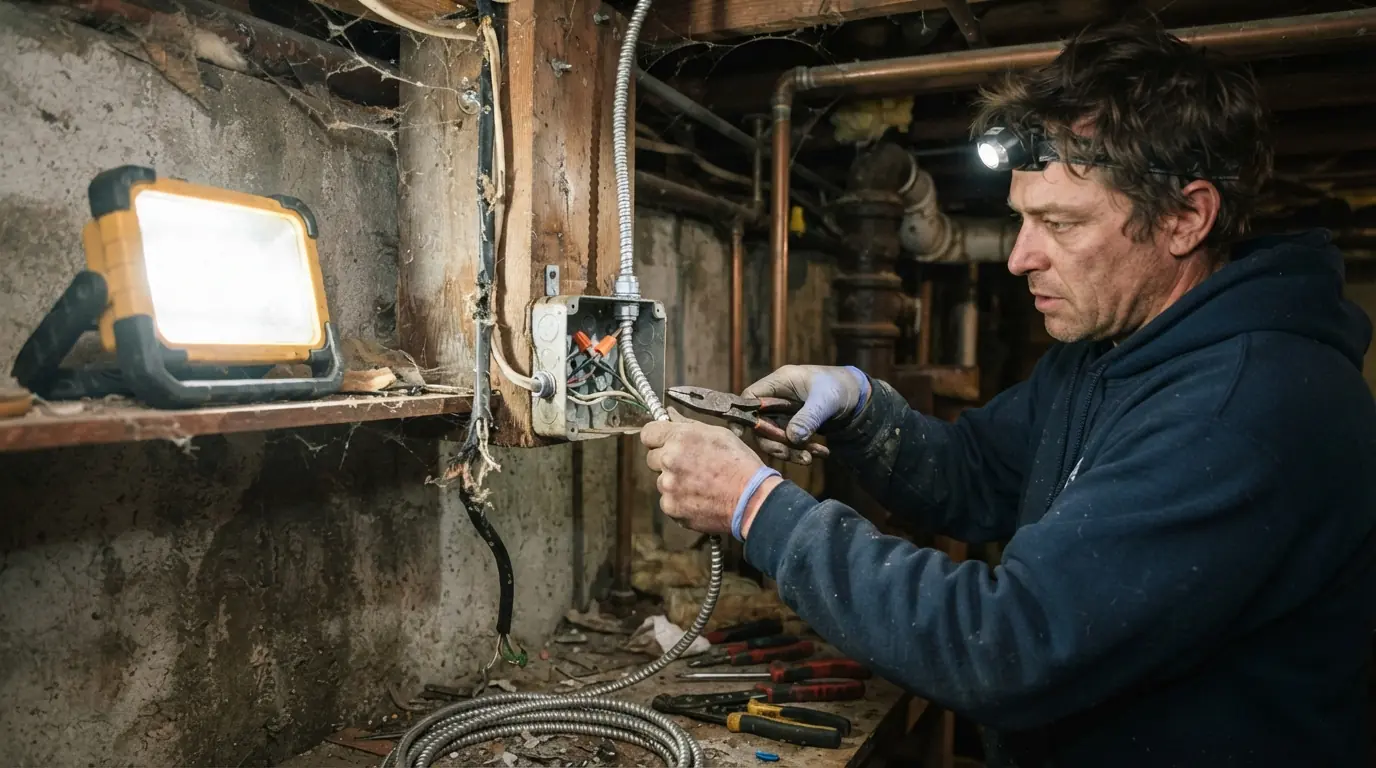
Exposed cable in a basement, a junction box with no cover, a fixture hanging on its wires, or a cable someone ran with lamp cord. We bring each one back to code with armored cable, a rated box and a cover, and secure the run properly. Rodent damage in basements and ceiling voids is common and shows up as chewed jackets and intermittent faults; we replace the damaged section end to end rather than splicing in the middle of a run, then seal the entry points we find.
What happens after you call
- 1
Describe the symptom
Which rooms, which devices, and whether it comes and goes. That narrows the circuit before we arrive.
- 2
Circuit mapped at the panel
We identify the circuit and meter it under load.
- 3
Fault located
Devices opened in order from the panel outward until the bad connection or break is found.
- 4
Repaired to code
New device, cable or box as needed, wired to screw terminals and secured.
- 5
Circuit tested and labeled
Every device on the run tested, the panel directory updated.
What we see in New York buildings
More than 80 percent of New York City's housing was built over 50 years ago, roughly three million units, so the wiring we repair most often predates grounded outlets, GFCI protection and the breaker itself. Like-for-like replacements of breakers 30 amps and under still count as regulated electrical work but skip the DOB inspection, which is why a fast repair is possible; the moment a repair needs a new circuit, the permit comes first.
What moves the price
- Whether the fault is a device, a connection or a run of cable
- Number of devices on the circuit that have to be opened to find it
- Plaster and lath walls versus drywall access
- Ungrounded circuits that need GFCI protection to be brought to code
- Panel condition, if the fault is at a breaker or bus
- After-hours versus scheduled visit
- Any DOB filing if the repair becomes new work
GFCI replacement about $100 to $200; standard outlet $100 to $150; three-way switch $200 to $225; 220V outlet $120 to $170. Source: www.homeyou.com, 2026-06-14. Published market range for budgeting only, not our quote.
Questions about electrical repair in New York
Usually a GFCI in another room, a failed backstab connection upstream, or a broken neutral. We trace it from the panel.
Most single-circuit flicker, yes. A loose neutral at the meter may need Con Edison and gets scheduled.
Like-for-like device and small breaker swaps don't need a DOB inspection. New circuits and rewired runs do, and we file them.
Yes. It's arcing or overloaded. Shut it off and call; running it hot for months damages the panel.
We replace them with grounded outlets where a ground exists, or GFCI-protected ones where it doesn't.
You're told the rate before we're dispatched. Small repairs like a GFCI or outlet swap are quoted on site once the fault is found.