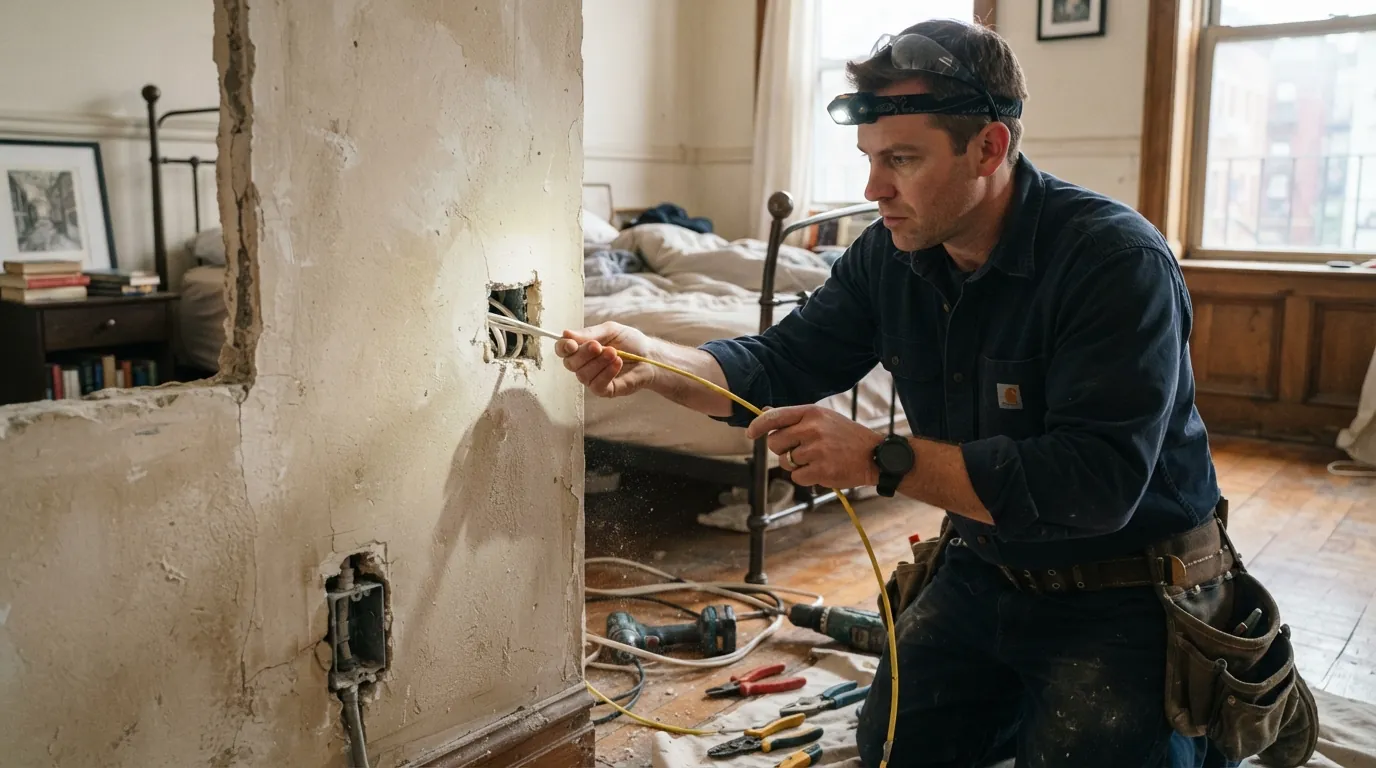
Outlet and switch work in New York City ranges from swapping a device to adding new outlets on new circuits. Published New York figures put a standard outlet at about $100 to $150, a GFCI replacement at $100 to $200 and a three-way switch at $200 to $225; adding outlets that need a new circuit is permitted work.
Updated September 2026
Pre-war rooms were wired for a lamp and a radio. Today every room has chargers, a TV, a computer and an air conditioner, and the answer shouldn't be power strips daisy-chained across the floor.
We add outlets where you actually need them, fish cable through plaster with small openings, and check every circuit we touch so new outlets aren't hung on a circuit that's already overloaded.
Adding outlets to pre-war rooms
Plaster and lath walls, masonry partitions and ornate baseboards make new outlets harder than in drywall, but not impossible. We look for routes through closets, the floor below or the baseboard, and cut openings only where the fish can't get through. Where a new outlet would overload an existing circuit, we run a new one from the panel. In rooms with a window air conditioner, the AC outlet gets its own circuit so the rest of the room isn't tripping every summer afternoon.
GFCI replacement about $100 to $200; standard outlet $100 to $150; three-way switch $200 to $225; 220V outlet $120 to $170. Source: www.homeyou.com, 2026-06-14. Published market range for budgeting only, not our quote.
USB and 20-amp outlets
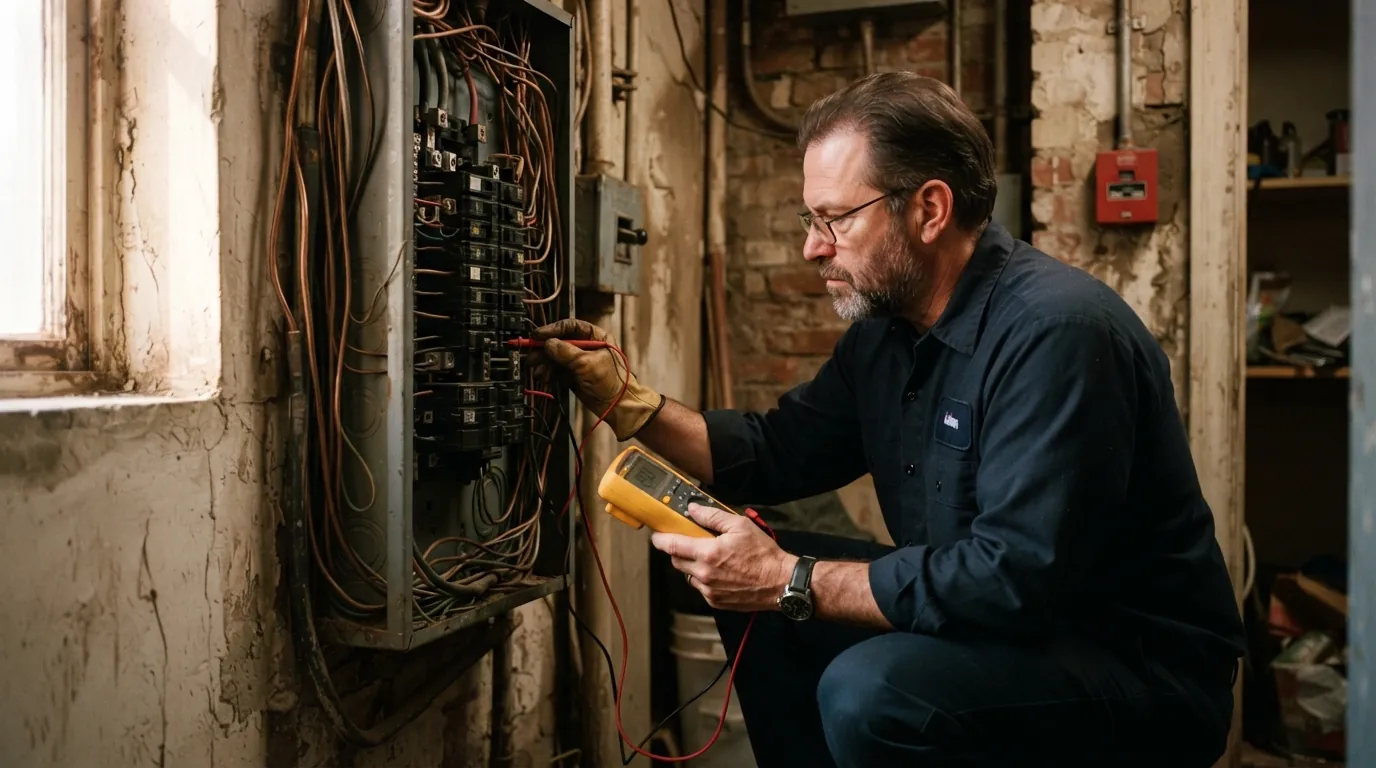
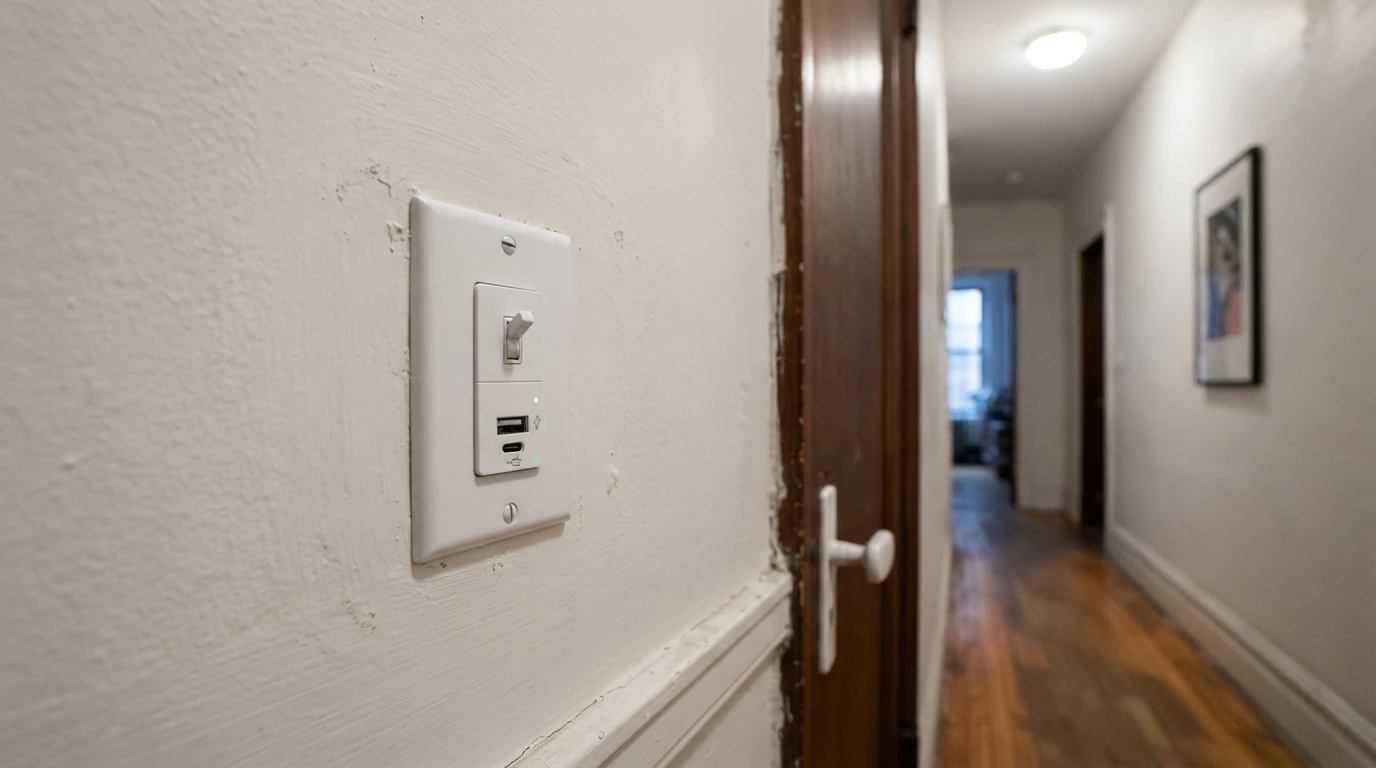
USB-A and USB-C outlets put chargers in the wall and free up receptacles, which is useful in bedrooms, kitchens and home offices. Where a circuit is wired for 20 amps, 20-amp receptacles let heavier appliances plug in properly. We check the wire size before installing a 20-amp device, because a 20-amp outlet on a 15-amp circuit is a code violation. Tamper-resistant receptacles, which the code requires in homes, go in everywhere we install new devices. Worn receptacles that no longer grip a plug are replaced while we're there.
Three-way and four-way switches
A three-way switch lets you control a light from two places, like the top and bottom of a stair or both ends of a hallway. Four-way switches add more locations in between. Retrofitting them means running a traveler cable between the switch locations, which is where plaster walls make planning matter. Smart three-way kits can sometimes avoid a new cable, but many need a neutral wire older switch boxes don't have, so we check the box before recommending one. The switch you buy should match the box you have.
Grounded outlets replacing two-prong
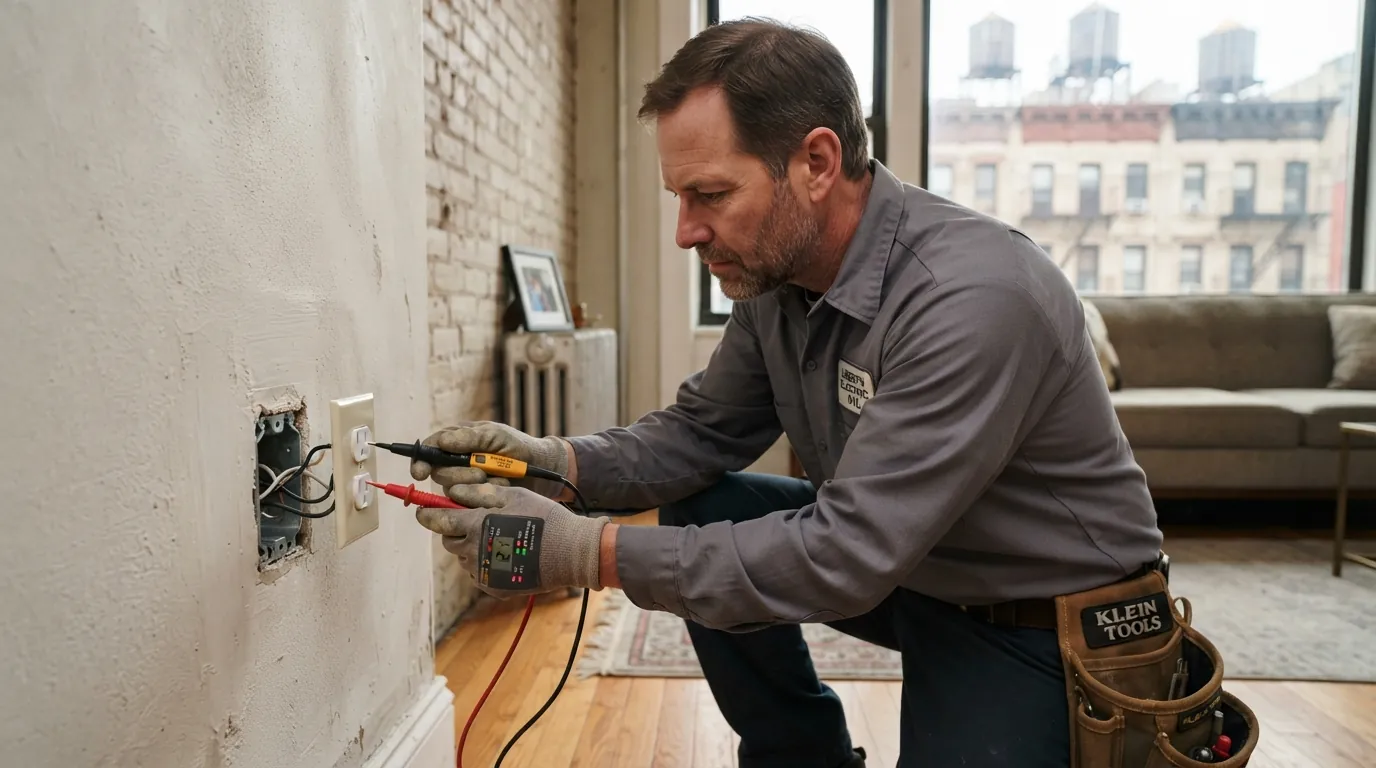
Replacing a two-prong outlet with a three-prong one only works if there's a ground to connect it to. Where the box or cable is grounded, the swap is simple. Where it isn't, the code allows a GFCI outlet labeled no equipment ground as a protective alternative, or we can run a new grounded circuit. We test each box before quoting, so you know room by room which outlets get a straight swap, which get GFCI protection and which are worth rewiring.
What moves the price
- Device swap versus a new outlet location
- New circuit needed from the panel
- Plaster, masonry or drywall walls
- Travelers for three-way and four-way switches
- GFCI or grounded circuit for two-prong outlets
- USB, 20-amp or smart devices
- Permit when new circuits are added
GFCI replacement about $100 to $200; standard outlet $100 to $150; three-way switch $200 to $225; 220V outlet $120 to $170. Source: www.homeyou.com, 2026-06-14. Published market range for budgeting only, not our quote.
What you can check yourself
| Check | Safe to do | Call us if |
|---|---|---|
| Outlet type | Count two-prong outlets | Most rooms have them |
| Loose plugs | Notice plugs that won't stay in | Several outlets are worn |
| Warm plates | Touch plates under normal use | Any plate is warm |
| Switch boxes | Note switches smart devices won't fit | You want smart switches |
What we see in New York buildings
Just over 64 percent of the city's housing was built before 1960, before grounded outlets and generous outlet counts were standard, which is why two-prong receptacles and one-outlet walls are still so common here. Most pre-war buildings also lack a neutral wire in the switch box, the conductor many smart switches and remote-control devices need, so switch upgrades start with a look inside the box.
What happens after you call
- 1
Walk the rooms
We mark where outlets and switches are needed and test existing circuits.
- 2
Route and circuit plan
Cable routes chosen to keep openings small.
- 3
Permit if new circuits
New circuits filed with the DOB.
- 4
Devices installed
Boxes, cable and devices installed and grounded.
- 5
Tested and patched
Each device tested; openings left ready to patch.
Signs it's time for more or better outlets
Power strips on power strips
Not enough outlets in the room.
Two-prong outlets throughout
No ground for modern devices.
Plugs fall out of outlets
Worn receptacle contacts.
Warm outlet or plate
A connection is overheating.
Switch at the wrong end
No three-way control.
Scorch marks on a receptacle
Arcing at the device.
Extension cord to the AC
The outlet isn't where it's needed.
Questions about outlet & switch installation in New York
Only if the box is grounded. Otherwise a labeled GFCI outlet or new wiring is the fix.
New outlets on existing circuits often don't; new circuits do. We tell you which applies.
Usually with small openings. Plaster sometimes needs a patch.
Yes, when they're listed devices. They go in like a normal outlet.
Many need a neutral wire older switch boxes don't have.
Yes. We extend or reroute the switch leg to the new location.