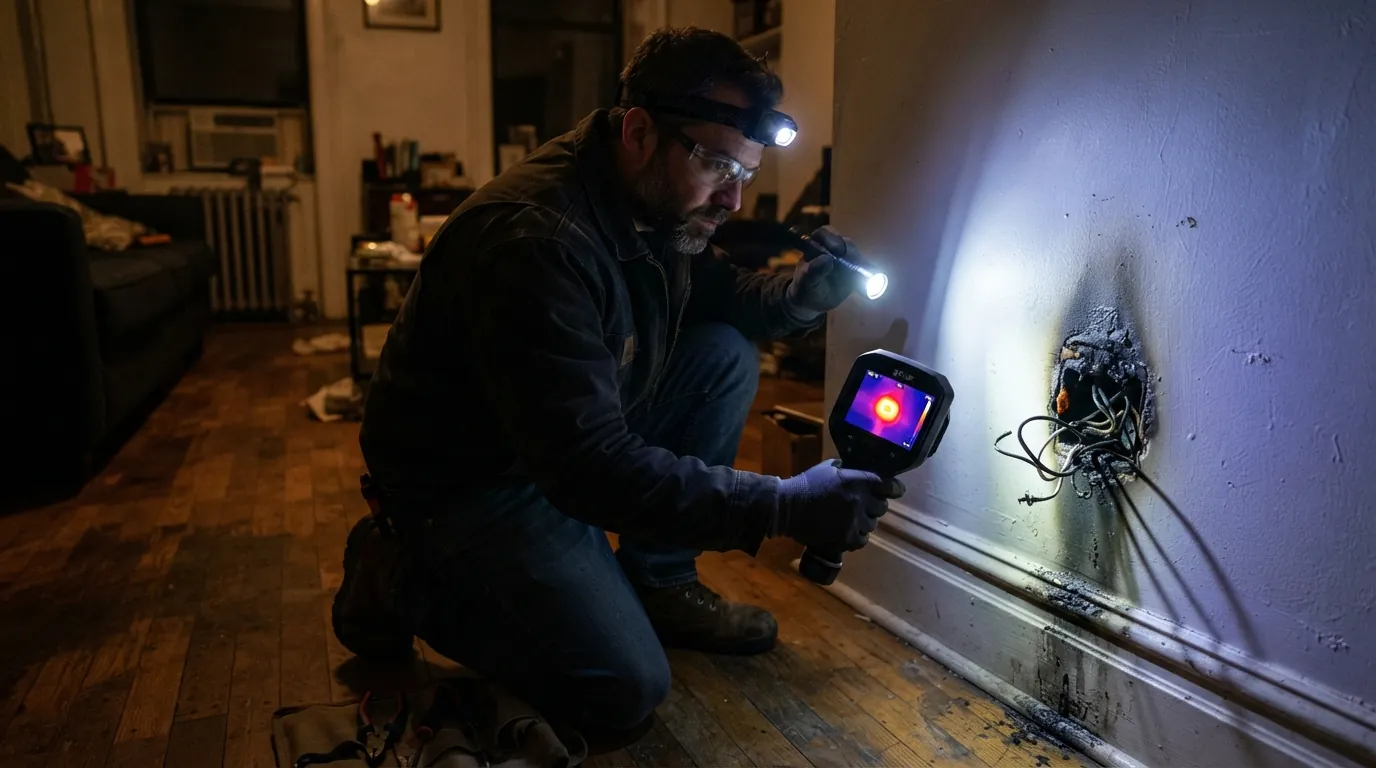
An electrical emergency in a New York City is anything that can start a fire or leave a building without power: a burning smell, sparking, a warm panel, or a main breaker that trips and won't reset. Kill the circuit at the panel if you can reach it safely, then call. We answer 24 hours a day and dispatch an electrician the same night.
Signs it is time to call
A burning or fishy smell
Overheating insulation on a loose terminal. Cut power to that circuit.
Warm outlet or switch plate
Heat at the device means a bad connection behind it.
Breaker trips and won't reset
A short downstream or a failed breaker. Stop resetting it.
Lights dim when the AC starts
An overloaded or undersized circuit, or low utility voltage.
Buzzing from the panel
Arcing at a breaker or lug. This one is urgent.
Scorch marks on a cover
Something already arced. The device and the run behind it need replacing.
Tingling from a fixture or tap
A grounding fault. Stay clear of it and call.
Updated September 2026
Most late-night calls are one of three things: a loose connection that has started to heat, a breaker that has failed rather than tripped, or a service problem that belongs to Con Edison. The first two are ours; the third we'll tell you in the first five minutes.
You'll get a straight read on the phone: whether to shut the main, whether to leave, and whether it can wait until morning. Then an electrician comes with breakers, receptacles, connectors, a meter and a thermal camera, finds the fault, and restores what's safe to restore that night.
Burning smell or sparking outlet
A fishy or plastic smell near an outlet or switch means insulation is cooking on a loose terminal. Sparking when you plug in a cord is the same problem one step further along. Don't keep using it and don't spray anything into it. Switch the breaker off if you know which one, and if you don't, shut the main. We'll open the device, trace the circuit back for scorched wire, and replace the device and any damaged run with new cable in a rated box. If the wall behind it shows heat, that section comes out too.
Power out in one apartment only
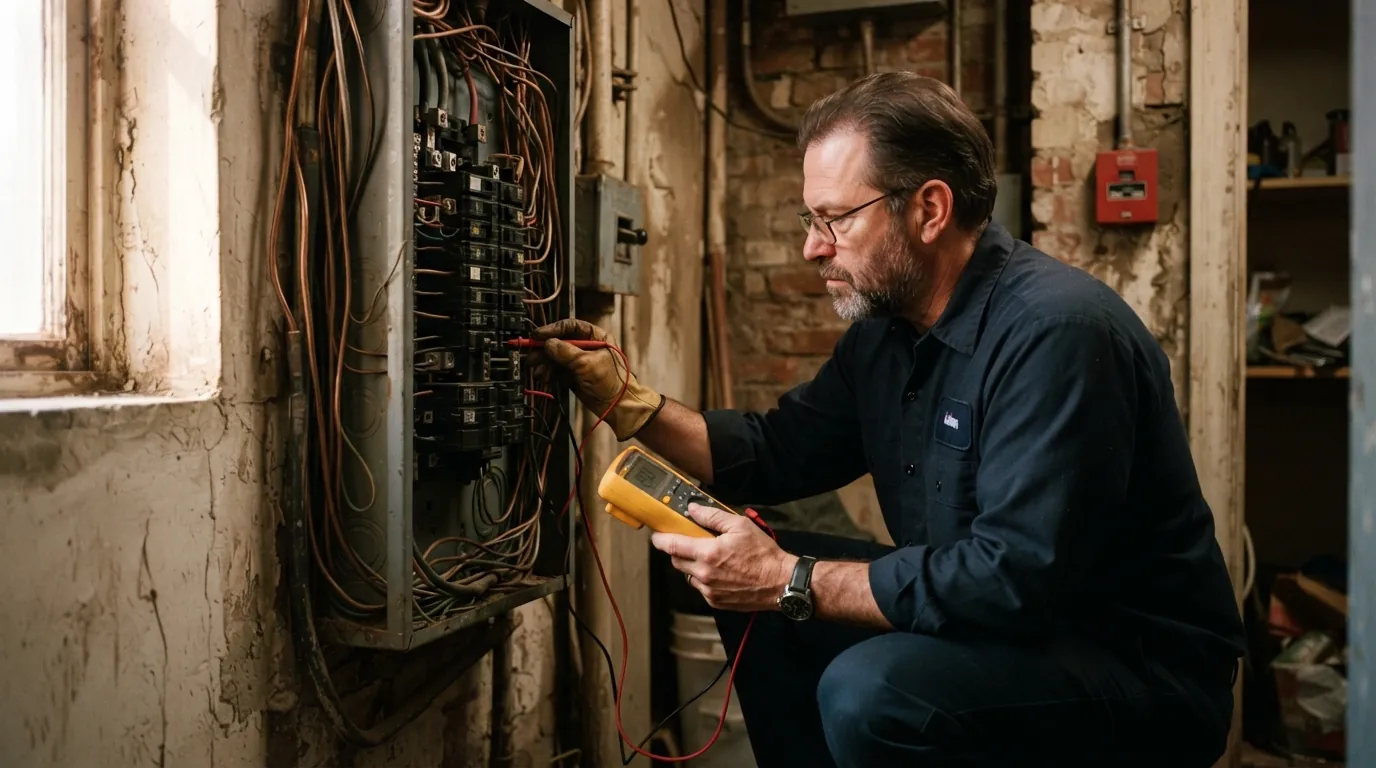
When the hallway lights are on but your unit is dark, the fault sits between the meter and your panel. It's often a failed main breaker, a burnt feeder lug, or in older buildings a blown cartridge fuse in the meter room. Check whether a neighbor has power first, because a whole-line outage is Con Edison's job. We carry mains and lugs for the common panels in the city, so most single-unit outages are restored the same visit. A burnt meter pan means a Con Edison disconnect and a scheduled return.
Main breaker tripped and will not reset
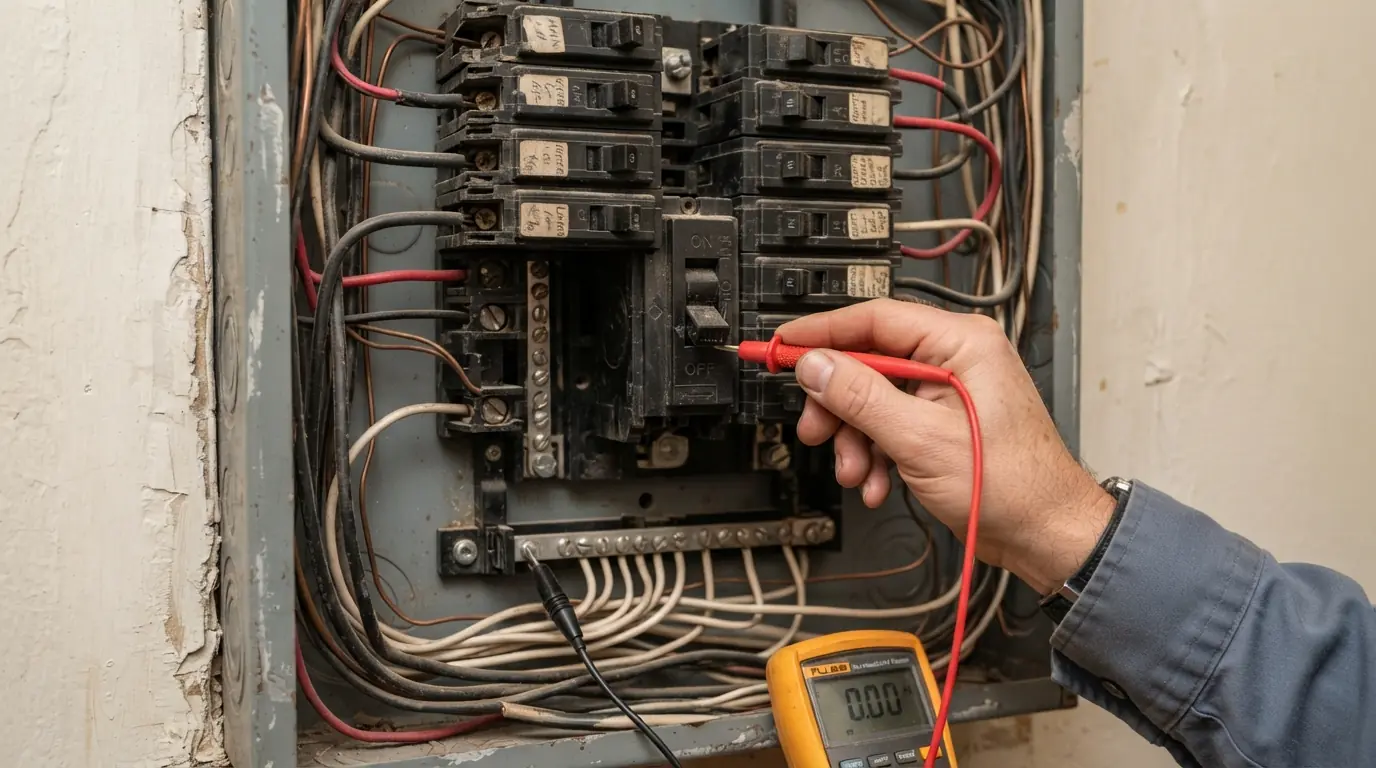
A main that trips again the moment you flip it is doing its job: something downstream is drawing a dead short or the breaker itself has failed. Repeated resets weld contacts and turn a cheap repair into a panel change. We split the load, isolate the circuit that's pulling the main, and then decide whether the breaker survived. Federal Pacific and Zinsco mains that fail are replaced with a new panel, not a used breaker, because replacement parts for those brands don't fix the design.
average $1,535, most paying $751 to $2,323; a few breakers as low as $200; labor $1,000 to $4,500 at $50 to $150 per hour. Source: www.angi.com, 2026-07-08. Published market range for budgeting only, not our quote.
Storm and flood damage to wiring
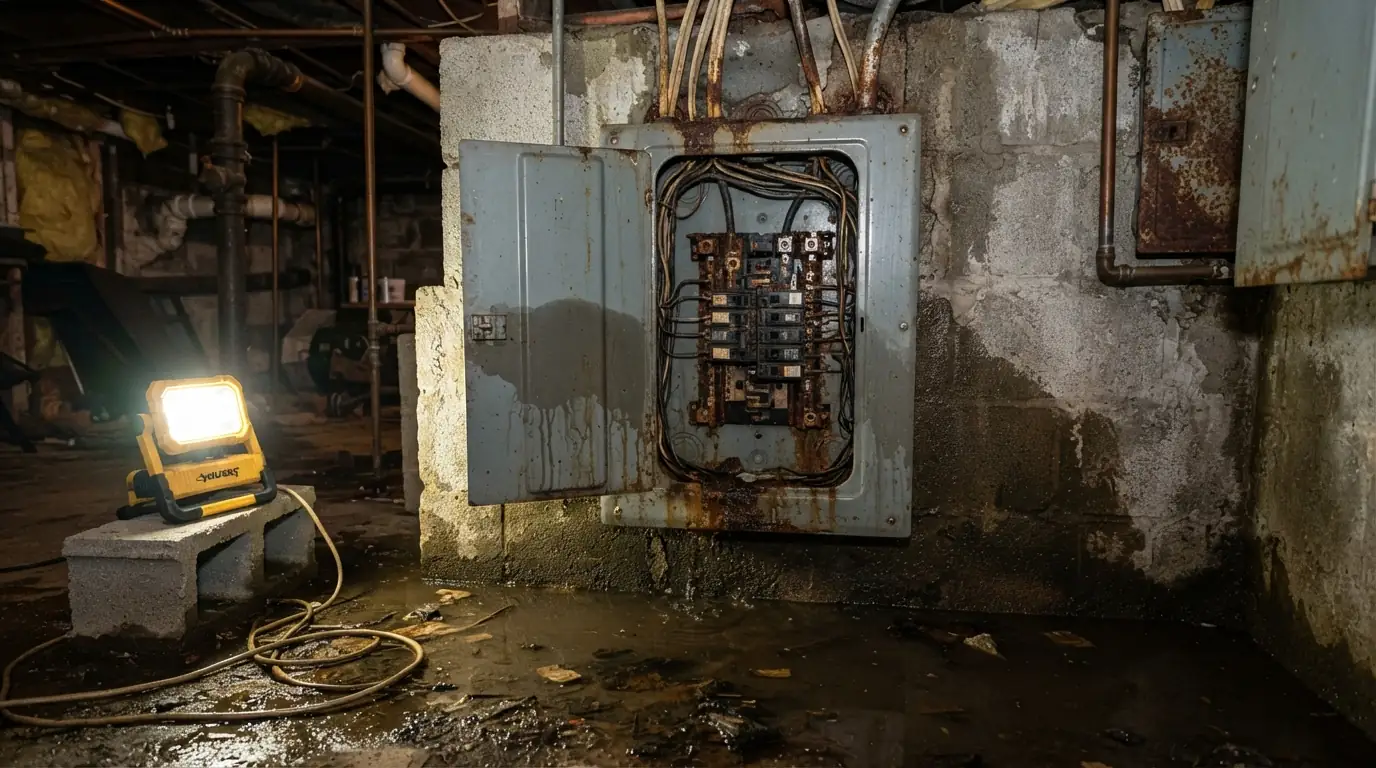
Water in a basement panel or meter room is an outage waiting to happen. After a storm, a flooded subpanel can look fine for days and then fail a week later. Don't re-energize a panel that has been wet. We'll test every circuit below the waterline, replace corroded breakers and devices, and pull new cable where the jacket has wicked water. Sump pumps and dehumidifiers get their own GFCI-protected circuit as part of the repair, so the next storm doesn't take them down with the lights.
What happens after you call
- 1
You call, we triage
We ask what you see, smell and hear, and whether neighbors have power. You'll know in minutes whether to shut the main.
- 2
An electrician is dispatched
Sent to your address with the breakers, devices and test gear the call suggests.
- 3
Fault found and isolated
Meter readings and a thermal scan, not guesswork. The dangerous circuit is opened and made safe first.
- 4
Safe circuits restored
Everything that tests clean comes back on that visit. Damaged devices and cable are replaced.
- 5
Follow-up scheduled
Panel changes, Con Edison work and permitted repairs are booked before we leave, with a written scope.
What we see in New York buildings
Summer is when the emergency line runs hottest. During the early-July 2026 heat wave Con Edison reported more than 80,000 customers losing power and cut voltage by 8 percent across wide areas of Brooklyn and Queens; Richmond Hill and Flushing were among the hardest-hit Queens areas. Low voltage makes window units and refrigerators draw more current, so breakers that held all spring start tripping and weak connections overheat. If the whole block is dark, that's Con Edison. If it's only your building or your unit, call us.
What moves the price
- Time of day: after-hours rates run higher than a scheduled visit
- Whether the fault is a device, a run of cable, or the panel itself
- Panel brand and age; obsolete breakers cost more or force a panel change
- Access: plaster walls, finished ceilings and shared risers add labor
- Whether Con Edison has to disconnect and reconnect
- Water damage that extends the repair to several circuits
- DOB filing for anything beyond a like-for-like repair
$100 to $200 per hour standard; $200 to $400 per hour emergency or after hours; service call minimum $150 to $300. Source: aecontractorsnyc.com, 2026-09. Published market range for budgeting only, not our quote.
Questions about emergency electrician in New York
If you smell burning, see sparks, or the panel is warm, yes, if you can reach it without standing in water.
If the neighbors and the street are dark too, it's the utility. If only your unit or your building is out, the fault is inside and we can fix it.
After-hours calls carry a higher rate than a scheduled visit, and you're told the rate before anyone is dispatched.
Yes. Most buildings let emergency electrical work in at any hour; we coordinate panel room access with the super or doorman.
A like-for-like device or breaker swap doesn't need a DOB inspection. New circuits, panel changes and rewiring do, and we file them after the building is safe.
Don't turn it back on. We test every circuit below the waterline, replace anything corroded, and only re-energize what passes.