
GFCI devices cut power when current leaks to ground, which protects people near water; AFCI devices detect arcing in wiring, which prevents fires. In New York City, published figures put a GFCI outlet replacement at about $100 to $200, and new protection filed after December 21, 2025 has to meet the 2025 code's expanded GFCI and AFCI requirements.
Updated September 2026
GFCI and AFCI protection do different jobs, and older apartments usually have neither. The code has steadily added locations where each is required, and the 2025 city code continued that.
When a protected device trips, it's usually telling you something. We add the protection where it's required and track down the cause when a device trips repeatedly, rather than replacing it with one that doesn't.
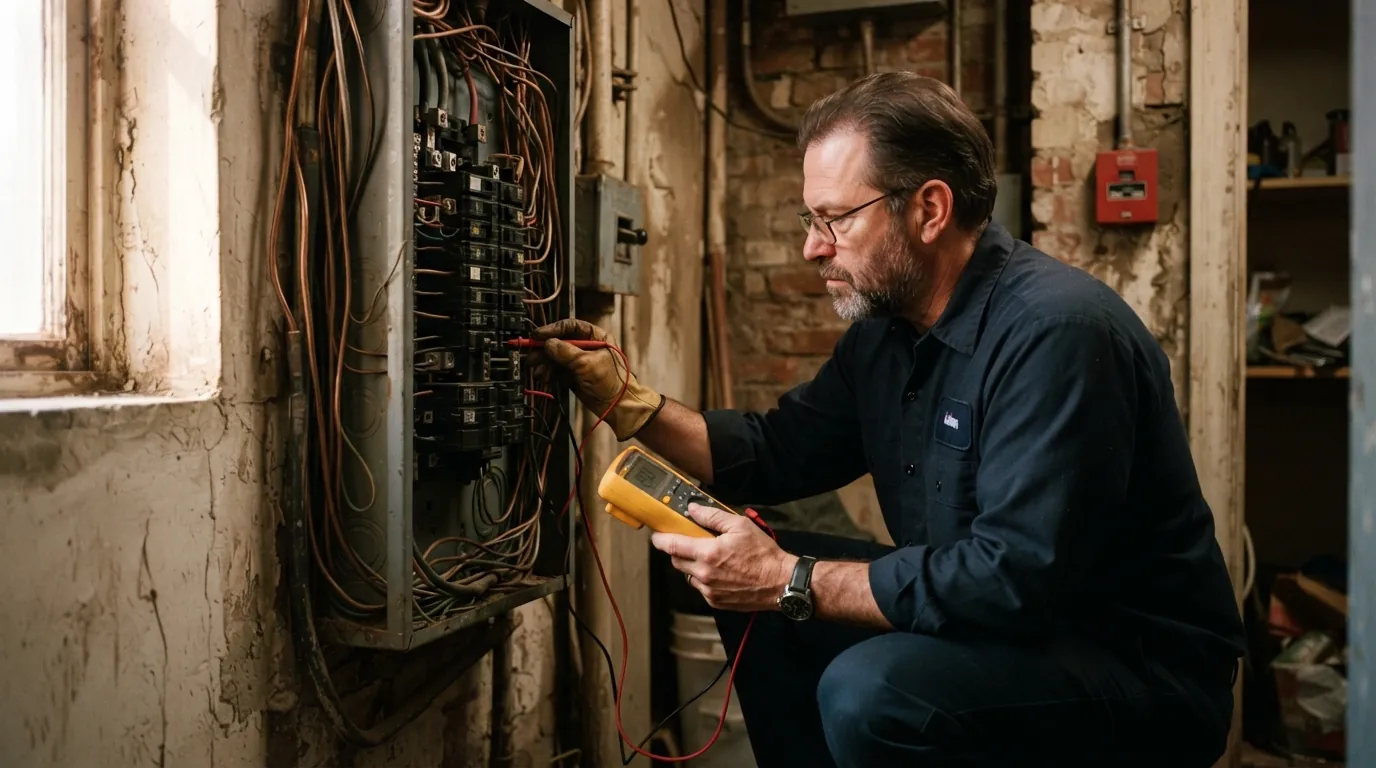
GFCI outlets in kitchens and baths
Kitchens, bathrooms, laundry areas, basements, garages and outdoor outlets need GFCI protection, either at each outlet or from a GFCI breaker or upstream GFCI outlet protecting the ones after it. We choose the approach that keeps resets easy to find: a GFCI outlet in the kitchen is convenient, a GFCI breaker for a basement circuit whose outlets are behind furniture may not be. Every protected outlet downstream is labeled so nobody hunts for a dead outlet's reset button. Outdoor receptacles also get in-use covers that close over a plugged-in cord.
GFCI replacement about $100 to $200; standard outlet $100 to $150; three-way switch $200 to $225; 220V outlet $120 to $170. Source: www.homeyou.com, 2026-06-14. Published market range for budgeting only, not our quote.
AFCI breakers under the 2025 code
AFCI breakers watch for the electrical signature of arcing, the loose connection or damaged cord that can smolder inside a wall. The code requires them on most branch circuits in dwellings, and they're usually part of any new circuit, panel replacement or significant extension of an old circuit. We install them at the panel, test each one, and make sure the circuit's wiring is sound first, because an AFCI on a circuit with a hidden loose splice will trip, correctly, until the splice is fixed.
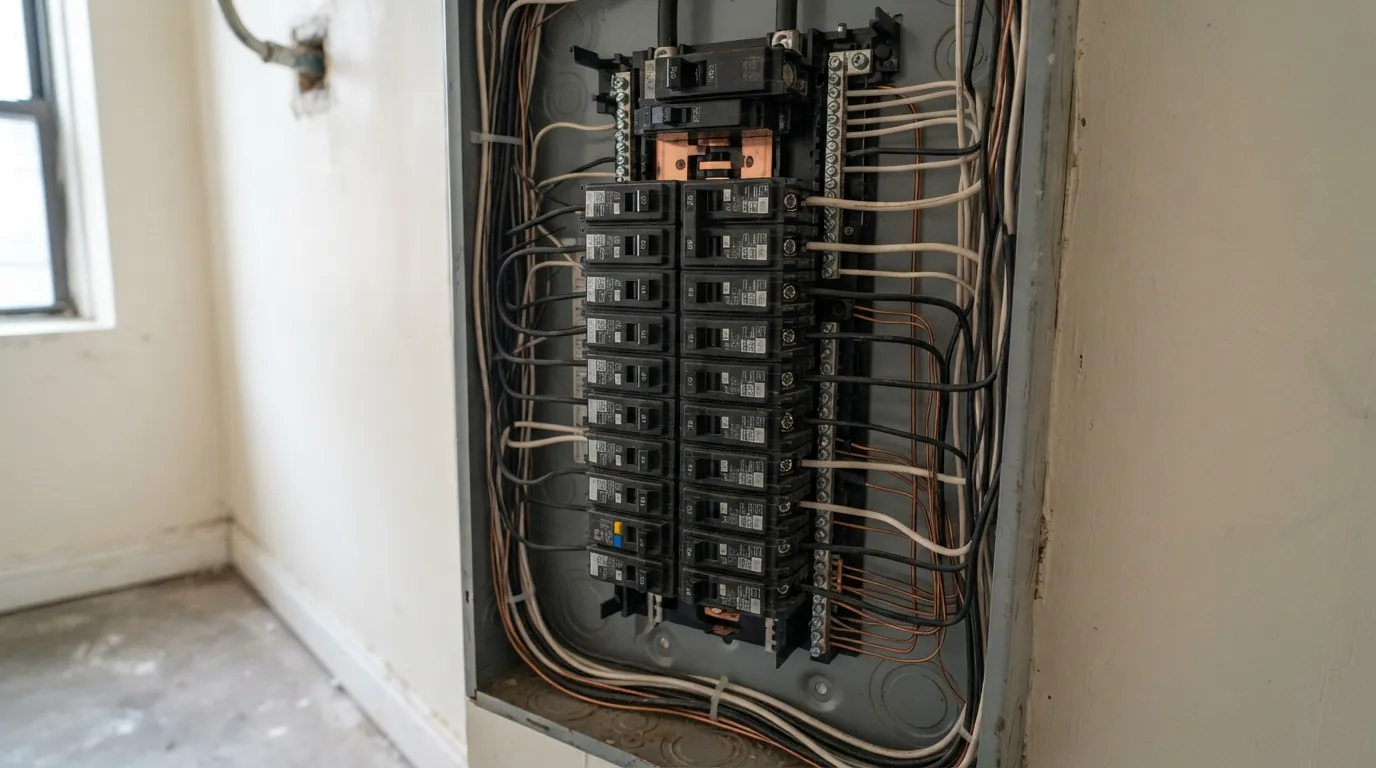
Combination AFCI-GFCI devices
Dual-function breakers and outlets combine arc-fault and ground-fault protection in one device. They're the practical answer for kitchens and laundry areas where both are required, and they save panel space compared with stacking separate devices. When a dual-function device trips, it indicates which protection tripped, which makes troubleshooting faster. We use them where both protections apply and the panel is compatible, and we check that the panel brand accepts the specific breaker model. Mixing brands voids the listing and can fail inspection.
Nuisance-trip troubleshooting
A GFCI or AFCI that trips repeatedly is rarely broken. The usual causes are moisture in an outdoor box, a shared neutral between two circuits, an appliance with leakage current, a damaged cord, or a loose splice somewhere on the run. We isolate the circuit, test each load and connection, and fix the actual cause. Replacing a tripping device with an unprotected one removes the safety and hides the problem, so we won't do that, and we'll show you what we found.
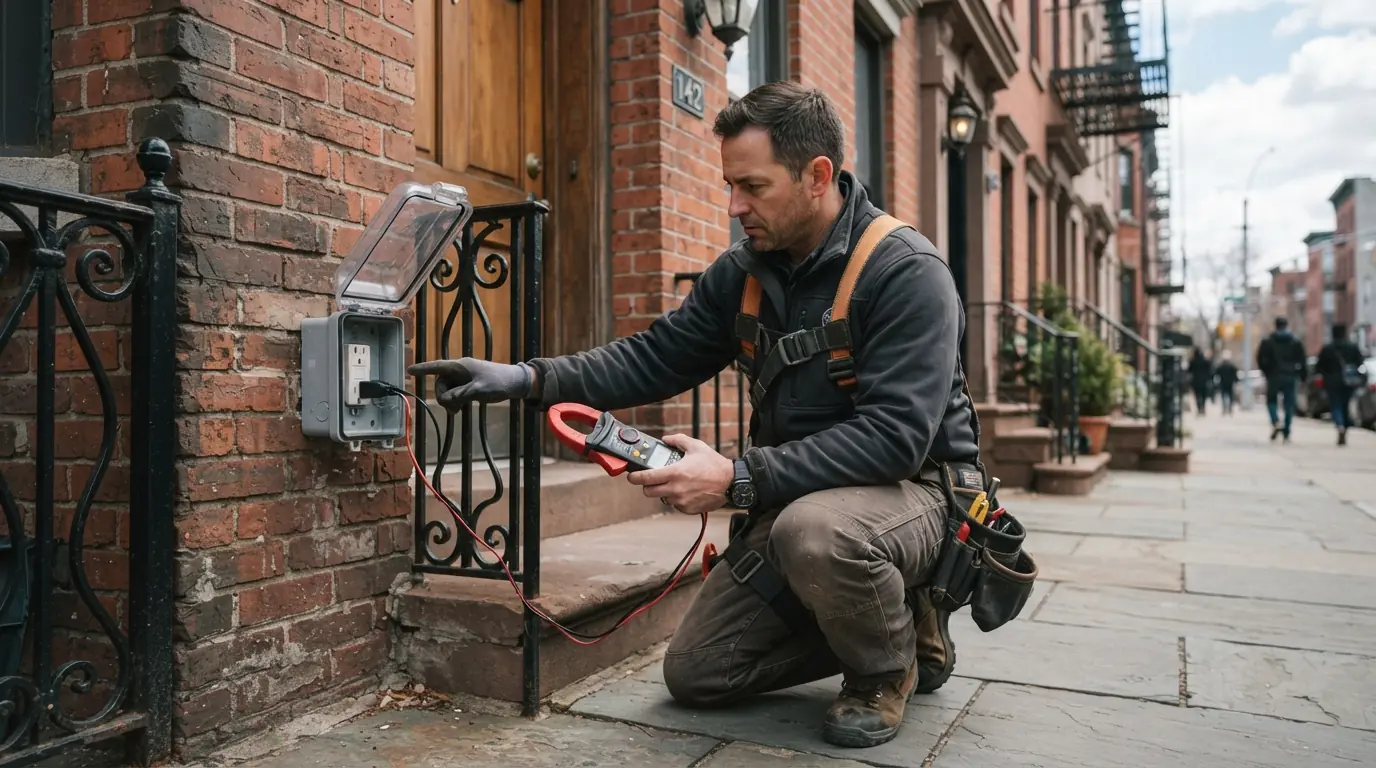
What moves the price
- GFCI outlet versus GFCI breaker
- AFCI or dual-function breakers
- Panel brand and breaker compatibility
- Number of circuits to protect
- Faults found while troubleshooting
- Outdoor and damp-location covers
- Permit when part of new work
GFCI replacement about $100 to $200; standard outlet $100 to $150; three-way switch $200 to $225; 220V outlet $120 to $170. Source: www.homeyou.com, 2026-06-14. Published market range for budgeting only, not our quote.
What you can check yourself
| Check | Safe to do | Call us if |
|---|---|---|
| Test button | Press TEST and RESET monthly | It won't reset or doesn't trip |
| Dead outlet | Look for a tripped GFCI nearby | You can't find the reset |
| Outdoor outlet | Check the cover closes | It trips after rain |
| Repeated trips | Unplug appliances one at a time | It trips with nothing plugged in |
What we see in New York buildings
In New York City the Department of Buildings requires an electrical permit for most electrical work, filed through DOB NOW: Build and checked by its Electrical Plan Review team. Adding protection as part of new circuits or renovations goes through that filing, so the GFCI and AFCI devices are inspected along with the rest of the work rather than added and forgotten.
What happens after you call
- 1
Map the circuits
Which outlets and rooms each circuit serves.
- 2
Pick the protection
Outlet, breaker or dual-function device per circuit.
- 3
Check the wiring
Loose splices and shared neutrals found before protection goes on.
- 4
Install and label
Devices installed, downstream outlets labeled.
- 5
Test every device
Each device tripped and reset to prove it works.

Questions about gfci & afci protection in New York
GFCI protects people from shock; AFCI protects the building from arcing fires.
Usually moisture, a leaky appliance or a wiring fault. We find the cause.
They're required with new circuits and many renovations. We'll tell you what applies.
Yes, when it's wired to protect the outlets downstream.
It depends on the brand. We check before ordering.
No. That removes the protection and hides the fault.