An LED retrofit in New York City replaces fluorescent, metal-halide or incandescent lighting with LED fixtures or kits and adds the controls the energy code calls for, such as occupancy sensors and daylight dimming. For buildings of 25,000 square feet or more, Local Law 88 required lighting to meet the energy code by January 1, 2025.
Updated September 2026
Lighting in common areas and commercial spaces runs for thousands of hours a year, which is why LED retrofits usually pay back faster than almost any other building upgrade.
A retrofit is also where lighting controls come in. The energy code expects occupancy sensors, automatic shutoff and daylight dimming in many spaces, and adding them during the retrofit is far cheaper than later.
Common-area and hallway retrofits
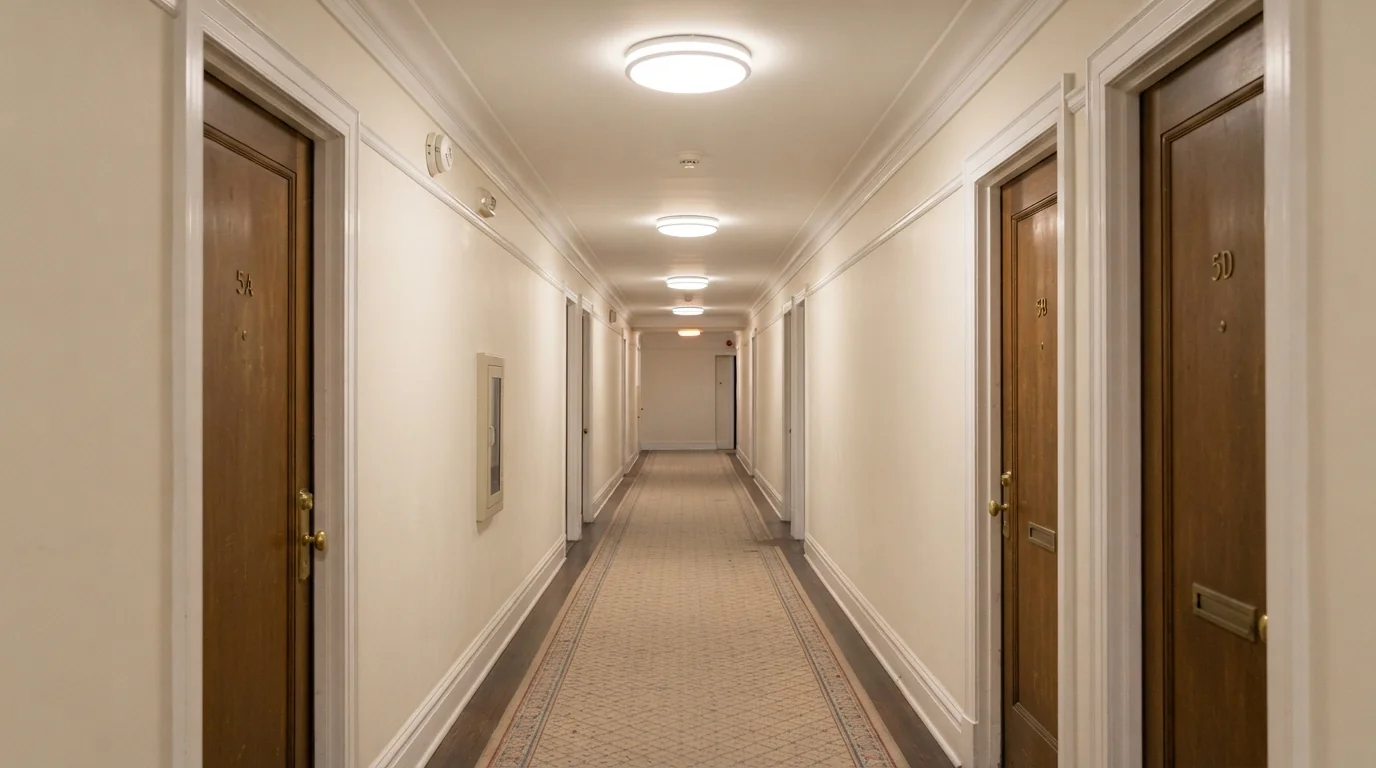
Hallways, stairwells, lobbies and basements in apartment buildings are lit day and night. Replacing their fixtures with LED cuts that load sharply, and bi-level fixtures that dim when nobody's present cut it further while keeping the corridor lit. We survey every floor, standardize fixture types so the super stocks fewer spares, and schedule the work floor by floor so residents always have a lit path. Emergency lighting and exit signs on the same floors are checked while we're there, and failed units are replaced in the same visit.
Office and retail troffer replacement
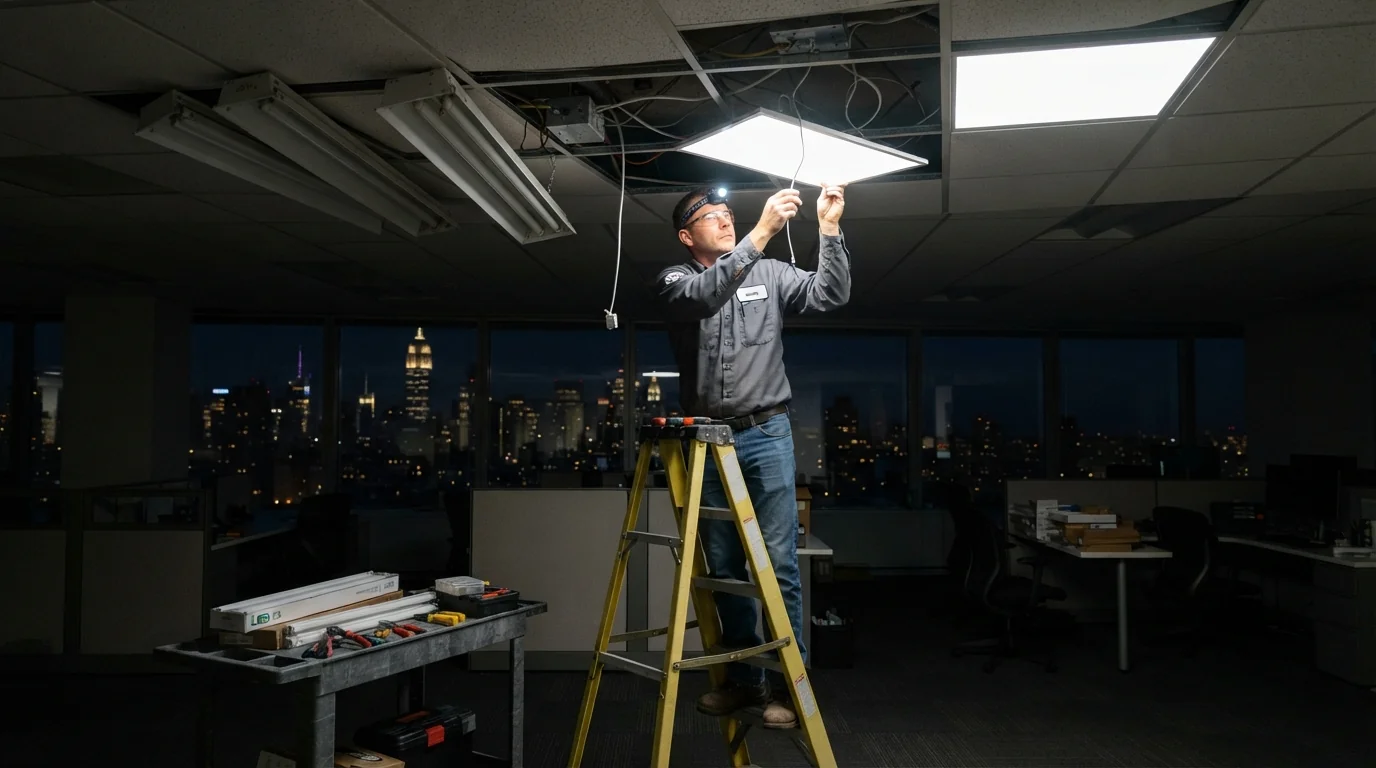
Fluorescent troffers are the standard office ceiling light, and most can be retrofitted with LED kits that reuse the housing or replaced outright with flat panels. Kits are faster and create less waste; new panels give a cleaner ceiling and better light. We compare both on your space, match color temperature across the floor, and work after hours or floor by floor so staff and shoppers aren't disrupted. Retail displays get higher color rendering so merchandise looks right under the new light.
$100 to $200 per hour standard; $200 to $400 per hour emergency or after hours; service call minimum $150 to $300. Source: aecontractorsnyc.com, 2026-09. Published market range for budgeting only, not our quote.
Parking garage lighting
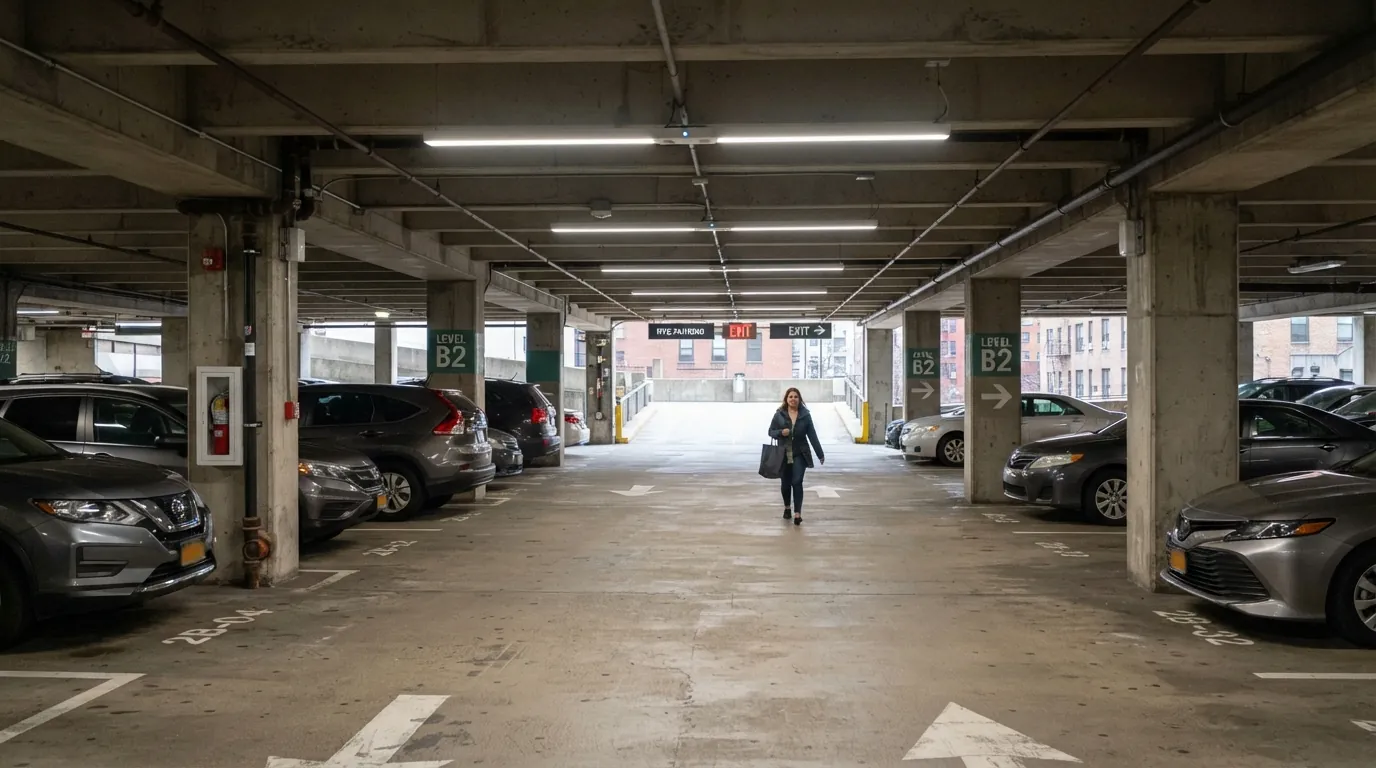
Garage lighting runs 24 hours a day, and old metal-halide or fluorescent fixtures are often dim, flickering and expensive. LED garage fixtures with integrated occupancy sensors run at a low level until a car or person enters, then brighten the zone. We lay out fixtures for even coverage between columns, mount them clear of vehicle height, and group sensors so drivers aren't driving into dark bays. Perimeter fixtures near openings can dim further on daylight, and the operator gets a map of every zone.
Occupancy sensors and daylight controls
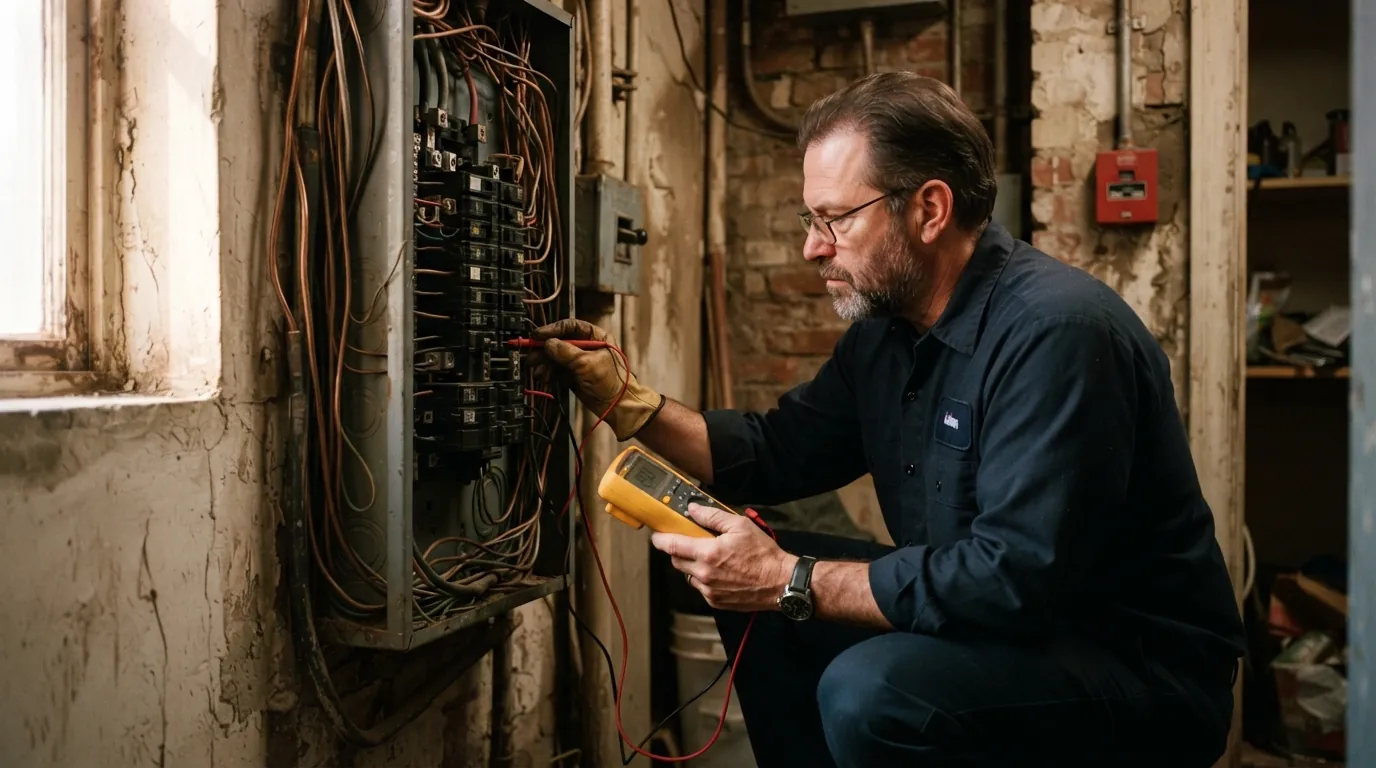
Occupancy sensors turn lights off in rooms nobody's using; vacancy sensors require someone to switch them on. Daylight sensors dim fixtures near windows when there's enough natural light. The energy code requires these controls in many commercial spaces, and they're a large part of the savings in a retrofit. We place sensors so they see the whole space without triggering from corridors, set time delays that suit the room, and commission each zone so it works as designed. Settings are recorded for the building's files.
What moves the price
- Number and type of fixtures
- LED kits versus new fixtures
- Occupancy, vacancy and daylight controls
- Ceiling type and access
- After-hours or phased scheduling
- Emergency and exit fixtures on the same floors
- Compliance documentation for large buildings
$100 to $200 per hour standard; $200 to $400 per hour emergency or after hours; service call minimum $150 to $300. Source: aecontractorsnyc.com, 2026-09. Published market range for budgeting only, not our quote.
What an LED retrofit includes
- Fixture survey by floor and space
- Kit or new fixture recommendation
- Color temperature matched across floors
- Occupancy and vacancy sensors placed
- Daylight dimming near windows
- Phased schedule around tenants
- Emergency and exit fixtures checked
- Old lamps and ballasts removed
- Controls commissioned and documented
What we see in New York buildings
Local Law 88 required buildings of 25,000 square feet or more to upgrade their lighting to the NYC Energy Conservation Code by January 1, 2025, including common areas such as lobbies, hallways, basements and laundry rooms in residential buildings. Local Law 97 adds pressure on the same buildings: it sets carbon caps that tighten every five years, with annual fines, and lighting is one of the easiest loads to cut.
What happens after you call
- 1
Lighting survey
Every fixture counted, typed and mapped by floor.
- 2
Retrofit plan
Kits or new fixtures, controls and phasing agreed.
- 3
Filing where required
Documentation prepared for code compliance.
- 4
Floor-by-floor install
Fixtures and controls installed around tenants.
- 5
Commissioning
Sensors, dimming and time delays set and tested.
Brands we install and service include Square D and Eaton panels, Leviton and Lutron devices, and Tesla and ChargePoint chargers.
Questions about led lighting retrofit in New York
Kits usually cost less up front. New fixtures give a cleaner result. We compare both.
The energy code requires them in many commercial spaces, and they add savings.
Yes. Offices and retail are often done at night or on weekends.
It covers buildings of 25,000 square feet or more. We can check your building.
We match color temperature across each floor so it looks consistent.
Yes, with sensor-controlled fixtures that dim when bays are empty.