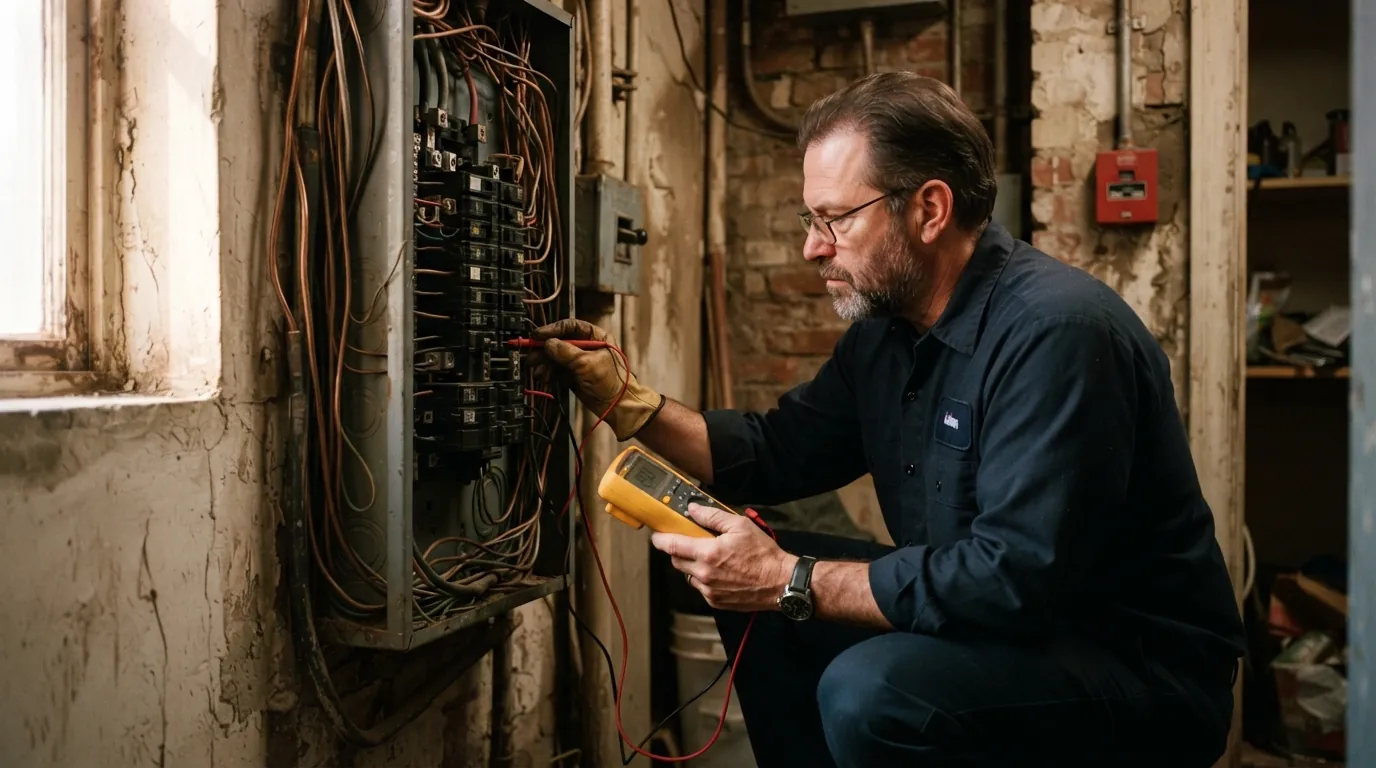
Solar electrical hookup in New York City covers the inverter and disconnect wiring, the connection to your panel or service, and the interconnection with the utility. It is permitted electrical work with a city inspection, and the panel often needs room for the solar breaker. The city's property tax abatement is applied for through the Department of Buildings.
Updated September 2026
A solar installer can mount panels, but the electrical side is where most delays happen: a panel too small to accept the backfeed, a missing disconnect, or paperwork the utility will not accept.
We handle the electrical scope from the array's wiring to the utility meter, coordinate with whoever installs the racking and panels, and file the electrical permit so the system can be inspected and turned on.
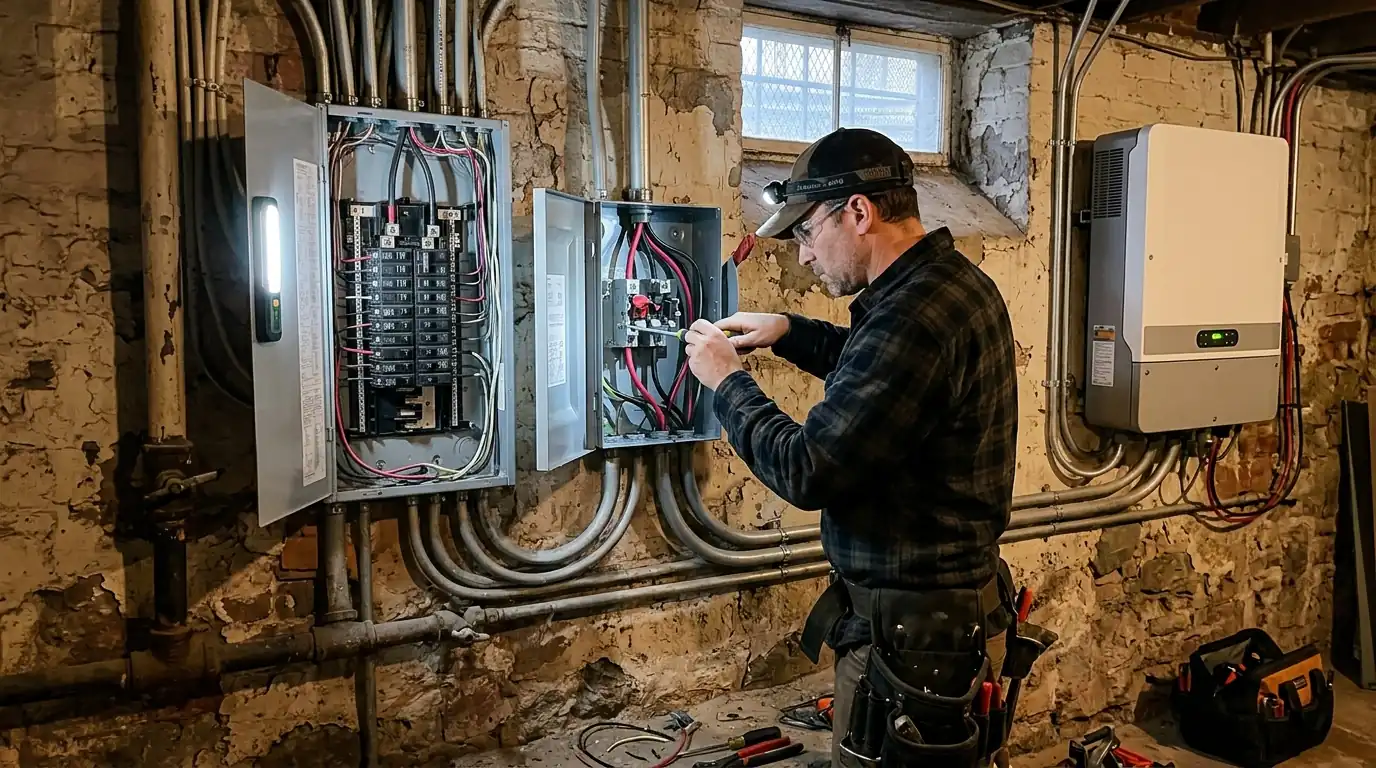
Ways to connect solar to your panel
| Method | When it fits | Trade-off |
|---|---|---|
| Breaker in the panel | Panel has room under the backfeed limit | Simplest when it fits |
| Supply-side connection | Panel too small for a backfeed breaker | Needs a fused disconnect |
| Panel upgrade | Panel is old, full or undersized | More work, but solves both problems |
Inverter and disconnect wiring
String inverters, microinverters and hybrid inverters each wire differently, but every system needs properly sized conductors, overcurrent protection and disconnects the fire department and the utility can find. We run the circuits from the array to the inverter and on to the panel, install the required disconnects and labels, and make sure rapid shutdown works the way the code requires. Equipment is placed where it can be reached for service without climbing over storage or squeezing behind a boiler. Every label the inspector expects is in place before we call for the inspection.
$150 to $300 for a new circuit or minor work; $300 to $600 for a panel upgrade. Source: aecontractorsnyc.com, 2026-09. Published market range for budgeting only, not our quote.
Interconnection with the utility
Before a system can export, the utility has to approve the interconnection and, in most cases, change or reprogram the meter. We prepare the electrical details the application needs, make sure what is installed matches what was approved, and are on site when the utility inspects. Systems that start producing before approval can cause problems with the utility, so we sequence the work so nothing is energized early and the approval and the inspection line up. If the utility asks for changes, we make them and update the paperwork the same week.
Panel capacity for solar backfeed
Solar connects to your electrical system by feeding power back into the panel, and the code limits how much a panel can accept. Many older panels in the city are too small, or too full, to take a solar breaker without changes. We check the panel's rating and bus, then choose the cleanest option: a supply-side connection, a derated main breaker, or a panel upgrade done at the same time, so the solar job does not stall at inspection. You see the options and their costs side by side before the design is final.
Permits, inspection and tax abatement paperwork
Solar is permitted electrical work, and the city's property tax abatement depends on Department of Buildings approval. We file the electrical side, schedule and attend the inspection, and provide the completed electrical documents the abatement application needs. Keeping the electrical filing and the abatement on the same timeline matters, because the abatement only starts after approval, so a delay at inspection pushes the tax benefit back too. You keep a copy of every filing, inspection result and approval for your records and for a future sale. If the installer handles the abatement application, we send them the electrical documents directly.
What moves the price
- System size and inverter type
- Panel capacity and any upgrade
- Supply-side or breaker connection
- Conduit runs from roof to panel
- Disconnects, labels and rapid shutdown
- Utility interconnection requirements
- Permit filing and inspection
$150 to $300 for a new circuit or minor work; $300 to $600 for a panel upgrade. Source: aecontractorsnyc.com, 2026-09. Published market range for budgeting only, not our quote.
What the electrical hookup includes
- Design review with the installer
- Panel rating and bus check
- Connection method chosen
- Electrical permit filed
- Inverter and DC wiring
- AC disconnect and labels
- Rapid shutdown verified
- City inspection attended
- Utility interconnection coordinated
What we see in New York buildings
New York City's solar property tax abatement is 7.5 percent of the installation cost per year for systems placed in service from 2024 through 2034, applied for four years starting the July 1 after Department of Buildings approval, and capped at the lower of the year's property taxes or $62,500. The Department of Buildings decides eligibility and the Department of Finance applies the credit, which is why a clean electrical filing and a passed inspection come first.
What happens after you call
- 1
Review the design
Array size, inverter and connection point checked.
- 2
Check the panel
Rating, bus and space for the solar connection.
- 3
File the work
Electrical permit and utility paperwork prepared.
- 4
Wire and label
Inverter, disconnects and panel connection installed.
- 5
Inspect and connect
City inspection, then utility approval to export.
Questions about solar panel electrical hookup in New York
Yes. The electrical work is permitted and inspected by the city.
Many can, some need a different connection or an upgrade. We check before the design is final.
We prepare the electrical details and coordinate the inspection with the utility.
The July 1 after Department of Buildings approval, for four years.
Yes. We often handle the electrical scope alongside the panel installer.
Not on its own. A battery and a backup loads panel are needed for that.