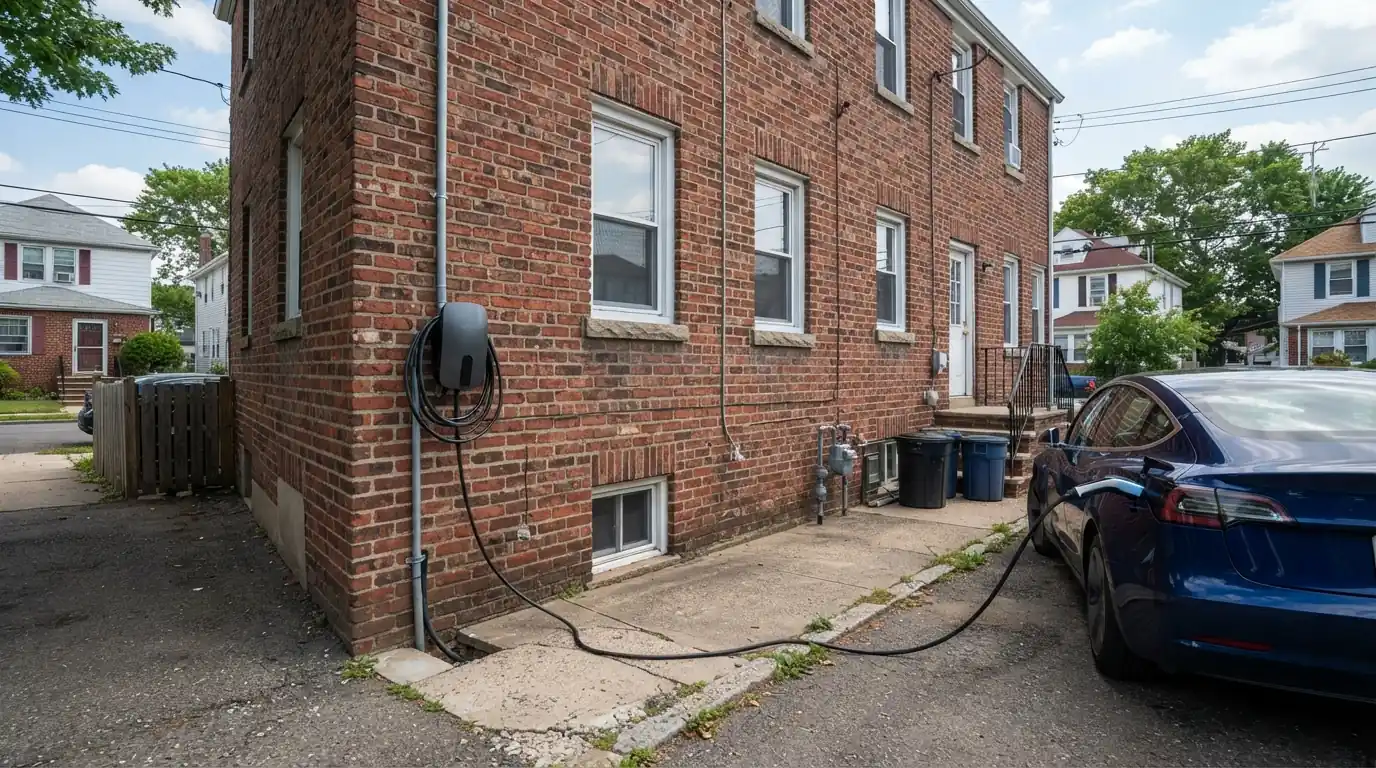
A Level 2 EV charger in a New York City needs a dedicated 240V circuit, usually 40 to 60 amps, a DOB electrical permit and an inspection. Most residential installs run roughly $1,200 to $3,500 depending on the distance from the panel and whether the panel has spare capacity, and a 240V charger delivers 20 to 30 miles of range per hour.
Updated September 2026
Plugging into a wall outlet gives you four or five miles an hour. For a car that does 30 or 40 miles a day in the city that barely keeps up, which is why almost every charger we install is a hardwired Level 2 unit on its own circuit.
The install has three parts: confirming the panel can carry a 40 to 60-amp circuit, running the circuit from the panel to where the car parks, and mounting and commissioning the charger. On a driveway that's straightforward. In a shared garage the circuit may run 100 feet through common space and the building has its own rules.
We install Tesla Wall Connectors, ChargePoint, Wallbox and Emporia units, and load-managed chargers for panels that don't have the headroom for a full 60-amp circuit.
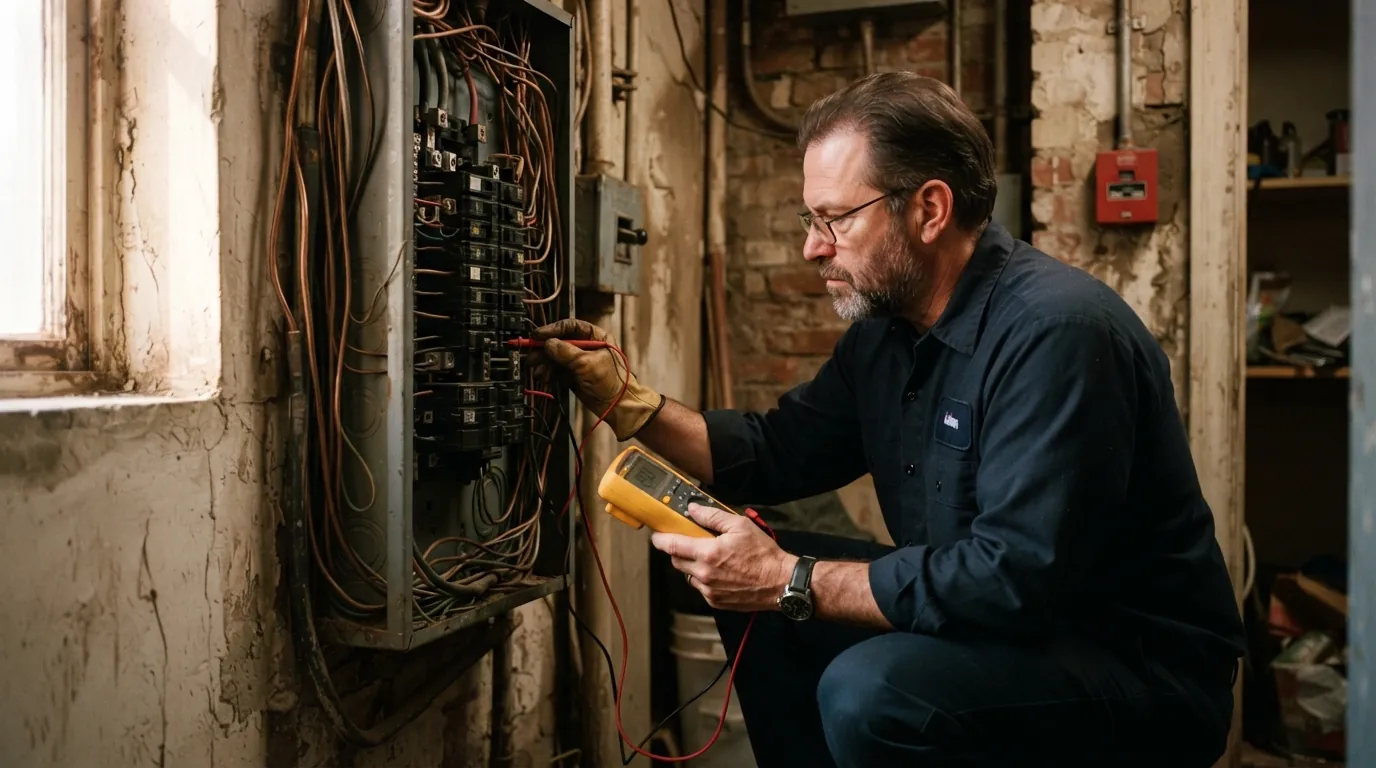
Which charger setup fits your building?
| Setup | Best for | Trade-off |
|---|---|---|
| 48-amp hardwired, 60-amp circuit | Houses with 200-amp service | Fastest charging; needs real panel headroom |
| 32-amp on a 40-amp circuit | 100-amp houses, most apartments | Slightly slower; fits more panels |
| Load-managed charger | Tight panels, shared feeders | Slows at peak times, full speed overnight |
Level 2 chargers for driveways and garages
For a house the charger mounts on the wall closest to where you park, on a dedicated 240V circuit from the main panel. We size the breaker to the charger's maximum output, usually 50 or 60 amps for a 48-amp unit, and run the circuit in conduit or armored cable rated for the location. Outdoor mounts get a weatherproof enclosure and, where the run is exposed, GFCI protection. The permit is filed before the circuit goes in, and inspection follows the install.
roughly $1,200 to $3,500+ depending on panel distance, spare capacity, conduit or trenching; more when a panel upgrade is needed. Source: aecontractorsnyc.com, 2026-06-21. Published market range for budgeting only, not our quote.
Tesla Wall Connector and universal J1772 units
A Tesla Wall Connector suits a Tesla household and now ships with an adapter for other cars. A universal J1772 unit like ChargePoint or Wallbox suits a mixed household or a spot you might sell with the property. Both hardwire the same way and both need the same circuit, so the choice is about the car you drive and whether you want app-based scheduling for off-peak charging. We'll talk you through it on the site visit, check the car's onboard charger rating, and install what fits.
Load-managed chargers for smaller panels
Not every panel can spare 60 amps. A load-managed charger monitors the whole service and throttles charging when the house is drawing heavily, then ramps back up overnight. That lets a 100-amp house or an apartment on a shared feeder add a charger without a full service upgrade. It's slower at peak times and full speed at night, which is when most cars charge anyway. When a load calculation comes back tight, this is usually the honest alternative to a bigger service.
Condo and co-op parking spot installs
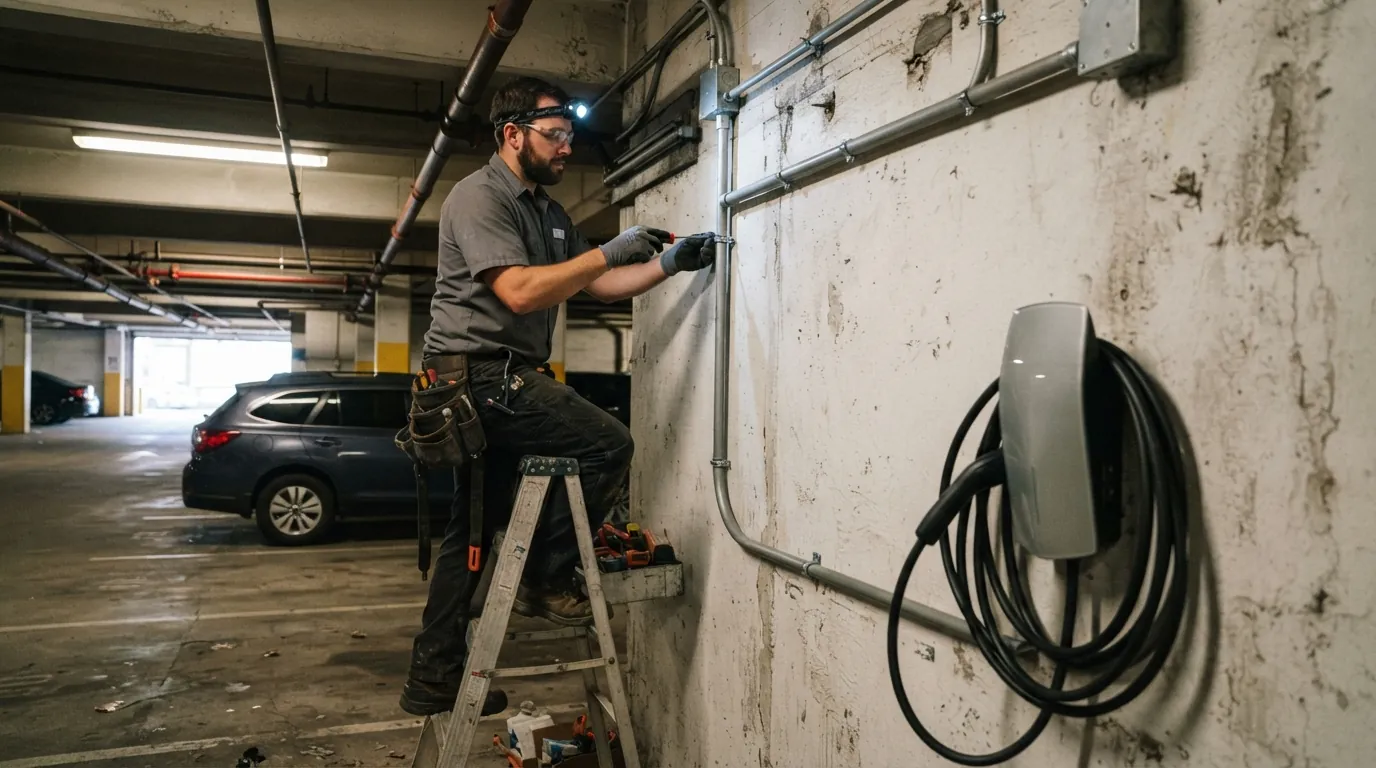
A charger in a deeded or assigned garage spot means running a circuit from your unit's panel or from house power with a submeter, and either way the building has to approve it. We prepare the load letter and the scope the board needs, coordinate with the managing agent on conduit routes through the garage, and handle the DOB filing. Boards move slowly, so the electrical part is usually the fastest step in the process, and we can start the paperwork while the approval is pending.
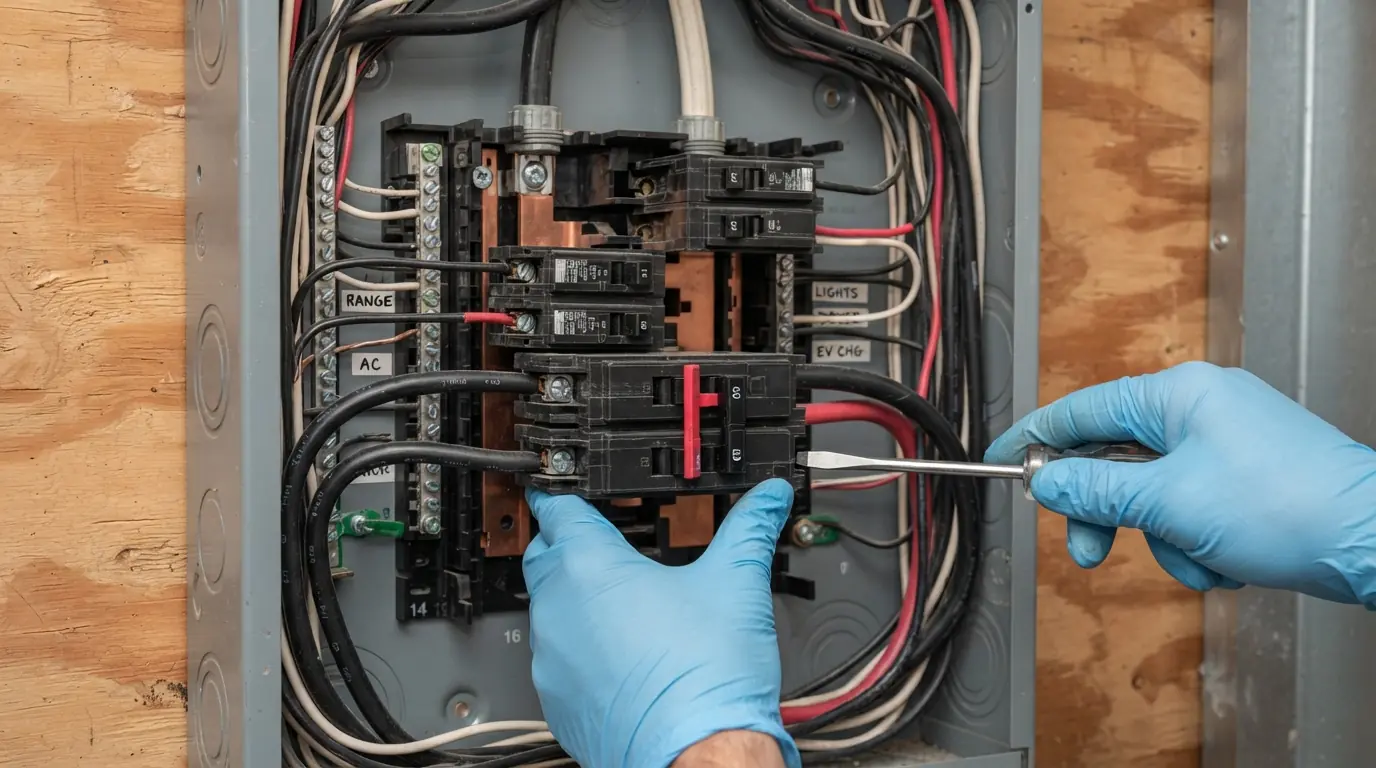
What moves the price
- Distance from the panel to the parking spot
- Spare capacity in the panel, or the panel upgrade if there isn't any
- Conduit, trenching or core drilling through masonry
- Charger model and whether it's hardwired or plug-in
- Load management hardware for a tight service
- Building approvals and submetering in a garage
- DOB permit and inspection fees
roughly $1,200 to $3,500+ depending on panel distance, spare capacity, conduit or trenching; more when a panel upgrade is needed. Source: aecontractorsnyc.com, 2026-06-21. Published market range for budgeting only, not our quote.
What a charger install includes
- Load calculation and panel capacity check
- Written scope with charger model and breaker size
- DOB electrical permit filed before work
- Dedicated 240V circuit from the panel
- Conduit or armored cable rated for the route
- Weatherproof enclosure and GFCI where exposed
- Charger mounted, wired and commissioned on your car
- App setup for scheduled off-peak charging
- DOB inspection scheduled and attended
What we see in New York buildings
Queens is where driveway chargers make the most sense. About 63 percent of the borough's housing units sat in one- and two-family structures by 1960, and 1961 zoning locked that in south and east of Queens Boulevard, so blocks around Woodhaven, Richmond Hill and Forest Hills have the driveway and the panel access a charger needs. The catch is the panel: many of those houses run on 100 amps, and a hardwired 240V charger needs spare capacity, which is why the load calculation comes before the quote.
What happens after you call
- 1
Site visit and load check
We look at the panel, the parking spot and the route between them, and run the load calculation.
- 2
Charger and circuit specified
Unit, breaker size, cable type and route in a written scope.
- 3
Permit filed
The DOB electrical permit goes in before any cable is run.
- 4
Circuit run and charger mounted
Panel to parking spot, weatherproofed where exposed, charger commissioned and tested on your car.
- 5
Inspection
We schedule and attend the DOB inspection and hand you the sign-off.
Brands we install and service include Square D and Eaton panels, Leviton and Lutron devices, and Tesla and ChargePoint chargers.
Questions about ev charger installation in New York
Roughly 20 to 30 miles of range per hour, so a full overnight charge for almost any EV.
Yes. A hardwired 240V charger needs a DOB electrical permit and inspection, and we file it.
In a deeded or assigned spot, usually yes, with the board's approval. We supply the load letter and scope the building asks for.
A load calculation tells us. If it's tight, a load-managed charger avoids a service upgrade.
A Tesla Wall Connector for a Tesla household, a universal unit for a mixed one. Both wire the same way.
Yes, as long as it's a listed unit with an installation manual. We'll confirm the model before the visit.