
During a heat wave, Con Edison may reduce voltage and ask customers to conserve between 2 p.m. and 10 p.m. Lower voltage makes compressors in air conditioners and refrigerators work harder. Turn off large loads you do not need, unplug sensitive electronics, and when power returns, bring air conditioners back one at a time. Afterward, dedicated AC circuits and surge protection prevent most repeat problems.
What happened in summer 2026
The early-July heat wave hit the grid hard. Con Edison reported more than 80,000 customers losing power across the boroughs and cut voltage by 8 percent across wide areas of Brooklyn and Queens, and nearly 10,000 Queens customers were temporarily shut off. The outages concentrated in Queens, with more than 15,000 customers affected, Brooklyn with more than 7,000 and Staten Island with more than 6,000.
The Fourth of July storms added to it, leaving more than 2,300 Brooklyn and about 1,000 Queens customers still out late on July 5. For many households the damage was not the outage itself but what the low voltage and the restoration surge did to appliances.

What a voltage reduction does
A voltage reduction keeps the grid up by lowering the voltage everyone receives. Lights dim slightly and most electronics cope. Motors do not: compressors in air conditioners, refrigerators and freezers draw more current to do the same work at lower voltage, which heats their windings and trips circuits that were already near their limit.
That is why breakers that were fine in May trip in July, and why a window air conditioner sharing a circuit with the kitchen becomes a daily problem during a heat wave. Our tripping breaker guide covers that pattern.
During a brownout
Cut the load you do not need. Con Edison asks customers to conserve between 2 p.m. and 10 p.m. during heat, and running fewer large appliances at once also protects your own circuits. Raise the thermostat a few degrees rather than switching air conditioners on and off repeatedly, and hold off on laundry and dishwashing until evening.
Unplug computers, televisions and chargers you are not using. Leave the refrigerator running, but keep the door closed. If lights dim sharply or motors hum without starting, switch those appliances off until voltage recovers.
- Run only the air conditioners you need
- Avoid dryers, ovens and dishwashers from 2 to 10 p.m.
- Unplug electronics you are not using
- Keep refrigerator and freezer doors closed
- Switch off motors that hum without starting
When the power comes back
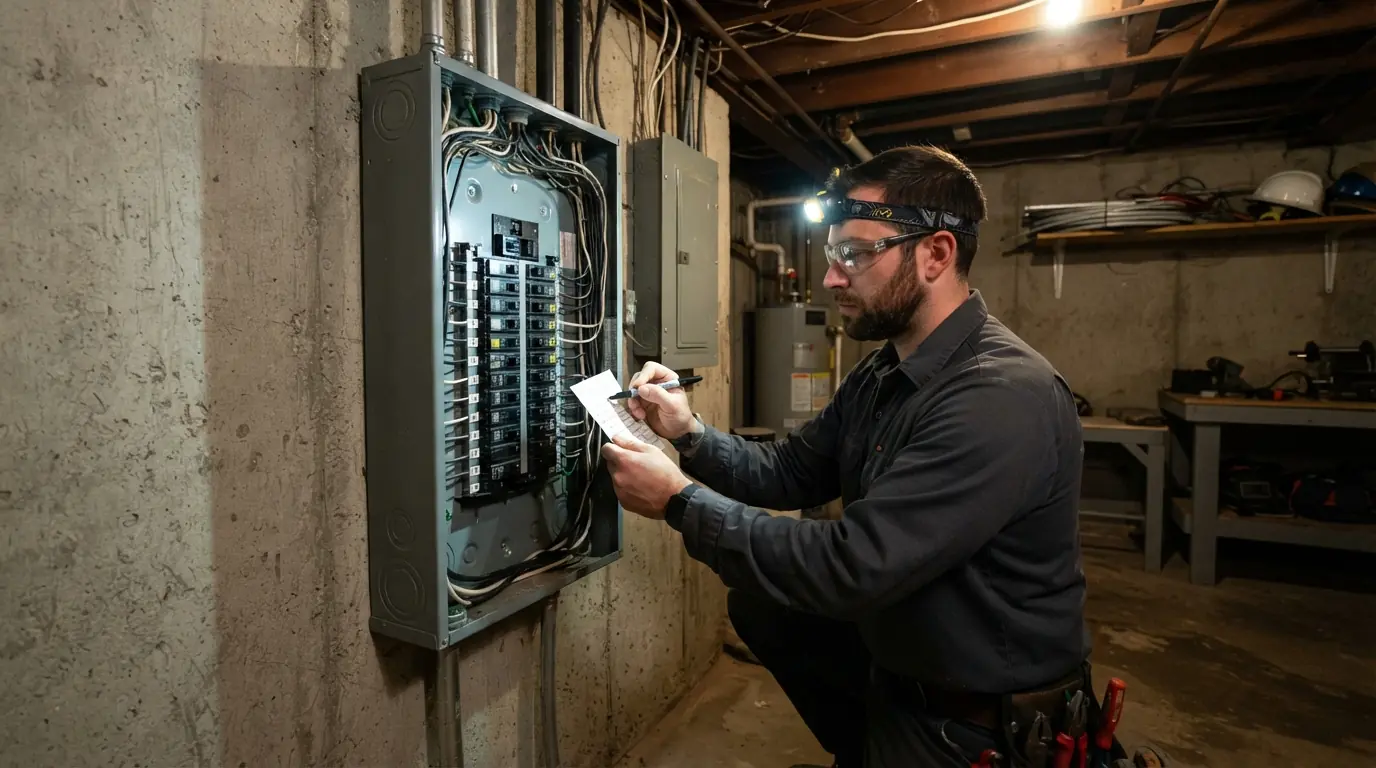
Restoration is a switching event, and it can send a spike into every home coming back online at once. Leave air conditioners and large appliances off for a few minutes after power returns, then bring them back one at a time, so their compressors do not all start against a sagging supply.
If a breaker trips as you restore loads, do not keep resetting it. Something may have been damaged in the outage, and an emergency electrician can check it before it becomes a larger fault.
What to fix before next summer
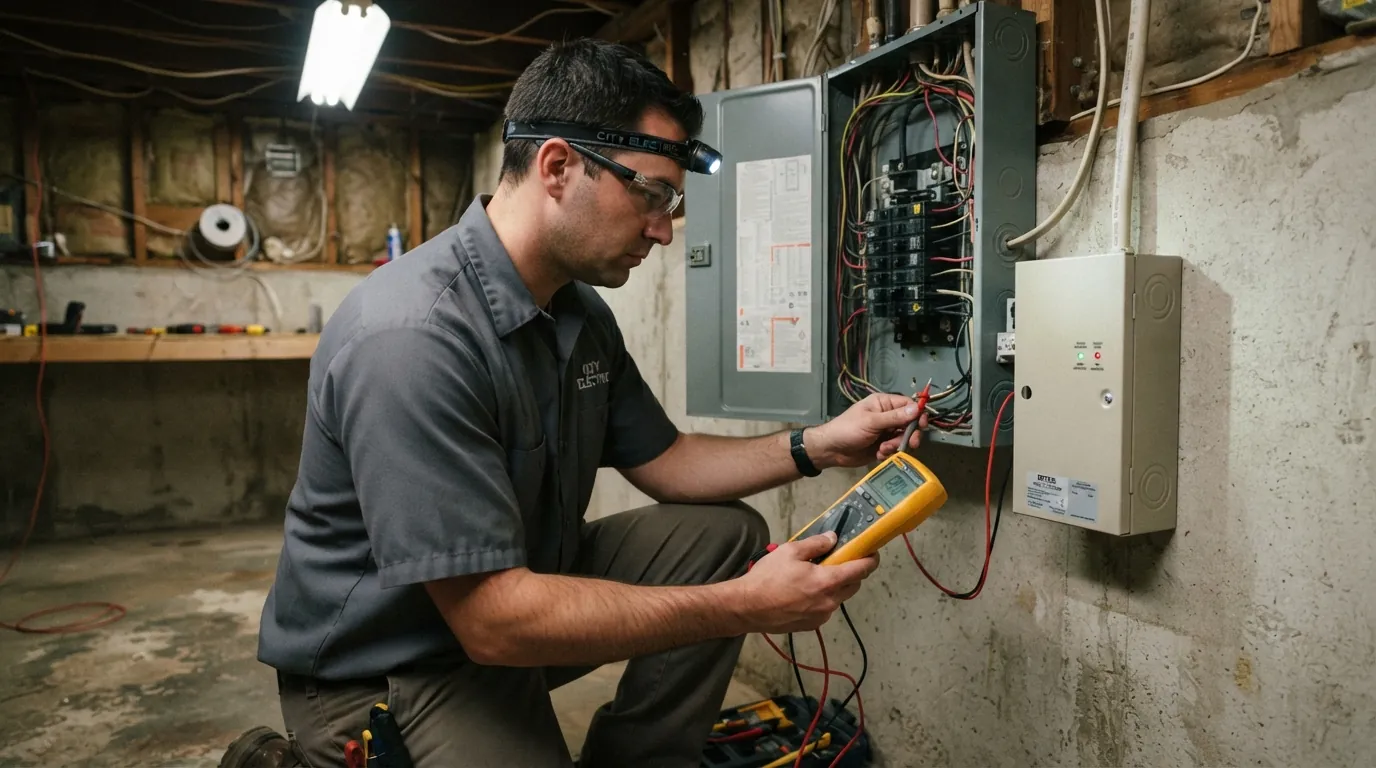
Three changes prevent most heat-wave problems. A dedicated circuit for each large air conditioner stops the shared-circuit trips. A whole-home surge device at the panel, paired with plug-in protection for electronics, limits the damage from restoration spikes. And a load calculation tells you whether the panel and service can carry the cooling you actually run.
For houses where losing power for a day is a real problem, a standby generator or a generator inlet with an interlock keeps essentials running safely.
Planning for medical devices and food
If anyone in the home relies on powered medical equipment, plan backup power before summer rather than during an outage. A generator inlet, a battery system or a standby generator can all keep a device running; the right choice depends on the equipment's load and how long it needs to run.
For food, a full freezer stays cold far longer than a half-empty one if the door stays shut. A small portable generator connected through a proper inlet, never an extension cord through a window, can keep a refrigerator going through a long outage.
Signs your wiring is struggling in the heat
Heat waves show you where the weak points are. An outlet or plug that feels warm, lights that dim every time the air conditioner starts, breakers that trip in the late afternoon but never in the morning, and an air conditioner that hums without starting are all signs a circuit or connection is at its limit.
A burning smell near an outlet or the panel is different: switch that circuit off and call. The rest can wait for a visit, ideally before the next heat wave rather than during it.
- Warm outlets, plugs or cover plates
- Lights dimming when the AC starts
- Breakers tripping in the late afternoon
- An AC humming without starting
- A burning smell near an outlet or panel
Services this guide covers
Related guides
Frequently asked questions
Con Edison may be reducing voltage to protect the grid.
It makes the compressor work harder; avoid restarting it repeatedly.
Yes, sensitive electronics you are not using.
Bring large appliances back one at a time after a few minutes.
Yes. Restoration spikes are what panel surge devices are for.
A generator inlet with an interlock, or a standby generator for houses.