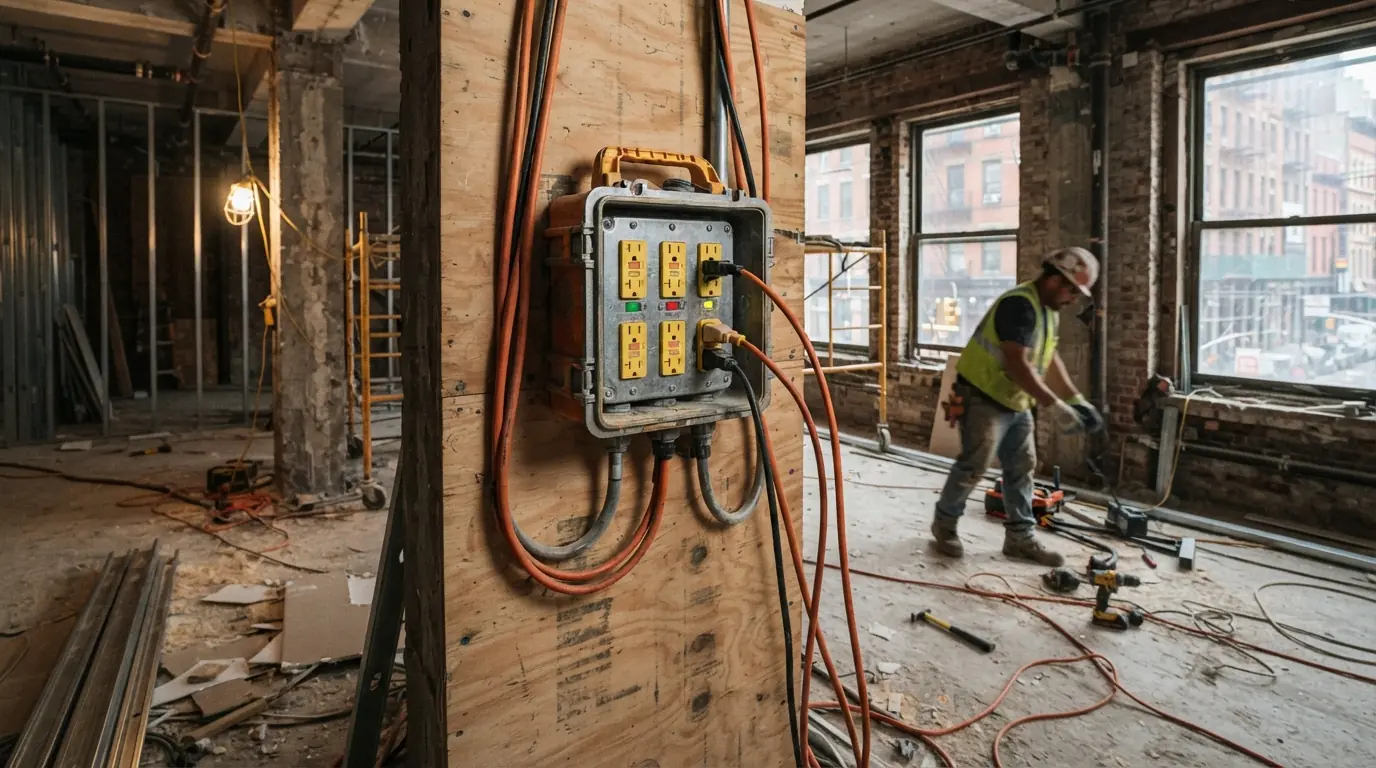
Temporary construction power in New York City is the electrical setup that runs a job before the permanent system is ready: a temporary panel fed from the existing service or a new temporary service, site lighting, and GFCI-protected receptacles for tools. It's installed and filed like other electrical work, maintained during the job, and removed when permanent power takes over.
Updated September 2026
Every renovation and build runs on temporary power for weeks or months. Done badly, it's extension cords daisy-chained through a stairwell. Done properly, it's a panel with labeled circuits, lighting on every floor and protected receptacles where the trades need them.
We set it up to match the construction schedule, move it as the work progresses, and take it out as the permanent wiring comes online.
Which setup does the site need?
| Setup | Best for | What it involves |
|---|---|---|
| Temporary panel from the existing service | Gut renovations | Panel, lighting and GFCI stations |
| Temporary service | New buildings and additions | Con Edison connection and site panel |
| Occupied-building setup | Apartment and floor renovations | Isolated circuits and coordinated shutdowns |
Temporary service and panels
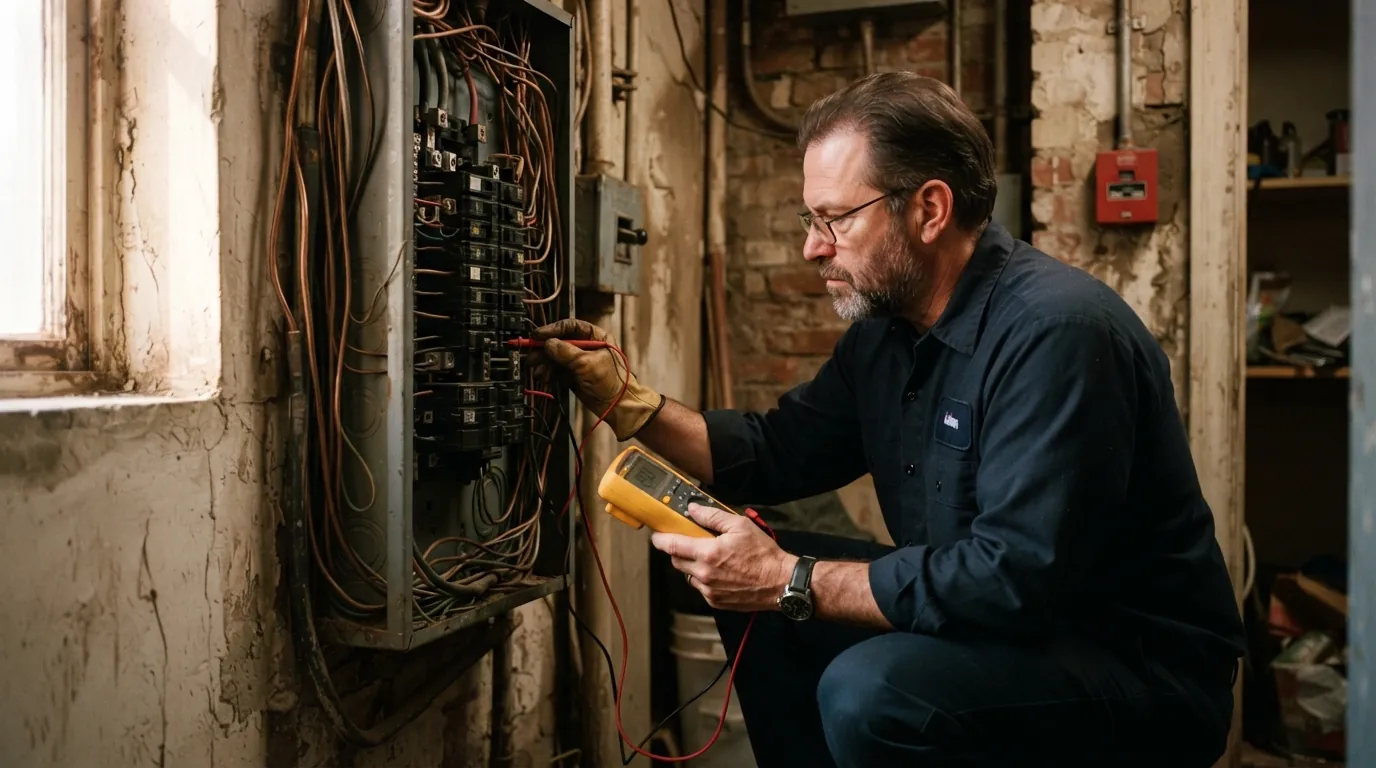
On a gut renovation, temporary power usually comes from the existing service through a temporary panel placed where the trades can reach it. On a new building or a major addition, a temporary service may be needed until the permanent one is energized, which involves Con Edison. We size the temporary panel to the tools and equipment on site, protect every receptacle circuit with GFCI, and label each circuit so the trades know what they're plugged into. Circuits are checked weekly so a damaged cord doesn't sit in service.
$150 to $300 for a new circuit or minor work; $300 to $600 for a panel upgrade. Source: aecontractorsnyc.com, 2026-09. Published market range for budgeting only, not our quote.
Site lighting and receptacles
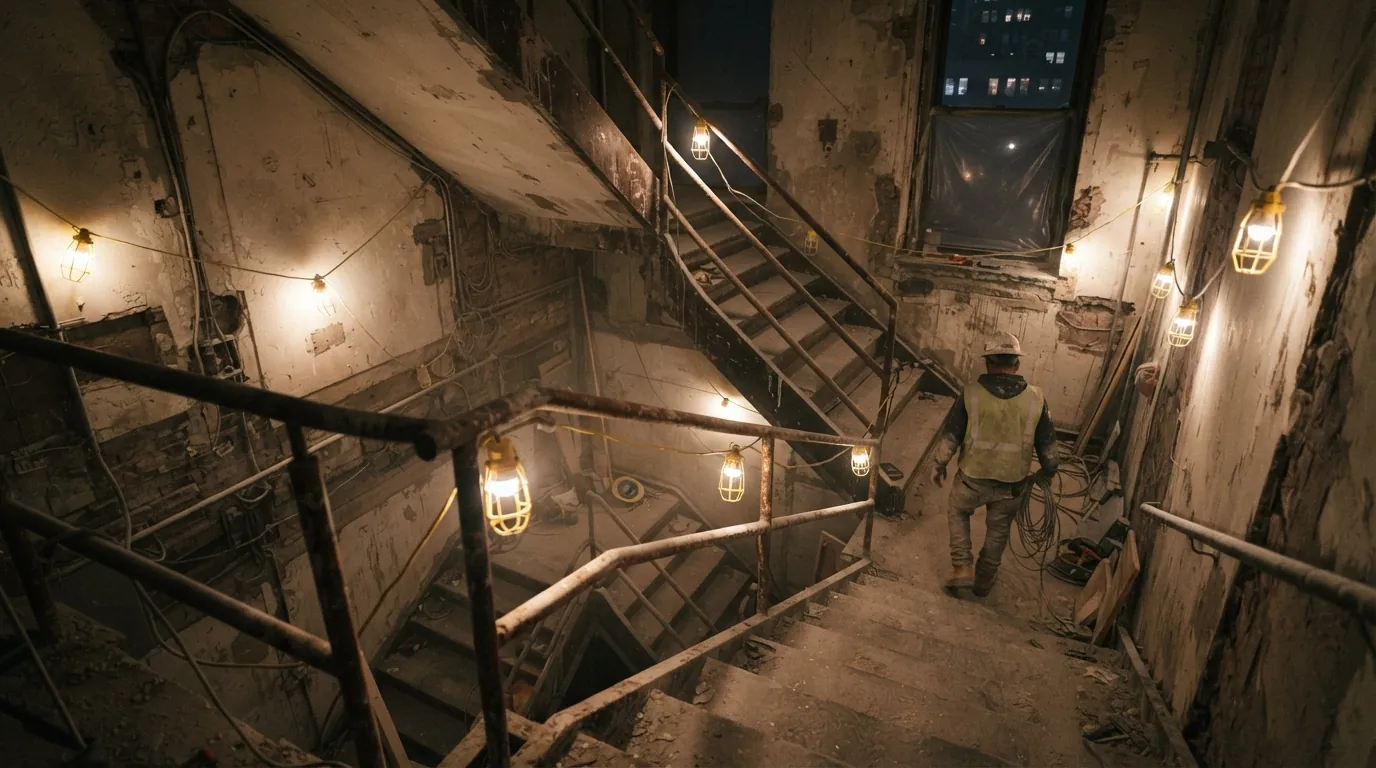
Work areas, stairs and exits need lighting from the day demolition starts. We string temporary lighting on its own circuits so a tripped saw doesn't plunge a stairwell into darkness, and install GFCI-protected receptacle stations on each floor where the trades need them. Cords are routed overhead or protected where they cross walkways. As walls go up and areas close in, we move lighting and stations to match the work. Exit paths stay lit at all times, including after the crews leave. Damaged fixtures are replaced the same day.
Power during renovations in occupied buildings
Renovating one apartment or floor in an occupied building means the temporary power has to stay separate from the neighbors' circuits and the building's life-safety systems. We feed temporary panels from the unit's own service where possible, keep hallways and stairs clear of cords, and coordinate any shutdown of the unit's power with the super and managing agent. Neighbors shouldn't know the renovation's electrical is there, except when the lights stay on. Noisy work and shutdowns are scheduled within the building's permitted hours.
Removal and make-safe at the end
Temporary power has to come out cleanly when the permanent system takes over. We cut over circuits to the new panel as rooms are finished, remove temporary panels, lighting and cords, and make safe every connection they used. Nothing temporary is left in a wall or ceiling. The general contractor gets a clear handover, and the space is ready for the final inspection without leftover wiring that an inspector would question. Any temporary penetration through walls or floors is left ready for the fire-stopping trade.
What moves the price
- Size of the site and number of floors
- Temporary panel fed from existing or new service
- Con Edison work for a temporary service
- Site lighting and receptacle stations
- Moving equipment as the work progresses
- Occupied-building requirements
- Removal and make-safe at the end
$150 to $300 for a new circuit or minor work; $300 to $600 for a panel upgrade. Source: aecontractorsnyc.com, 2026-09. Published market range for budgeting only, not our quote.
What we see in New York buildings
Our office sits in lower Manhattan, where Fulton Street falls inside the Department of Buildings' electrical-permit district for the area, and DOB calendars list electrical service equipment approvals for addresses on the street. Temporary power on job sites across the Financial District and the rest of downtown runs through that same permit and inspection process, so it's filed and scheduled alongside the permanent electrical work rather than as an afterthought.
What happens after you call
- 1
Plan with the GC
Tools, equipment and schedule reviewed.
- 2
File and schedule
Temporary work filed with the permanent electrical.
- 3
Install
Panel, lighting and GFCI receptacle stations set.
- 4
Maintain and move
Adjusted as floors close in and trades change.
- 5
Remove and hand over
Cut over to permanent power and made safe.
How long temporary power takes to set up
A temporary panel and lighting for a single apartment renovation is usually set up in a day. A multi-floor site takes longer and grows with the job. A new temporary service depends on Con Edison's schedule, so we request it as early as the site plan allows. Removal at the end takes a day or two, timed with the cutover to permanent power.
Questions about temporary construction power in New York
Often, through a temporary panel sized for the site.
Yes. Every receptacle circuit on site is GFCI-protected.
We do, as the work progresses.
We keep temporary power separate from neighbors' circuits and clear of common areas.
Yes, completely, before the final inspection.
Yes. We plan it around the GC's schedule.