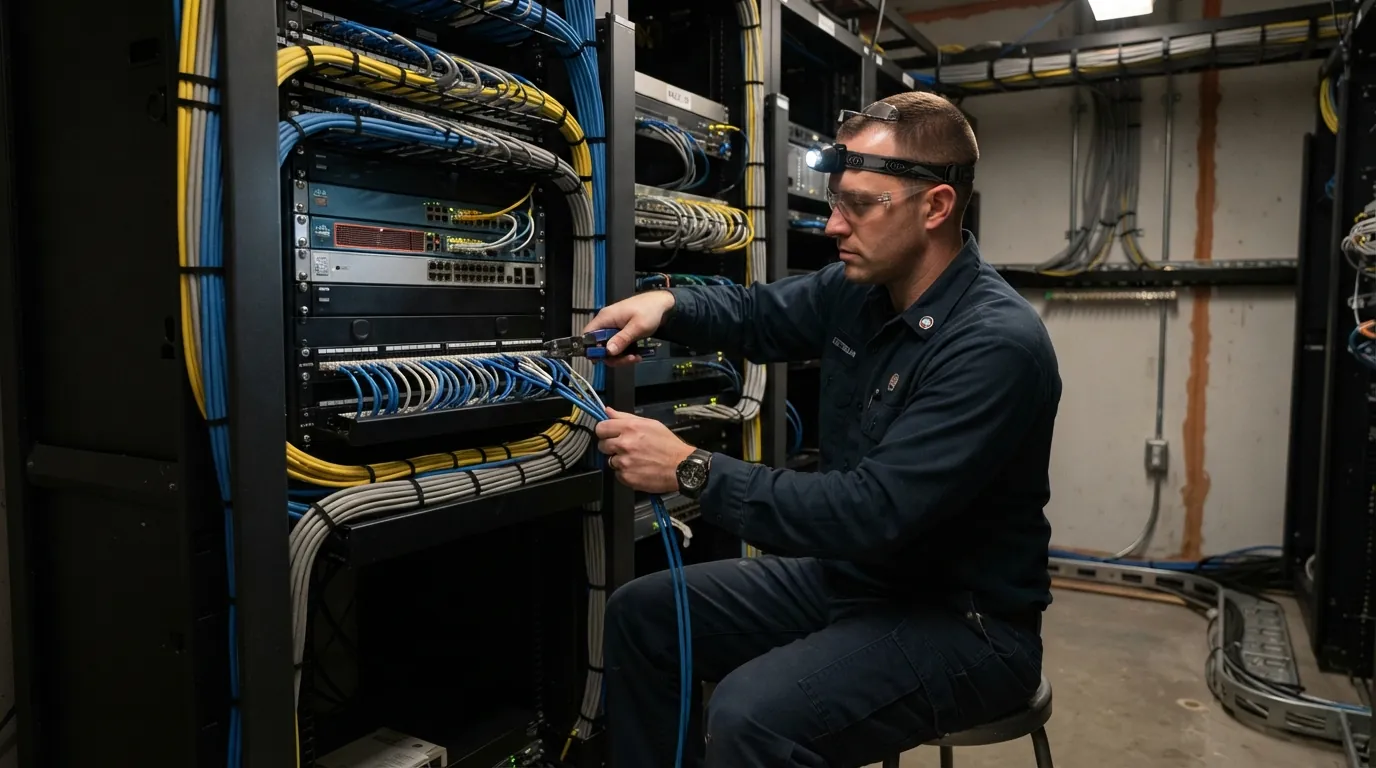
Data and low-voltage wiring in New York City means structured cabling (Cat6 copper and fiber), Wi-Fi access point drops, AV wiring for meeting rooms, and the dedicated power a server or network closet needs. Every run is terminated, tested and labeled, and NYC electrician time typically runs $100 to $200 an hour standard.
Updated September 2026
Wireless still depends on wires. Access points need cable and power, and a network that's slow or dropping usually has a cabling or power problem somewhere.
Because we're electricians, the data runs and the power behind them are planned together, so the closet, the access points and the conference room all have what they need.
Which cabling fits the job?
| Cable | Best for | Limit |
|---|---|---|
| Cat6 | Desk drops and access points | 100-meter channel |
| Cat6A | High-speed drops and future-proofing | Thicker cable, more space |
| Fiber | Between floors and buildings | Needs media converters or fiber switches |
Cat6 and fiber runs
Cat6 copper is the standard for desk drops and access points, good for a 100-meter channel from the switch to the device. Longer distances and connections between floors or buildings use fiber. We run cable in plenum-rated jacket where it passes through air-handling ceilings, keep it clear of power to avoid interference, and terminate on patch panels in the closet. Every run is tested and labeled at both ends, and you get a record of which port serves which desk. Spare runs to key rooms are cheap now and expensive later.
$100 to $200 per hour standard; $200 to $400 per hour emergency or after hours; service call minimum $150 to $300. Source: aecontractorsnyc.com, 2026-09. Published market range for budgeting only, not our quote.
Wi-Fi access point drops
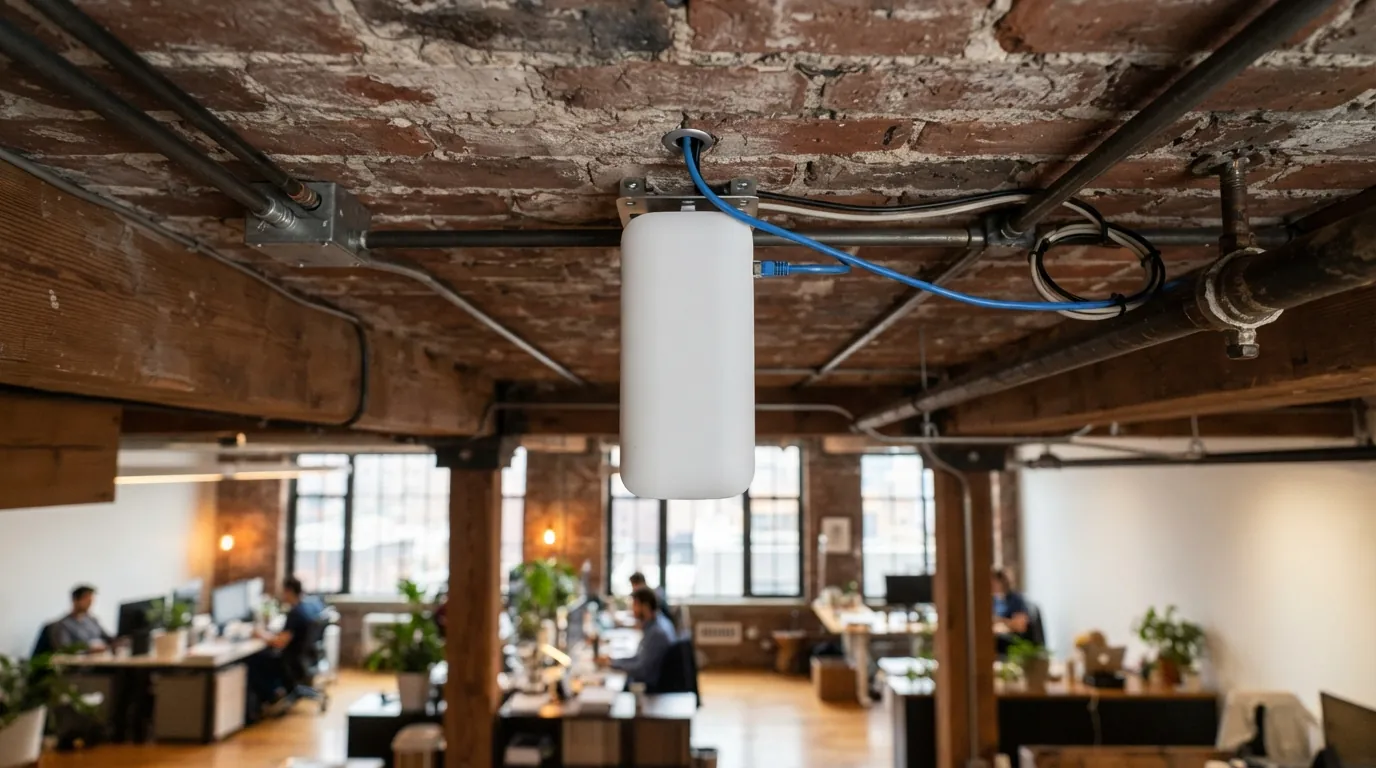
Access points work best mounted on the ceiling, spaced to cover the floor, and powered over the same Cat6 cable that carries the data. We plan drop locations from the floor plan and wall construction, since brick and plaster block signal far more than drywall. Each drop gets a cable run back to a PoE switch and a neat ceiling mount. In older buildings with thick masonry, more access points closer together beat one powerful unit trying to push through walls.
Server closet power
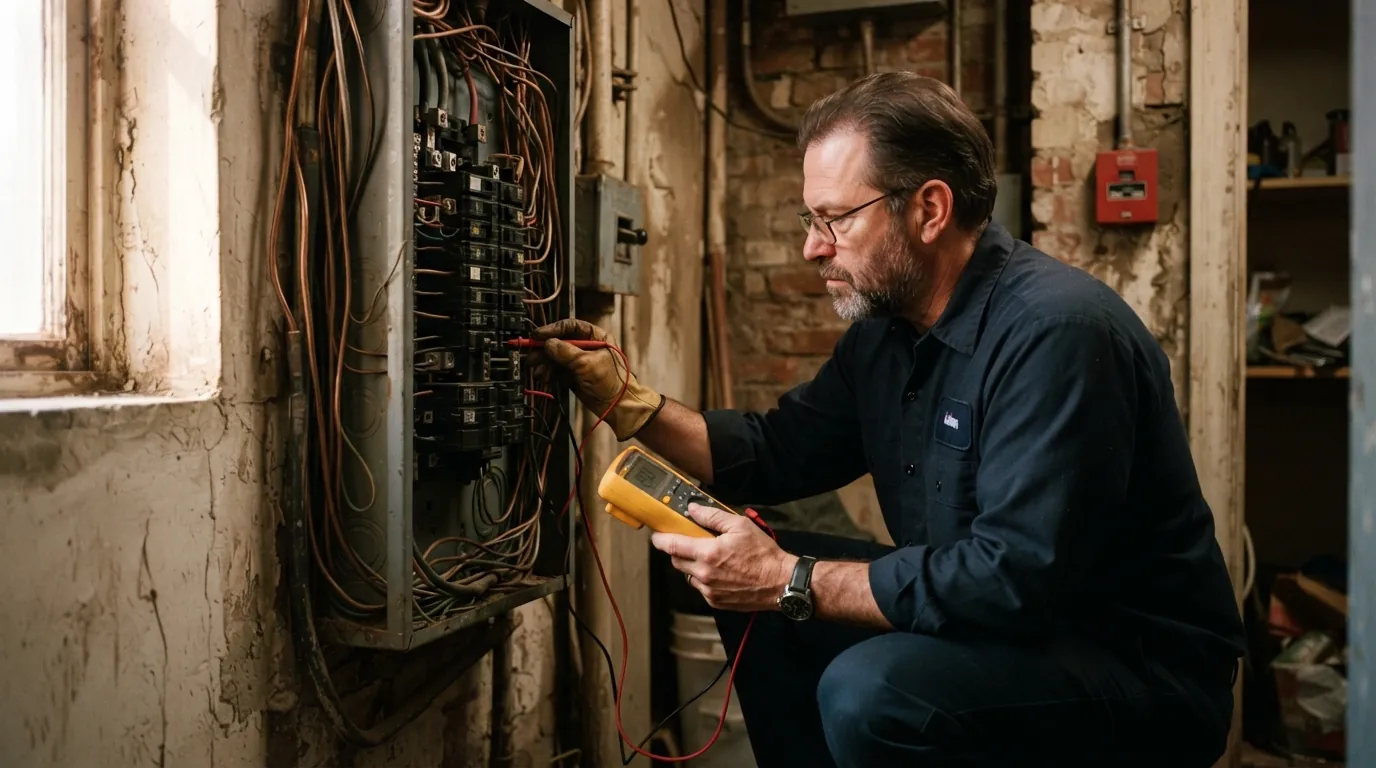
A network closet often starts life with a single outlet and a power strip. We give it dedicated circuits sized to the equipment, isolated-ground or twist-lock receptacles where the gear needs them, and space for a UPS so switches and servers ride through brief outages and shut down cleanly on long ones. Ventilation and a thermostat-controlled fan keep the closet cool. Labeling each circuit at the panel means nobody switches off the network while hunting for a hallway light. The UPS runtime is sized to the equipment it carries.
Conference room AV wiring
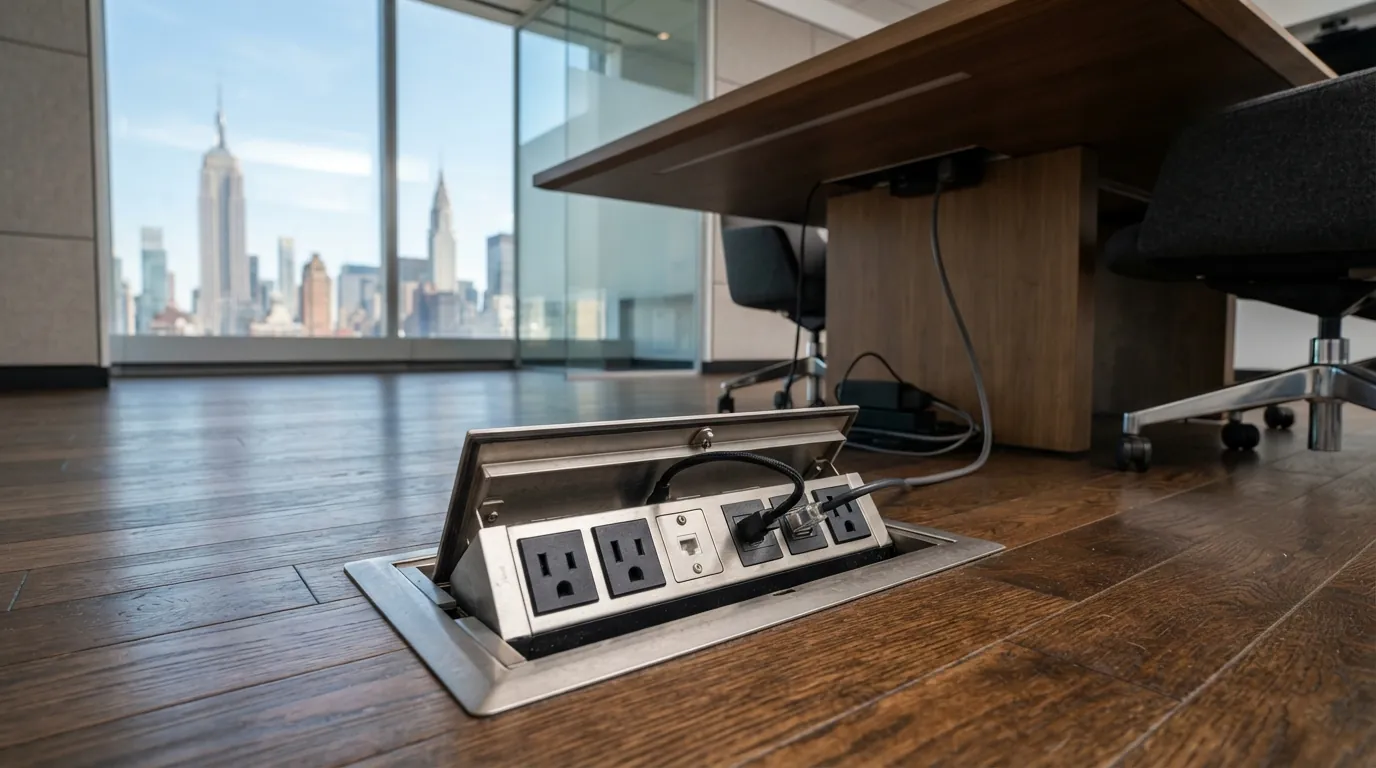
Conference rooms need a display, a camera, microphones, a table connection and power, all without cables across the floor. We run HDMI or HDBaseT from the table to the display, add floor boxes or table grommets with power and data, and mount wall plates for the camera and control panel. Cable is concealed in the wall or ceiling. Once installed, we test every input with the equipment you use, so the first meeting doesn't start with a search for the right adapter.
What moves the price
- Number of drops and run lengths
- Cat6 copper or fiber
- Plenum-rated cable in air-handling ceilings
- Patch panels, racks and labeling
- Closet circuits and UPS space
- AV runs, floor boxes and wall plates
- After-hours work in occupied offices
$100 to $200 per hour standard; $200 to $400 per hour emergency or after hours; service call minimum $150 to $300. Source: aecontractorsnyc.com, 2026-09. Published market range for budgeting only, not our quote.
What a cabling job includes
- Survey of walls, ceilings and closet
- Drop and access point layout
- Plenum-rated cable where required
- Terminations on patch panels and plates
- Every run tested
- Both ends labeled
- Dedicated closet circuits
- Space and power for a UPS
- Port map handed over
What we see in New York buildings
Summer 2026 showed why network closets need proper power. Heat-related outages in July concentrated in Queens with more than 15,000 customers, Brooklyn with more than 7,000 and Staten Island with more than 6,000, with Richmond Hill and Flushing among the hardest hit. A closet on a sized circuit with a UPS rides through a brief dropout and shuts down cleanly on a long one instead of crashing.
What happens after you call
- 1
Site survey
Floor plan, walls, ceilings and closet reviewed.
- 2
Cabling plan
Drop, access point and AV locations set.
- 3
Run and terminate
Cable run, terminated on patch panels and wall plates.
- 4
Test and label
Every run tested and labeled at both ends.
- 5
Closet power and handover
Circuits, UPS space and a port record delivered.
Questions about data & low-voltage wiring in New York
Cat6 for desks and access points; fiber for long runs and between floors.
Yes, with PoE from the network switch.
Yes. Every run is tested and labeled at both ends.
Yes, with dedicated circuits and space for a UPS.
Yes, in walls, ceilings and floor boxes.
Yes. Office cabling is often done at night or on weekends.