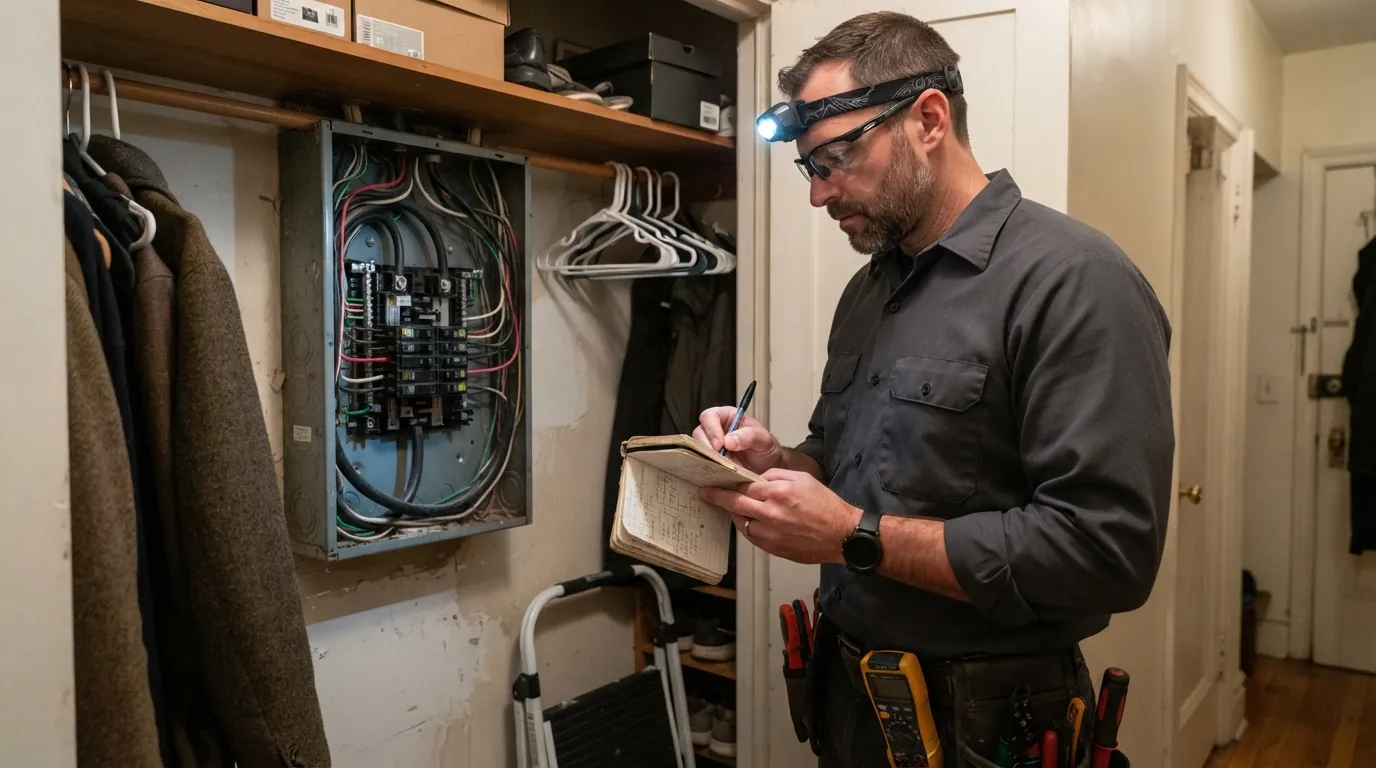
A load calculation in New York City adds up an apartment's or building's existing and planned electrical loads using the method the code requires and compares the total with the service. A co-op load letter presents that calculation for the board and its engineer, usually before approving new appliances, air conditioning or EV charging. Many apartments need a panel upgrade before a 240-volt, 50-amp circuit can be added.
Updated September 2026
Boards ask for load letters because every apartment draws through shared risers and meter banks. One unit adding large loads without a check can leave the whole line short.
A good letter is exact rather than estimated: it uses the actual equipment ratings, the actual service size and, where it matters, the riser feeding the unit. That's what gets approved the first time.
Which calculation do you need?
| Calculation | Best for | What it answers |
|---|---|---|
| Unit load letter | One renovation or appliance | Does it fit on this unit's service? |
| Electrification study | Going all-electric in stages | What capacity work, done once, covers everything? |
| Riser check | Boards and managers | How much room is left on this riser? |
Co-op and condo load letters
A load letter covers the unit's service size and panel, the existing connected load, the new equipment by nameplate, the calculated total and a clear conclusion: fits as is, needs a panel change, or is limited by the riser. We visit to record the panel and feeder, take the equipment list from your designer or contractor, and write the letter in the form the managing agent asks for. If the building has its own template, we use it. Revisions after the engineer's review are included.
$100 to $200 per hour standard; $200 to $400 per hour emergency or after hours; service call minimum $150 to $300. Source: aecontractorsnyc.com, 2026-09. Published market range for budgeting only, not our quote.
Load calculations for EV chargers
A charger is usually the largest single load an apartment or house adds, running for hours at a time. The calculation shows whether the service carries it alongside everything else, and whether a load-managed charger can share capacity to avoid an upgrade. For houses, it decides between a simple circuit and a panel change. For garages, the calculation covers the building service and shows how many chargers fit before new capacity is needed. The result names the charger size the service can support, so you can buy the right unit.
Electrification load studies
Switching a home to heat pumps, induction, a heat pump water heater and an electric dryer adds up fast. An electrification study calculates the full plan, not just the next appliance, so the capacity work is done once. It shows which loads fit on the existing service, where load management helps, and when a service upgrade is the only answer. Boards planning building-wide electrification use the same approach across every unit type. It becomes the plan your contractor, your board and your budget all work from.
Riser capacity checks
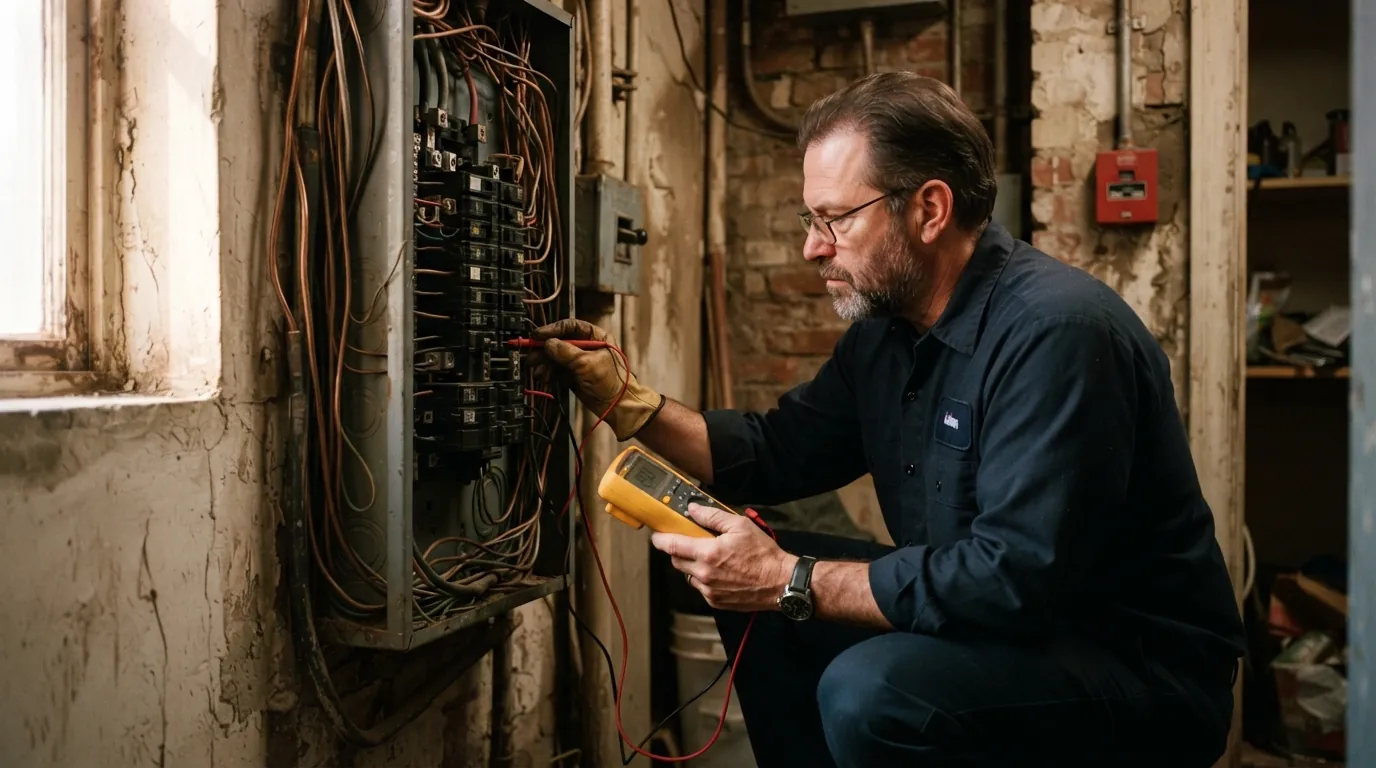
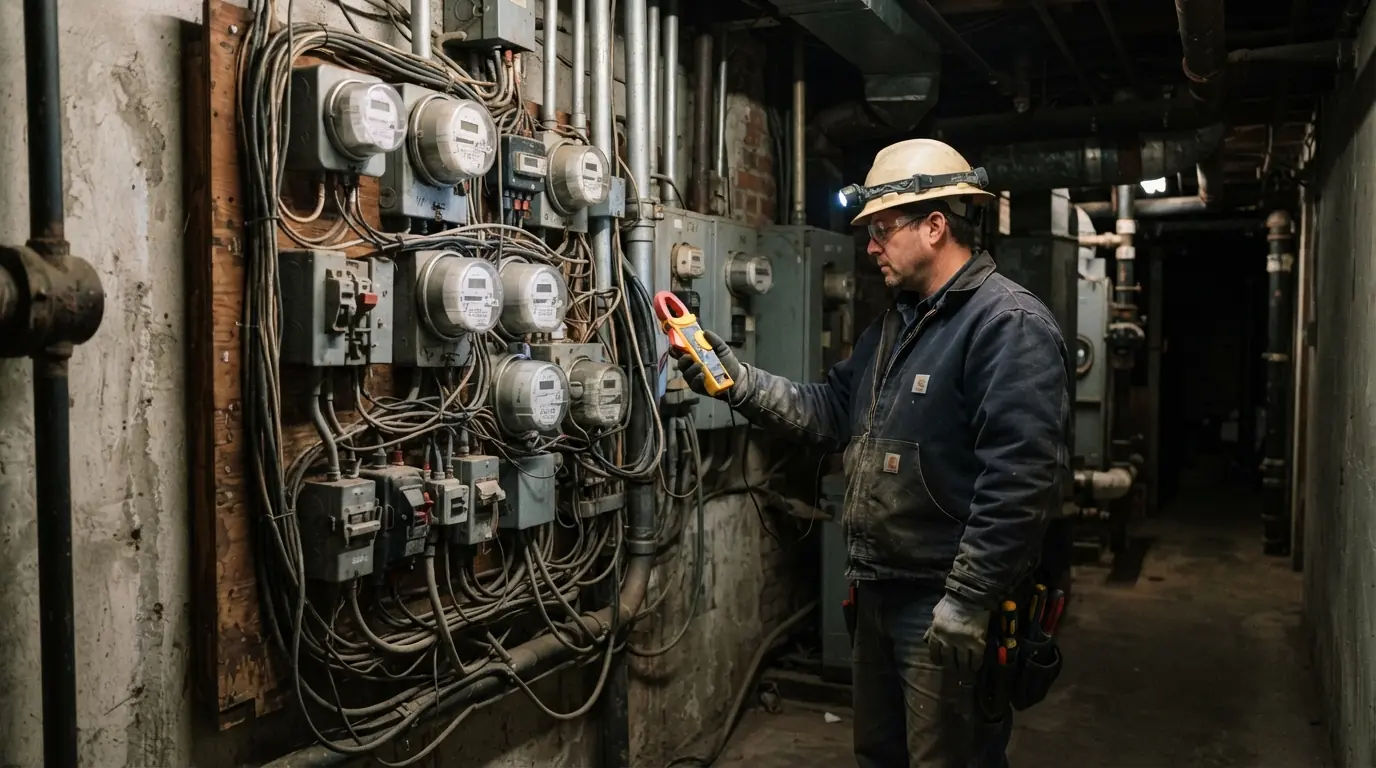
In apartment buildings, the unit panel is often not the limit; the riser feeding it is. A riser check traces the conductors from the meter bank to the unit, confirms their size and condition, and compares the total load of every unit on that riser with its capacity. It answers the question a board actually cares about: whether approving one shareholder's request leaves room for the rest. We report it plainly, with the riser upgrade priced when it's needed. The findings are written for non-engineers on the board.
What moves the price
- Single appliance or full electrification plan
- Unit panel and feeder survey
- Riser tracing in the building
- Building template or custom letter
- Number of units or chargers covered
- Revisions when the equipment list changes
- Coordination with the building engineer
$100 to $200 per hour standard; $200 to $400 per hour emergency or after hours; service call minimum $150 to $300. Source: aecontractorsnyc.com, 2026-09. Published market range for budgeting only, not our quote.
What a load letter includes
- Site visit to record panel and feeder
- Existing connected loads listed
- New equipment by nameplate rating
- Calculation by the code method
- Riser checked where it matters
- Clear conclusion and any required upgrades
- Building template used where supplied
- Insurance certificate attached on request
- Answers to the engineer's questions
What we see in New York buildings
Chargers are where load letters come up most often now. In New York City, a hardwired 240-volt Level 2 charger requires a DOB electrical permit and inspection, and many apartments need a panel upgrade before a 240-volt, 50-amp circuit can be added. The calculation decides which apartments are in that group, which is exactly the question a board or managing agent asks before approving the work.
What happens after you call
- 1
Equipment list
Model numbers from your designer, contractor or manual.
- 2
Site survey
Panel, feeder and, where needed, riser recorded.
- 3
Calculation
Code method, actual ratings, total against the service.
- 4
Letter
Written in the building's format with a clear conclusion.
- 5
Follow-up
Questions from the board's engineer answered.
Questions about load calculations & co-op load letters in New York
A signed calculation showing whether your planned equipment fits on the unit's service and riser.
Most boards require one for induction, dryers, AC and chargers.
Yes. We write it in whatever format the managing agent asks for.
The letter says so, and we can price the riser work for the board.
Usually one visit, with the letter following once the equipment list is final.
No. It supports the board's approval; the permit is filed separately.