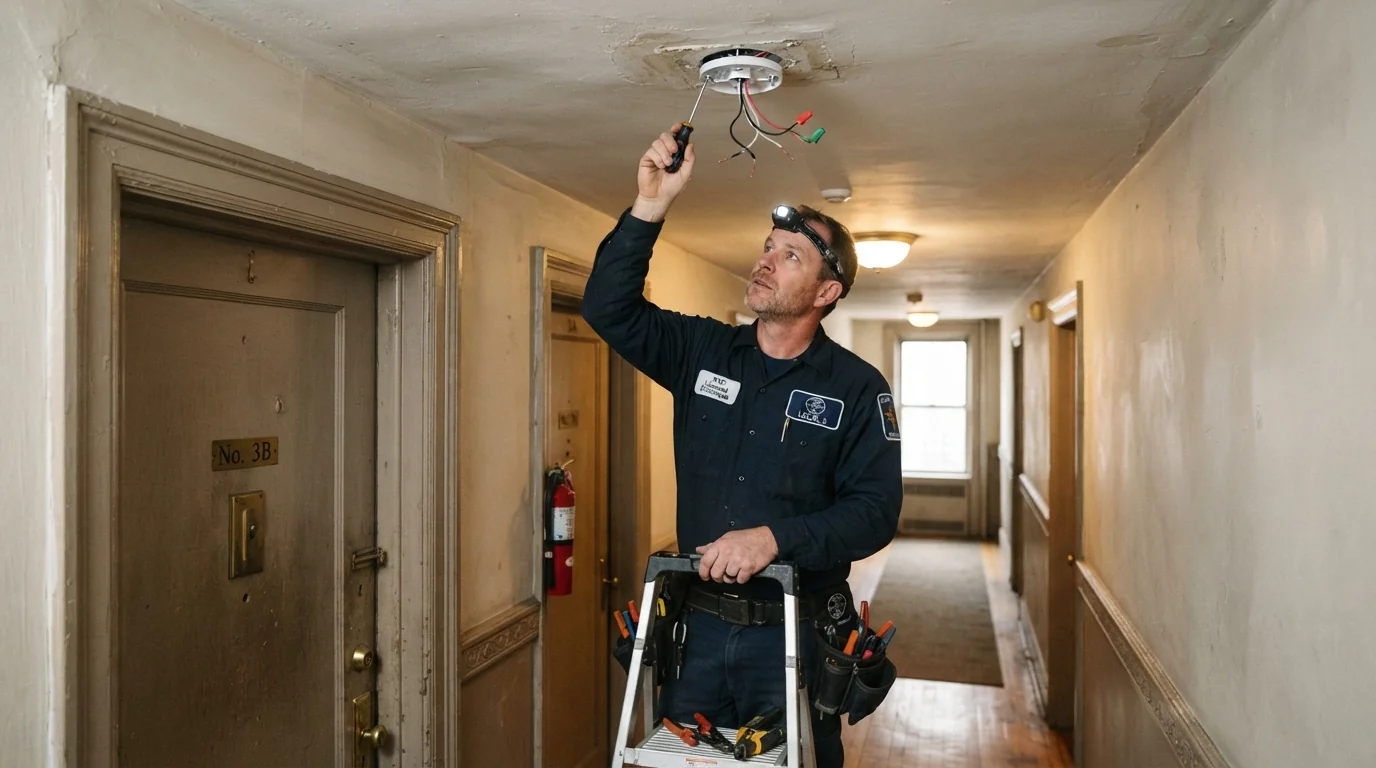
In New York City, Local Law 50 requires smoke and carbon monoxide detectors in all residential units; battery-only detectors must be ten-year sealed units, and new construction needs hardwired interconnected systems. We install and replace both types, place them where the code requires, and test each one before we leave.
Updated September 2026
Detectors are cheap and the rules are specific: where they go, what type, how they're powered, and when they have to be replaced. Landlords carry most of the responsibility in rental units, and renovations often trigger an upgrade to hardwired units.
We check what's installed, replace units that are expired or the wrong type, and wire interconnected systems where they're required or wanted.
Hardwired interconnected systems
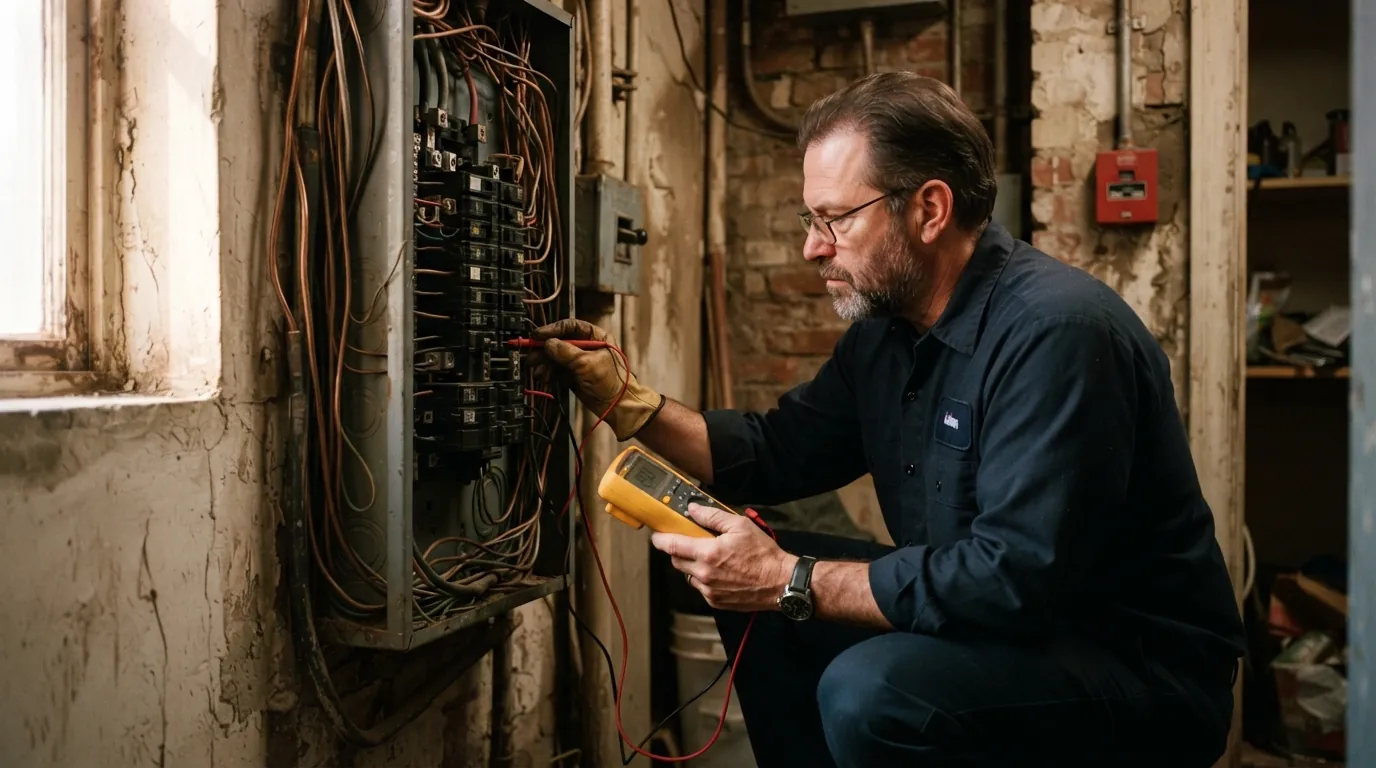
Hardwired detectors run on house power with a battery backup, and interconnected units all sound when any one of them detects smoke or carbon monoxide. That matters in duplexes and houses where a fire on one floor might not be heard on another. We run the interconnect wiring between locations, fishing through plaster where the building allows it, and connect the system to a dedicated or lighting circuit as the code permits. Wireless interconnect units are an option where running cable isn't practical.
$100 to $200 per hour standard; $200 to $400 per hour emergency or after hours; service call minimum $150 to $300. Source: aecontractorsnyc.com, 2026-09. Published market range for budgeting only, not our quote.
Ten-year sealed battery units
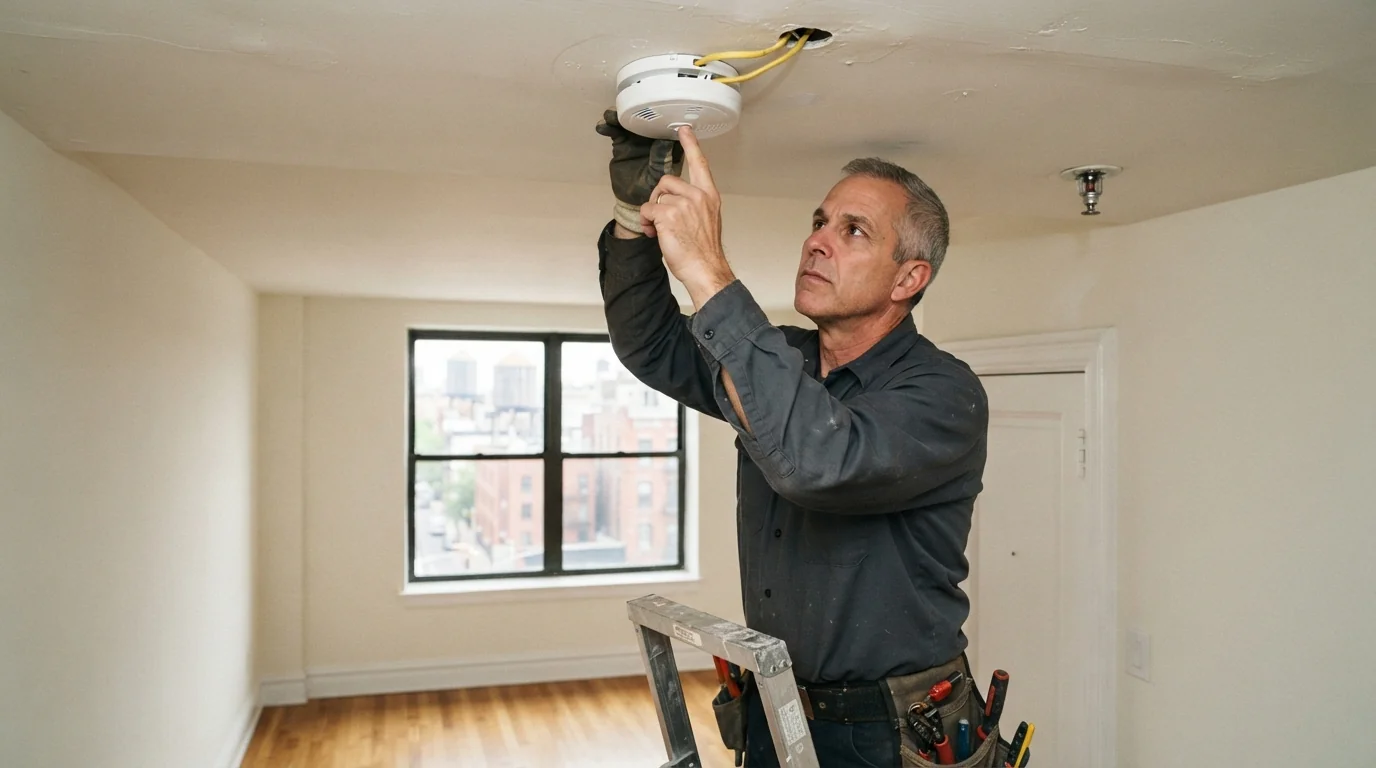
Where hardwiring isn't required, ten-year sealed battery detectors meet the rule for battery-only units. The battery can't be removed, which ends the problem of detectors disabled to stop a chirp. We install combination smoke and CO units or separate ones depending on the space, date each unit, and remove old detectors that have passed their replacement date. Landlords turning over a unit can have every detector replaced and documented in a single visit before the next tenant moves in. Each replaced unit is logged with its date.
Local Law 50 compliance
Compliance means the right detector types, in the right places, with the right power source, and records to show it. For owners and managers of rental buildings we walk each unit, note missing or expired detectors, and install what's needed. For renovations we add the hardwired interconnected detectors the filing calls for. Each unit gets a record of what was installed, the date and the test result, which is what an inspector or insurer will ask to see. Boards get one summary for the whole building.
Detector placement and testing
Placement decides how well a detector works. Smoke detectors go outside sleeping areas, inside bedrooms and on every level; CO detectors go near sleeping areas and near fuel-burning appliances. We keep detectors away from kitchen steam, bathroom doors and ceiling corners where air doesn't move, which cuts false alarms without cutting protection. Every detector is tested with the test button, interconnected systems are tested end to end, and you're shown how to test and silence them yourself. A monthly test takes seconds.
What moves the price
- Number of units and detectors
- Hardwired versus ten-year sealed units
- Interconnect wiring through plaster
- Combination or separate smoke and CO units
- Removal of expired detectors
- Records for landlords or insurers
- Permit when part of a renovation
$100 to $200 per hour standard; $200 to $400 per hour emergency or after hours; service call minimum $150 to $300. Source: aecontractorsnyc.com, 2026-09. Published market range for budgeting only, not our quote.
What detector installation includes
- Walkthrough of every level and bedroom
- Existing units checked for type and date
- Smoke detectors placed to the code
- CO detectors near sleeping areas and appliances
- Hardwired or ten-year sealed units fitted
- Interconnect wiring or wireless linking
- Expired detectors removed
- Every detector tested
- Record of types, dates and results
What we see in New York buildings
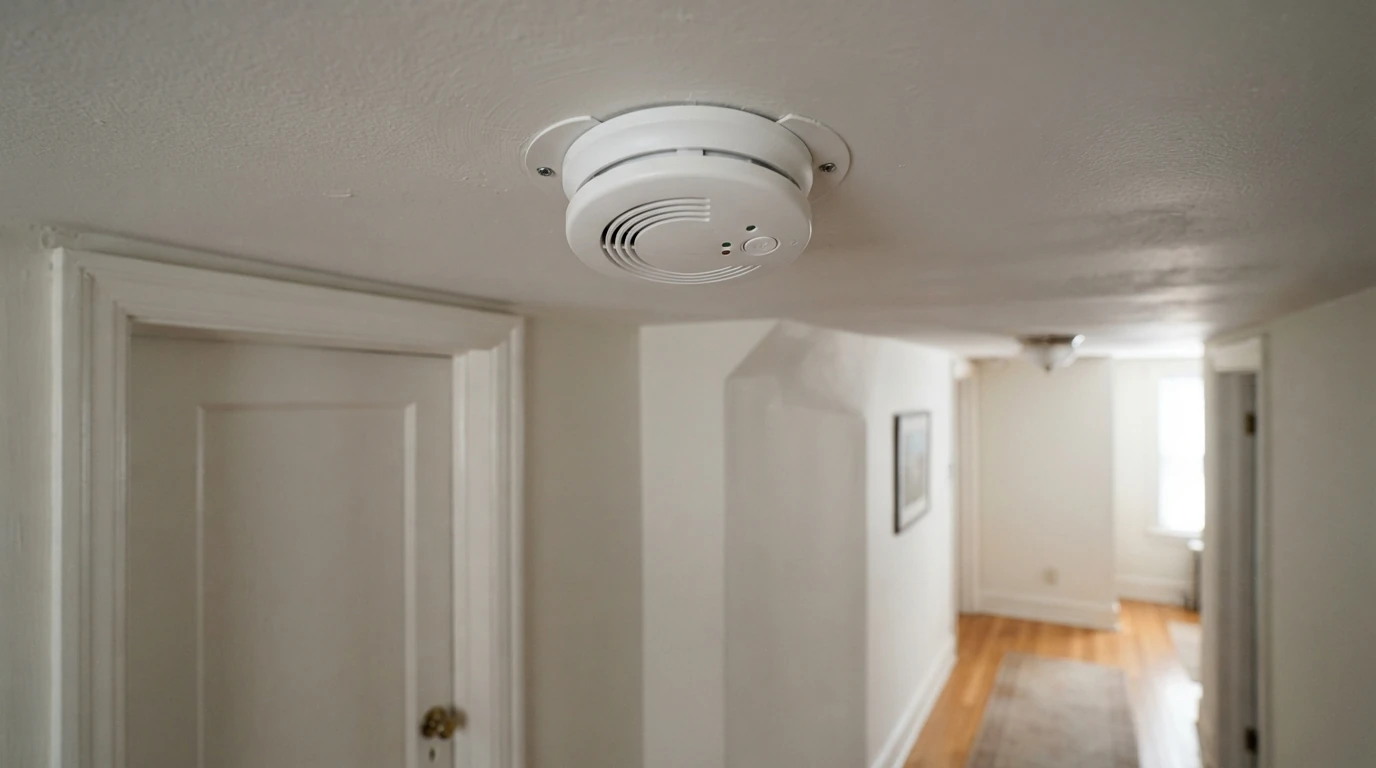
New York City's Local Law 50 requires smoke and carbon monoxide detectors in all residential units. Battery-only detectors have to be ten-year sealed units and replaced every ten years, and hardwired interconnected systems are required in new construction. For landlords and co-op and condo boards, that turns detectors into a recurring replacement schedule, not a one-time purchase, and each turnover is a natural moment to check every unit's dates.
What happens after you call
- 1
Walk the unit
Existing detectors checked for type, age and placement.
- 2
Plan placement
Locations set by the code and the layout.
- 3
Install or replace
Hardwired, interconnected or sealed units fitted.
- 4
Test everything
Each detector and the interconnect tested.
- 5
Record left
Types, locations, dates and test results documented.
Signs your detectors need attention
Chirping every minute
Low battery or end of life.
Date over ten years old
The unit has expired.
Battery removed
Someone disabled it.
No detector in bedrooms
Placement is short of the code.
No CO detector
Gas appliances without CO coverage.
Alarms that don't sound together
No interconnect between floors.
Frequent false alarms
Detector too close to steam or cooking.
Questions about smoke & co detector installation in New York
New construction and many renovations require them. Existing units can often use ten-year sealed units.
About every ten years. The date is printed on the back.
Landlords generally provide and install them; tenants maintain them. We handle the landlord side.
Yes, with wireless interconnect units where wiring isn't practical.
Near sleeping areas and near fuel-burning appliances.
Usually a low battery or an expired unit. Sealed units should be replaced.