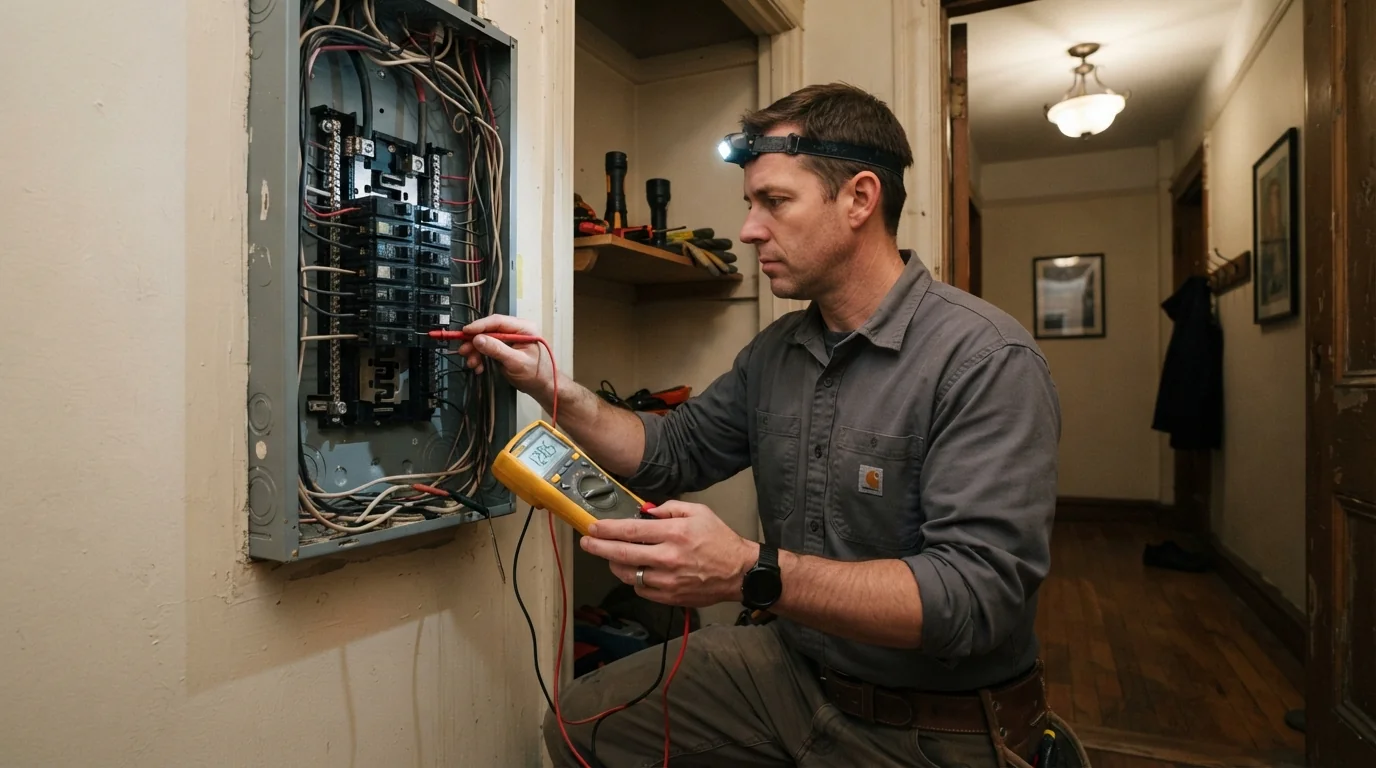
Flickering lights in New York City homes usually come from one of five places: a loose bulb or failing LED, a dimmer that doesn't match the LED driver, a loose connection in a box, an overloaded circuit, or a problem on the service such as a failing neutral. Flicker in one fixture is often simple; flicker across rooms, or with a burning smell, needs an electrician soon.
Signs the flicker needs an electrician now
Flicker in several rooms
The problem is likely at the panel or service.
Some lights bright, others dim
A possible failing neutral.
Burning smell or warm switch
A connection is overheating.
Buzzing from a switch or box
Arcing at a connection.
Flicker with outlets going dead
A loose connection on the circuit.
Appliances acting strangely
Voltage may be swinging.
Flicker that started after work nearby
A connection may have been disturbed.
Updated September 2026
Flicker is a symptom, not a diagnosis. The pattern tells us where to look: one fixture, one circuit, the whole home, or only when something large switches on.
We measure voltage at the panel and at the affected circuits, check the connections the pattern points to, and fix the cause. Replacing bulbs or dimmers at random rarely solves it and sometimes hides a loose connection that keeps heating.
Whole-home flicker and dimming
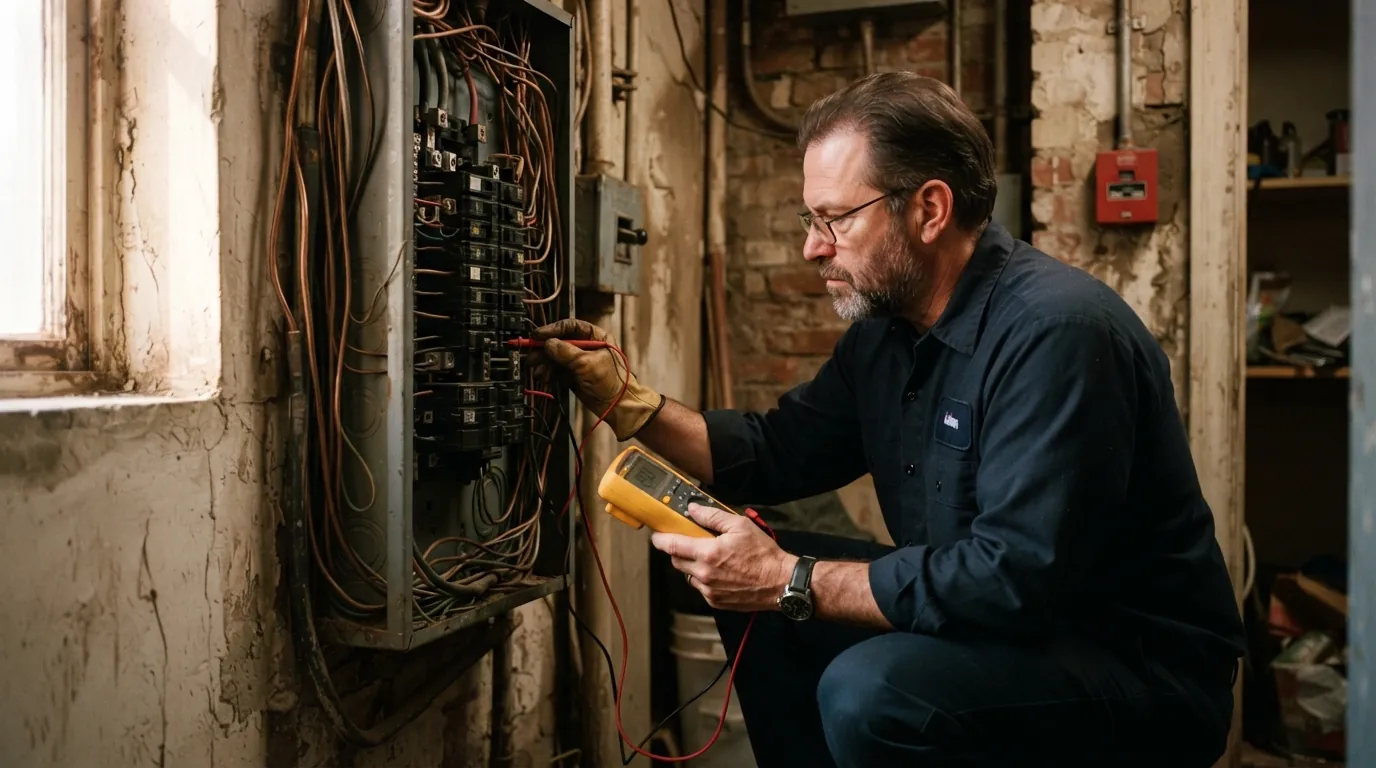
When lights flicker in several rooms at once, the problem is usually upstream of the branch circuits: a loose main lug, a corroded connection at the meter, or a failing neutral on the service. A failing neutral is the dangerous one, because it lets voltage swing high on one side of the panel and low on the other, which can damage electronics and appliances. We measure both legs at the panel under load, check the main connections, and bring in Con Edison when the fault is on the utility side.
$100 to $200 per hour standard; $200 to $400 per hour emergency or after hours; service call minimum $150 to $300. Source: aecontractorsnyc.com, 2026-09. Published market range for budgeting only, not our quote.
One fixture or one room flickering
Flicker limited to one fixture is usually the lamp, the fixture's socket or driver, or a loose connection in its box. Flicker across one room usually means a loose connection somewhere on that circuit, often at a backstabbed outlet or a splice in a switch box. We work through the circuit from the panel outward, tighten or replace the failing connection, and move backstabbed devices to their screw terminals. It's often a short visit, but it's worth doing, because loose connections heat up.
Lights dim when appliances start
A brief dip when a large motor starts is normal. A deep dim every time the air conditioner, refrigerator or microwave kicks on means the lighting shares a circuit with the load, or the service is sagging under it. We check which circuits the lights and the appliance are on, measure the voltage drop when the load starts, and fix it with a dedicated circuit for the appliance or, where the service itself is the limit, a service or panel upgrade.
LED and dimmer mismatch
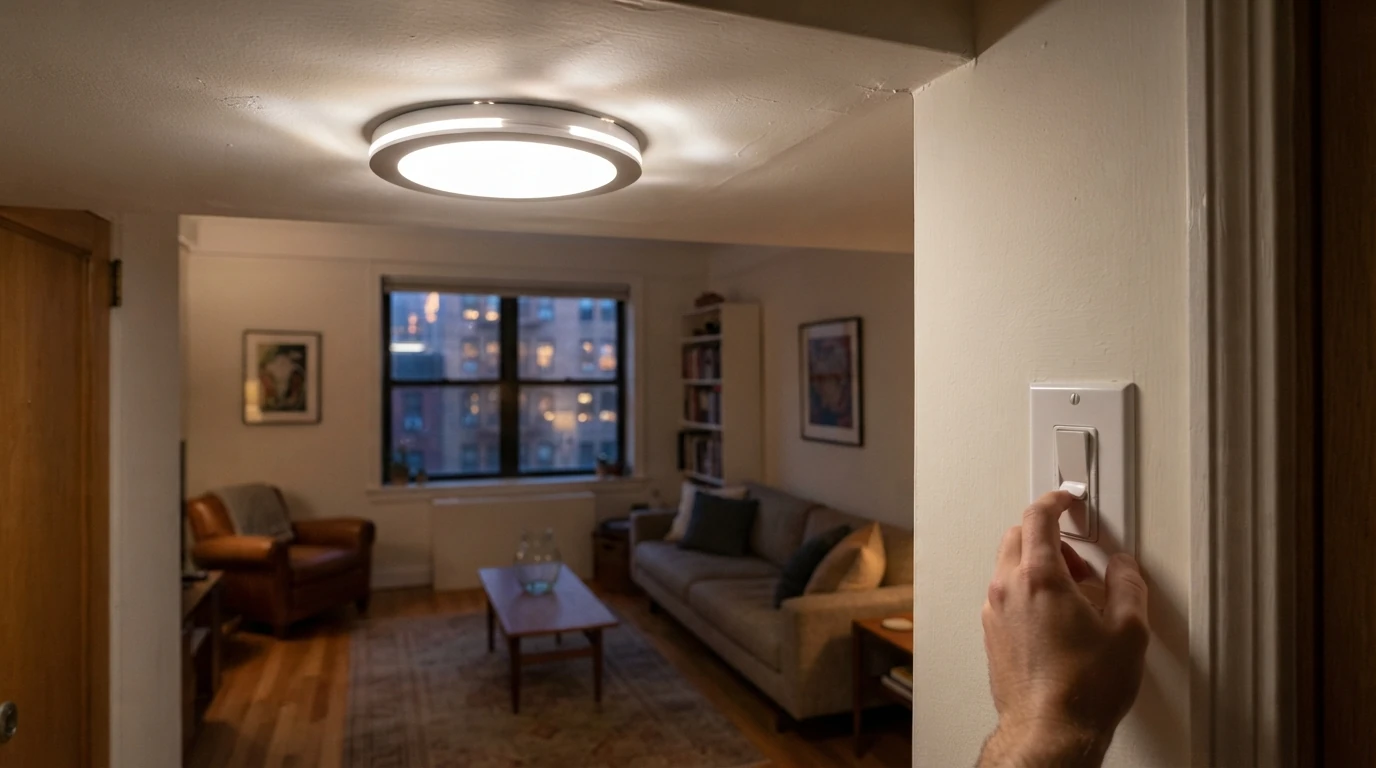
Many older dimmers were made for incandescent bulbs and don't control LED drivers smoothly, which shows up as flicker at low settings, buzzing or lights that never fully turn off. Mixing bulb brands on one dimmer makes it worse. We check the dimmer model against the fixtures, replace it with one listed for the LED loads, and set the low-end trim so the lights dim smoothly. It's the most common flicker in newly renovated rooms and the easiest to fix. Replacement dimmers match your existing switch style.
What happens after you call
- 1
Describe the pattern
Which lights, how often, and what else was running.
- 2
Measure at the panel
Voltage on both legs checked under load.
- 3
Trace the circuit
Connections checked from the panel toward the flicker.
- 4
Fix the cause
Connection, dimmer, circuit or service corrected.
- 5
Test under load
Lights watched while large loads start and stop.
What we see in New York buildings
Summer makes flicker more common. New York City is planned around a 2 p.m. to 10 p.m. peak in hot weather, and when Con Edison reduces voltage by 8 percent during heat waves in Brooklyn and Queens, motor-driven appliances and compressors draw harder as they start. On a circuit shared with lighting, that shows up as a dip or flicker every time the air conditioner cycles.
What moves the price
- Where the flicker is: one fixture, one circuit or the whole home
- Loose connections found and corrected
- Dimmer replacement and LED compatibility
- Dedicated circuit for a large appliance
- Service or neutral problems and Con Edison involvement
- Emergency or after-hours timing
- Access to boxes in plaster walls and ceilings
$100 to $200 per hour standard; $200 to $400 per hour emergency or after hours; service call minimum $150 to $300. Source: aecontractorsnyc.com, 2026-09. Published market range for budgeting only, not our quote.
Questions about flickering lights repair in New York
Flicker from a loose connection or a failing neutral can be. Flicker in one bulb usually isn't.
The dimmer usually isn't matched to the LED driver.
They share a circuit, or the service is sagging under the load.
Sometimes. We measure at the panel and call the utility when the fault is on their side.
For one fixture, yes. For flicker across rooms, call.
Yes. The line is answered 24/7, and flicker with a burning smell is treated as an emergency.