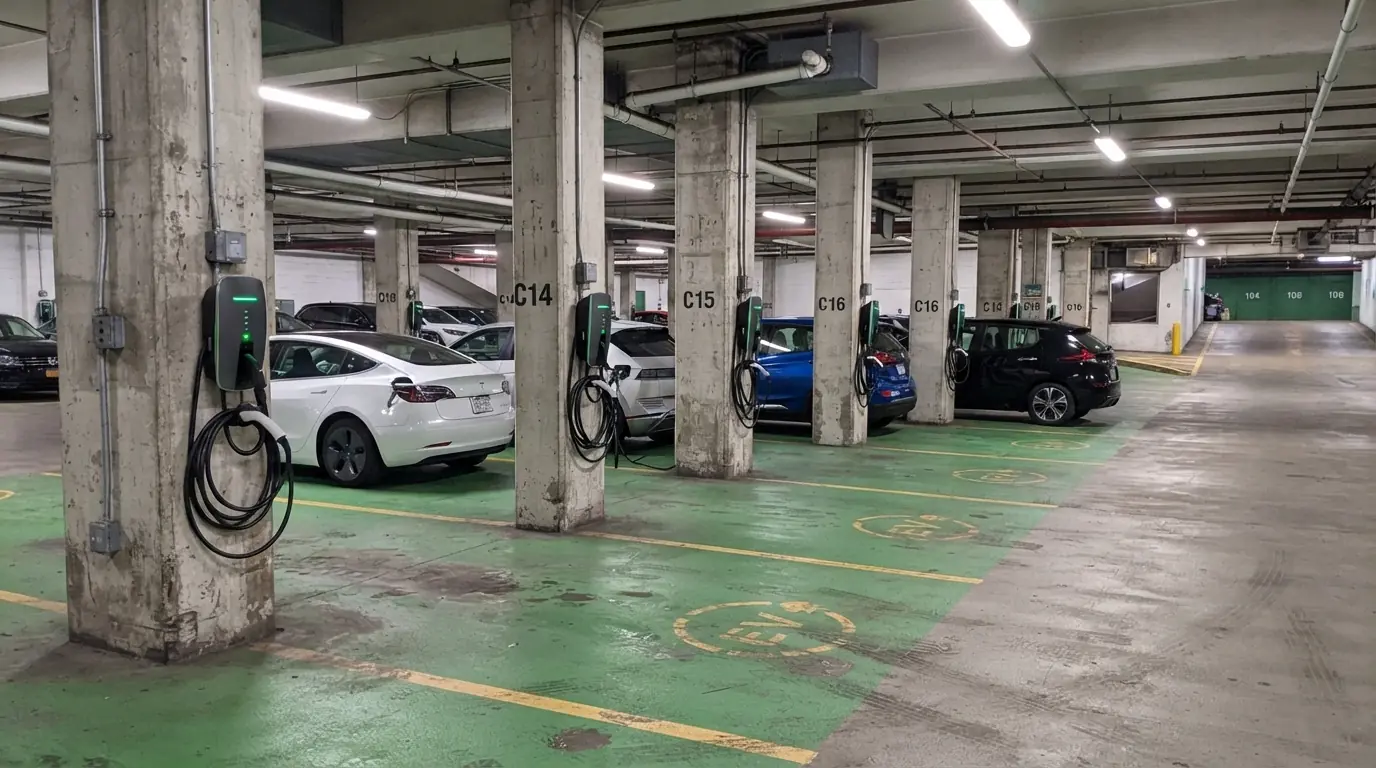
Commercial EV charging in New York City means Level 2 or DC fast chargers installed in a garage, lot or depot, fed from the building's service with load management so the chargers share capacity instead of forcing a service upgrade. It's permitted electrical work filed with the DOB, and the service size and parking layout decide the design more than the charger brand does.
Updated September 2026
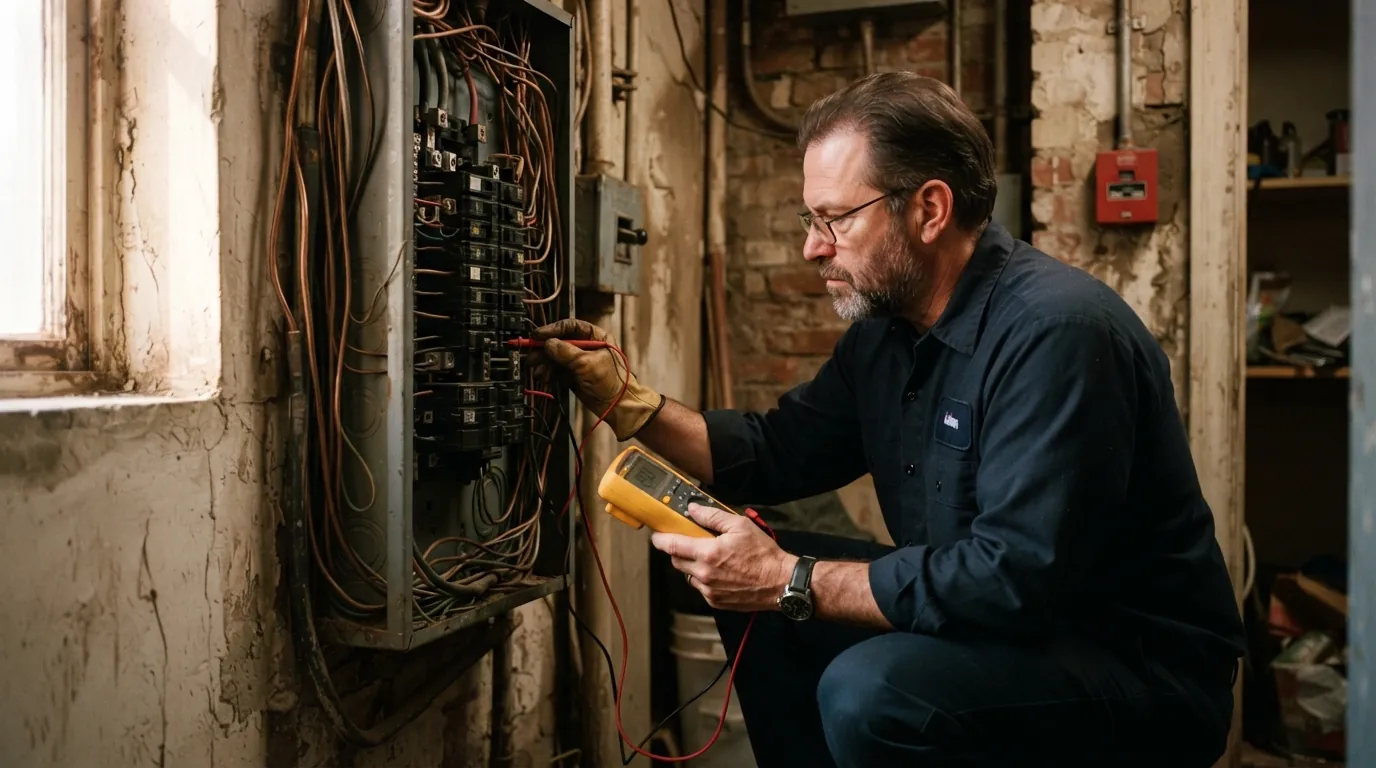
The charger is the easy part. The hard part is feeding a dozen of them from a service that was sized for lights and a ventilation fan. Most commercial projects succeed or fail on the load calculation and the load-management plan.
We start with the building's existing service and utility bills, lay out the parking, and show you how many chargers the current service can carry with managed charging versus how many need new capacity.
Which charging setup fits?
| Setup | Best for | Trade-off |
|---|---|---|
| Level 2 on managed circuits | Residential garages and workplaces | Slower per car; fits the existing service |
| Mixed Level 2 and DC fast | Fleets with tight turnarounds | More capacity needed for the fast units |
| Networked pay-per-use | Public or shared parking | Software fees; revenue offsets them |
Garage and parking-lot charging banks
Residential garages and commercial lots usually start with Level 2 chargers on dedicated circuits, grouped on a new panel near the parking. We plan conduit runs along the ceiling or in trenches, protect equipment from vehicle impact with bollards or wheel stops, and leave spare conduit for the next phase so the second round doesn't mean new trenching. In occupied garages we phase the work by level and coordinate closures with the operator so spaces stay available while the banks go in.
$150 to $300 for a new circuit or minor work; $300 to $600 for a panel upgrade. Source: aecontractorsnyc.com, 2026-09. Published market range for budgeting only, not our quote.
Fleet depot charging
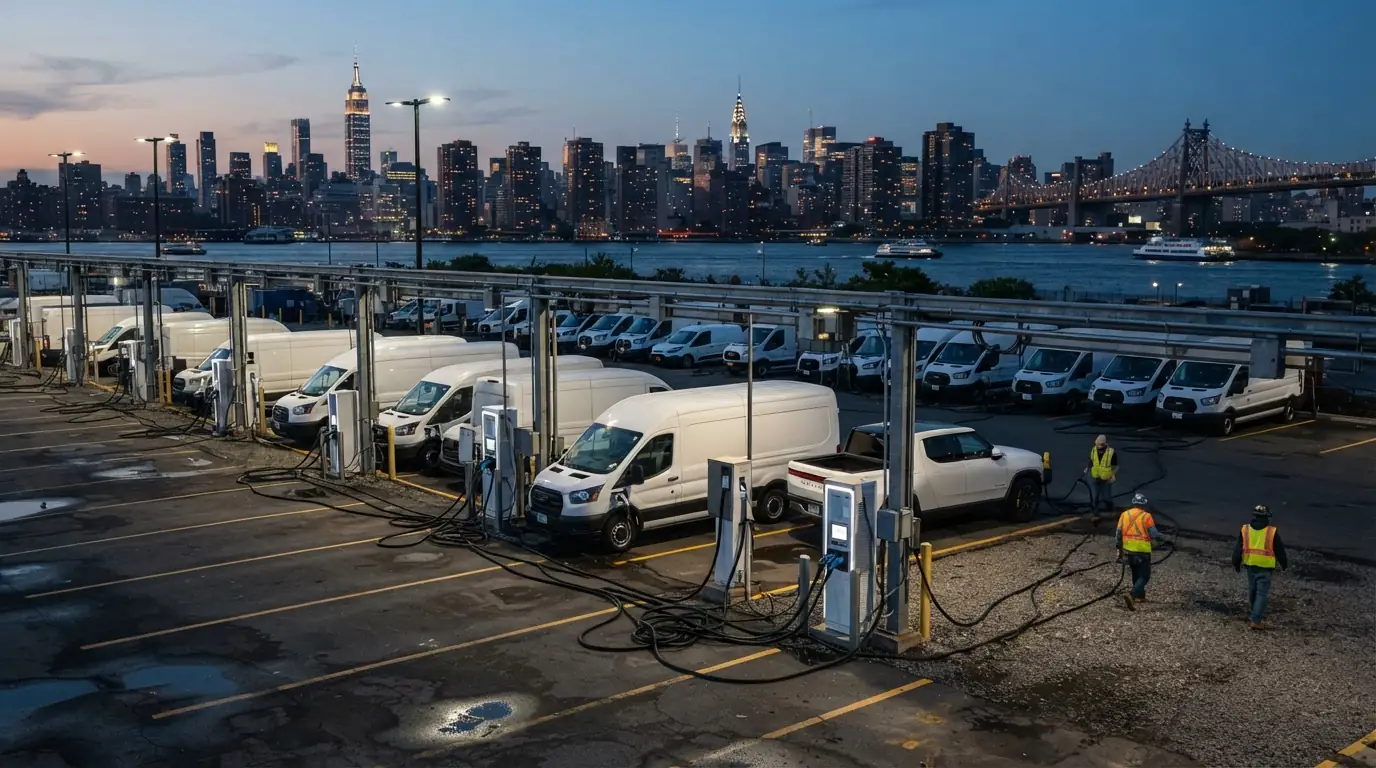
Delivery vans, service trucks and car-share fleets charge on a schedule, which is an advantage. Knowing when vehicles return and when they leave lets us stagger charging overnight and size the equipment far more tightly than a public station. We look at duty cycles, battery sizes and dwell times, then design a mix of Level 2 and DC fast charging with software that finishes every vehicle by morning without setting a new peak demand on the building's service each night. Spare capacity is left for fleet growth.
Networked and pay-per-use stations
Networked chargers connect to a cloud platform that handles access control, pricing, payment and usage reports. Garages use them to bill drivers by the hour or the kilowatt-hour, and condo boards use them to charge each owner for their own energy. We install the hardware, confirm cellular or network connectivity in the garage, and set up the site in the operator's portal so the stations are live and billing on the day they're energized, not weeks later. Staff get a short walkthrough of the portal and the reports.
Load management and service upgrades
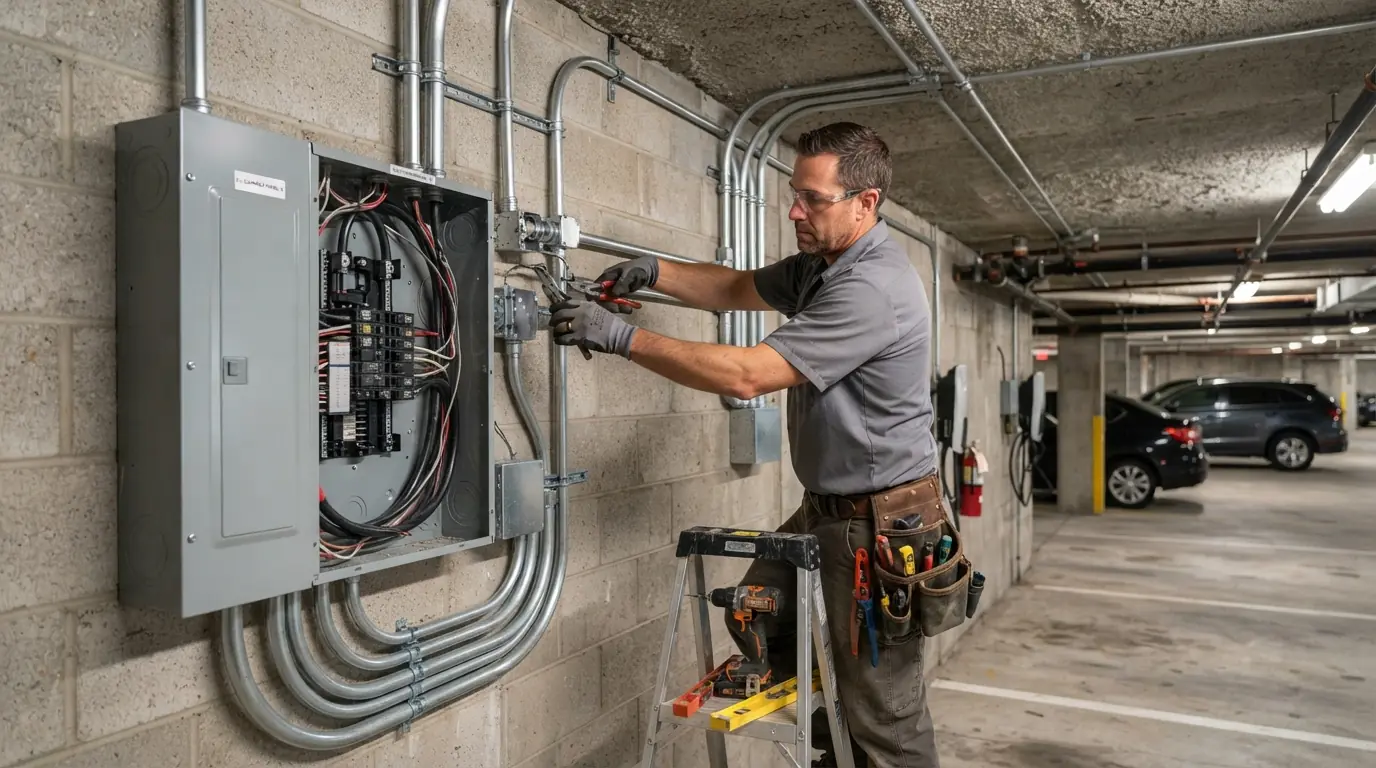
Load management lets several chargers share one circuit or one panel by throttling each car as the total rises. It's often the difference between installing chargers now and waiting months for a service upgrade and a Con Edison cutover. When the plan does need more capacity, we prepare the load letter, file the service upgrade and coordinate the utility work, phasing chargers so the first bank can open on the existing service while the upgrade proceeds. You see both paths priced side by side before choosing.
What moves the price
- Number and type of chargers
- Existing service capacity and spare panel space
- Load management versus a service upgrade
- Conduit length, trenching or garage ceiling runs
- Bollards and impact protection
- Network, payment and billing setup
- DOB permit and Con Edison coordination
$150 to $300 for a new circuit or minor work; $300 to $600 for a panel upgrade. Source: aecontractorsnyc.com, 2026-09. Published market range for budgeting only, not our quote.
What we see in New York buildings
Local Law 97 puts carbon caps on buildings over 25,000 square feet, tightening every five years with annual fines, which is pushing owners to electrify parking along with heat and hot water. The grid side is growing too: Con Edison's $3.9 billion summer 2026 program included a 200 MW line into Long Island City. More street capacity helps, but each garage still needs its own service designed for the chargers.
What happens after you call
- 1
Site and service survey
Parking layout, existing service and utility bills reviewed.
- 2
Load plan
Charger count, managed charging and any upgrade laid out in writing.
- 3
Filings
DOB permit filed, and Con Edison request where capacity is added.
- 4
Installation
Panels, conduit, chargers and protection installed in phases.
- 5
Commissioning
Stations networked, billing set up, inspection passed.
How long a commercial charging project takes
A first bank of Level 2 chargers on an existing service is often installed within a couple of weeks of permit approval. Projects that add service capacity take longer, because the Con Edison side sets the date. We sequence it so the chargers that fit today go in first and the rest follow the upgrade, rather than holding the whole project for the slowest piece.
Brands we install and service include Square D and Eaton panels, Leviton and Lutron devices, and Tesla and ChargePoint chargers.
Questions about commercial ev charging stations in New York
It depends on the service and on load management. We calculate it from your equipment and bills.
Not always. Managed charging often fits the first round of chargers on the existing service.
Yes. Networked stations handle pricing, payment and reports.
Level 2 suits long parking stays. DC fast suits fleets and short stays.
We prepare the load letter and submit the request when new capacity is needed.
Yes. We install spare conduit so later phases don't mean new trenching.