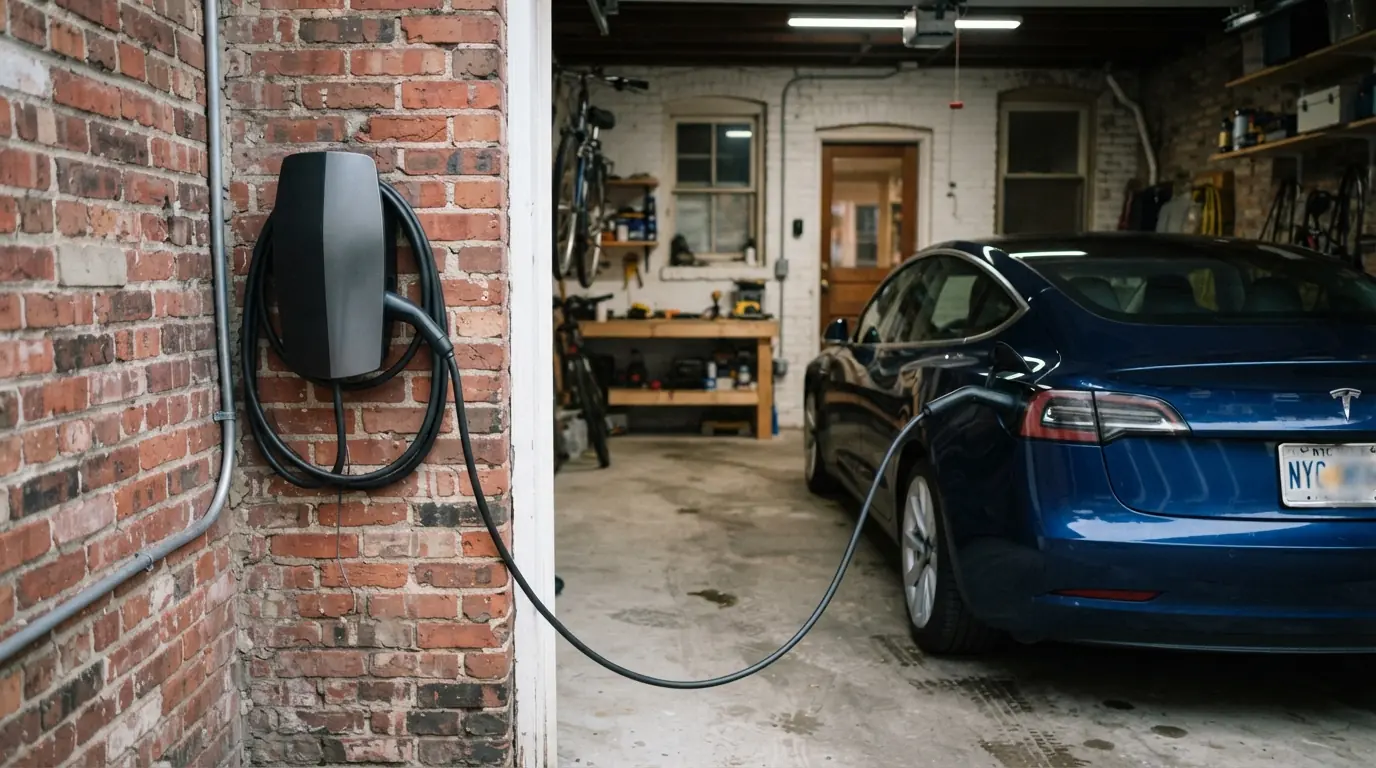
A hardwired Level 2 charger in New York City needs a DOB electrical permit and inspection, usually on a 240-volt circuit of 40 to 60 amps. Published New York figures put a residential install at roughly $1,200 to $3,500 or more, depending on the distance from the panel, spare capacity and conduit, with more if the panel has to be upgraded first.
Where you park decides the job
In a house with a driveway or attached garage, the charger usually goes on the wall nearest the car, and the job is a single circuit from the panel. The distance and the route matter most: a panel on the other side of the basement or a detached garage adds cable, conduit and sometimes trenching.
In apartment buildings the picture changes. Chargers go in the building's garage, not your unit, and the board or management decides how they are wired and billed. Street parking is the hardest case: a homeowner cannot install a charger at the curb, so those drivers usually rely on public stations or a workplace.

What it costs
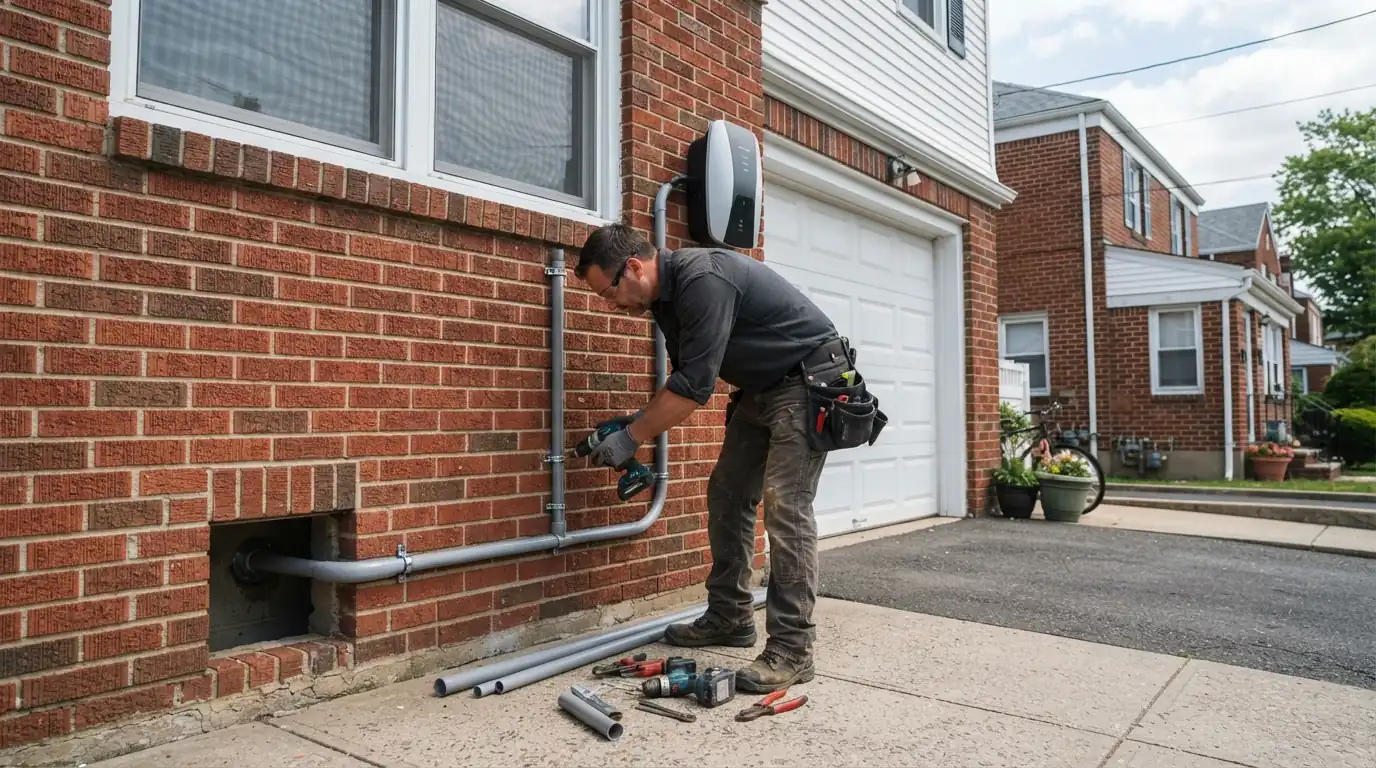
Published New York figures put a residential Level 2 install at roughly $1,200 to $3,500 or more. The low end is a short run from a panel with spare capacity; the high end involves long conduit runs, masonry, trenching to a detached garage or work in finished spaces.
If the panel cannot carry the charger, the cost of a panel or service upgrade comes on top. All-in panel upgrades in the city run about $1,500 to $4,000, which is why checking capacity first matters. Our panel cost guide breaks those numbers down.
| Scope | Published range |
|---|---|
| Level 2 charger, residential install | $1,200 to $3,500+ |
| Panel upgrade if needed, all-in | $1,500 to $4,000 |
| DOB filing for a new circuit | $150 to $300 |
The permit and the inspection
A hardwired 240-volt Level 2 charger in the city requires a DOB electrical permit and an inspection. The electrician files it, installs the circuit, and the inspector checks the breaker size, the wire, the connections and the charger's mounting before it is signed off.
Plug-in chargers on a new 240-volt receptacle are still new-circuit work and need the same filing. The only charger that avoids the process is a portable Level 1 cord on an existing outlet, which is slow but useful for short daily commutes.
Panel capacity and load management
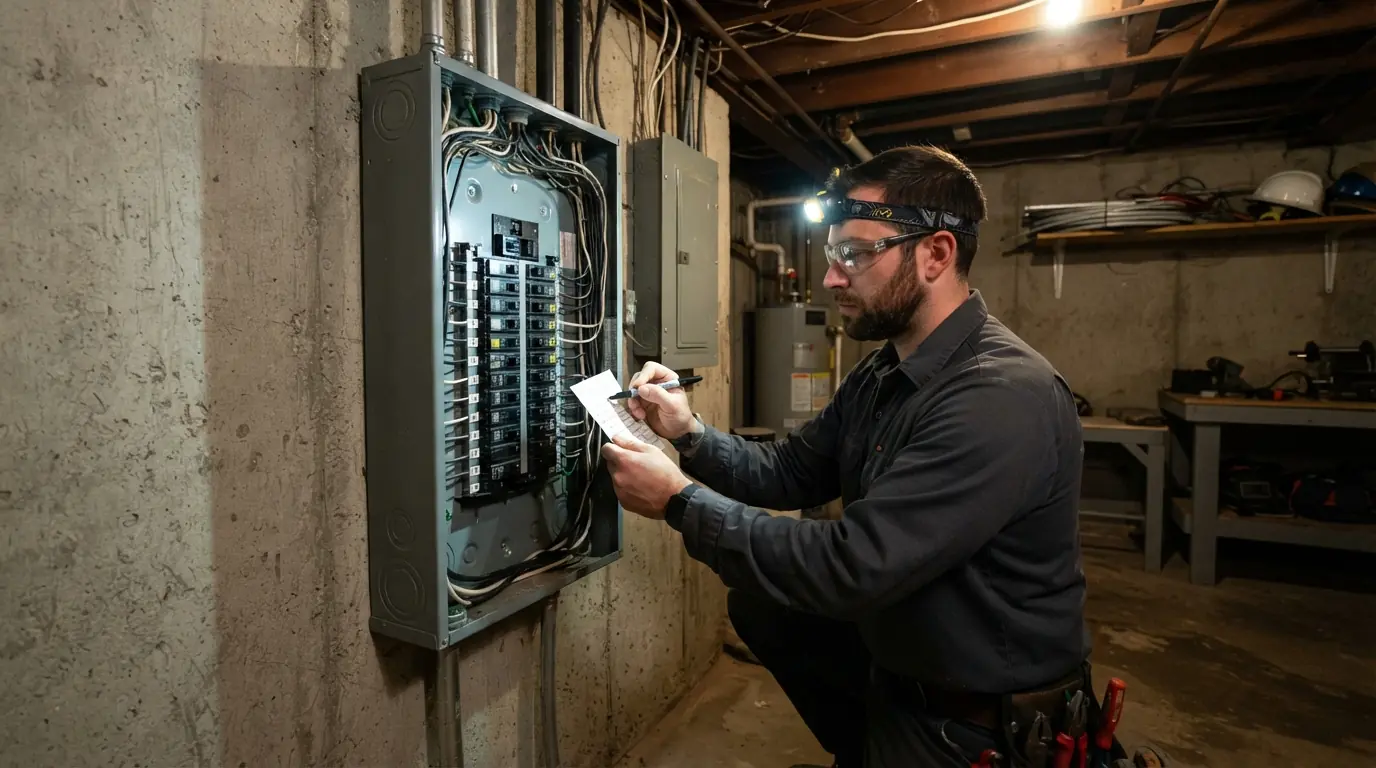
Many city homes, and many apartments, cannot add a 240-volt, 50-amp circuit without a panel upgrade. The load calculation decides it: it adds the charger to everything already on the service and compares the total with the service size.
When the numbers are close, a load-managed charger or a smart panel device can let the charger share capacity, slowing charging when the dryer or the air conditioning runs and speeding up again when they stop. For most overnight charging that is barely noticeable, and it can save the cost of an upgrade.
Co-op and condo garages
In a building garage, the charger is a building project even if it serves one car. Boards want a load letter showing the building's service can carry it, and they increasingly prefer a planned bank of chargers with networked billing over one-off circuits that nobody tracks.
If your board is starting from scratch, a building-wide plan is usually cheaper per space than several individual installs. Our commercial EV charging page covers garage banks, load management and billing.
Choosing the charger
Most home chargers deliver 32 to 48 amps on a 40 to 60-amp circuit. A hardwired unit can use the higher current and has no receptacle to wear out; a plug-in unit on a 240-volt receptacle is easier to take with you. Either is fine when the circuit matches the charger.
Connector types are shifting as many new cars move to the Tesla-style connector, but adapters work in both directions, so the connector matters less than the circuit. Buy the charger for the amperage your panel can support, not the maximum the car can accept.
Charging on a schedule
Most chargers and most cars let you set charging hours, and it is worth doing. Charging overnight keeps the car's load away from the evening hours when your own air conditioning, cooking and laundry run, which matters most in homes where the charger shares capacity through load management.
It also keeps the load off the grid's busiest period. Con Edison asks customers to conserve between 2 p.m. and 10 p.m. during heat, and a car set to start charging late in the evening is ready by morning without adding to that peak. Scheduling costs nothing and makes a modest panel go further.
Services this guide covers
Related guides
Frequently asked questions
Yes. A hardwired Level 2 charger needs a DOB permit and inspection.
No. Street spaces are public; homeowners cannot install chargers there.
Sometimes. The load calculation decides, and load management can avoid it.
Usually a day once the permit is in, longer with trenching or a panel upgrade.
Both work. Hardwired can deliver more current; plug-in is portable.
Yes, with board approval and a building plan for capacity and billing.