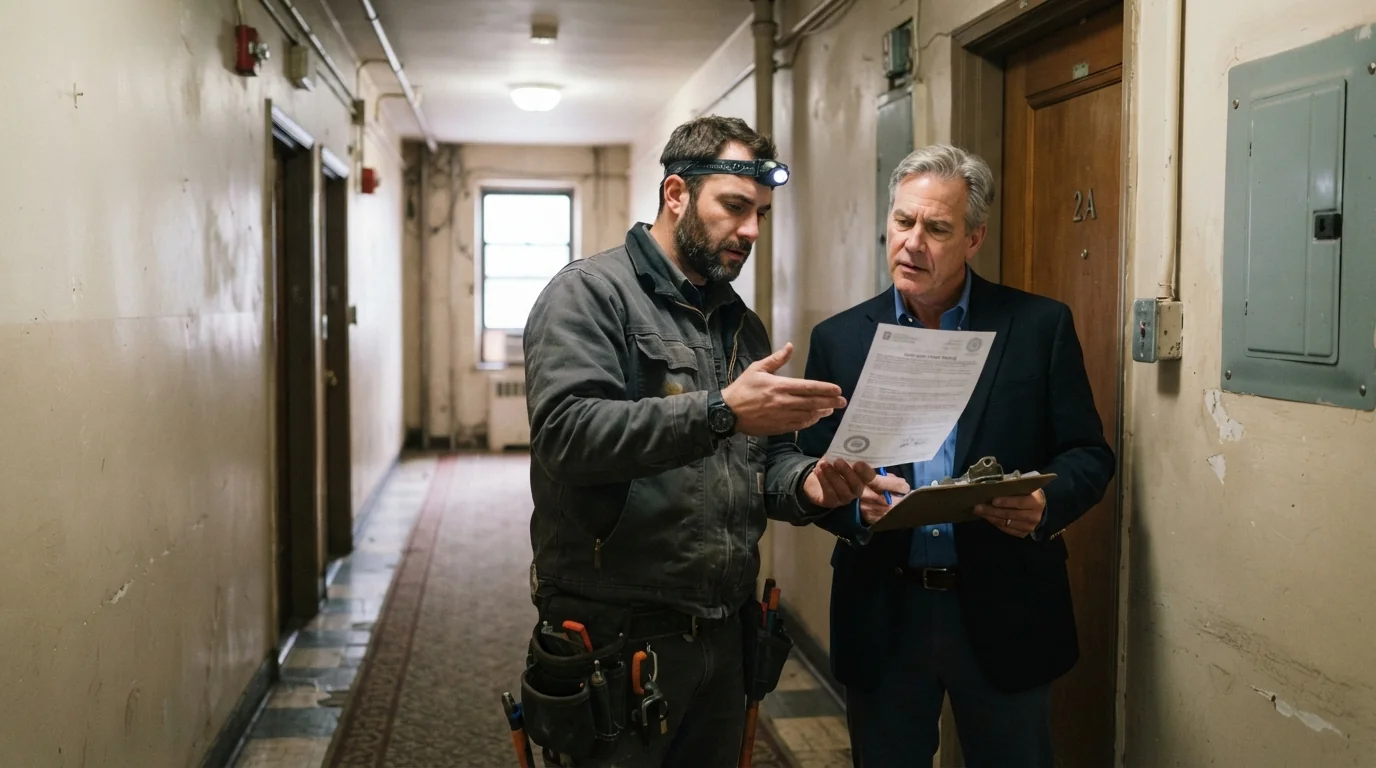
An electrical violation in a New York City is cleared by correcting the condition, filing the work under a DOB electrical permit, and passing the inspection that signs it off. Most electrical violations trace back to unpermitted work by a previous owner or contractor, and the fix starts with reading exactly what the inspector cited.
Updated September 2026
Violations are specific. The notice names the condition, the location and the code section, and the correction has to answer that exact citation. Doing more work than cited is fine; doing different work doesn't clear anything.
Most of the violations we see come from work nobody filed: a basement circuit, a kitchen renovation, a panel swapped by someone without a license. We bring the work to code, file it properly, and meet the inspector.
ECB and DOB electrical violations
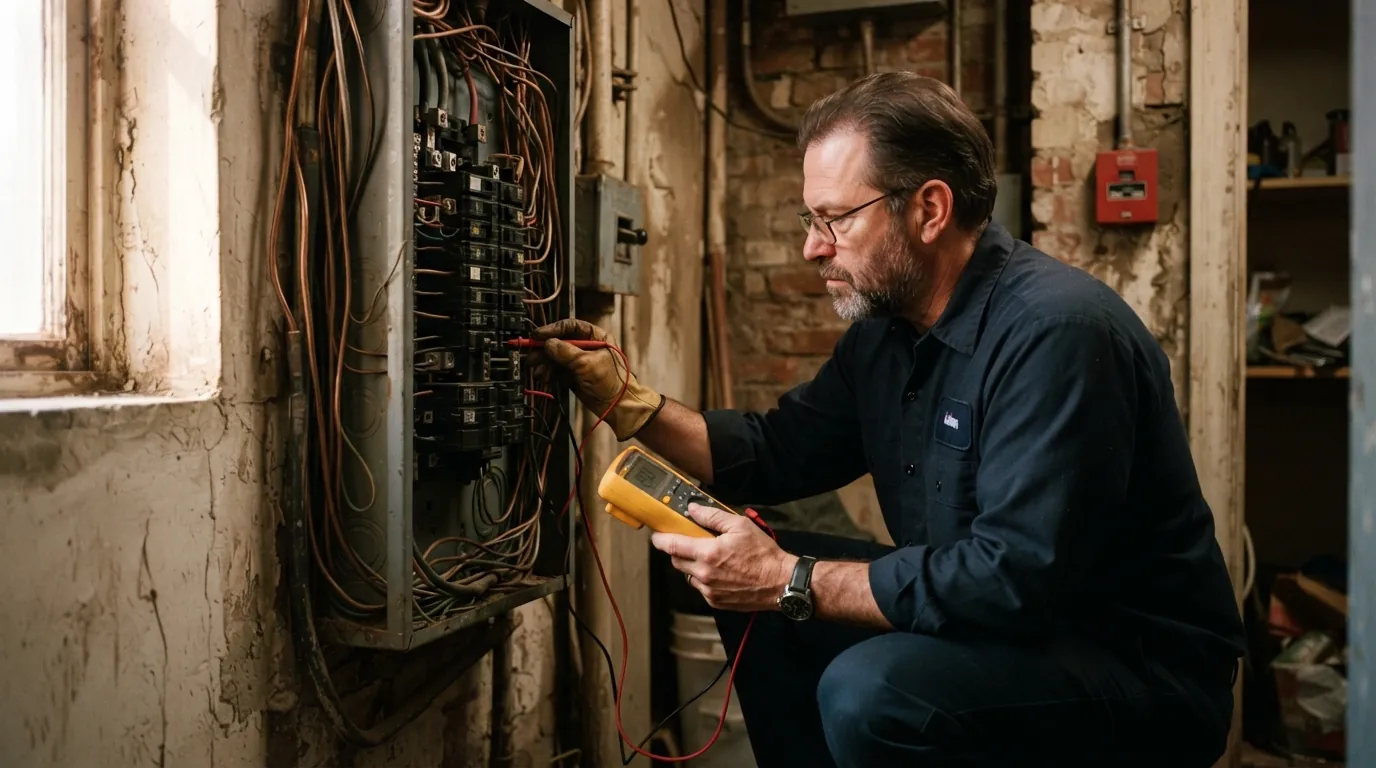
A DOB violation records a condition the department found; an ECB violation, now heard by the city's administrative tribunal, can also carry a penalty. Both stay on the property record until they're certified corrected. We start by pulling the violation details, reading the cited condition and code section, and visiting the site to see what's actually there. The correction scope follows the citation, and we tell you up front if the fix touches anything the inspector didn't cite but will certainly see when they return.
$150 to $300 for a new circuit or minor work; $300 to $600 for a panel upgrade. Source: aecontractorsnyc.com, 2026-09. Published market range for budgeting only, not our quote.
Unpermitted work brought to code
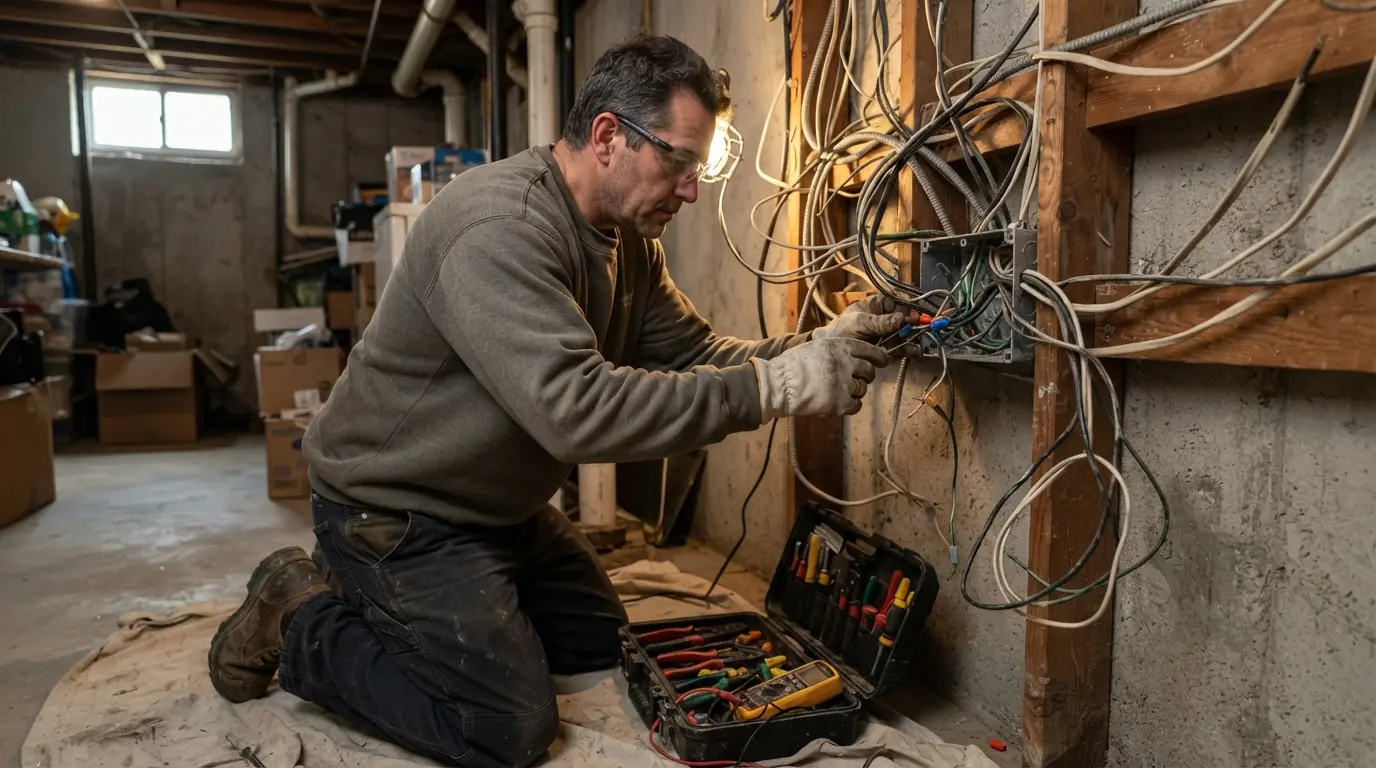
Unpermitted electrical work is the most common source of violations we clear. It might be a finished basement with circuits run in lamp cord, a kitchen renovation done without a filing, or a panel installed by a handyman. We open what we need to see, replace what doesn't meet code, and file the work under a new permit so the record matches what's in the walls. Sometimes most of the work is sound and only needs protection and documentation; sometimes it has to come out.
Sign-off and inspection scheduling
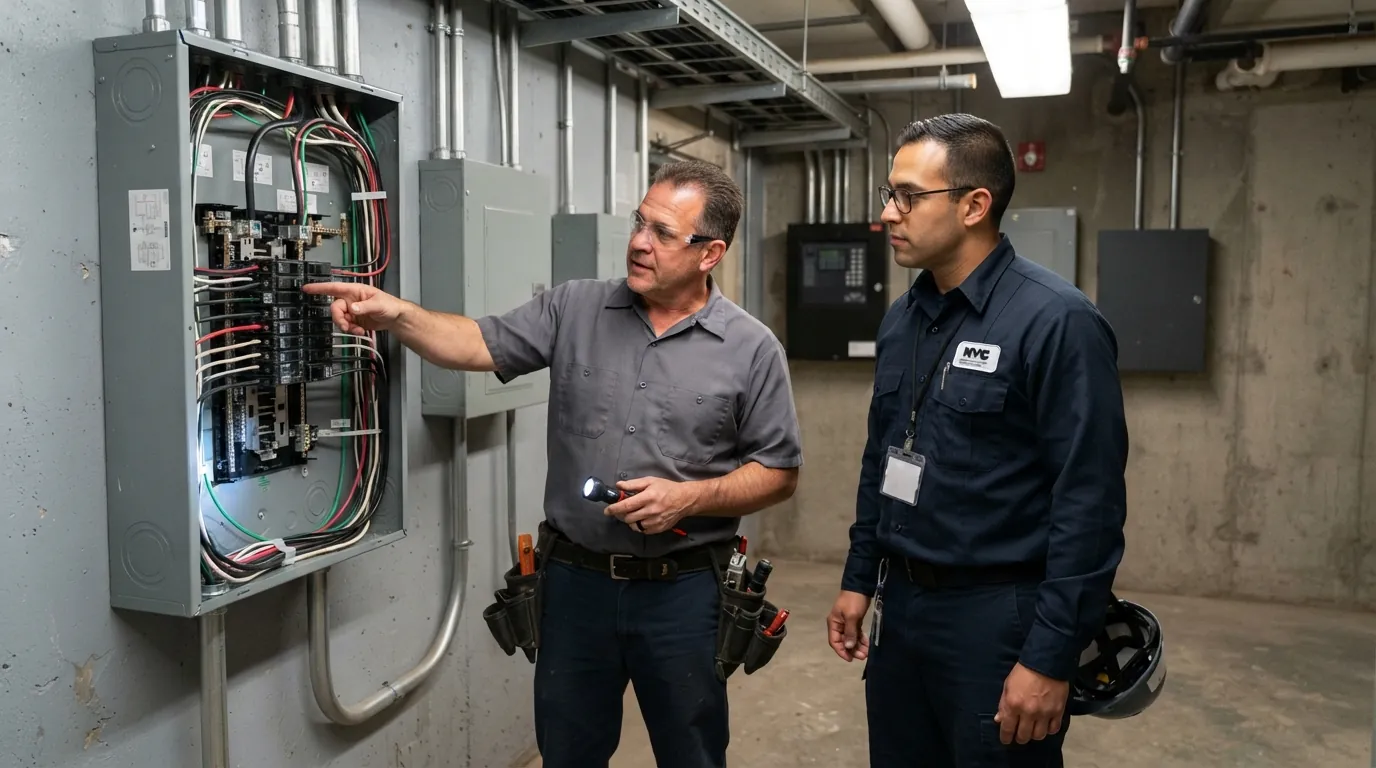
A violation isn't cleared when the work is done. It's cleared when the inspection passes and the certification is accepted. We schedule the DOB electrical inspection as soon as the corrected work is ready, meet the inspector on site, and resolve any items raised on the spot where we can. Once the permit is signed off, we assemble what's needed to certify the correction so the violation drops off the property record. You get copies of every document for your own files and for any buyer or lender who asks.
Landlord and property manager filings
Owners of multi-unit buildings often carry several open electrical violations at once, from different eras and different tenants' alterations. We work through them as a set, grouping corrections by floor or system so the building isn't opened repeatedly, and scheduling inspections to clear several items per visit. Property managers get a written status for each violation, so the board or the lender sees progress rather than a single pass-fail at the end, and the super knows which floors are affected on which days.
What moves the price
- What the violation cites and how much work sits behind it
- Whether existing work can stay or has to be replaced
- Walls or ceilings that must be opened to verify
- Number of violations corrected together
- Code changes since the original work was done
- Permit filing and inspection visits
- Certification paperwork to close the record
$150 to $300 for a new circuit or minor work; $300 to $600 for a panel upgrade. Source: aecontractorsnyc.com, 2026-09. Published market range for budgeting only, not our quote.
What to have ready
| Item | Where to find it | Why it helps |
|---|---|---|
| Violation number | On the notice or the property record | We pull the exact citation |
| Photos of the area | Your phone | We see the condition before visiting |
| Past renovation dates | Your records or the seller's | Tells us which code applied |
| Board or lender deadline | Your managing agent or broker | We schedule the inspection around it |
What violation correction includes
- Violation details pulled and read
- Site visit to verify the cited condition
- Written correction scope tied to the citation
- Other visible defects flagged before work
- DOB permit filed for the correction
- Work corrected to the 2025 code
- Inspection scheduled and attended
- Sign-off obtained on the permit
- Certification assembled to close the record
What we see in New York buildings
The NYC Department of Buildings requires an electrical permit for most electrical work, filed through DOB NOW: Build and checked by its Electrical Plan Review team. That's why unpermitted work turns into a violation: the record says the work was never filed. Since December 21, 2025, new filings fall under the 2025 NYC Electrical Code, so corrections filed now are judged against its GFCI, AFCI and service requirements rather than the old code.
What happens after you call
- 1
Pull the violation
We read the cited condition, location and code section.
- 2
Site verification
We see what's actually in place and what the correction requires.
- 3
Permit filed
Correction work filed in DOB NOW under a new permit.
- 4
Work corrected
The cited condition fixed and anything the inspector will see brought to code.
- 5
Inspection and certification
Inspection passed, correction certified, record cleared.
Questions about dob electrical violation correction in New York
The violation number on the notice leads to the full record. We pull it as the first step.
Only the cited condition clears the violation, but visible defects will be seen on the return visit, so we flag them.
It often does. Lenders and co-op boards want open violations cleared.
The work is often short; the inspection and certification schedule sets the pace.
Yes. Grouping them saves openings and inspection visits.
It doesn't matter who did it; the correction and filing clear it.