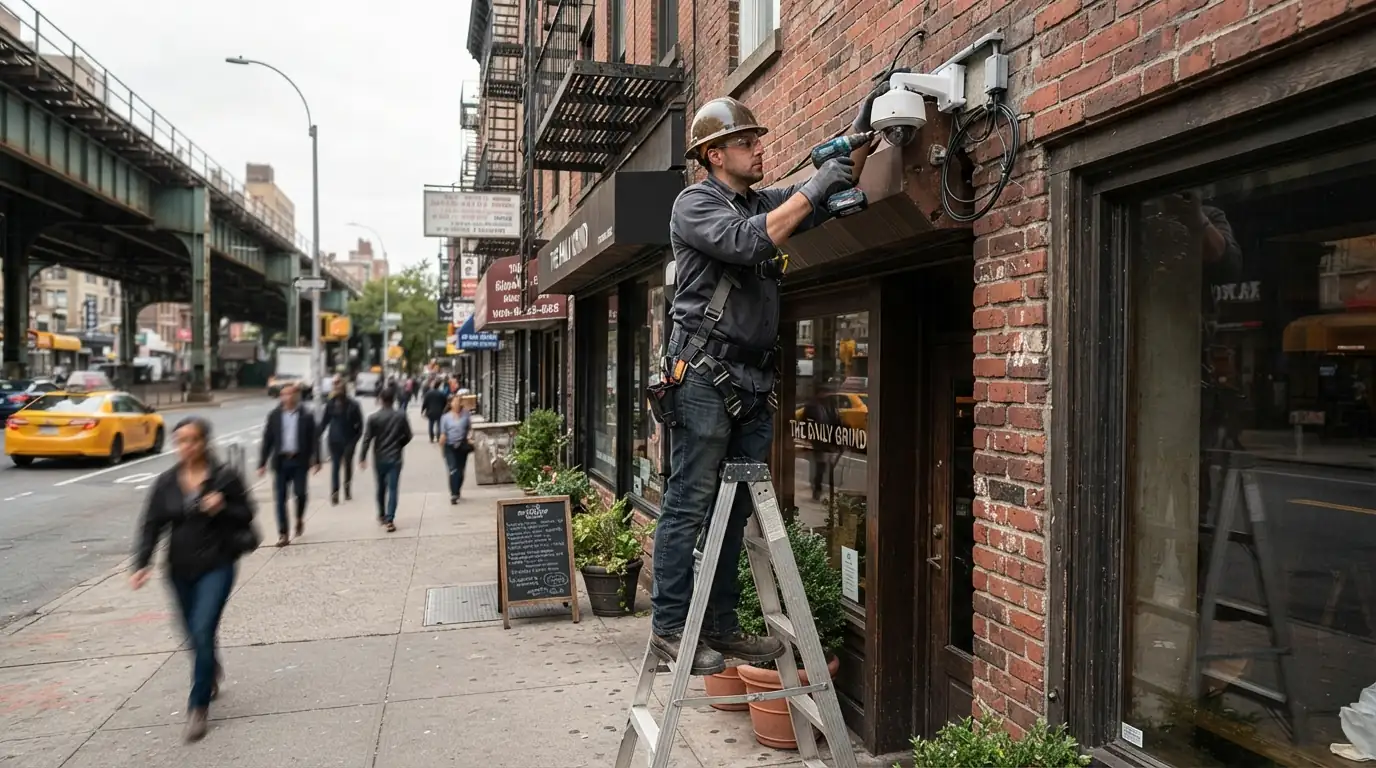
Security camera wiring in New York City means running PoE (power over Ethernet) cable from a network video recorder or switch to each camera, powering the recorder on a protected circuit, and weatherproofing exterior drops. Wired cameras are more reliable than Wi-Fi models, and NYC electrician time typically runs $100 to $200 an hour standard.
Updated September 2026
Wireless cameras are easy to buy and easy to lose: they drop off the network, drain batteries and stop recording when you need them. A wired PoE system sends power and video down one cable, so each camera stays up as long as the recorder does.
We plan coverage with you, run and test the cable, and power the recorder so a short outage doesn't leave a gap in the footage.
PoE camera runs
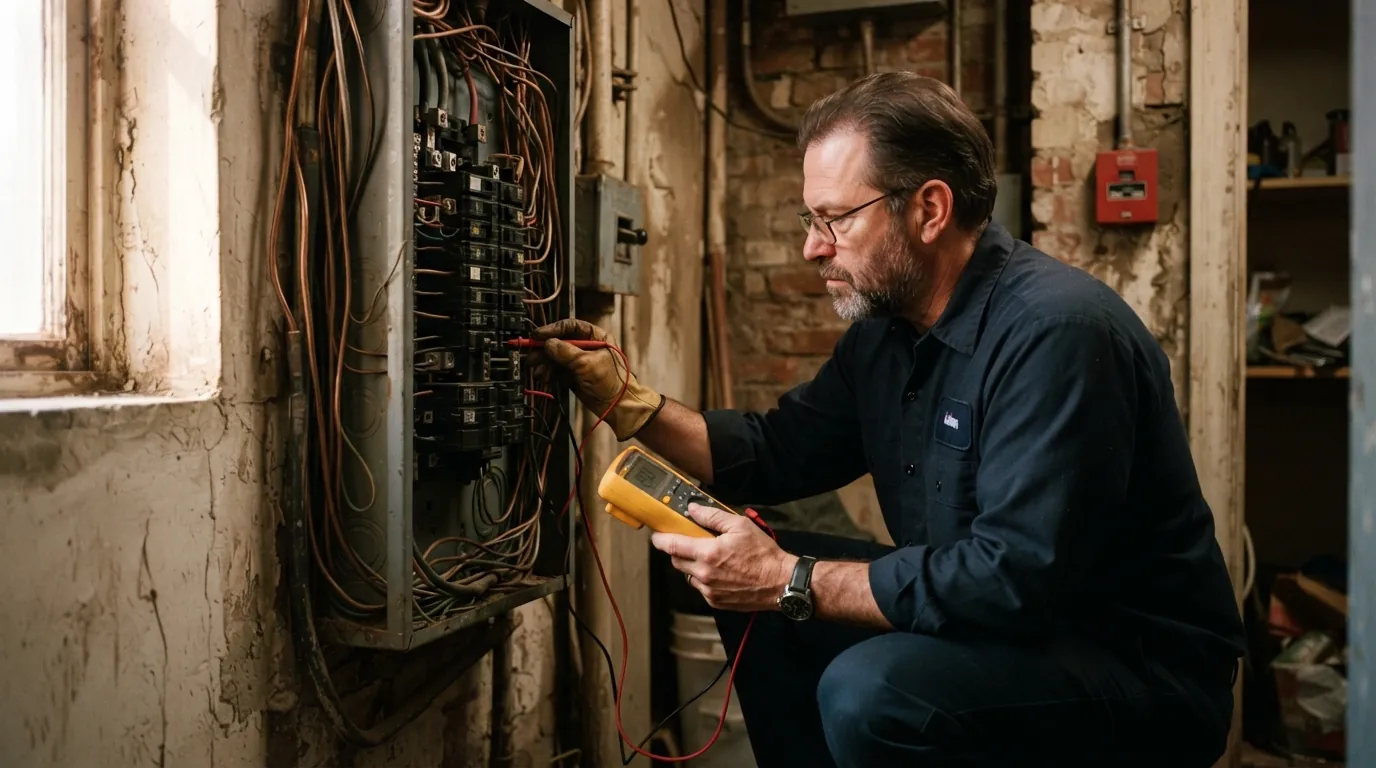
Each camera gets its own Cat6 run back to the recorder or a PoE switch, which carries both power and video. We route cable through ceilings, basements and conduit where it's exposed, keep runs within the distance limit, and terminate each one with a weather-appropriate connector at the camera. Every run is tested before the camera is mounted, labeled at both ends, and noted on a map of the system. Adding a camera later is then a matter of one more run to a known port.
$100 to $200 per hour standard; $200 to $400 per hour emergency or after hours; service call minimum $150 to $300. Source: aecontractorsnyc.com, 2026-09. Published market range for budgeting only, not our quote.
NVR closet power and network
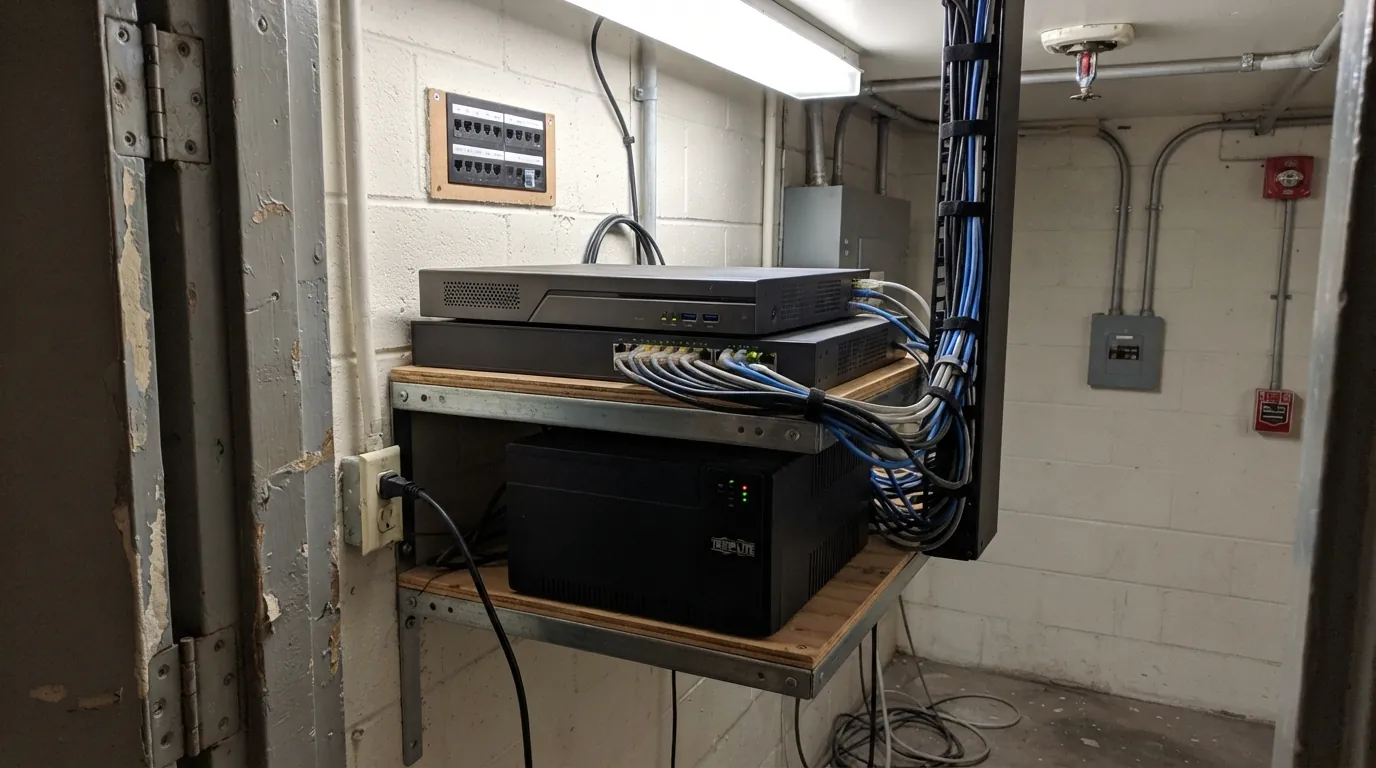
The recorder is the heart of the system, and it's often the weakest link: a box on a shelf, plugged into a power strip, sharing a circuit with a microwave. We give it a dedicated outlet, space for a UPS so it keeps recording through brief outages, and a secure spot where it can't be unplugged or stolen easily. If you want remote viewing, we connect it to your network and confirm it works from your phone before we leave. Storage is sized to the retention period you need.
Storefront and lobby coverage
Storefront and lobby cameras need to capture faces at the door, the register or mailboxes, and the path in and out, without pointing into glare from windows. We place cameras at head height angles rather than straight down, choose lenses for the distance, and cover entrances from inside so the camera sees people as they come in. For residential lobbies, we coordinate placement with management so hallways and entries are covered and tenants' doors aren't the focus. Staff are shown how to pull and export a clip.
Exterior weatherproof drops
Outdoor cameras need a sealed cable entry, a junction box or mount rated for the weather, and a position high enough to be out of easy reach. On brick and stone we drill cleanly and seal every penetration so water can't follow the cable inside. Yard, alley and roof cameras get vandal-resistant housings where needed. We aim each exterior camera at your own property, entrance and yard, and adjust the view after dark so night footage is usable. Infrared range is checked against the actual distance to the gate.
What moves the price
- Number of cameras and run lengths
- Interior or exterior mounting
- Masonry drilling and sealing
- Recorder or PoE switch capacity
- Dedicated circuit and UPS space
- Remote viewing and network setup
- Conduit where cable is exposed
$100 to $200 per hour standard; $200 to $400 per hour emergency or after hours; service call minimum $150 to $300. Source: aecontractorsnyc.com, 2026-09. Published market range for budgeting only, not our quote.
What to decide before we wire
| Decision | Options | Why it matters |
|---|---|---|
| Number of cameras | Entrances first, then yards and hallways | Sets recorder size |
| Recording | Continuous or motion-based | Sets storage needed |
| Remote viewing | Phone app or on-site only | Needs a network connection |
| Recorder location | Closet, office or basement | Needs power, network and security |
What we see in New York buildings
Summer 2026 is a reminder that cameras depend on power. During the early-July heat wave Con Edison reported more than 80,000 customers losing power across the boroughs, cut voltage by 8 percent across wide areas of Brooklyn and Queens, and temporarily shut off nearly 10,000 Queens customers. A recorder and PoE switch on a UPS keep cameras recording through a short outage instead of rebooting into a gap.
What happens after you call
- 1
Coverage walkthrough
We walk entrances, lobbies and yards with you.
- 2
Camera and cable plan
Locations, lenses and runs mapped.
- 3
Cable runs and testing
Every run tested and labeled before mounting.
- 4
Mount and power
Cameras mounted, recorder powered with UPS space.
- 5
Aim and hand over
Views adjusted day and night, remote viewing set up.
Questions about security camera wiring in New York
For reliability, yes. PoE cameras don't depend on Wi-Fi or batteries.
Yes. PoE carries power and video over one Cat6 cable.
Short ones, with the recorder and switch on a UPS.
Yes. We set up remote viewing before we leave.
Both. We run cable, mount cameras and set up the recorder.
Yes. New runs go to known ports on the recorder or switch.