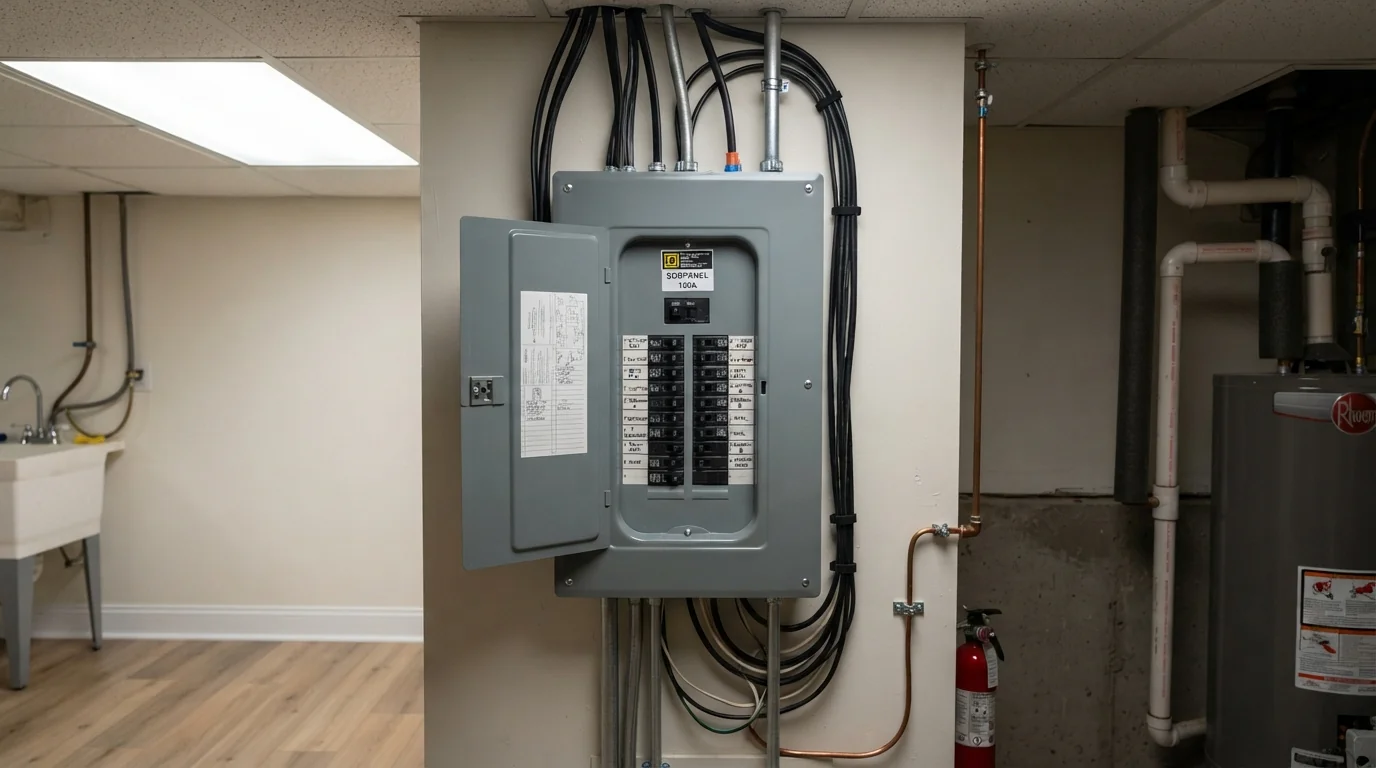
A subpanel in New York City is a second breaker panel fed from the main by a feeder cable, used when the main has no spaces left or the new circuits are far from it. It adds breaker space, not capacity, so a load calculation comes first; the DOB filing fee for a panel job runs about $300 to $600 on top of the installation.
Updated September 2026
A subpanel solves a space problem, not a power problem. If the service can carry the new load but the main panel has no room, or the new work sits at the far end of the house, a subpanel is usually the cleanest answer.
If the load calculation shows the service itself is the limit, we'll tell you, because a subpanel on an overloaded service only moves the trips somewhere else.
Basement and garage subpanels
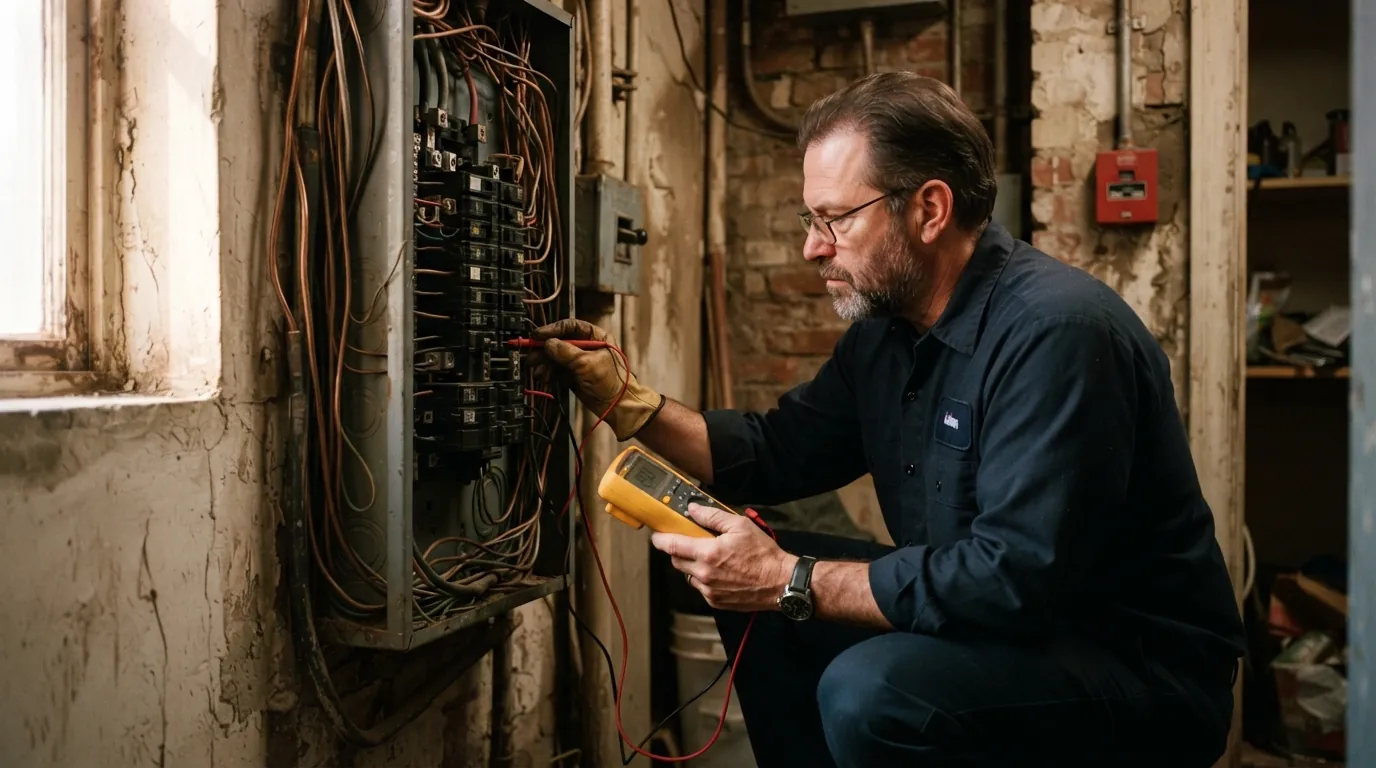
Finishing a basement or wiring a detached garage usually means lighting, outlets, a dehumidifier or sump pump and sometimes a heater or a charger. Running each of those circuits back to the main panel wastes cable and fills the main. A subpanel in the basement or garage gives those circuits a short run and a local shutoff. In a detached garage the feeder is run in conduit and the subpanel gets its own grounding, done to the rules for separate structures. Exterior runs are kept out of the way of cars and snow shovels.
$150 to $300 for a new circuit or minor work; $300 to $600 for a panel upgrade. Source: aecontractorsnyc.com, 2026-09. Published market range for budgeting only, not our quote.
Kitchen renovation subpanels
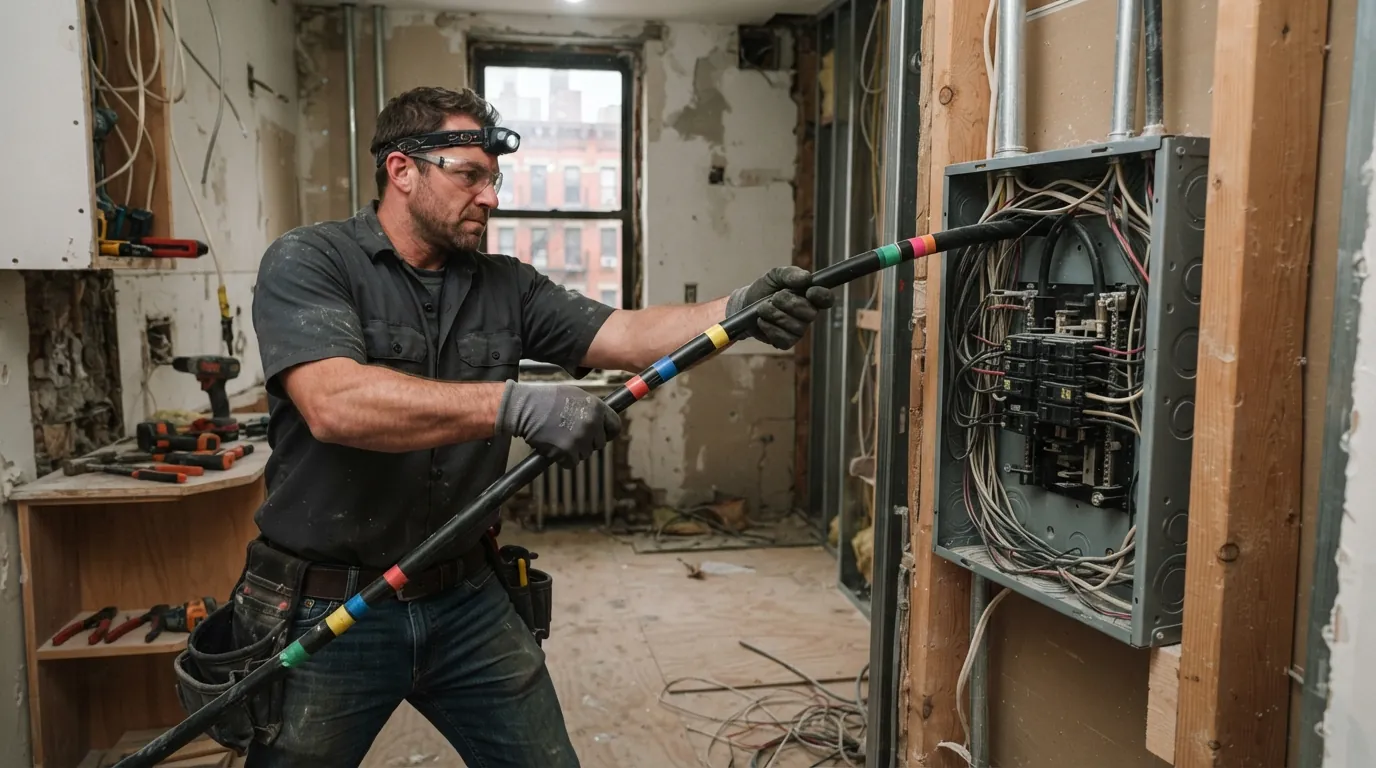
A modern kitchen can need eight or more circuits: two small-appliance circuits, the refrigerator, dishwasher, disposal, microwave, an induction range and lighting. When the main panel is in a hallway closet at the other end of the apartment, a kitchen subpanel shortens every run and keeps the renovation from turning into a rewire of the whole unit. We size the feeder to the load calculation and place the subpanel where the code's working clearance can be kept, never inside a cabinet or behind the refrigerator.
Workshop and studio subpanels
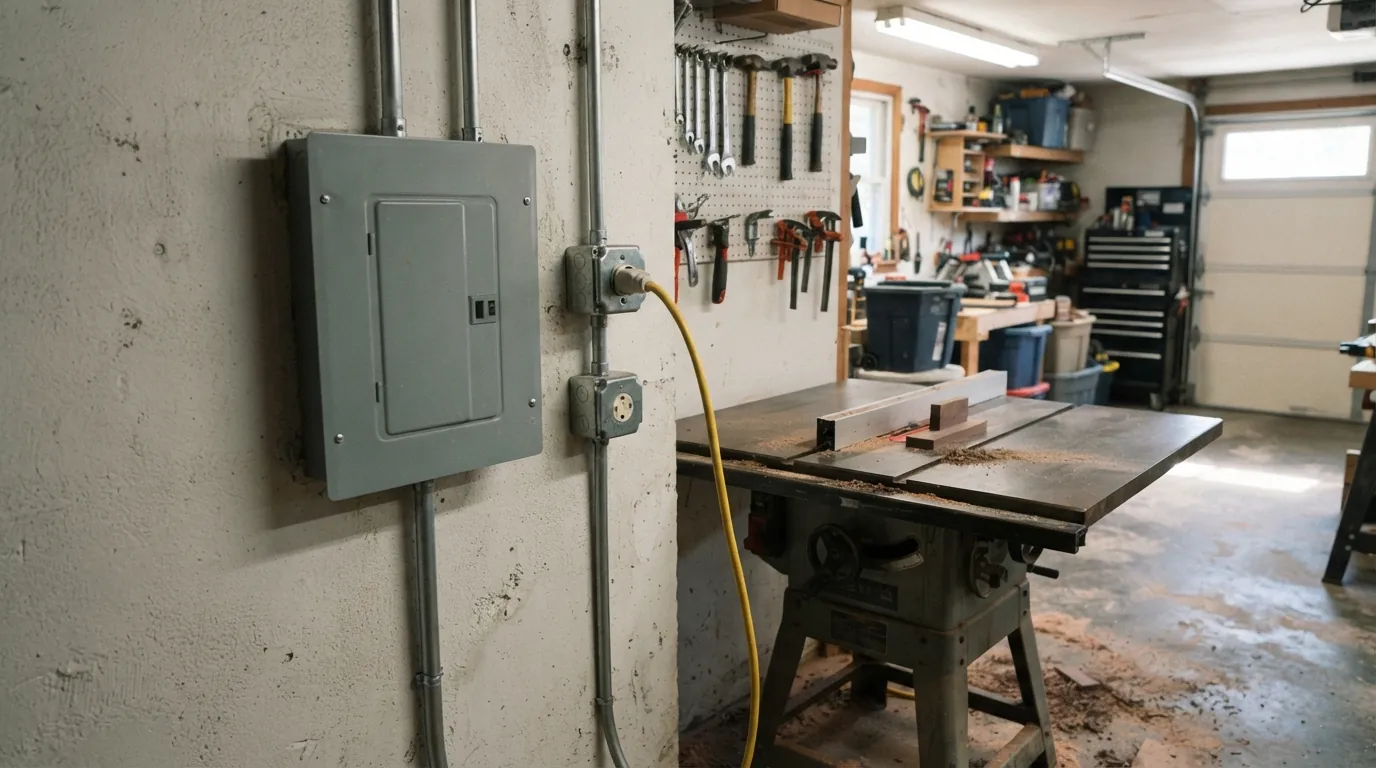
Workshops, pottery studios and home recording rooms have loads that don't behave like household circuits: table saws with big starting current, kilns that run hot for hours, and audio gear that wants clean, dedicated power. A subpanel in the room keeps those loads off the house circuits and gives you a shutoff within reach. We match breakers to each tool's nameplate, add 240-volt receptacles where needed, and keep sensitive equipment on its own circuits, away from the motor loads that cause hum and resets.
Feeder sizing
The feeder is the cable between the main and the subpanel, and it's where shortcuts show up. It has to be sized for the calculated load, protected by the right breaker in the main, and run with a separate neutral and ground so the subpanel's neutral bar stays isolated. Long runs need larger conductors to keep voltage drop in check. We calculate it, write it on the permit, and label both ends so the next electrician can see how it was designed.
What moves the price
- Subpanel size and number of spaces
- Feeder length and conductor size
- Breaker in the main panel for the feeder
- Walls, floors or outdoor runs the feeder crosses
- Separate grounding for a detached structure
- Number of new circuits landed in the subpanel
- DOB permit and inspection
$150 to $300 for a new circuit or minor work; $300 to $600 for a panel upgrade. Source: aecontractorsnyc.com, 2026-09. Published market range for budgeting only, not our quote.
Subpanel or something else?
| Situation | Likely answer | Why |
|---|---|---|
| Main panel full, service has spare capacity | Subpanel | Adds space without new service |
| Lights dim when big loads start | Service upgrade | The supply is the limit |
| One or two circuits to add | Tandem breakers, if allowed | Cheapest when the panel permits it |
| New work far from the main | Subpanel near the work | Shorter runs, local shutoff |
What we see in New York buildings
Local Law 154 has required new buildings under seven stories to be all-electric since 2024, and gut renovations that add major floor area fall under it too. All-electric kitchens, laundry and heat mean more circuits than the old panel location was ever meant to feed. Permits for that work are filed in DOB NOW, where plan review of complex jobs can take weeks and inspectors check box fill, conduit fill and firestopping at every penetration.
What happens after you call
- 1
Load calculation
We confirm the service can carry the new load before adding space.
- 2
Location and feeder route
Subpanel placed where the work is, with code clearance kept.
- 3
Permit filed
Feeder and panel sizes written into the DOB filing.
- 4
Feeder and subpanel installed
Isolated neutral, separate ground, breaker sized in the main.
- 5
Circuits landed and inspected
New circuits labeled, tested and inspected.
How long a subpanel job takes
Most subpanels are installed in a day, sometimes two when the feeder crosses finished floors or runs to a detached garage. The permit comes first, and complex filings can sit in plan review for a few weeks, so we file as soon as the load calculation is done. Circuits for a renovation can be landed in the subpanel as the work progresses, with one inspection at the end.
Questions about subpanel installation in New York
No. It adds breaker space. More power means a service upgrade.
Only if the code's working space and access rules can be met. Many closets fail that test.
Yes. It's new electrical work filed with the DOB.
Distance is fine if the feeder is sized for it. Long runs use larger conductors.
Usually, with board approval and a load letter.
Sometimes, where the panel allows it. We'll tell you which option fits.