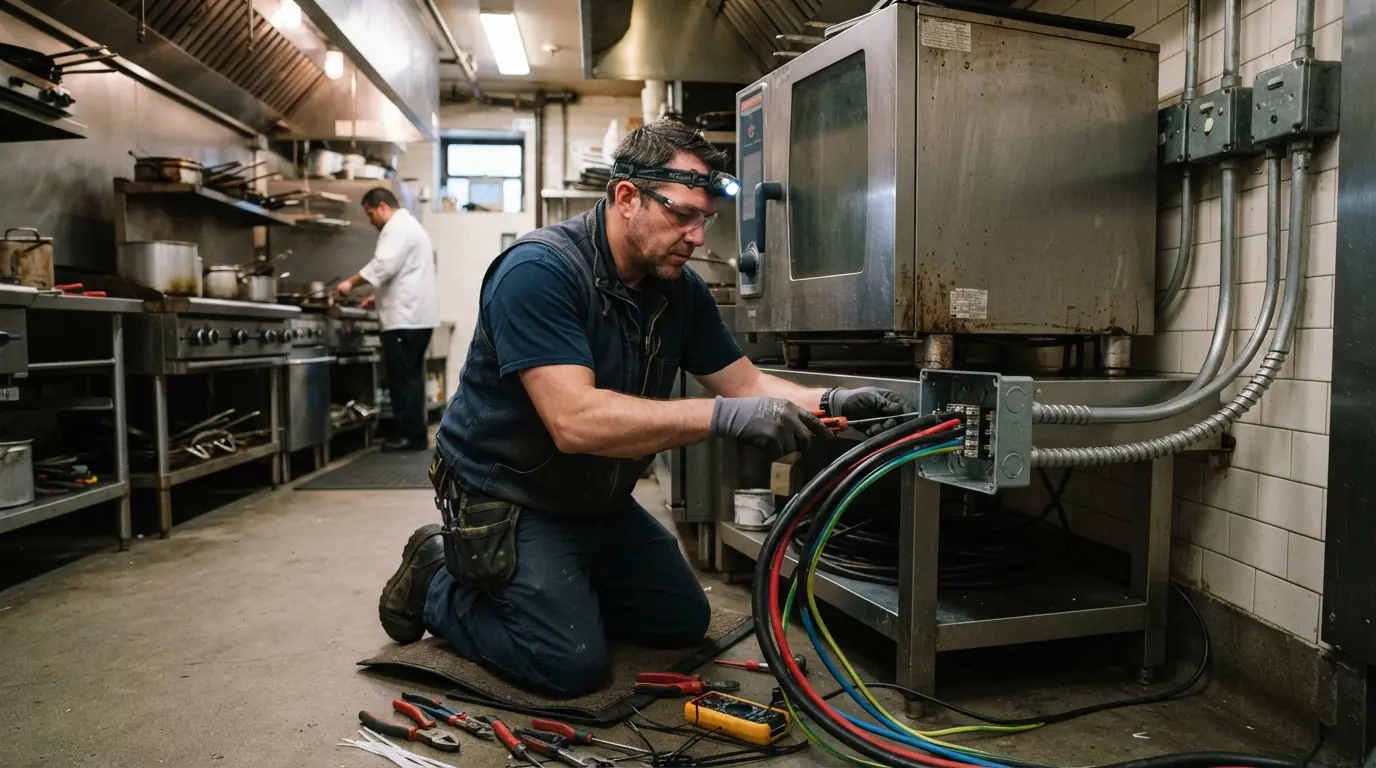
Three-phase wiring in New York City connects commercial equipment such as combi ovens, dish machines, compressors, pumps and large HVAC units to a three-phase service, with breakers, disconnects and conductors sized to each nameplate. The work also keeps load balanced across the three phases, since an unbalanced panel overheats and trips even when the total load looks fine.
Updated September 2026
Most commercial kitchens, shops and larger buildings in the city have three-phase service, and much of their heavy equipment needs it. Getting it wrong shows up as motors running hot, equipment faulting, or breakers tripping at the busiest hour.
We read each machine's electrical requirements, check the service and panel have the capacity and spaces, and wire each piece with the right breaker, disconnect and conductors.
Three-phase service and panels
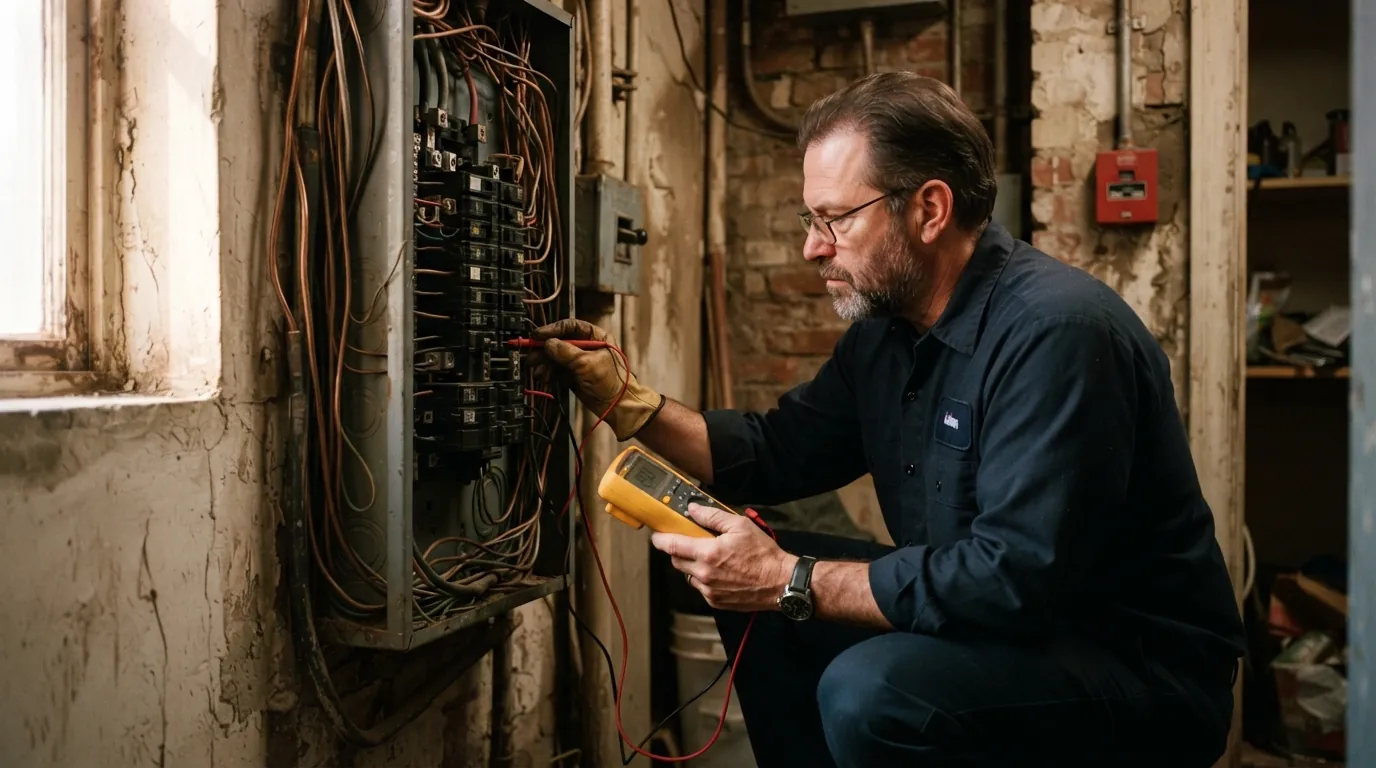
Before new equipment goes in, the service has to carry it. We check the three-phase service size, the panel's spaces and the load already on each phase, and run a load calculation for the new equipment. Where there's room, the equipment is added on new breakers; where there isn't, a new panel or a service upgrade is planned with Con Edison. The panel schedule is updated so every three-phase breaker is labeled with the machine it feeds. Spare capacity is noted for the next piece of equipment.
$100 to $200 per hour standard; $200 to $400 per hour emergency or after hours; service call minimum $150 to $300. Source: aecontractorsnyc.com, 2026-09. Published market range for budgeting only, not our quote.
Commercial kitchen equipment
Combi ovens, dish machines, fryers and large ranges often need three-phase power, and each comes with its own requirements for voltage, breaker size and connection type. We wire them to the equipment plan, add disconnects where the manufacturer or the code requires them, and coordinate with the hood suppression contractor so electric cooking equipment shuts off when the system discharges. Equipment is tested under load with the kitchen staff before service starts. Cord-and-plug connections are used where equipment has to move for cleaning.
Motors, compressors and pumps
Motors are sensitive to how they're wired. The wrong rotation, a missing phase or undersized overload protection burns them out. We wire motors, compressors and pumps with starters and overloads sized to the nameplate, confirm rotation before the equipment runs, and add phase-loss protection where a dropped phase would damage expensive equipment. When a motor that used to start won't, we check for a lost phase or a failing starter before anyone replaces the motor. Nameplate data is recorded so replacement parts match.
Balancing loads across phases
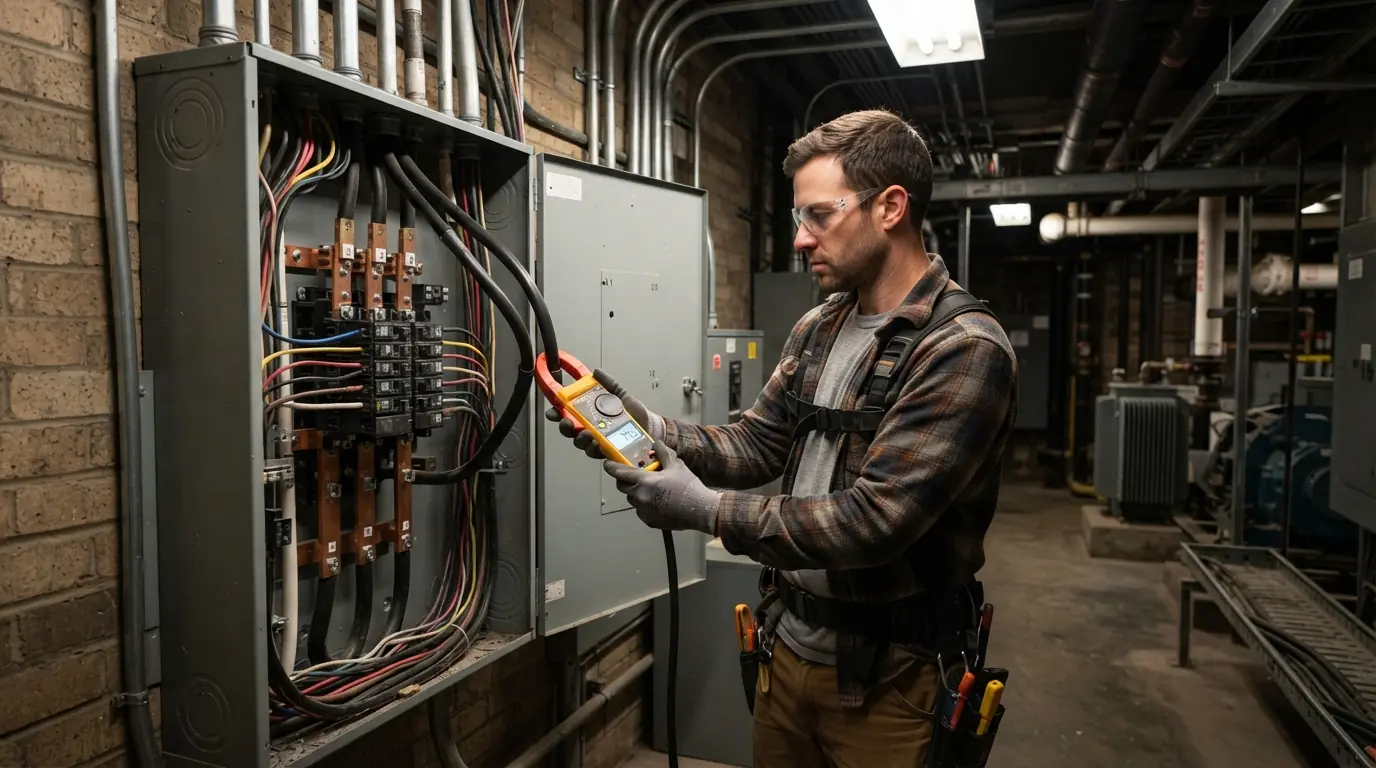
A three-phase panel works best when the load is spread evenly. Adding single-phase equipment piecemeal over the years often loads one phase far more than the others, which overheats that phase's conductors and trips breakers while the panel looks half empty. We measure the current on each phase under normal operation, move circuits to even out the load, and document the result so the next addition goes on the right phase. A simple chart in the panel door shows which phase each machine uses.
What moves the price
- Number and type of machines
- Three-phase service capacity and panel spaces
- New panel or service upgrade
- Disconnects, starters and overload protection
- Phase-loss protection for key equipment
- Load balancing across phases
- After-hours work around business hours
$100 to $200 per hour standard; $200 to $400 per hour emergency or after hours; service call minimum $150 to $300. Source: aecontractorsnyc.com, 2026-09. Published market range for budgeting only, not our quote.
What three-phase equipment wiring includes
- Equipment specs reviewed per machine
- Service capacity and phase loads checked
- Load calculation for new equipment
- Permitted work filed
- Breakers and conductors sized to nameplates
- Disconnects, starters and overloads installed
- Rotation confirmed before first run
- Phase-loss protection where needed
- Panel schedule updated and labeled
What we see in New York buildings
Restaurants are where most three-phase work in the city happens. The NYC Health Department lists inspection results for about 29,000 restaurants and inspects each unannounced at least once a year, looking at facility and equipment maintenance as well as food handling. A combi oven or walk-in compressor that faults mid-service because it was wired to the wrong phase or undersized is an inspection problem as much as a kitchen one.
What happens after you call
- 1
Read the equipment specs
Voltage, phase, breaker and connection per machine.
- 2
Check the service
Capacity, spaces and current load on each phase.
- 3
Plan and file
Circuits laid out and permitted work filed.
- 4
Wire and protect
Breakers, disconnects, starters and overloads installed.
- 5
Test and balance
Rotation checked, equipment run, phases balanced.
Signs three-phase equipment needs attention
Breaker trips at peak hours
A phase is overloaded.
Motor hums but won't start
A possible lost phase.
Equipment running hot
Wrong voltage or unbalanced load.
Compressor short-cycling
Electrical or control fault.
One phase much warmer
Unbalanced panel.
New equipment faulting
Wrong connection for its spec.
Burning smell at a disconnect
Stop and call.
Questions about three-phase power & equipment wiring in New York
The nameplate says. Many commercial ovens, dish machines and compressors do.
Often one phase is overloaded. Balancing fixes it.
It depends on what Con Edison can supply. We check and coordinate.
A lost phase or failing starter is common. We test before replacing.
Yes, around your business hours.
Yes, from the equipment plan, with the hood interlock.