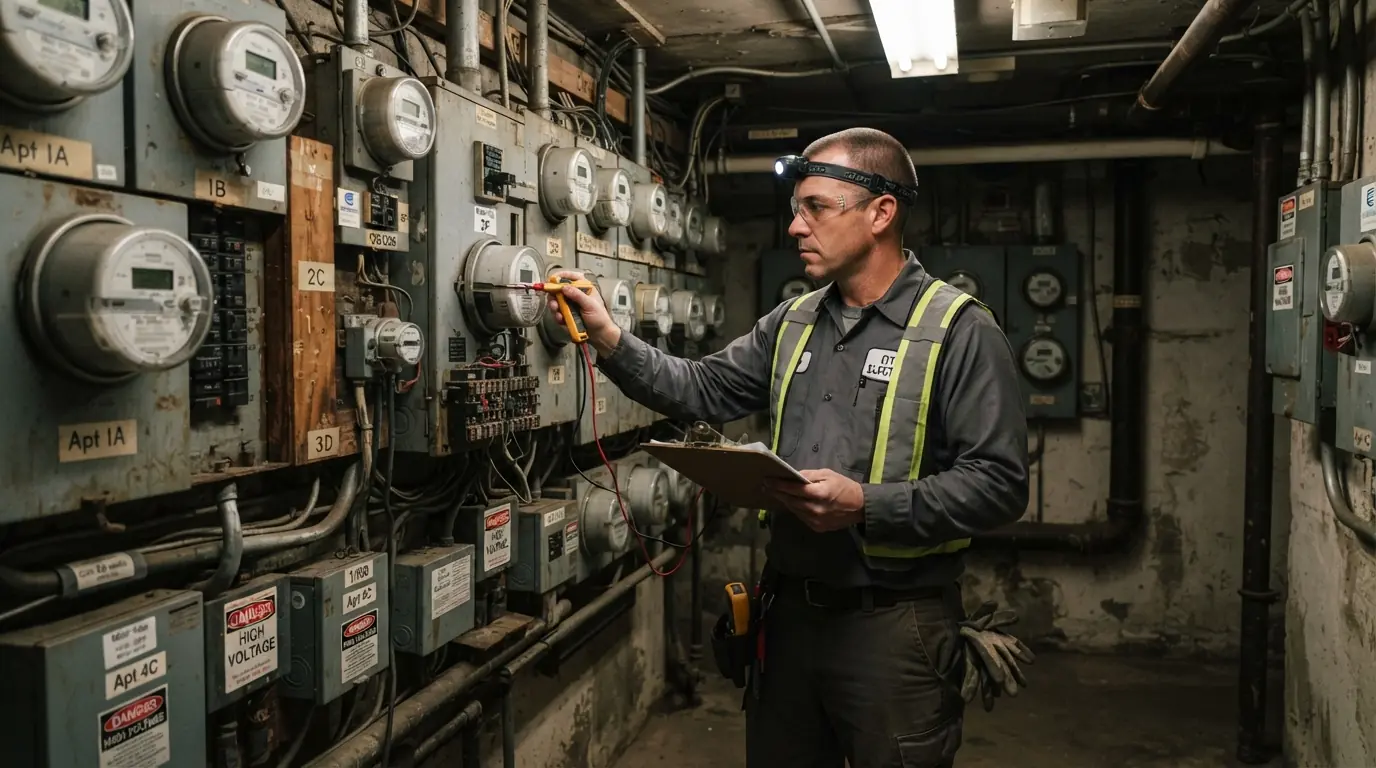
Multifamily electrical service in New York City covers everything outside and between the apartments: common-area lighting and power, meter rooms and risers, emergency lighting, intercoms, plus apartment turnovers and repairs. Buildings of 25,000 square feet or more also had to bring common-area lighting up to the energy code under Local Law 88 by January 1, 2025.
Updated September 2026
An apartment building's electrical system is shared, which means one failure affects many households and one bad decision affects everyone's bills. The job is part repair, part planning and part being there when the super calls.
We keep records by building, flag work before it becomes a violation, schedule shutdowns with notice to tenants, and answer the line around the clock.
Common-area and hallway power
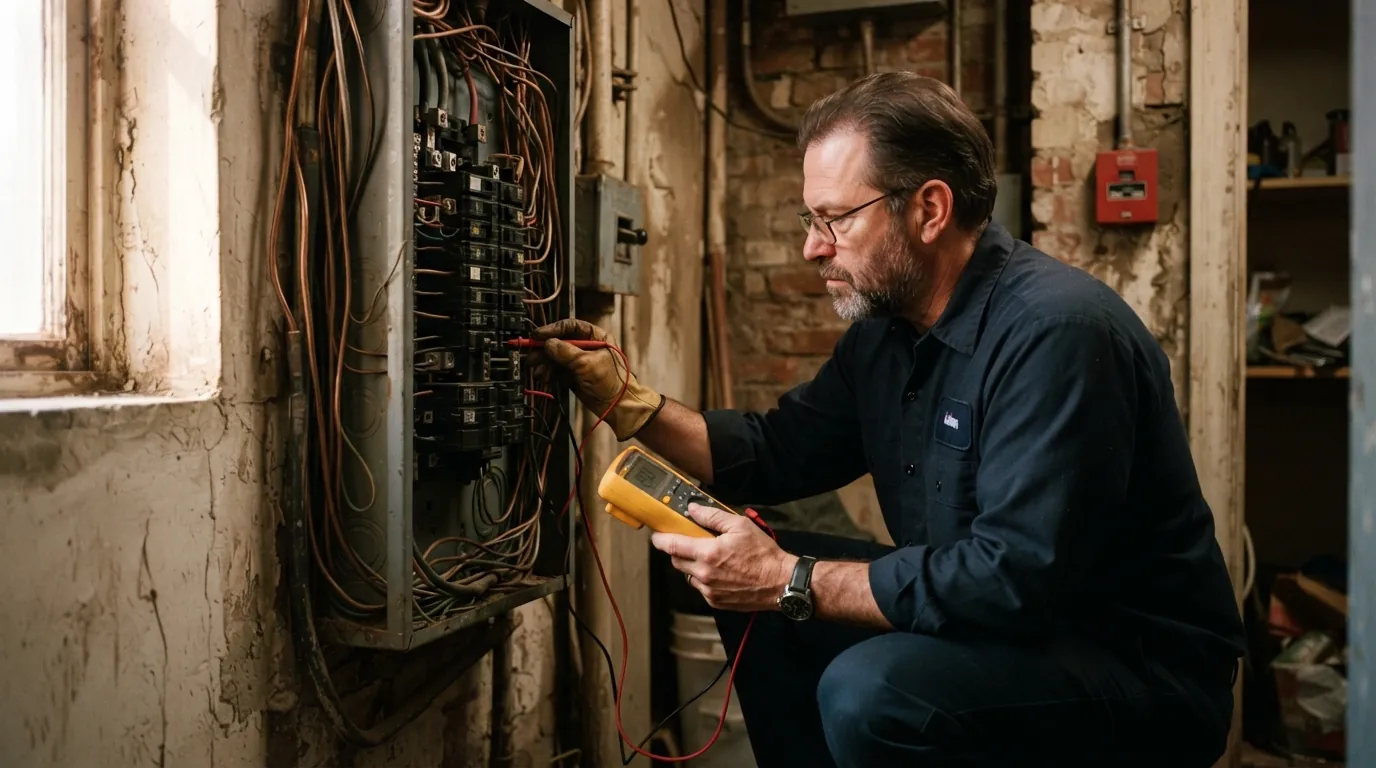
Hallways, stairwells, lobbies, laundry rooms and basements carry the building's house lighting and power. We repair and upgrade that lighting, add the controls the energy code expects in large buildings, and keep emergency lighting and exit signs working and tested. Laundry rooms and boiler rooms get dedicated circuits sized to their equipment. Everything is labeled at the house panel, so the next time a hallway goes dark the super can find the breaker without calling anyone. Fixture types are standardized so the super stocks fewer spares.
Meter room and riser work
Meter rooms and risers are where a building's capacity is decided. Corroded meter banks, undersized risers and overheating connections limit what every apartment can add, and they're often the reason a board has to refuse air conditioners, induction ranges or chargers. We inspect meter rooms, thermal-scan the connections, replace failing equipment and upgrade risers where the building is electrifying. Work is filed with the DOB and coordinated with Con Edison, and tenants get notice of any shutdown well in advance. The board gets a written summary it can use for alteration requests.
$100 to $200 per hour standard; $200 to $400 per hour emergency or after hours; service call minimum $150 to $300. Source: aecontractorsnyc.com, 2026-09. Published market range for budgeting only, not our quote.
Tenant turnover electrical
Turnovers run on tight dates. Between tenants we test every outlet and switch, replace worn and broken devices, check GFCI protection in kitchens and baths, test and date the smoke and CO detectors, and fix whatever the last tenant left behind. We work to the managing agent's punch list and schedule, and leave a short record of what was done in each unit, which is useful when the next complaint or inspection comes in. Anything that needs a permit is flagged before the unit is re-let.
Super and management on-call service
Supers need one number that answers. We set up buildings on our 24/7 line with their address, access instructions and panel locations on file, so an electrician arriving at night knows where to go. Routine requests are scheduled with the super, emergencies are dispatched immediately, and the managing agent gets a record of every visit. For portfolios, we keep the same arrangement across buildings so the process is the same everywhere. Repeat problems are tracked so the root cause gets fixed, not just the symptom.
What moves the price
- Building size and number of units
- Emergency or scheduled work
- Meter room and riser condition
- Common-area lighting and controls
- Turnover punch-list scope
- After-hours and tenant notice requirements
- Permits and Con Edison coordination
$100 to $200 per hour standard; $200 to $400 per hour emergency or after hours; service call minimum $150 to $300. Source: aecontractorsnyc.com, 2026-09. Published market range for budgeting only, not our quote.
What building service includes
- Building set up on the 24/7 line
- Common-area lighting and power
- Emergency lighting and exit sign testing
- Meter room inspection and thermal scan
- Riser and service upgrades with DOB filings
- Intercom and door release repairs
- Turnover testing and device replacement
- Smoke and CO detectors tested and dated
- Visit records for management
What we see in New York buildings
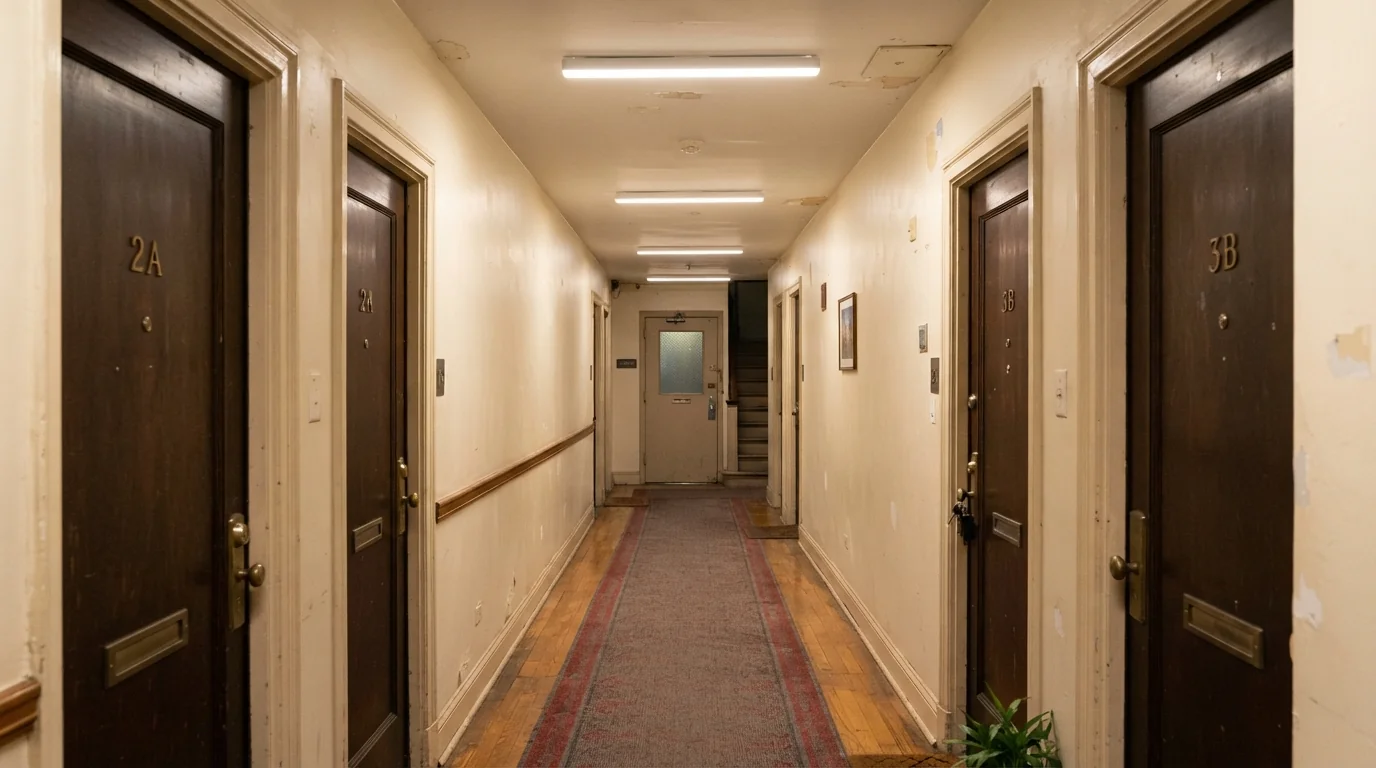
Two city rules frame apartment-building electrical work. Local Law 88 required buildings of 25,000 square feet or more to bring common-area lighting up to the energy code by January 1, 2025, covering lobbies, hallways, basements and laundry rooms. And under 1 RCNY 42-01, class A buildings with eight or more apartments must keep self-closing, self-locking entrance doors and a working intercom with a door release.
What happens after you call
- 1
Building set up
Address, access and panel locations recorded for our 24/7 line.
- 2
Walkthrough
Common areas, meter room and risers checked.
- 3
Priority list
Items ranked so violations and failures come first.
- 4
Scheduled work
Shutdowns planned with notice to tenants.
- 5
Records kept
Every visit logged for the managing agent.
Signs a building needs electrical attention
Hallway lights failing floor by floor
House lighting circuits or fixtures failing.
Meter room feels warm
Connections overheating at the meter bank.
Tenants tripping breakers in summer
Risers and unit panels near their limit.
Exit signs dark
Batteries or fixtures have failed.
Intercom dead on some floors
Wiring or station faults.
Board refusing AC or charger requests
The riser may not carry the load.
No house panel directory
Nobody knows what each breaker feeds.
Questions about multifamily building electrical service in New York
Yes. The line is answered 24/7 and emergencies are dispatched immediately.
Yes, to the managing agent's punch list and schedule.
Yes, including a thermal scan of the connections.
It covers buildings of 25,000 square feet or more. We can check your building.
Yes. Tenants are notified well ahead of any planned shutdown.
Yes, with the same process and records across the portfolio.