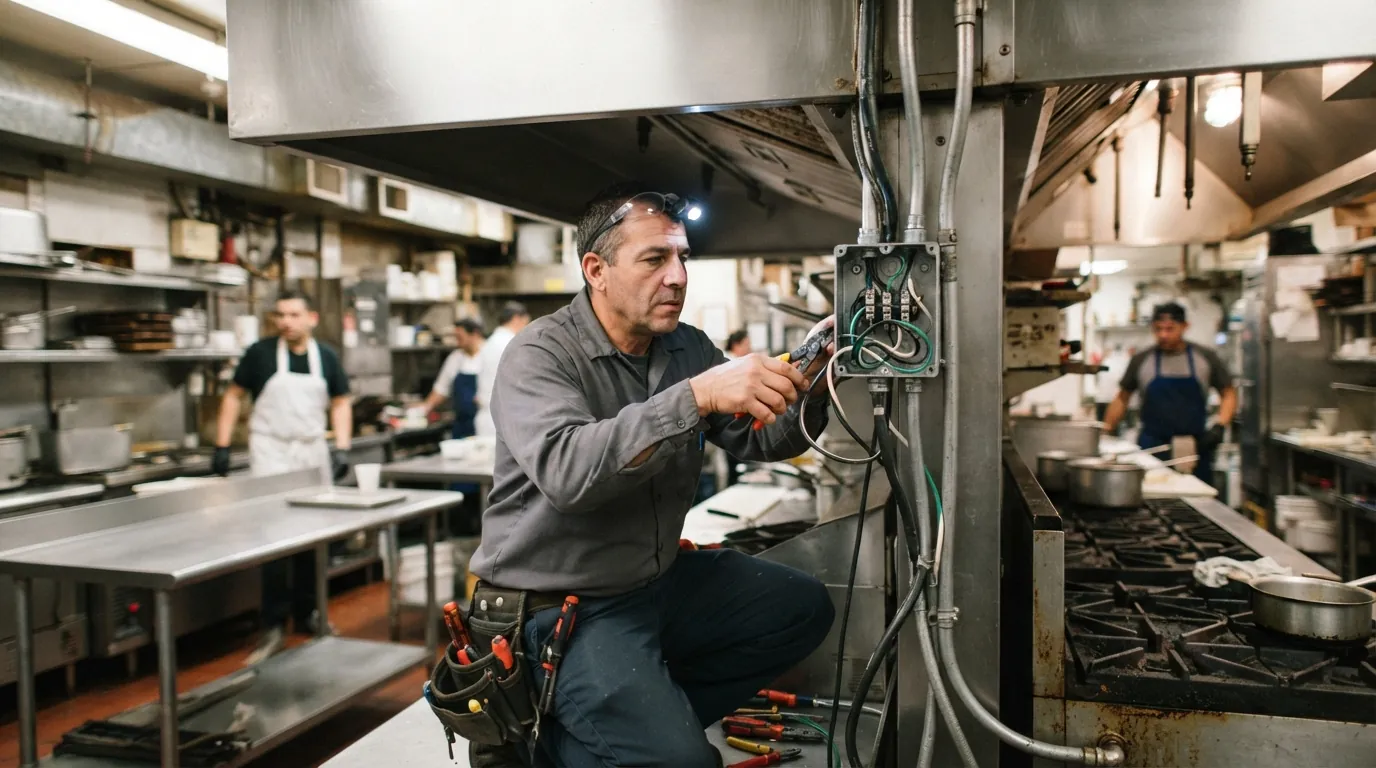
Restaurant electrical work in New York City covers the cooking line, hood and fire-suppression interlocks, walk-in coolers and refrigeration, dishwashing, and dining room lighting and controls. The Health Department inspects the city's roughly 29,000 restaurants unannounced at least once a year, and facility and equipment maintenance is part of what inspectors look at.
Updated September 2026
A kitchen is the most demanding electrical environment in most buildings: heavy loads, heat, grease, water and equipment that has to run all day. When something trips at service, every minute counts.
We wire new kitchens and renovations, keep existing ones running, and answer the line around the clock for the walk-in that won't restart at 2 a.m.
Cooking line and hood circuits
Electric fryers, combi ovens, induction ranges and salamanders each need dedicated circuits sized to their nameplates, often three-phase. Under the hood, electric cooking equipment has to shut off when the fire-suppression system discharges, which means a shunt-trip or contactor interlock wired to the suppression panel. We lay out receptacles and hardwired connections to the equipment plan, use cord-and-plug connections where equipment has to move for cleaning, and test the interlock with the suppression contractor before the kitchen opens. New equipment added later gets checked against the panel first.
$100 to $200 per hour standard; $200 to $400 per hour emergency or after hours; service call minimum $150 to $300. Source: aecontractorsnyc.com, 2026-09. Published market range for budgeting only, not our quote.
Walk-in cooler and refrigeration power
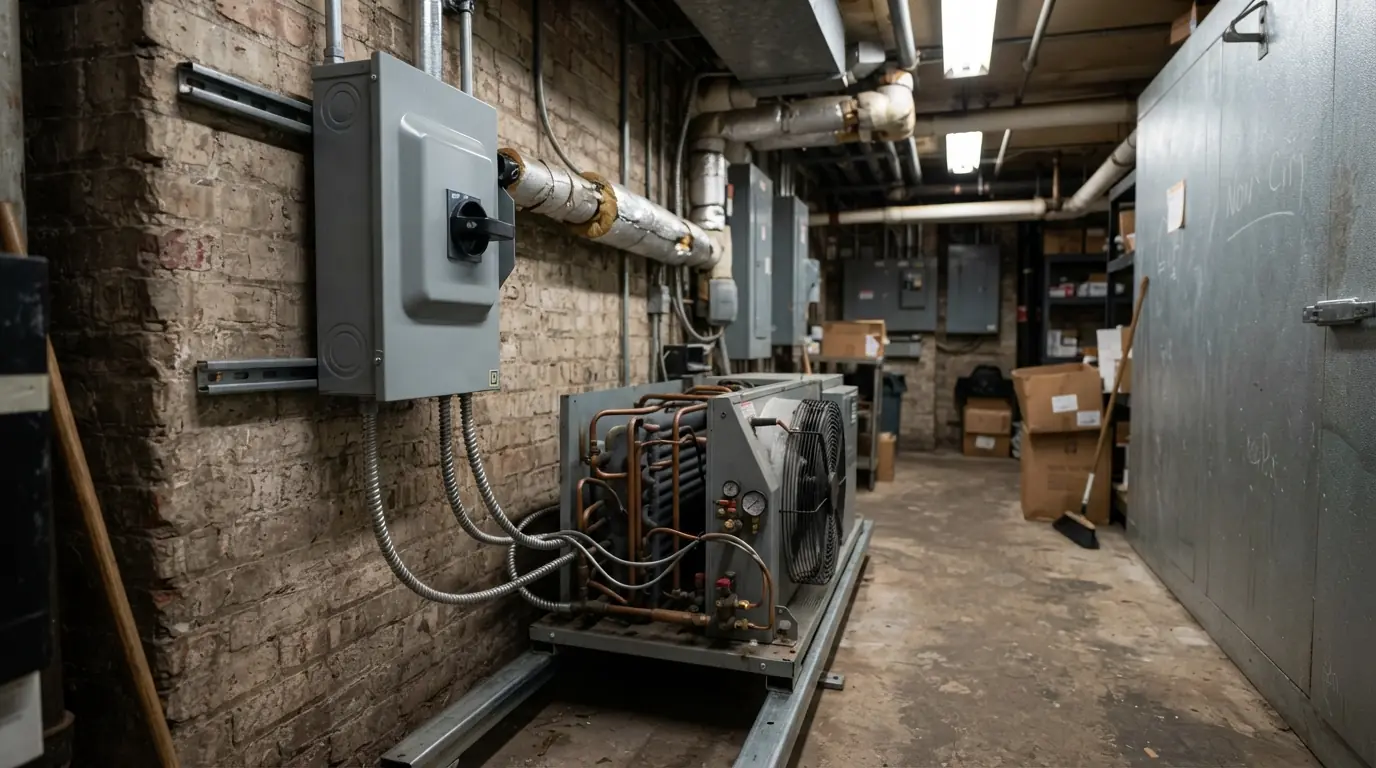
Walk-ins, reach-ins and prep tables are where a power problem turns into lost inventory. Condensing units and evaporators get dedicated circuits and disconnects, and we keep refrigeration off circuits shared with cooking equipment so a trip on the line doesn't warm the walk-in. Where the building's power is unreliable, we can add an inlet for temporary generator power or alarms that notify you when a cooler loses power. After-hours refrigeration failures get priority on our 24/7 line. We also label which breaker feeds each unit.
Health inspection prep
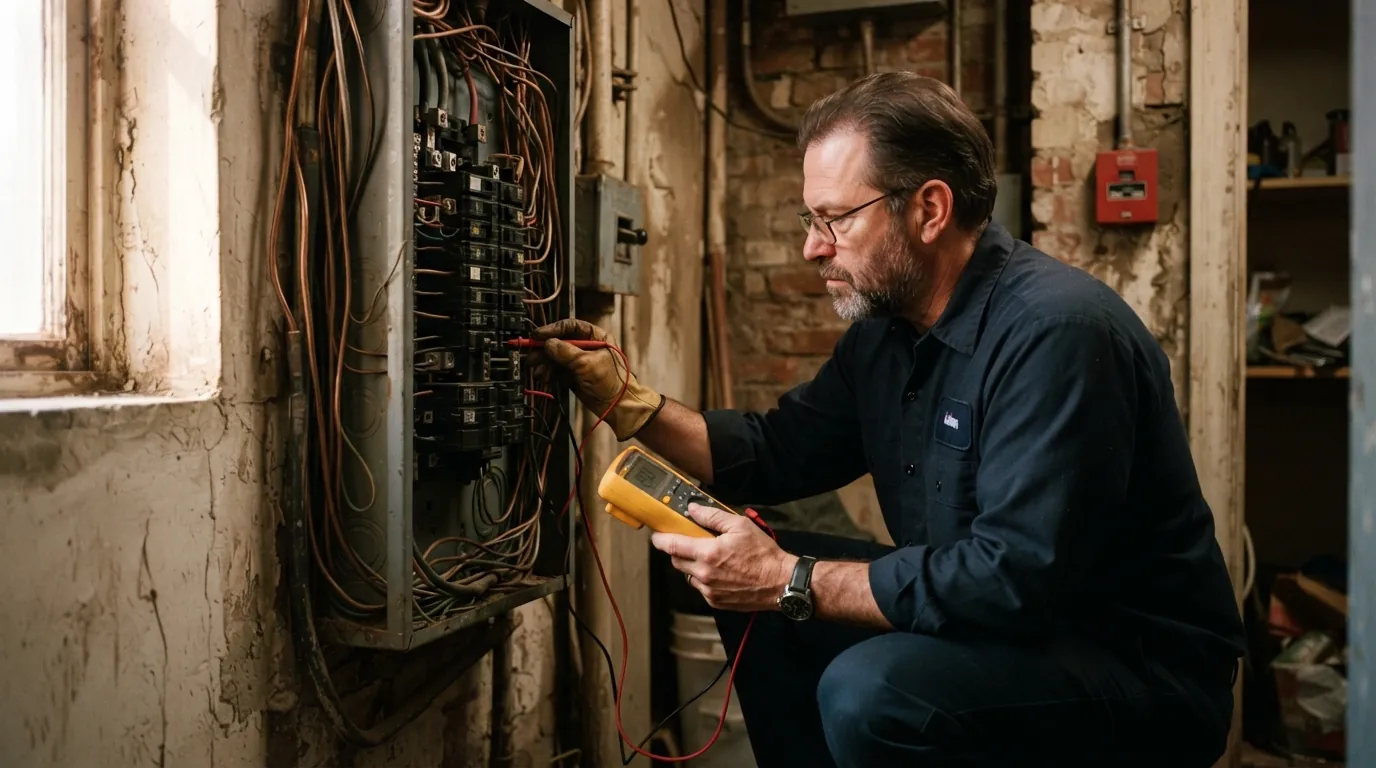
Health inspectors look at the whole facility, and electrical defects show up in the details: missing covers, damaged cords, lights without shields over food areas, and outlets that aren't GFCI-protected near sinks. Before an inspection or a reopening, we walk the kitchen with the manager, fix the items an inspector would note, and replace damaged cords and plugs. It's a short visit that takes electrical items off the list of things that can cost points. Staff are shown how to reset GFCI outlets themselves.
Dining room lighting and controls
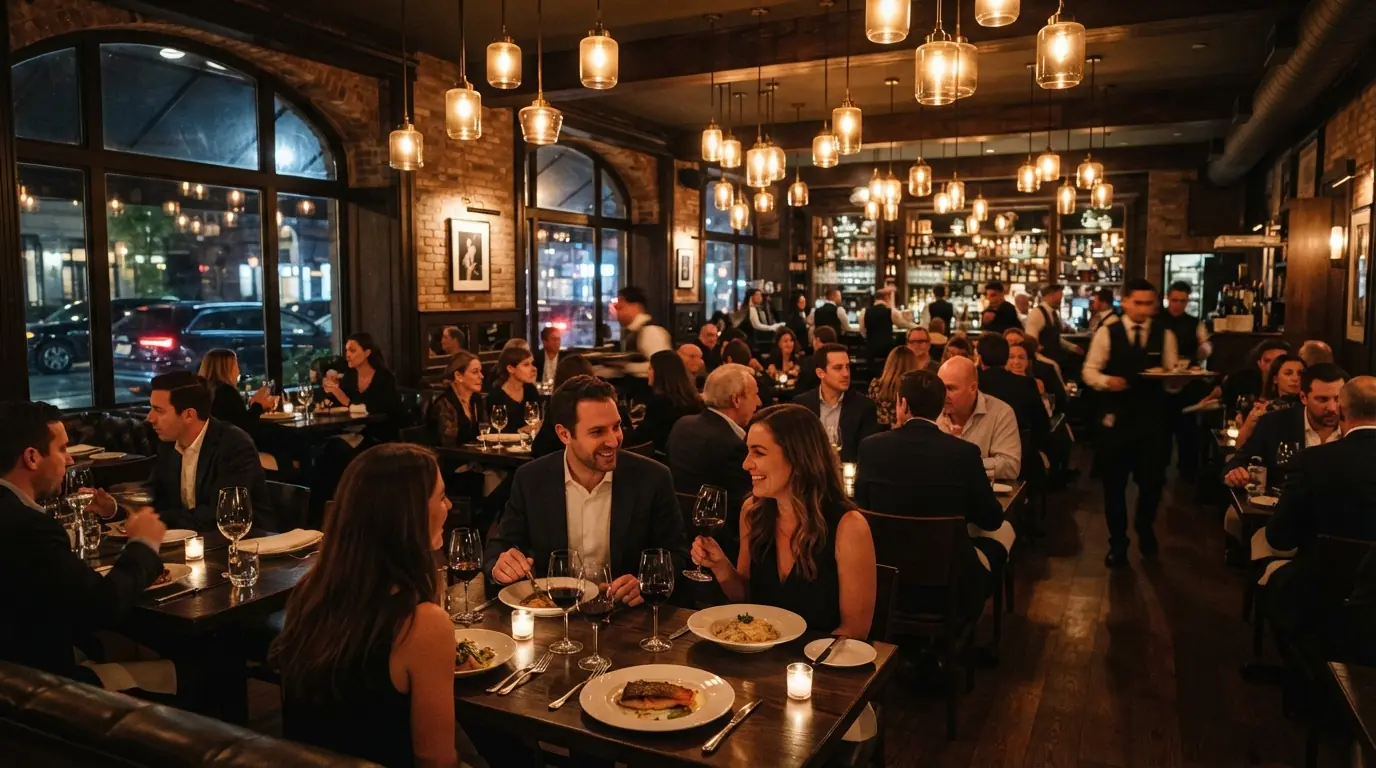
Dining room lighting sets the room, and it has to change through the day, from bright at lunch to low at dinner. We install fixtures, dimming systems and scene controls that staff can operate from one keypad, and keep the lighting on circuits separate from the kitchen so a trip at the line doesn't plunge the dining room into darkness. Bar lighting, signage and exterior lighting are put on timers so nobody has to remember them at close. Presets are labeled on the keypad for new staff.
What moves the price
- Equipment list and nameplate loads
- Three-phase service and panel capacity
- Hood suppression interlock
- Walk-in and refrigeration circuits
- GFCI protection in wet areas
- Dining room dimming and scene controls
- After-hours or overnight scheduling
$100 to $200 per hour standard; $200 to $400 per hour emergency or after hours; service call minimum $150 to $300. Source: aecontractorsnyc.com, 2026-09. Published market range for budgeting only, not our quote.
What restaurant electrical work includes
- Equipment plan reviewed from spec sheets
- Service and panel capacity confirmed
- Dedicated circuits sized to nameplates
- Hood suppression interlock wired and tested
- Refrigeration on separate circuits
- GFCI protection in wet areas
- Shielded fixtures over food areas
- Dining room dimming and scenes
- Permits filed and inspected
What we see in New York buildings
The NYC Health Department lists inspection results for the city's roughly 29,000 restaurants and inspects each one unannounced at least once a year. Inspectors look at food handling and temperatures, and also at facility and equipment maintenance. That puts the electrical behind the refrigeration and the kitchen lighting in play: a walk-in that lost power or a broken light shield over a prep table becomes an inspection issue.
What happens after you call
- 1
Equipment plan review
Every appliance's electrical needs listed from the spec sheets.
- 2
Capacity check
Service and panels confirmed for the kitchen load.
- 3
Filing and scheduling
Permits filed, work set around service hours.
- 4
Install and interlock
Circuits, disconnects and hood interlock installed and tested.
- 5
Walkthrough
Kitchen walked with the manager before opening or inspection.
Signs a kitchen's electrical needs attention
Breaker trips at the rush
The line is loaded past its circuits.
Walk-in warm in the morning
Refrigeration lost power overnight.
Scorched plug on the line
A cord or receptacle is failing.
Dead outlet near the sink
A tripped or failed GFCI.
Flickering hood lights
A failing fixture over the cooking line.
Burning smell behind equipment
Stop and call immediately.
Dining room dark after a kitchen trip
Circuits are shared that shouldn't be.
Questions about restaurant & commercial kitchen electrical in New York
Yes. The line is answered 24/7 and refrigeration failures get priority.
Yes, in coordination with the suppression contractor.
Yes. Most work is scheduled before prep or after close.
Yes, in wet areas and near sinks.
Yes. We walk the kitchen and fix electrical items an inspector would note.
Yes, with scenes staff can set from one keypad.