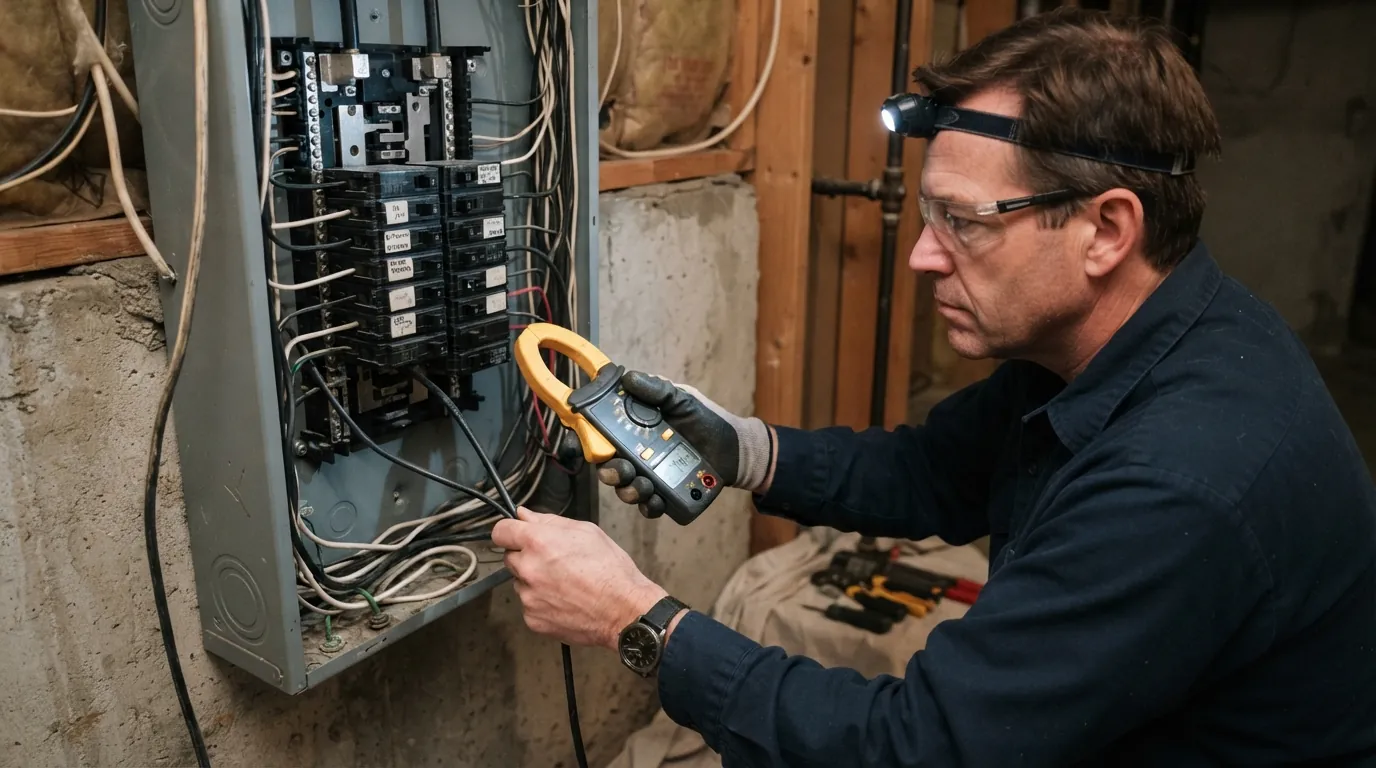
A circuit breaker that keeps tripping in a New York City is protecting you from an overload or a short, and a new breaker only fixes it when the breaker itself has worn out. We meter the circuit under load, find what's drawing the current, and replace the breaker only when it has failed or is an obsolete brand.
Signs it is time to call
Trips at the same time every day
An overload from a scheduled load, usually AC or heating.
Trips instantly when something turns on
A short in that appliance or its cord.
Won't reset, snaps back
Dead short on the circuit.
Resets with no resistance
The breaker mechanism has failed.
Breaker warm or discolored
Loose connection or overload at the breaker.
Two wires under one screw
A double tap that will eventually arc.
Panel says Federal Pacific or Zinsco
Replace the panel, not the breaker.
Updated September 2026
Breakers wear out, but not as often as people think. Most tripping is a real overload, like a window unit and a space heater on one 15-amp circuit, or a short from a failed appliance. A bigger breaker is the one thing we won't fit, because the wire behind it is sized for the original rating.
When the breaker has failed, it fails in one of two ways: it won't hold at all, or it won't trip when it should. The second is the dangerous one and the reason Federal Pacific and Zinsco panels get replaced rather than repaired.
A like-for-like breaker swap at 30 amps or below doesn't need a DOB inspection, so most breaker repairs are done in one visit.
Breaker keeps tripping
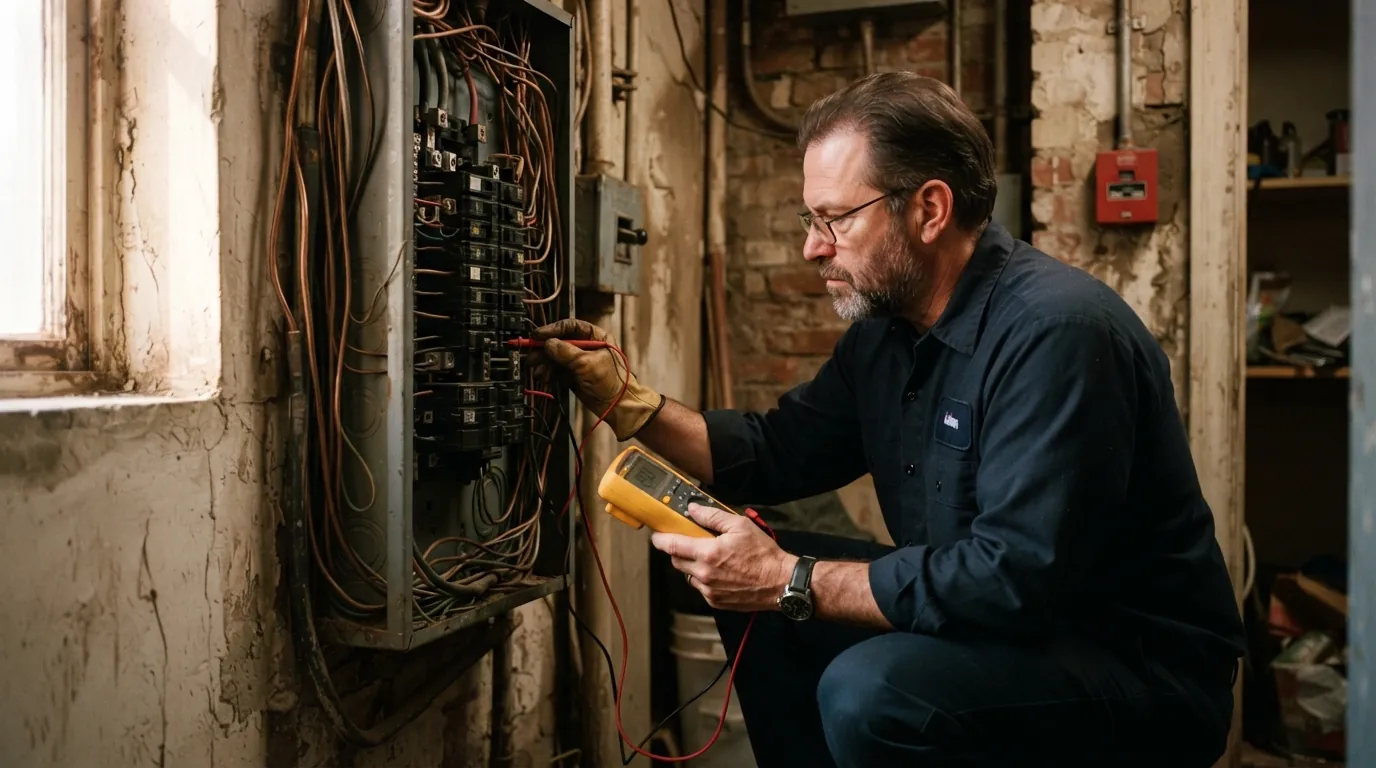
We plug a clamp meter on the circuit and watch what it draws when the trip usually happens. A circuit running at or above its rating is an overload, and the fix is moving a load to another circuit or adding a dedicated one. A trip the instant something is switched on is a short, and we chase it to the appliance, cord or device. A breaker that trips at well below its rating with a normal load has weakened and gets replaced with the same rating and type.
Breaker will not reset
Push it fully off first, then on; a breaker that has tripped often won't reset from the middle position. If it snaps straight back, there's a dead short on the circuit and the breaker is doing its job. If it flops loose with no resistance, the mechanism has failed. We isolate the circuit by disconnecting the loads, test the breaker on its own, and replace it if it fails or clear the short if it doesn't. Repeated forcing welds contacts and can take the panel bus with it.
Double-tapped or undersized breakers
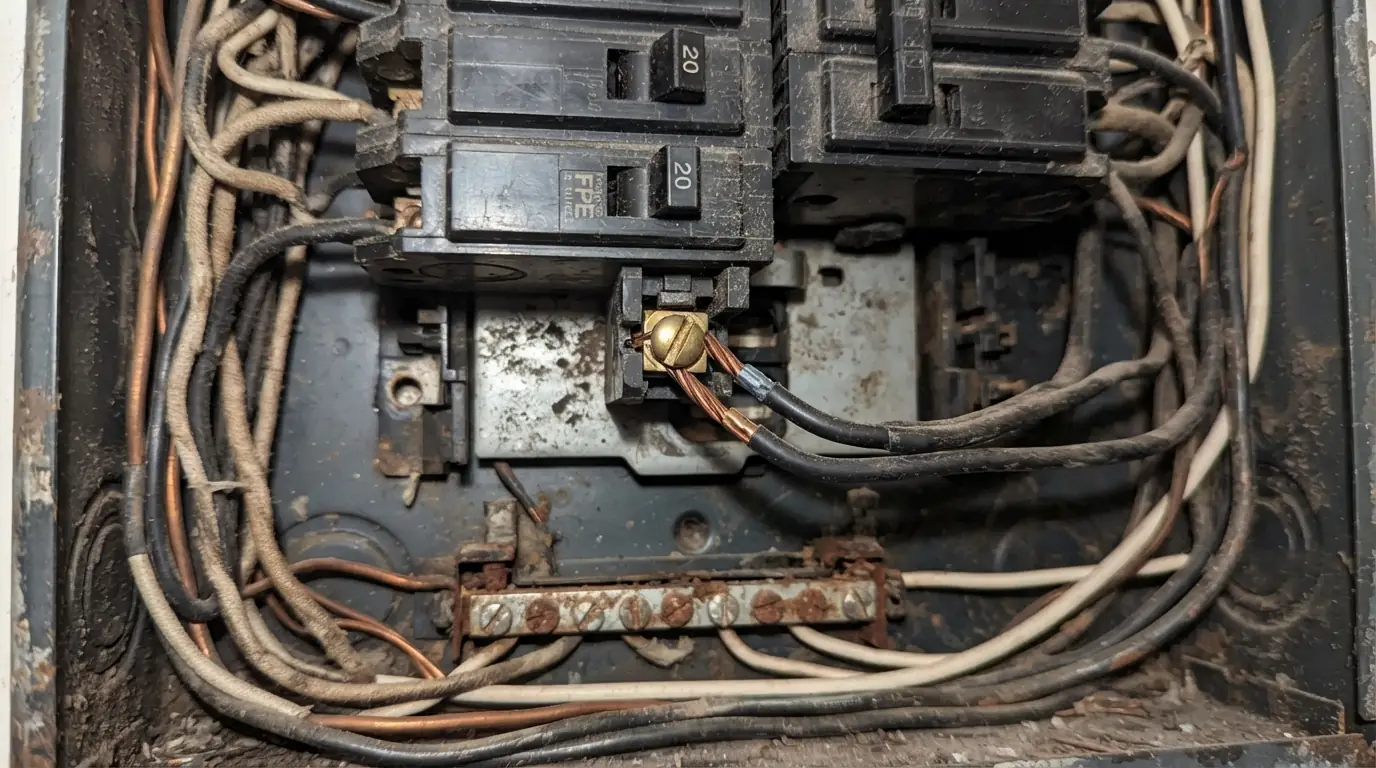
Two wires under one breaker screw is a double tap, and unless the breaker is listed for two conductors it's a loose connection waiting to arc. It's the most common defect we find in panels that have had decades of additions. We land the second conductor on its own breaker, adding a tandem breaker where the panel is listed for one or a subpanel where it isn't. A breaker bigger than the wire it protects gets swapped back to the correct rating, even if that means the circuit trips until the load is split.
Federal Pacific and Zinsco breakers
Stab-Lok breakers from Federal Pacific and the aluminum-bus breakers in Zinsco panels have a documented history of failing to trip under fault. Replacement breakers for these panels are hard to find and don't fix the underlying design. When we find one of these panels behind a tripping problem, we recommend a full panel replacement rather than a breaker swap, and we'll show you the panel label so you can see the brand yourself. Insurers and co-op boards increasingly require it before they sign off on work.
average $1,535, most paying $751 to $2,323; a few breakers as low as $200; labor $1,000 to $4,500 at $50 to $150 per hour. Source: www.angi.com, 2026-07-08. Published market range for budgeting only, not our quote.
What happens after you call
- 1
Tell us the pattern
When it trips, what's running, and whether it resets. That points us at overload, short or failed breaker.
- 2
Circuit metered under load
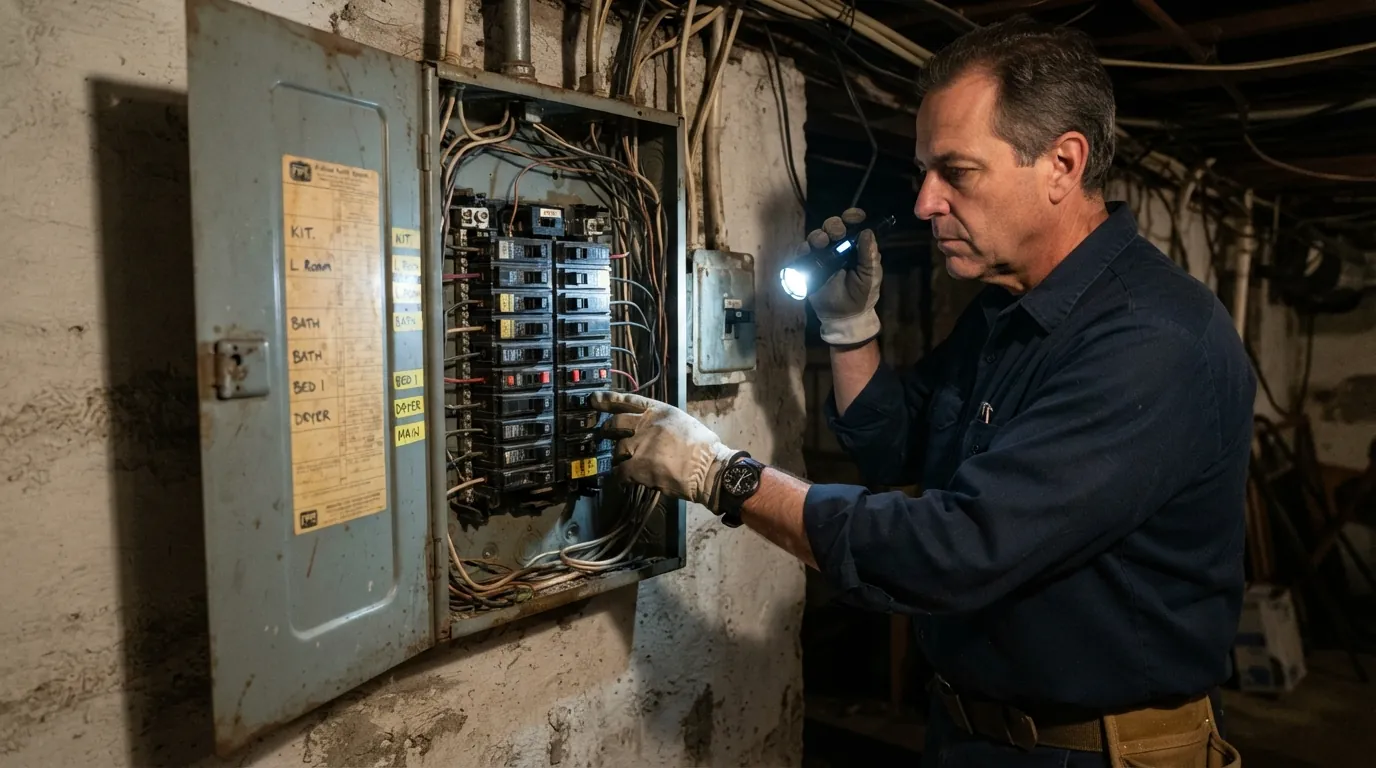
A clamp meter on the circuit while the usual appliances run.
- 3
Cause identified
Overload, short, loose connection or a failed breaker, and you see the reading.
- 4
Repair made
Load split, short cleared or breaker replaced with the correct rating and type.
- 5
Panel checked
Neighboring breakers and lugs torqued, directory updated.
How long a breaker repair takes
A failed breaker is diagnosed and replaced in under an hour on site, and clearing a double tap with a tandem breaker is about the same. Chasing a short through a dozen devices takes longer, because each is opened in turn until the fault shows. A panel replacement is a permitted job on its own day, with the DOB inspection to follow.
What we see in New York buildings
Like-for-like replacement of breakers 30 amps and under, and panel parts at 150 volts and under, is still regulated electrical work in New York City but doesn't trigger a DOB inspection, which is why most breaker repairs finish in one visit. The 2025 NYC Electrical Code, in force since December 21, 2025, changed the AFCI and GFCI requirements for new filings, so when a breaker repair grows into a new circuit, the replacement breaker may need to be an arc-fault or ground-fault type.
What moves the price
- Whether the breaker failed or the circuit is genuinely overloaded
- Breaker type: standard, AFCI, GFCI or a two-pole 240V breaker
- Panel brand, and whether breakers are still made for it
- Adding a tandem breaker or a circuit to clear a double tap
- Tracing a short through several devices
- After-hours versus scheduled visit
- A panel replacement when the bus is damaged or the brand is obsolete
GFCI replacement about $100 to $200; standard outlet $100 to $150; three-way switch $200 to $225; 220V outlet $120 to $170. Source: www.homeyou.com, 2026-06-14. Published market range for budgeting only, not our quote.
Questions about circuit breaker repair in New York
No. The wire behind it is sized for the original rating and a bigger breaker lets it overheat. We split the load instead.
Window air conditioners. Two units, or one unit plus a microwave, on a single 15-amp circuit will trip it. A dedicated circuit fixes it.
If it trips with a light load, or won't reset with everything unplugged, it has likely failed. We test it on its own before replacing it.
A like-for-like swap at 30 amps or under is regulated work but needs no DOB inspection.
Two wires under one screw on a breaker not rated for it. We give the second wire its own breaker.
Yes. Its breakers have a documented failure history, and replacement breakers don't fix the design.