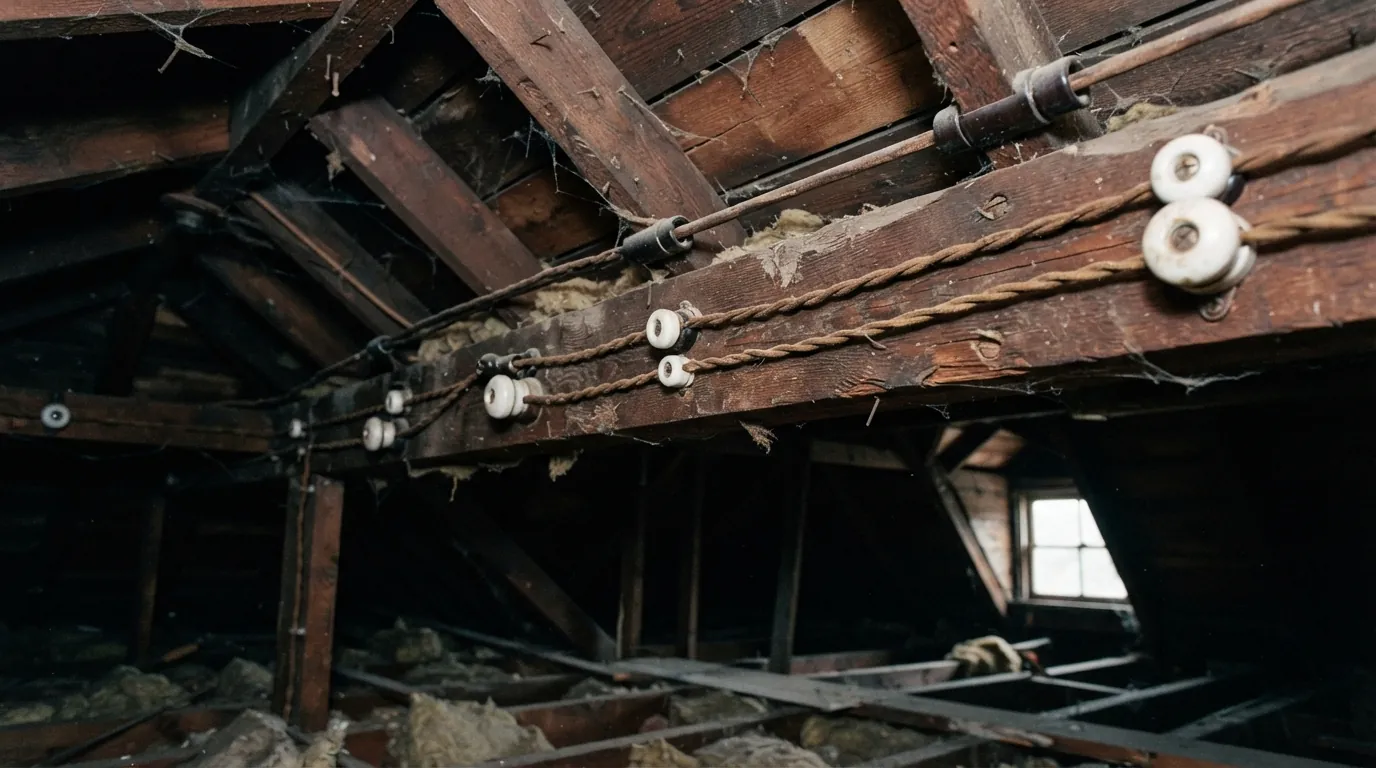
Knob and tube is the earliest wiring in New York houses: single conductors on porcelain knobs and through porcelain tubes, with no ground. Many insurers decline or surcharge homes where it is still live. Replacing it means rewiring those circuits with grounded cable and giving the insurer a letter and permit sign-off confirming none remains live.
How to tell if you have it
Look in the attic and the basement, where framing is exposed. Knob and tube runs as two separate wires, spaced apart, clipped to white porcelain knobs along joists and passing through porcelain tubes where it crosses framing. Splices are often wrapped in cloth tape and hang in open air.
Inside the living space, the clues are indirect: two-prong outlets everywhere, a fuse box or very small service, and ceiling fixtures on round metal boxes. None of those proves it on its own, but together they are worth a closer look.

Why insurers care
The system was designed to shed heat into open air. A century later, many runs are buried under attic insulation that traps that heat, and the rubber and cloth insulation on the conductors has dried and cracked. There is no equipment ground, and decades of additions have spliced newer wiring into old runs.
Insurers do not inspect your attic; they price risk from questionnaires. Knob and tube is one of the items that gets a policy declined, surcharged or given a deadline to replace it, alongside fuse boxes and some older panel brands.
Where it turns up in New York
Just over 64 percent of the city's housing was built before 1960, and the houses from the earliest decades are where knob and tube survives. Queens is a good example: about 63 percent of its housing was one- and two-family houses by 1960, and much of that stock, in places like Woodhaven and Richmond Hill, was built before modern wiring.
Apartment buildings are less likely to have it in the units, since many were rewired over time, but it can still turn up in older brownstones and row houses in Brooklyn and in single-family houses on Staten Island.
What replacement involves
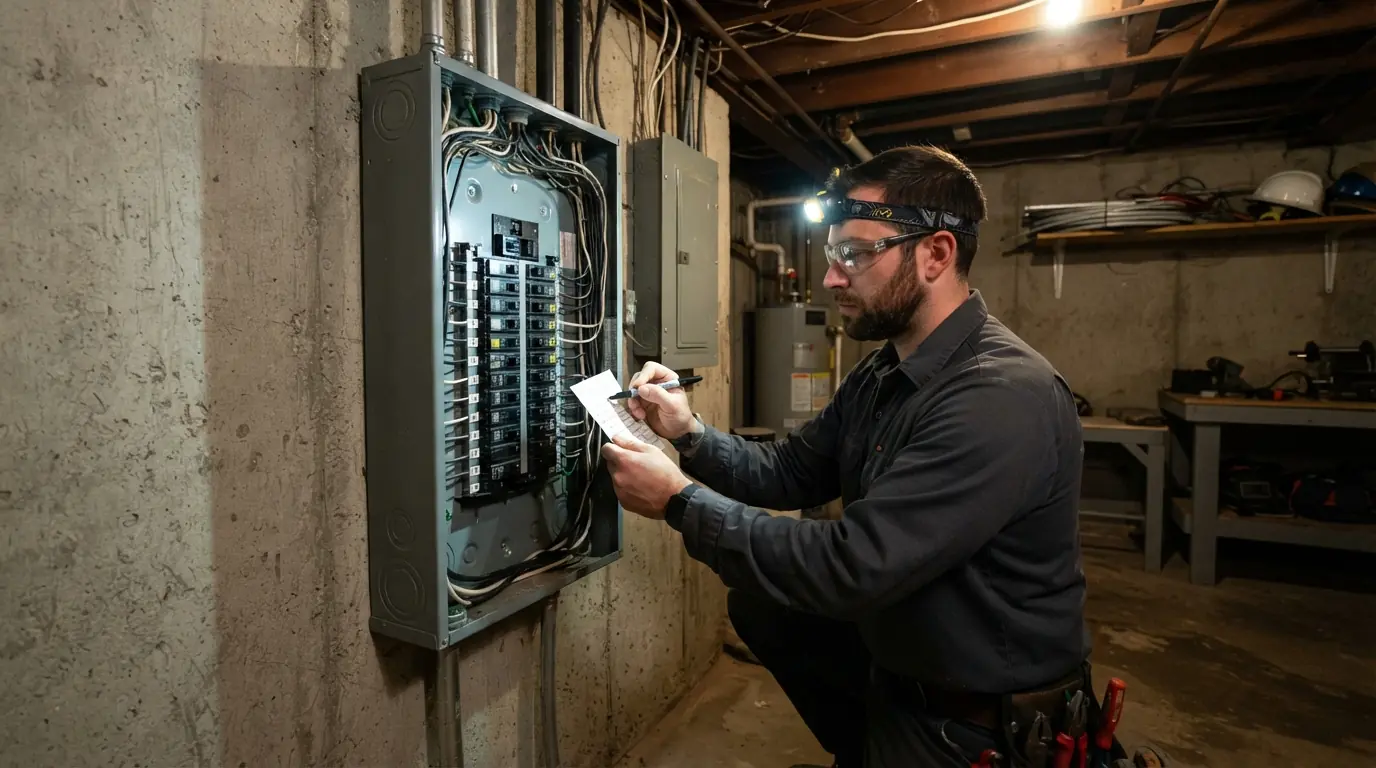
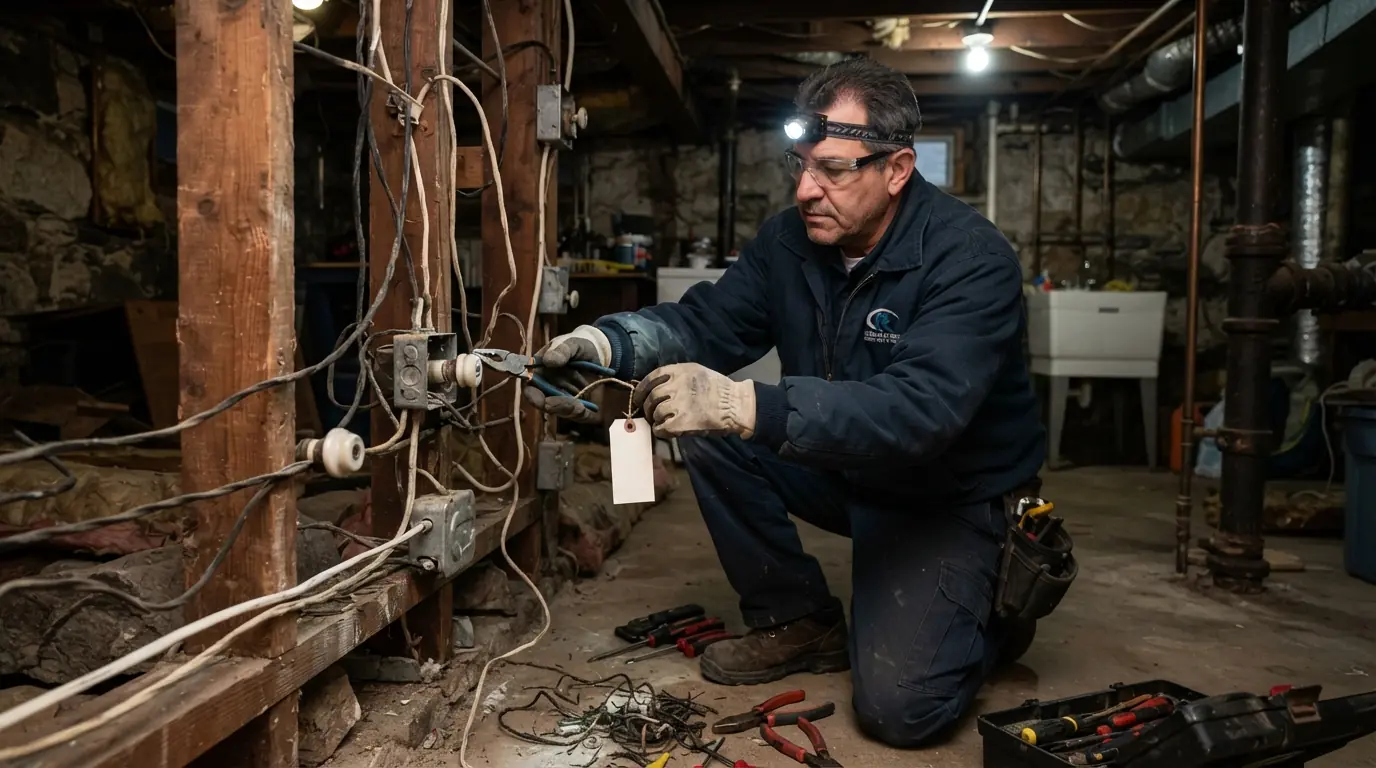
Replacement means identifying every run that is still live and replacing those circuits with grounded cable. Old conductors hidden in walls are disconnected at both ends, tagged and left in place rather than pulled out, which avoids tearing up plaster. Attic and basement runs are replaced first because they are exposed and easiest to reach.
The job usually pairs with a panel or service change, since knob and tube houses rarely have an adequate service. Published figures put knob and tube rewiring at $10,000 to $30,000 when combined with a service upgrade from 60 amps, while a whole-house rewire in the New York area runs roughly $2,500 to $5,000 for a 1,600 square foot home before those extras.
| Scope | Published range | Notes |
|---|---|---|
| Knob and tube rewiring with 60A service upgrade | $10,000 to $30,000 (national) | Pre-1960 homes; service work adds $4,000 to $8,000 |
| Whole-house rewire, 1,600 sq ft | $2,500 to $5,000 (New York area) | Before plaster repair and panel work |
What the insurer usually wants
Most insurers want written confirmation that no live knob and tube remains, from the electrician who did the work, backed by the permit sign-off. Some want photos of the new panel and the disconnected old runs. Ask your agent exactly what the underwriter needs before work starts, so the paperwork at the end matches.
If only part of the house has it, a survey that shows which circuits are affected can keep you from paying to rewire rooms that are already modern. An electrical safety inspection gives you that map.
Doing it in phases
A full replacement can be done room by room in an occupied home, with each room back on power at the end of the day. Attic runs come first where insulation is packed around them, then the heaviest circuits, then the rest. Planned this way, the house is never without power overnight, and the insurer's deadline can usually be met.
Our knob and tube replacement page covers the process in more detail.
Before you buy a house that has it
If you are buying an older house, find out about the wiring before you close, not after. A home inspector may flag knob and tube, but an electrician can tell you how much of it is still live, which circuits it feeds and roughly what replacement will cost, which is useful in negotiating the price.
Call your insurer early too. Some will write a policy with a deadline to replace it; others will not write one at all until it is gone. Knowing which before the closing date keeps you from scrambling for coverage in the last week, and it may change how you plan the first renovation.
Services this guide covers
Related guides
Frequently asked questions
Existing knob and tube is not automatically illegal, but it has no ground and is hard to insure.
Only where exposed. Hidden runs are disconnected, tagged and left in place.
No. Knob and tube needs open air to shed heat; remove it first.
Only if no live knob and tube remains. Ask what documentation they need.
Days to a couple of weeks depending on the house, done in phases.
Usually, since these houses often still have fuses or a small service.