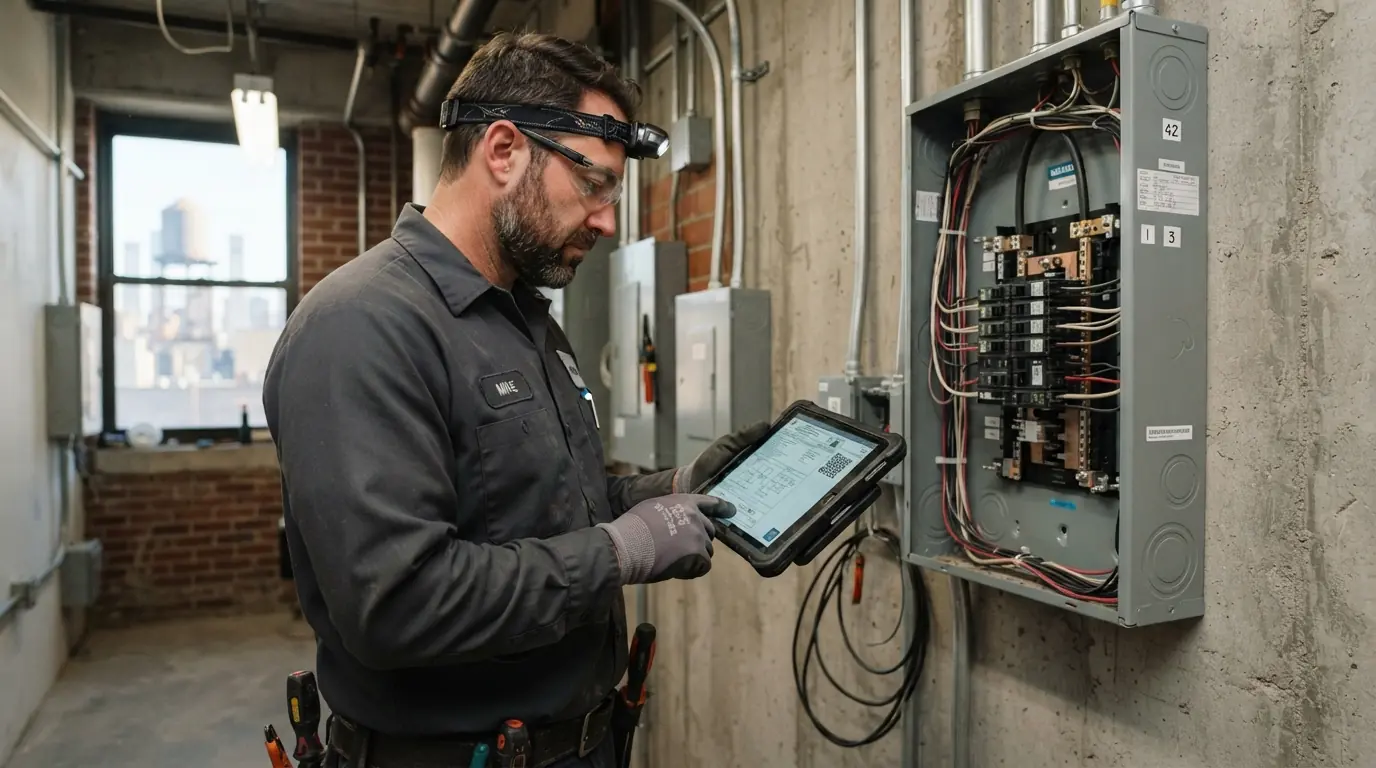
In New York City, the Department of Buildings requires an electrical permit for most electrical work, filed by the electrician through DOB NOW: Build. Like-for-like minor replacements, such as breakers of 30 amps and under, are still regulated electrical work but do not need a DOB inspection. New circuits, panels, services, EV chargers and renovations need a permit and an inspection.
The short version
The city treats electrical work as regulated work. Under the Department of Buildings' rules, the electrician files the permit, the work is described in the filing, and an inspector checks it before it is signed off. Homeowners cannot pull their own electrical permits the way they sometimes can elsewhere.
That covers nearly every job that adds or changes wiring. It is why an electrician quoting new circuits, a panel or a charger should include the filing and the inspection in the price.
What usually does not need an inspection
The main exception is like-for-like minor replacement. Swapping a breaker of 30 amps or less for an identical one, or replacing panel parts of 150 volts and under in kind, is still regulated electrical work, but it does not need a DOB inspection. Replacing a worn outlet or switch with the same type generally falls in the same category of repair.
The line moves as soon as the work changes the system: a new circuit, a larger breaker, a relocated outlet on a new run, or a device of a different type where the code now expects protection.
What does need a permit
New circuits, panel and service replacements, subpanels, rewiring, renovations, generators and EV chargers all need permits. A hardwired 240-volt Level 2 charger, for example, requires a DOB electrical permit and inspection, and many apartments need a panel upgrade before a 240-volt, 50-amp circuit can be added.
| Job | Permit | Inspection |
|---|---|---|
| Like-for-like breaker, 30A or less | Regulated work, no filing | No DOB inspection |
| New circuit for an AC or appliance | Yes | Yes |
| Panel or service upgrade | Yes | Yes |
| Level 2 EV charger | Yes | Yes |
| Kitchen or bath renovation wiring | Yes | Yes |
| Correcting a DOB violation | Yes | Yes |
How filing and inspection work
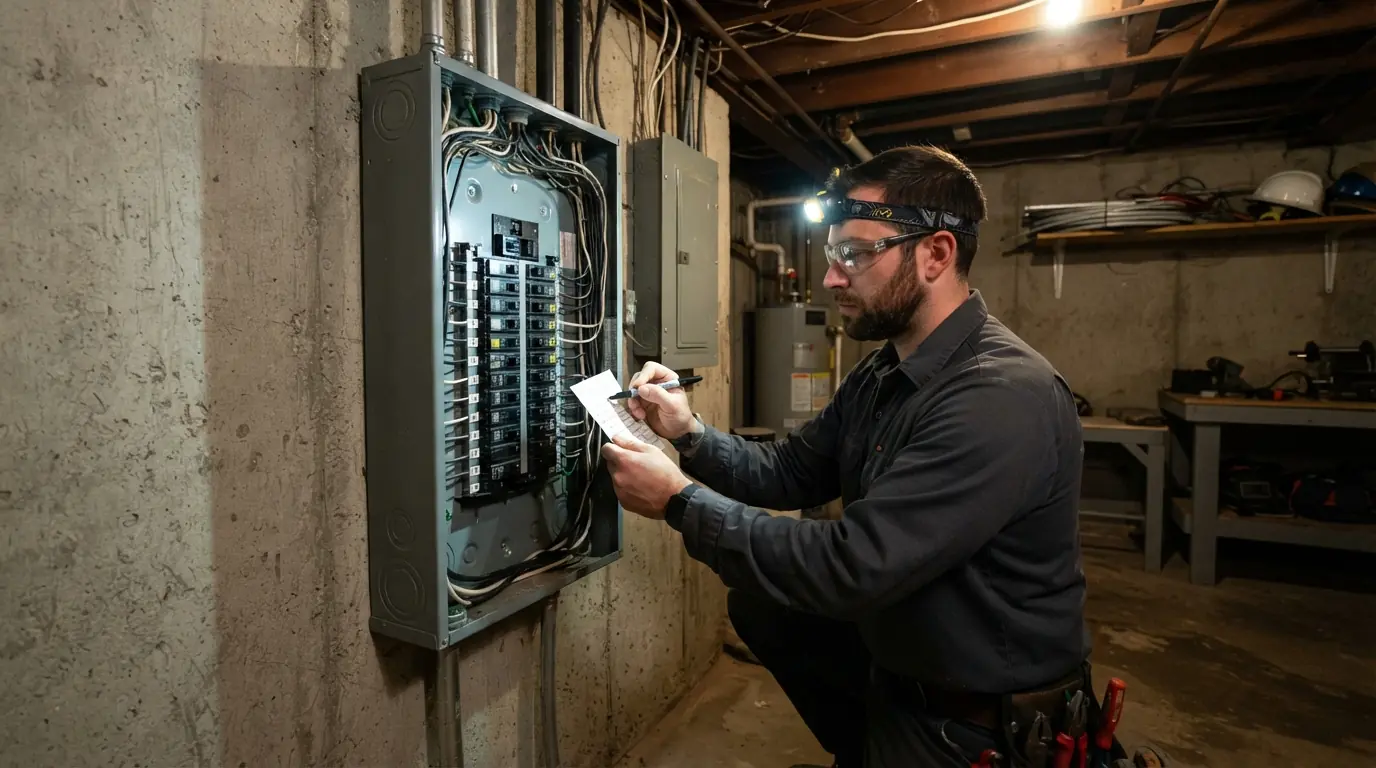
The electrician files in DOB NOW: Build with the scope of work listed. Simple jobs move quickly; complex work goes through plan review, which can take several weeks. Once the work is installed, the inspector checks it, including conduit and box fill and firestopping at every penetration in multi-story buildings.
Since December 21, 2025, filings fall under the 2025 NYC Electrical Code, which applies the city's amendments to the 2020 NEC and changed GFCI, AFCI and service requirements. Work designed to the old code can fail an inspection under the new one.
What skipping the permit costs
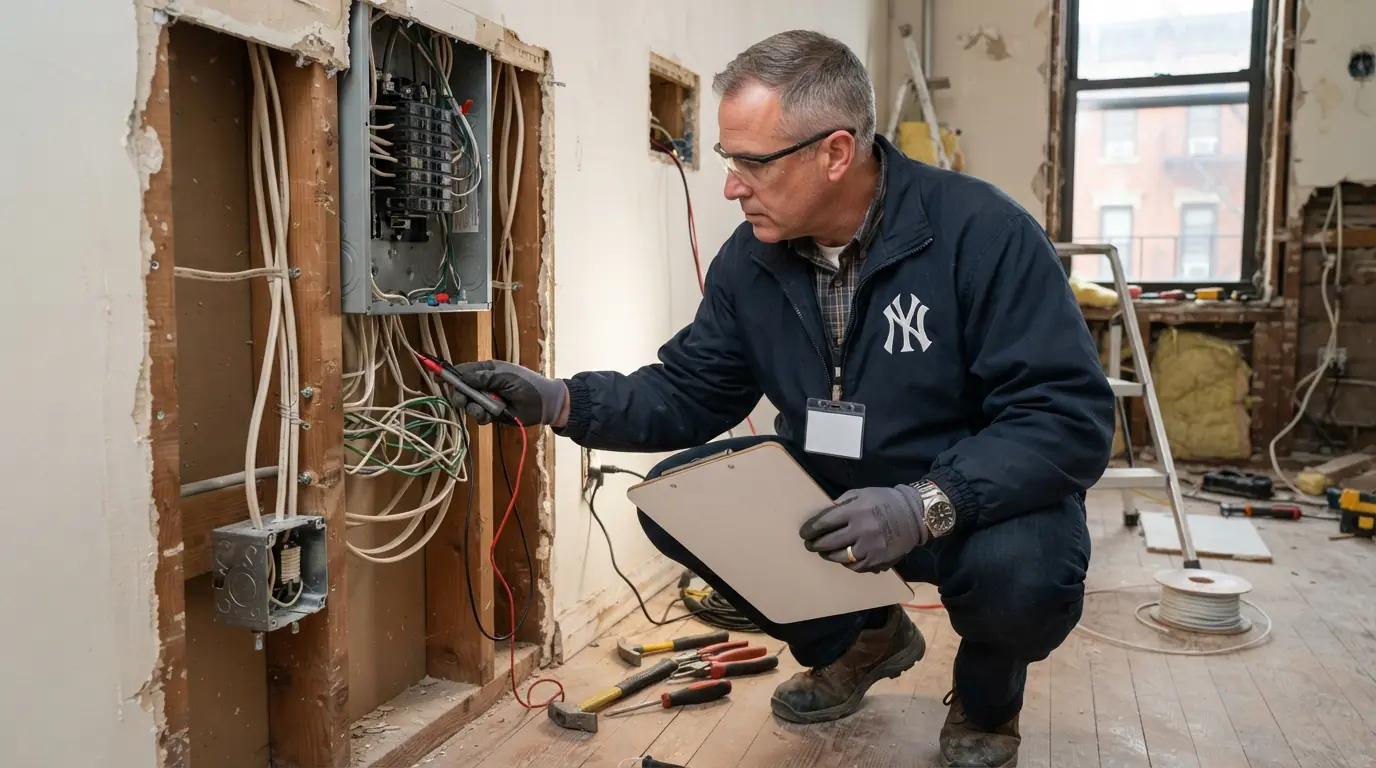
Unpermitted electrical work does not stay hidden. It surfaces at a sale, a refinance, an insurance claim or a board review, and a DOB or ECB violation can follow. Clearing one means correcting the work, filing it properly and passing the inspection, which usually costs more than doing it right the first time.
Our violation correction page explains that process, from reading the citation to getting the record cleared.
Co-ops and condos add a layer
In co-ops and condos, the board's alteration agreement sits on top of the city's permit. Boards usually want the electrician's insurance certificate, a scope of work and often a load letter before approving electrical work, and they set the hours when work can happen. The DOB permit and the board's approval are separate, and you need both.
Planning both together saves weeks. The same scope and load calculation can support the board package and the DOB filing.
Checking the record yourself
Permits and violations are public in New York City. The Department of Buildings' online portals let you search an address and see filed jobs, their status and any open violations, which is worth doing before you buy, before a renovation and after any electrical job is finished.
When an electrician files your work, ask for the job number. It lets you follow the filing through review and inspection, and it is the document a buyer, lender, insurer or board will ask for later. If a job was done at your address with no record, that is the time to ask questions, not at the closing table.
Services this guide covers
Related guides
Frequently asked questions
No. Electrical permits are filed by the electrician doing the work, not the homeowner.
A like-for-like swap is generally a repair; adding or moving outlets on new runs is permitted work.
Simple filings move quickly; plan review for complex work can take several weeks.
The 2025 NYC Electrical Code, in full effect since December 21, 2025.
Yes. A hardwired Level 2 charger needs a permit and an inspection.
It can lead to a violation; it is corrected by filing, fixing and passing inspection.