Local Law 88 requires buildings of 25,000 square feet or more to upgrade lighting to the NYC Energy Conservation Code, covering common areas in residential buildings and all areas in commercial ones, and to sub-meter large tenant spaces. Compliance was due January 1, 2025, with reports due May 1, 2025, filed by a master electrician or an engineer. Not filing carries a $1,500 fine each year until the report is in.
Which buildings it covers
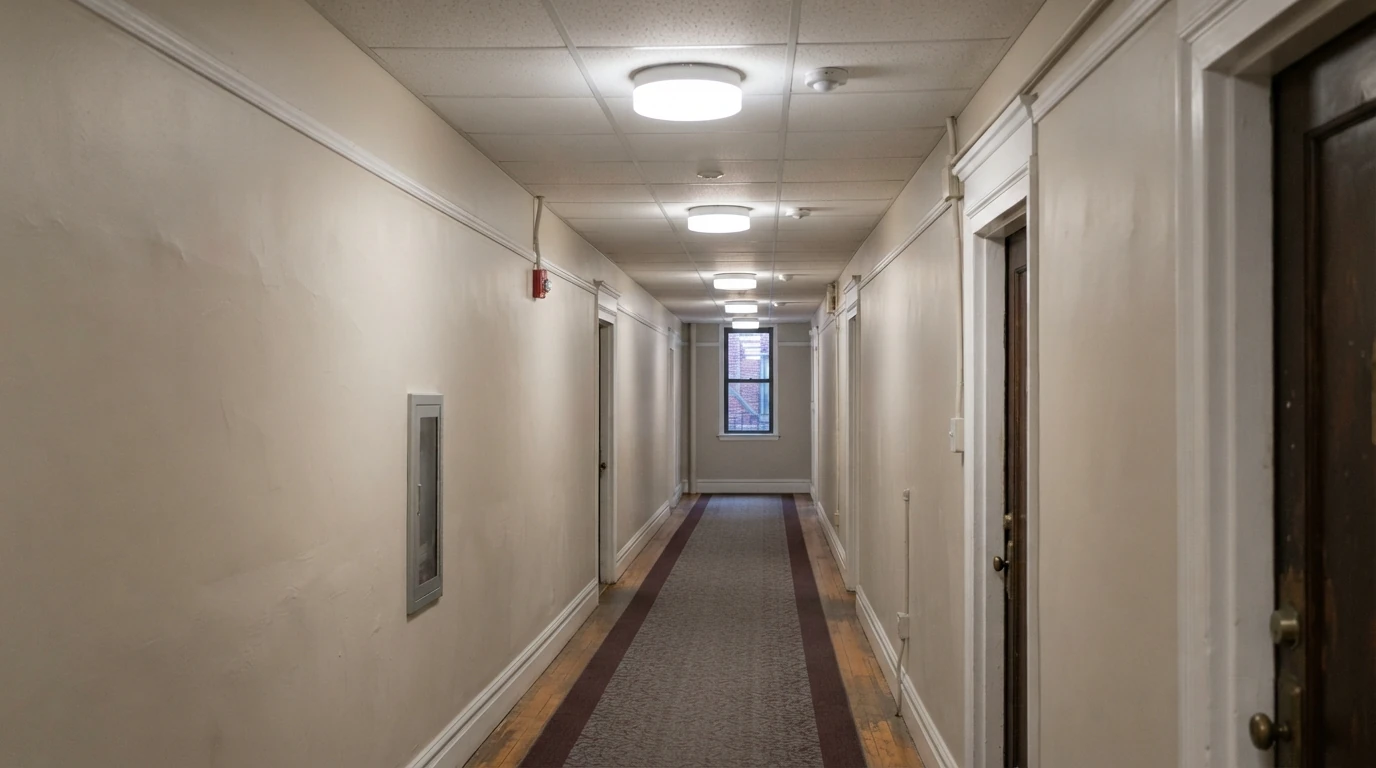
Local Law 88 of 2009, as amended, applies to buildings of 25,000 square feet or more. In residential buildings the lighting requirement covers common areas such as lobbies, hallways, basements, mechanical rooms and laundry rooms, not the apartments themselves. In commercial and mixed-use buildings it covers the lighting throughout.
The same law requires electrical sub-meters for large tenant spaces, so tenants can see and pay for what they use. Residential buildings without large commercial tenants still report that they have no covered spaces.
What counts as an upgrade
The lighting has to meet the current energy code, which in practice starts with LED conversion. The upgrades the law covers also include interior lighting controls, light reduction controls, automatic shutoff, exit signs and exterior lighting. A building that swapped lamps to LED but kept every light on around the clock may still fall short on controls.
For hallways and stairwells, that usually means bi-level fixtures or occupancy sensors that dim when nobody is present. For offices, occupancy and daylight controls. For garages, sensor-controlled fixtures. Our LED retrofit page covers each.
- LED conversion of fixtures
- Occupancy and vacancy sensors
- Light reduction (bi-level) controls
- Automatic shutoff
- Exit signs
- Exterior lighting
Submetering tenant spaces
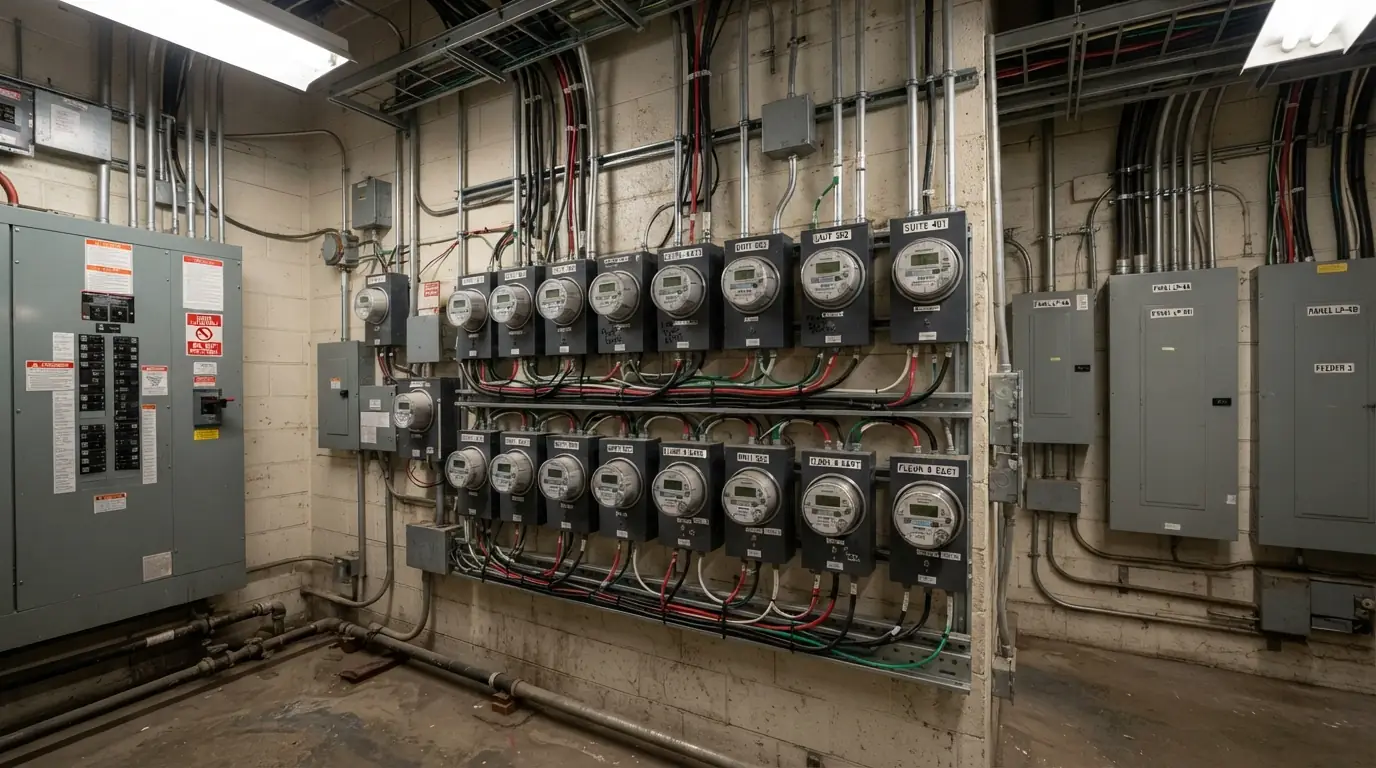
Large non-residential tenant spaces must be sub-metered, and owners provide tenants with statements of their electricity use. The meters give tenants a reason to manage their own consumption, which is the point of the rule.
Submetering is electrical work in its own right: meters installed at the tenant panels or feeders, wired to a reading system and documented. It is often done alongside the lighting upgrade because both need the same survey of the building's distribution.
Reports and fines
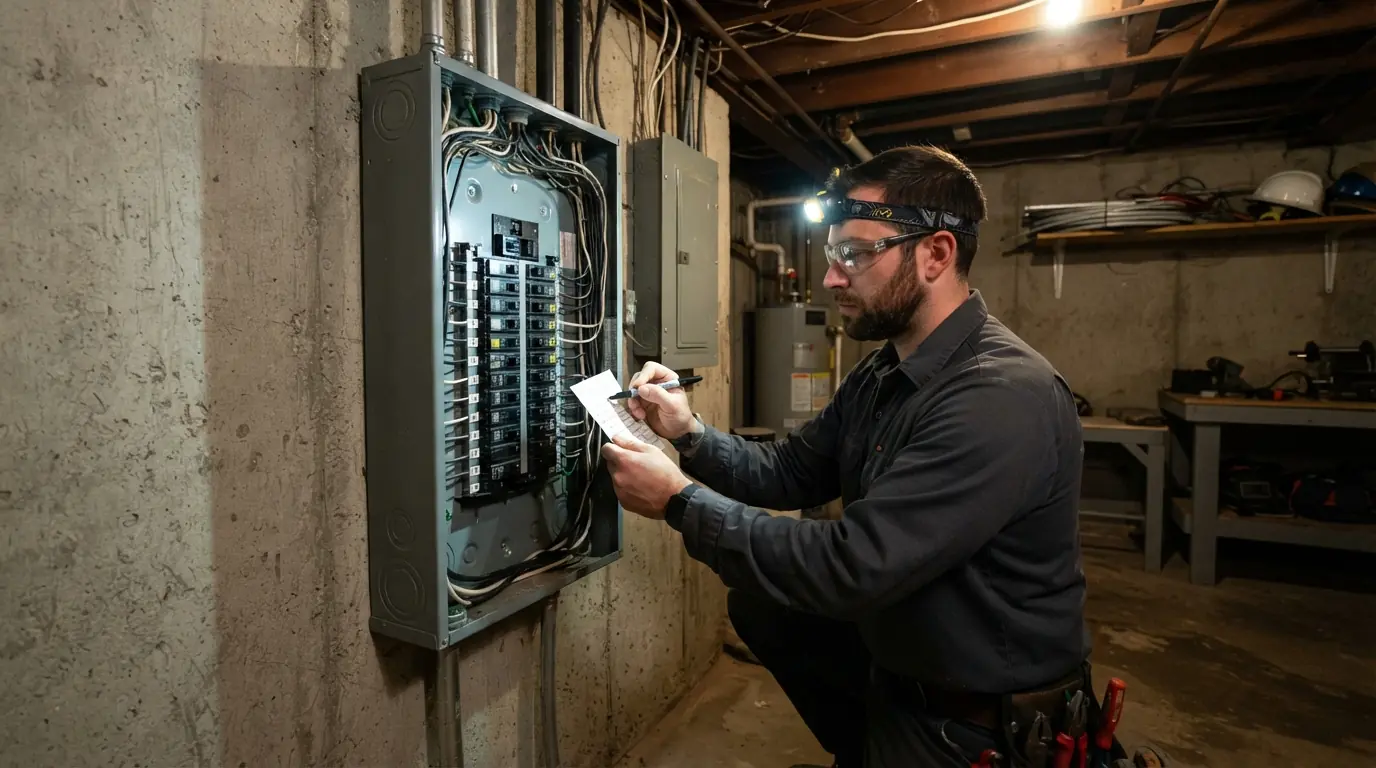
Compliance reports are filed by a master electrician or an engineer, verifying the lighting upgrade and the sub-meter installation. Failing to file carries a $1,500 fine, assessed every year until the report is in, and missing sub-meters can add further penalties.
The deadline has passed, so the question for a building that has not filed is how quickly it can get compliant. Fines keep accruing either way; the survey and the plan are the first steps.
How it connects to Local Law 97
Local Law 97 sets carbon caps on buildings over 25,000 square feet that tighten every five years, with annual fines for exceeding them. Lighting is one of the easiest loads to cut, so the work done for Local Law 88 also counts toward staying under the Local Law 97 caps.
Treating the two together makes sense: the same survey that identifies Local Law 88 gaps shows where lighting and controls can reduce the building's emissions most.
Where to start if you are behind
Start with a lighting survey: every fixture counted and typed, floor by floor, with the controls already in place. From that, a retrofit plan sets out what to replace, which controls to add and in what order, phased so tenants and residents are not disrupted.
Exit signs and emergency lighting on the same floors are worth checking at the same time, since both show up in the law's scope and in fire inspections. Once the work is done, the compliance report is prepared and filed.
What a lighting survey covers
A useful survey counts and types every fixture by floor and space, records the lamps, ballasts and drivers in use, notes which spaces have controls and which run around the clock, and flags exit signs and emergency units along the way. It also records ceiling types and access, which decide whether LED kits or new fixtures make more sense.
From that inventory, the retrofit plan follows almost automatically: which fixtures to replace, where sensors and bi-level controls go, and how to phase the work floor by floor. The same record supports the compliance report and later maintenance, since the super knows exactly which fixture types the building now uses.
- Fixture count and type by floor
- Lamps, ballasts and drivers in use
- Existing controls and run hours
- Exit signs and emergency units
- Ceiling types and access
- Recommended kits or new fixtures
Services this guide covers
Related guides
Frequently asked questions
It covers buildings of 25,000 square feet or more.
No. In residential buildings the requirement covers common areas.
January 1, 2025, with reports due May 1, 2025.
A master electrician or an engineer.
$1,500 a year until the report is filed.
Yes. Lighting upgrades reduce the building's energy use and emissions.