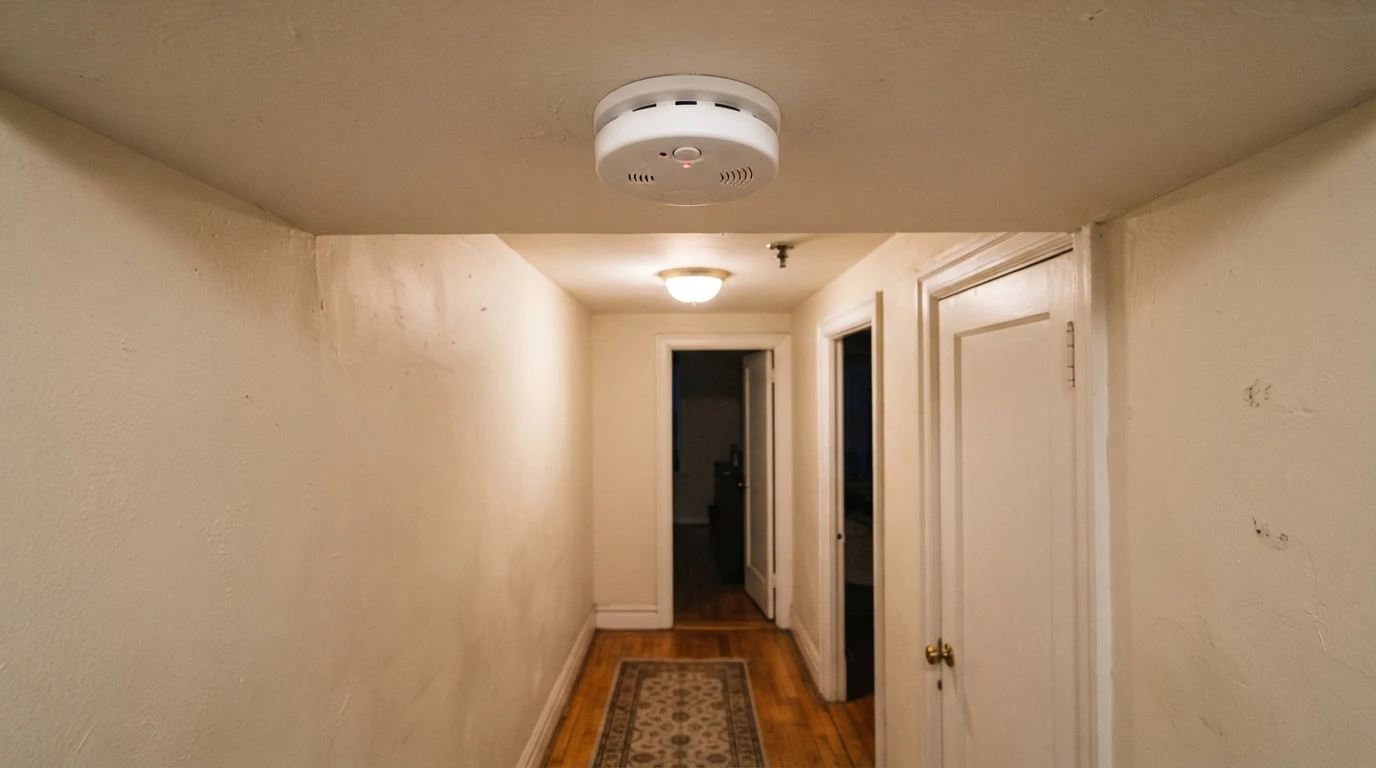
New York City's Local Law 50 requires smoke and carbon monoxide detectors in all residential units. Battery-only detectors must be ten-year sealed units and be replaced every ten years, and new construction needs hardwired, interconnected systems. In rentals, owners generally provide and install detectors and occupants keep them working.
What the law requires
Local Law 50 requires smoke and carbon monoxide detectors in all residential units in the city. Where detectors run on batteries alone, they must be ten-year sealed units, the kind whose battery cannot be removed, and they must be replaced every ten years. New construction requires hardwired detectors that are interconnected, so that when one sounds, they all sound.
The sealed-battery rule targets the most common failure: a detector disabled because it chirped for a new battery and someone pulled it out. A sealed unit runs its full life and then gets replaced as a whole.

Sealed, hardwired or combination
Ten-year sealed detectors are the simplest route in existing apartments: no wiring, no battery changes, and they meet the battery-only rule. Hardwired detectors run on house power with a battery backup and are required in new construction; they are usually interconnected so an alarm on one floor is heard on the others.
Combination units detect both smoke and carbon monoxide in one device, which saves ceiling space and keeps the count down. They are a good fit for hallways outside bedrooms, where both types are wanted.
| Type | Power | Best for |
|---|---|---|
| Ten-year sealed | Non-removable battery | Existing apartments without wiring |
| Hardwired interconnected | House power + battery backup | New construction and gut renovations |
| Combination smoke and CO | Either | Hallways outside sleeping areas |
Where they go
Smoke detectors belong in each bedroom, in the area outside sleeping rooms and on every level of a home. Carbon monoxide detectors belong near sleeping areas and near fuel-burning appliances such as gas ranges, boilers and water heaters.
Placement also affects false alarms. Detectors mounted right next to a kitchen or a bathroom door go off from cooking and steam, which is when people start disabling them. Keeping them a sensible distance from those sources, and out of dead-air corners, gives protection without the nuisance.
Who is responsible in a rental
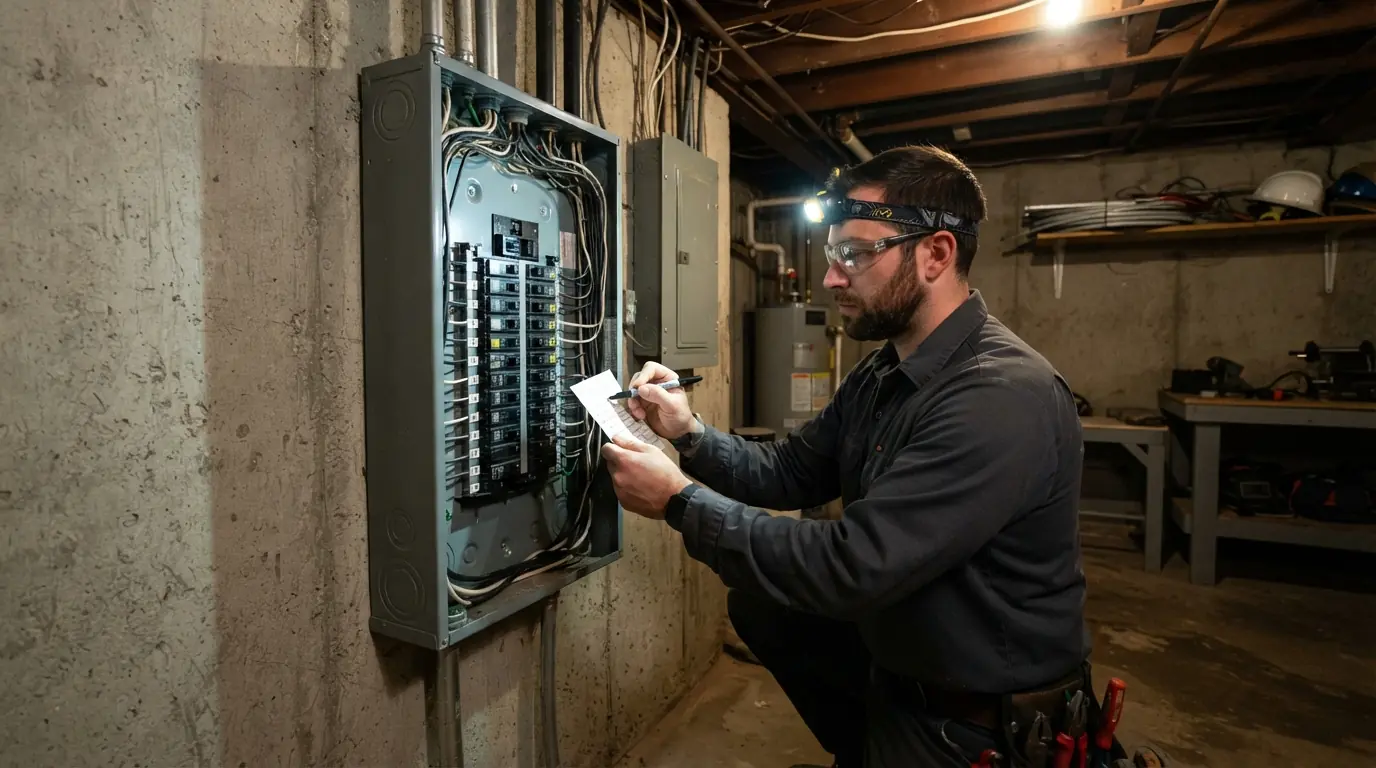
In rental housing the owner is generally responsible for providing and installing the required detectors, and the occupant for keeping them in working order and reporting problems. The city's housing agency publishes the specific duties for owners and tenants, and building management can explain how the building handles it.
For owners, turnovers are the natural moment to check every unit: test each detector, confirm the type and date, and replace anything expired before the next tenant moves in. Keeping a simple record of what was installed and when makes inspections straightforward.
When renovations trigger hardwiring
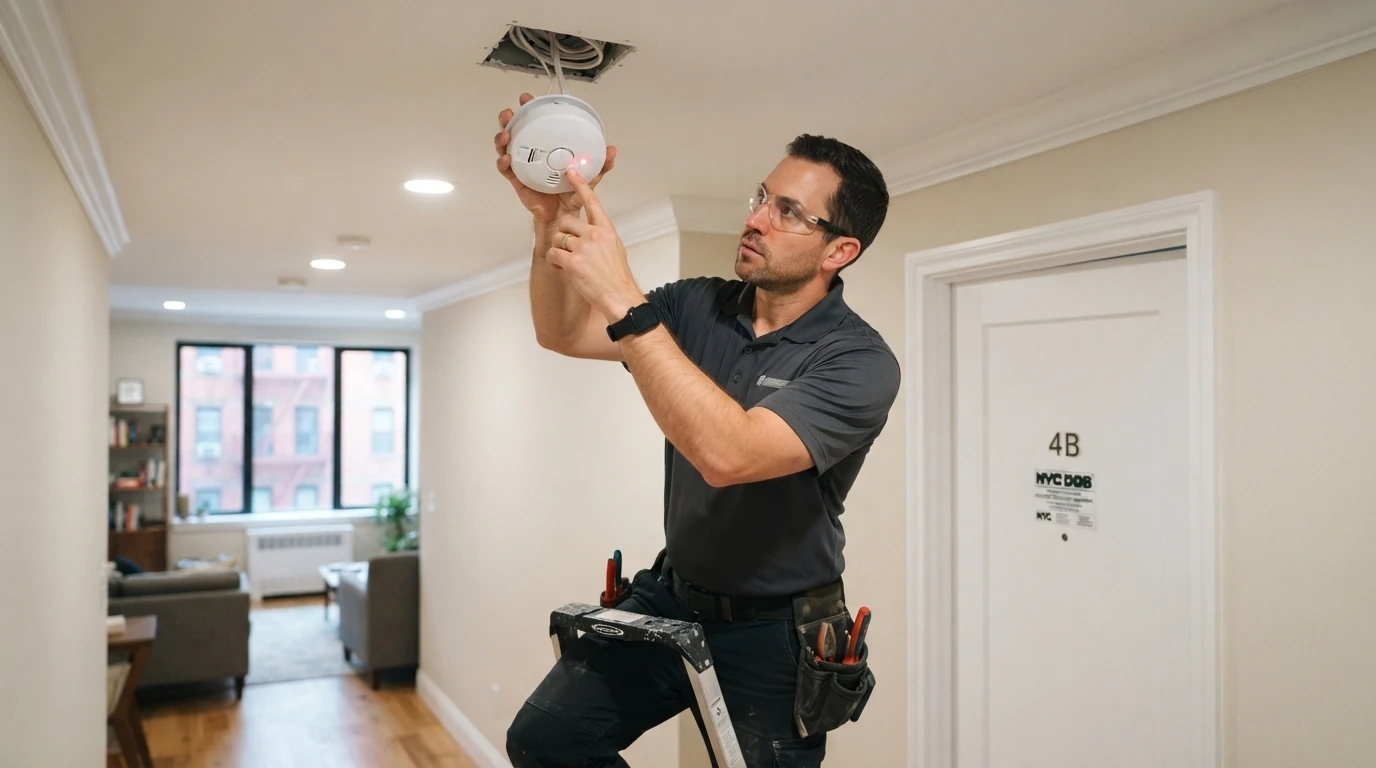
A gut renovation or new construction brings the hardwired, interconnected requirement with it. That means running cable between detector locations and tying them to a circuit, which is easiest while walls and ceilings are open.
For smaller renovations, sealed units may remain acceptable, but it is worth asking whether the filing calls for hardwired detectors before the ceilings are closed. Adding interconnect wiring later means opening plaster that was just finished.
Testing and replacing
Test every detector monthly with its test button, and after any long absence from the home. Replace any detector that is ten years past its manufacture date, which is printed on the back, and any unit that chirps after its battery has been replaced or that is sealed and chirping at end of life.
For buildings with many units, a scheduled walkthrough once a year catches expired and missing detectors before an inspector or an emergency does. Our detector installation page covers installs, replacements and records.
Fewer false alarms
False alarms are the main reason detectors get disabled, so it is worth choosing and placing them to avoid nuisance trips. Photoelectric smoke detectors are generally less prone to alarms from ordinary cooking than ionization types, which makes them a better choice near a kitchen. Keeping units away from bathroom doors helps with steam.
If a detector keeps sounding for no clear reason, it may be dirty, mounted in a draft, or simply past its life. Replacing it is cheaper than living with an alarm that everyone has learned to ignore, or worse, one that has been taken down.
Services this guide covers
Related guides
Frequently asked questions
Smoke and CO detectors in all residential units, with sealed ten-year units for battery-only detectors.
New construction does. Existing units can generally use ten-year sealed detectors.
Every ten years; the date is on the back.
Owners generally provide and install them; occupants keep them working.
Near sleeping areas and near fuel-burning appliances.
A low battery or the end of the unit's life.