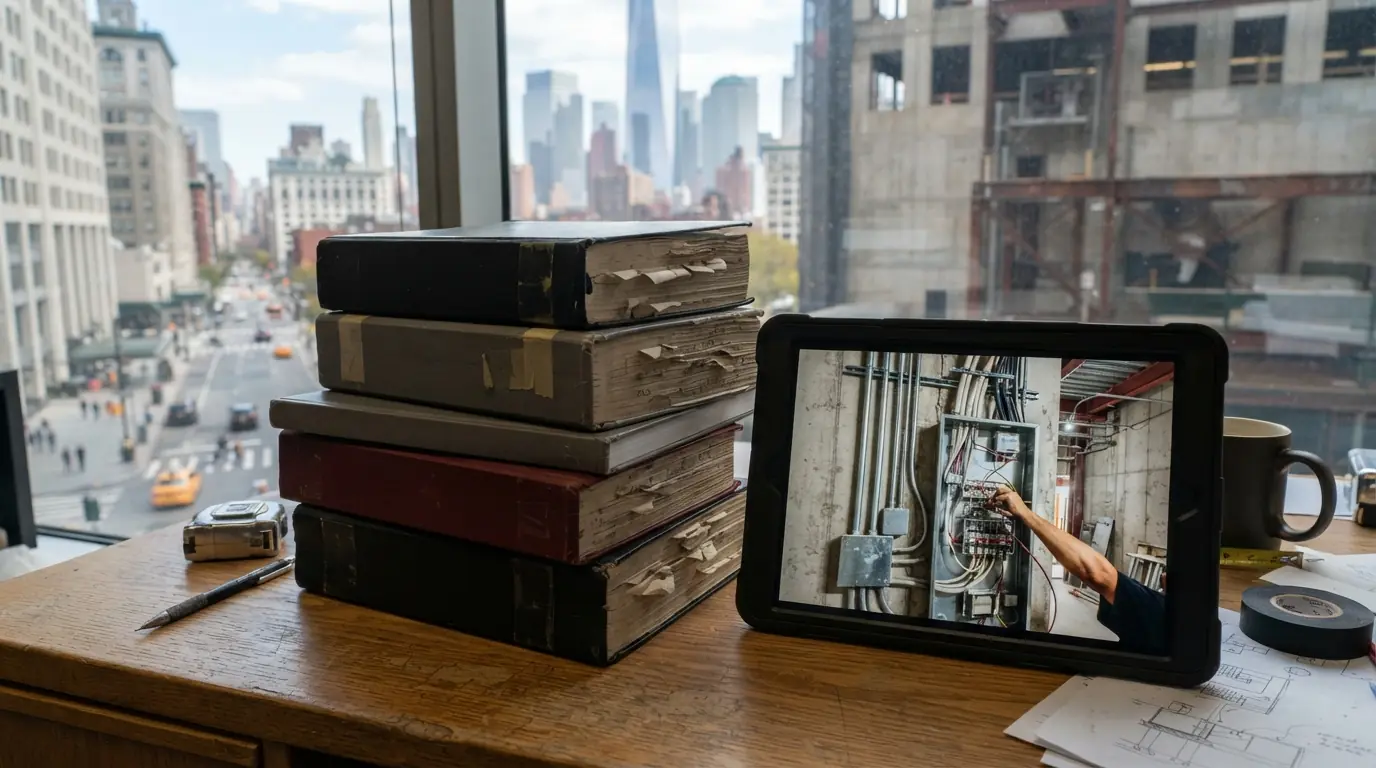
Since October 26, 2025, every battery energy storage system at a one- or two-family home in New York City falls under Department of Buildings rules, whatever its size. Approval runs in two steps: a Conditional Acceptance Letter before the permit and a Final Acceptance Letter after installation. Location and capacity limits apply, so plan both before ordering a system.
What changed in October 2025
The Department of Buildings adopted energy storage rules that took effect on October 26, 2025. They were the first city rules to address indoor storage directly, and they extend oversight beyond the Fire Department's existing requirements.
For homeowners, the practical change is that a battery is no longer something an installer simply mounts and wires. It has a review process of its own, with steps before and after the permit.
Which homes the rules cover
The rules cover every energy storage system at a one- or two-family home, regardless of size. Lithium-ion thresholds start as low as one kilowatt-hour, far below the national standard, so even a small battery is in scope.
Larger buildings and outdoor systems above Fire Department thresholds have their own requirements. If you live in a co-op or condo, the building's rules and its engineer come into it as well. Two-family homes are treated the same as one-family homes, so a battery serving either unit goes through the same review.
The two-step acceptance
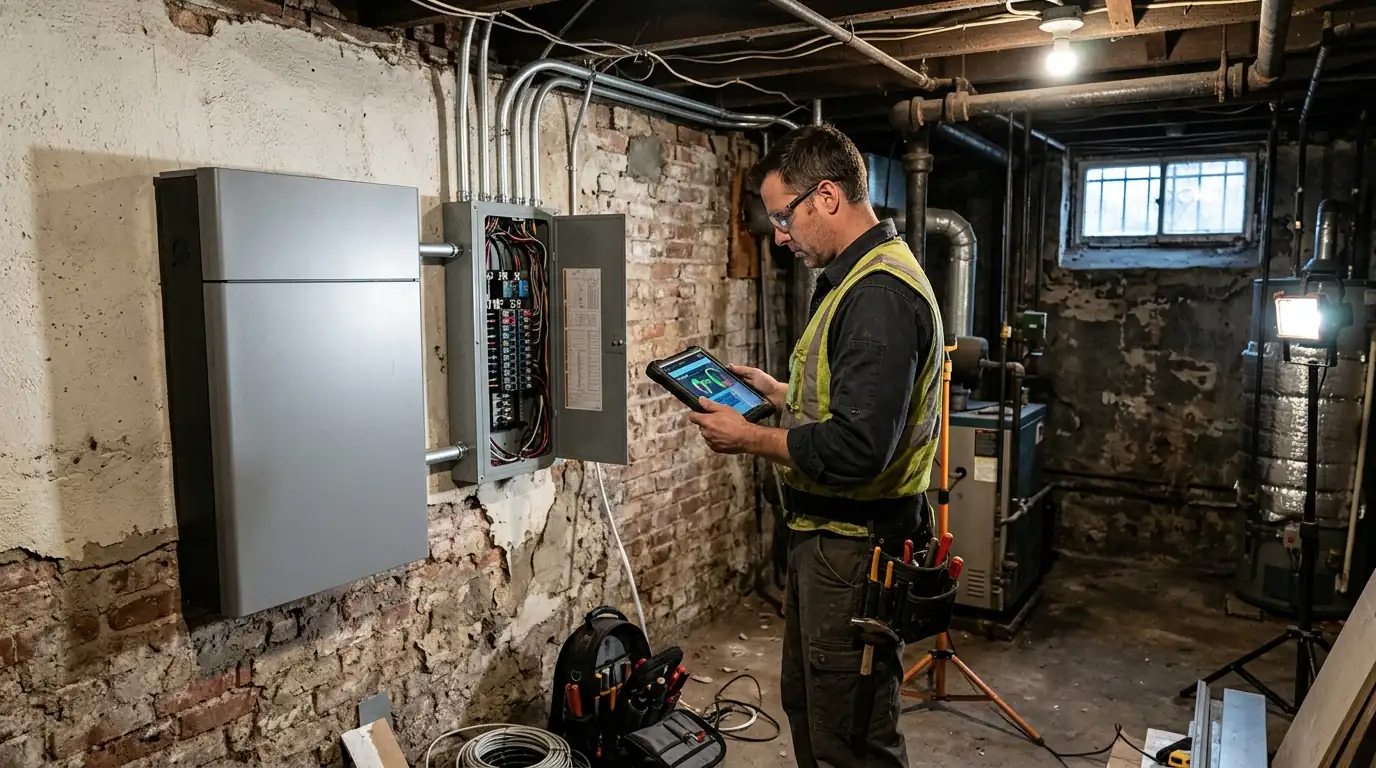
Approval runs in two steps. First, the design is reviewed and the Department issues a Conditional Acceptance Letter, which comes before the permit. After installation and certification, a Final Acceptance Letter closes it out.
Building that sequence into the schedule avoids the most common frustration: a battery delivered and sitting in its box while the paperwork catches up. Submitting early is the simplest way to keep the job moving. The permit itself is filed between the two letters, and the city inspection happens before the final acceptance is issued.
Where a battery can go
The rules limit where lithium-ion systems can be installed and how much capacity can sit in one space, with protection requirements in some locations. A basement, garage or exterior wall may each be treated differently.
That is why the location should be settled first. Choosing the battery and then looking for a place to put it often ends with a smaller system than planned, or a different spot than the one you wanted. Outdoor installations on an exterior wall can be an option where indoor space is limited, subject to the same review.
What a battery can actually run
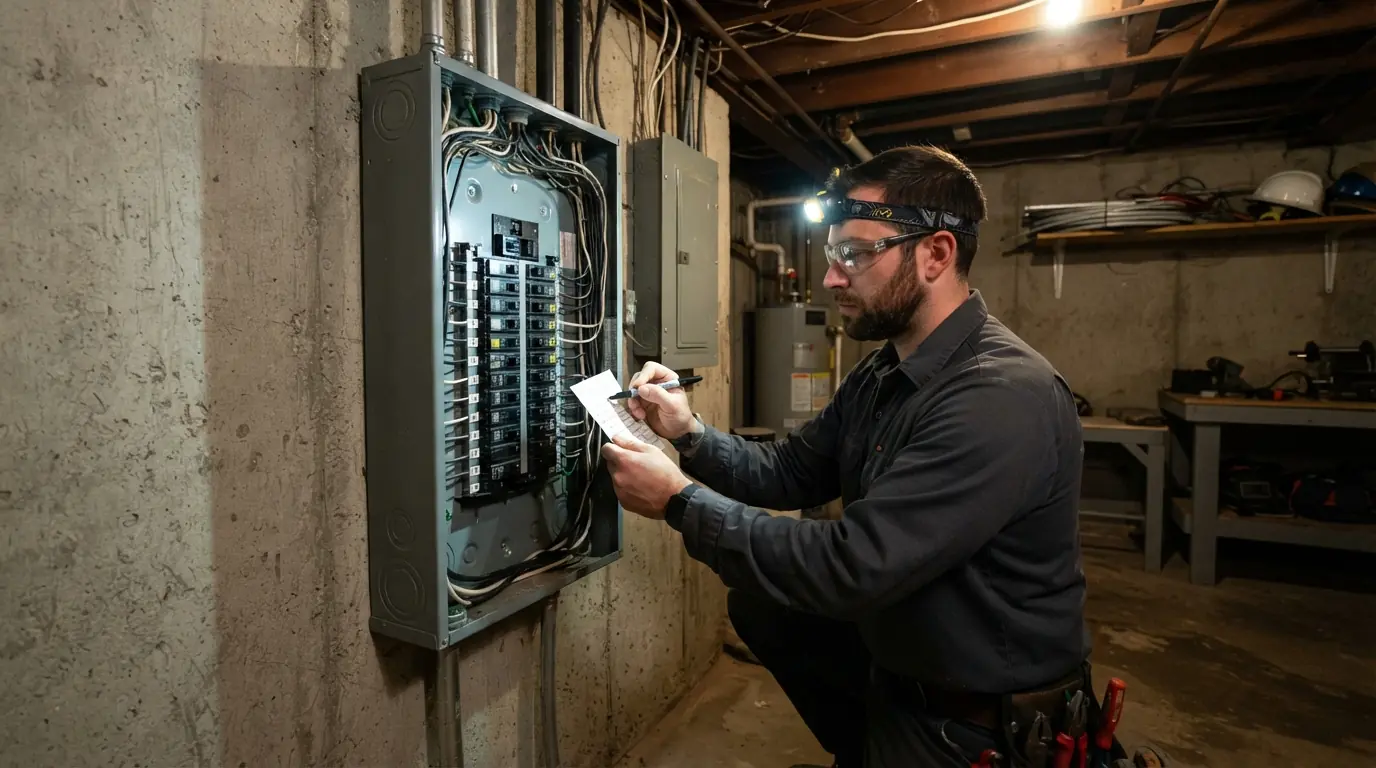
A battery stores a fixed amount of energy and delivers it at a limited rate. Most home systems run a backup loads panel with the circuits that matter during an outage rather than the whole house.
Large loads such as central air, electric ranges and EV chargers drain a battery quickly, so they usually stay off the backup panel. Refrigerators, lights, internet, heating controls and a few outlets are the typical list.
| Load | Usually on backup? | Why |
|---|---|---|
| Refrigerator and freezer | Yes | Food and medicine |
| Lights and internet | Yes | Low draw, high value |
| Boiler or furnace controls | Yes | Heat needs the controls to run |
| Central air or EV charger | Usually not | Drains the battery fast |
Batteries and solar
A battery paired with solar can recharge during a long outage instead of running down. Adding storage to an existing solar system means reviewing how the solar was connected, because the inverter and panel connection may need changes.
The city's property tax abatement program has covered electric storage as well as solar. Ask about eligibility when the work is filed, because the timing of the approval affects when any benefit starts.
Questions to ask before you buy
A short list of questions saves most of the problems we see with home batteries in the city. The answers shape the design long before the installation date.
If an installer cannot answer these clearly, slow down. The rules are new, and experience with the city's acceptance process matters as much as the equipment. Ask too how the system will be monitored, and what happens to the warranty if it is installed somewhere other than the location in the approved design.
- Is the system listed for residential use?
- Where will it go, and is that location allowed?
- Which circuits will it run, and for how long?
- Who prepares the DOB submission?
- How does it connect to any existing solar?
Services this guide covers
Related guides
Frequently asked questions
Yes. The rules cover batteries at one- and two-family homes regardless of size.
The Department's approval of the design, issued before the permit.
The rules took effect on October 26, 2025.
Possibly; location limits apply, so confirm before buying.
Usually not for long; most systems run a backup loads panel.
No. A battery can be installed on its own and charged from the grid.