
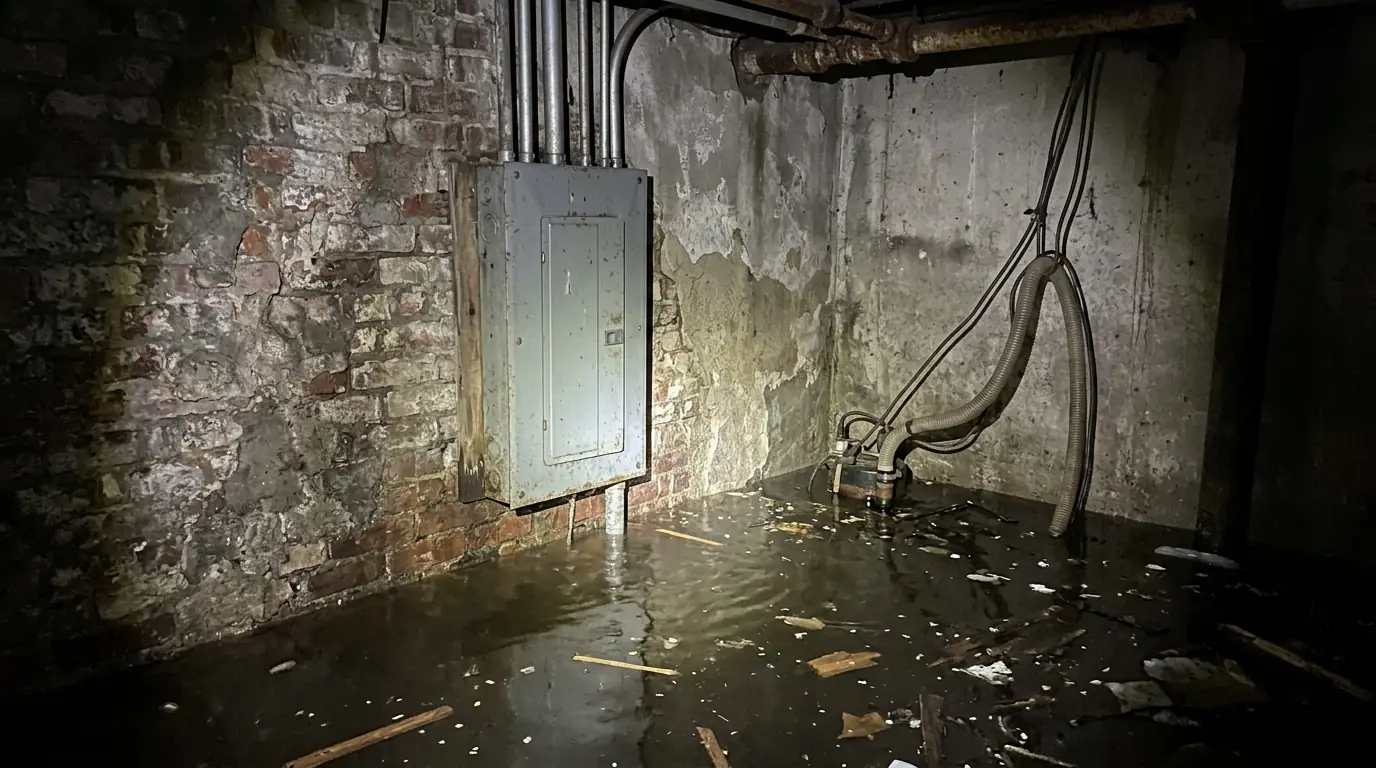
Do not wade into a flooded basement while the power may be on, and never operate a breaker while standing in water. Have the utility shut off power if you cannot reach the panel dry. Any panel, wiring or outlet that was under water must be inspected, and usually replaced, before power is restored, and Con Edison may require certification first.
Stay out of the water
After the September 2021 citywide flooding, the Department of Buildings warned owners not to wade into flooded basements or cellars, because the water may be contaminated, contain debris or be electrically charged. That advice applies after every flood.
If equipment such as a panel, a boiler, a sump pump or an extension cord is in the water, assume the water is live until the power is confirmed off.
Turning power off safely
Never operate a circuit breaker or the main while standing in water or on a wet floor. If the panel is in the flooded space and you cannot reach it dry, call the utility to disconnect power at the meter instead.
If the panel is upstairs or reachable from a dry area, switch off the main and the circuits feeding the basement. Leave them off until the equipment has been checked.
What water does to electrical equipment
Water leaves silt, corrosion and moisture inside breakers, outlets, panels and connections. Equipment that looks fine after it dries can fail later, sometimes by overheating.
Keep anything you take out of service until it has been looked at. A breaker, an outlet or a water heater control that sat in water tells the electrician how high the water reached and which circuits need checking, and insurers often ask to see it before they pay for the replacement.
Salt water from coastal flooding is worse: it corrodes faster and leaves conductive residue. Wiring and equipment that sat in salt water generally have to be replaced rather than dried and reused. Appliances with motors and electronics, such as washers, dryers and boilers, need their own checks before they run again.
| Item that was under water | Usual outcome | Why |
|---|---|---|
| Breakers and GFCI devices | Replace | Internal parts corrode |
| Receptacles and switches | Replace | Contacts and housings hold silt |
| Panel enclosure | Inspect, often replace | Bus and connections corrode |
| Cable runs | Inspect, replace if submerged long | Insulation and jackets hold water |
Getting Con Edison to turn power back on
After major flooding, Con Edison checks whether customer-owned electrical equipment was under water. Equipment that was damaged has to be certified safe by an electrician, through the Department of Buildings process, before the utility will re-energize it.
If you know your equipment was flooded, say so when you call. Starting the inspection and certification early is what shortens the time without power.
Pumping out without new damage
The Department of Buildings also warned against pumping a flooded basement too quickly, because pressure on the outside of the walls can cause structural damage. Water has to come down slowly to balance the pressure.
Pumps and fans used for drying should run from outlets you know are safe, ideally GFCI-protected and upstairs, on cords rated for the load, never from outlets that were in the water.
Preventing the next one
Raising the panel, meter and key equipment above the likely flood line is the most effective change in basements that flood repeatedly. Where that is not practical, moving the most important circuits to a panel on a higher floor helps.
A dedicated, GFCI-protected circuit for the sump pump, a battery backup for the pump, and GFCI protection on basement outlets all reduce the damage and the danger the next time water comes in.
Checklist after a flood
Use this order when the water starts to come down. It keeps people safe first and gets the power back as quickly as the inspection allows.
Photograph everything before anything is removed, for the insurance claim and for the electrician. If the house has a generator or a battery, keep it off until the electrician confirms the wiring it would feed is dry and safe.
- Stay out of the water until power is confirmed off
- Have the utility disconnect if the panel is not reachable dry
- Photograph equipment and water lines
- List what was under water: panel, outlets, appliances
- Call an electrician to inspect before any reset
Services this guide covers
Related guides
Frequently asked questions
Not while power may be on. Stay out until it is confirmed off.
Not until the equipment that was under water has been inspected.
Call the utility to disconnect at the meter.
After damaged equipment is certified safe through the DOB process.
Not always, but devices that were submerged usually do, and salt water damage almost always does.
Raise it or move key circuits upstairs, and protect the sump pump circuit.