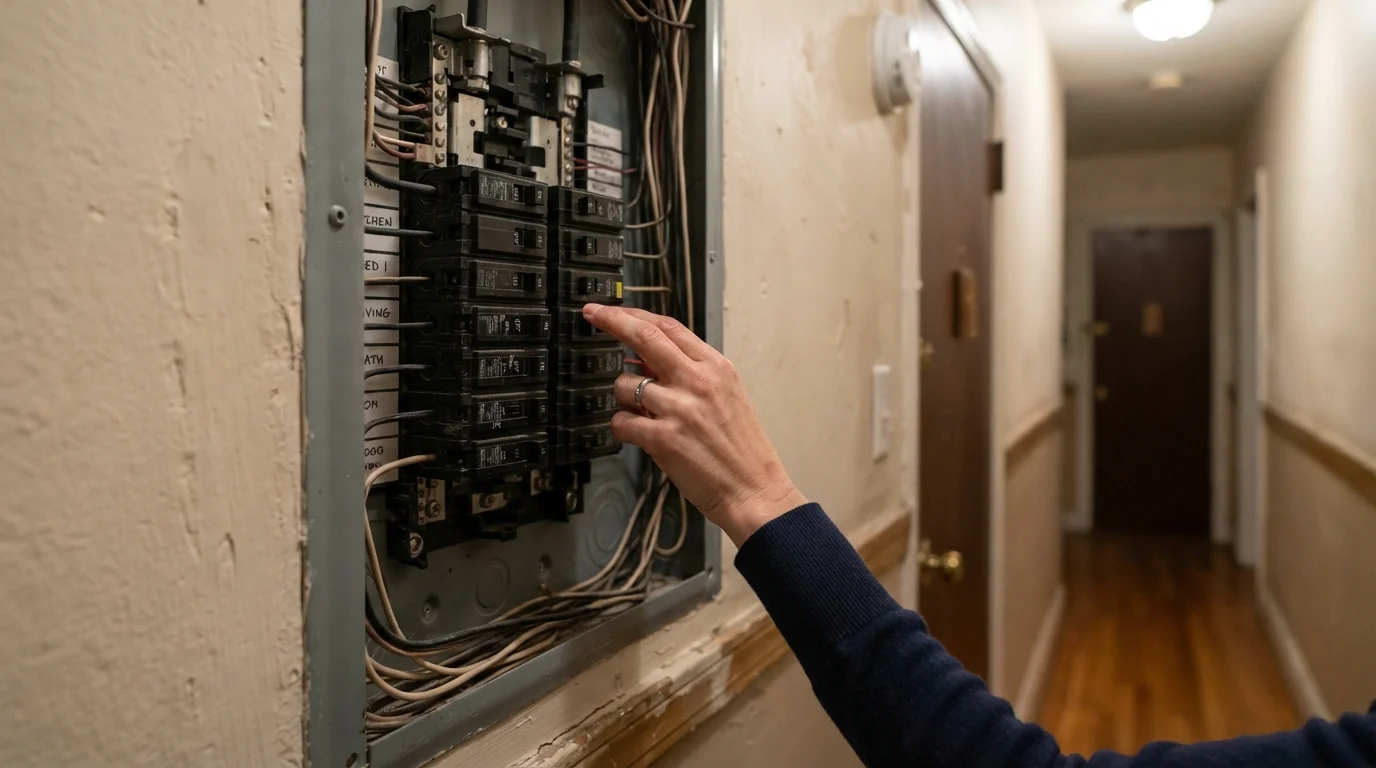
Breakers trip for three reasons: too much load on the circuit, a short circuit, or a ground fault. Unplug everything on the circuit, reset the breaker once, and add loads back one at a time. If it trips with nothing plugged in, trips instantly, feels warm, or you smell burning, stop resetting it and call an electrician.
The three reasons a breaker trips
An overload is the most common: more current on the circuit than its wire is rated for, usually because a space heater, air conditioner and microwave share one circuit. The breaker trips after a delay, and resetting it works until the same combination runs again.
A short circuit is different. A hot conductor touches a neutral or ground, the current spikes, and the breaker trips instantly, sometimes with a spark or a pop. A ground fault is a smaller leak of current to ground, the kind GFCI protection is built to catch, often from moisture or a damaged appliance cord.

What you can safely check
Start by unplugging everything on the dead circuit and switching off its lights. Reset the breaker fully: push it to off, then back to on. If it holds, plug things back in one at a time. The item that trips it, or the combination that does, tells you whether the fix is a new appliance, a different outlet or a dedicated circuit.
Look for a tripped GFCI outlet in the kitchen, bathroom or basement as well, because a GFCI can cut power to outlets in other rooms. Press its reset button firmly.
- Unplug everything on the circuit
- Reset the breaker once, fully off then on
- Add loads back one at a time
- Check nearby GFCI outlets and press reset
- Note what was running when it tripped
The summer apartment pattern
In older city apartments, the classic trip happens on a hot afternoon when a window air conditioner and the kitchen share a circuit. Heat makes it worse: Con Edison asks customers to conserve between 2 p.m. and 10 p.m. during heat, and during the July 2026 heat wave it cut voltage by 8 percent across wide parts of Brooklyn and Queens. Lower voltage makes compressors draw more current to do the same work, so a circuit that coped in May trips in July.
The lasting fix is a dedicated circuit for the air conditioner, not a bigger breaker. A larger breaker on the same wire removes the protection and lets the wire overheat inside the wall.
When to stop and call
Stop resetting and call if the breaker trips again immediately with nothing plugged in, if it will not stay reset at all, if the breaker or panel cover feels warm, if you smell burning plastic, or if you hear buzzing or crackling at the panel. Those point to a short, a failing breaker or a loose connection, and repeated resets can make them worse.
If the smell or heat is strong, switch off the main if you can reach it safely and are not standing on a wet floor, then call. An emergency electrician can isolate the fault and restore the rest of the home first.

Older panels and worn breakers
Breakers wear out. A breaker that has tripped hundreds of times, or one in a panel with loose or corroded bus connections, can trip below its rating or, worse, fail to trip at all. Some panel brands common in older buildings, including Federal Pacific and Zinsco, are known for breakers that may not trip when they should.
A breaker diagnosis checks the breaker, its connection to the bus and the circuit's actual load with a clamp meter. Sometimes the answer is one new breaker; sometimes it is a panel that should be replaced.
GFCI and AFCI trips are messages too
GFCI outlets and breakers trip on small leaks to ground, often from water in an outdoor box or a worn appliance cord. AFCI breakers trip on the electrical signature of arcing, which can mean a damaged cord, a loose splice or a nail through a cable. Both are frustrating when they repeat, and both are usually right.
The fix is finding the cause, not swapping the protected device for an unprotected one. Our guide to GFCI and AFCI protection covers the common culprits.
What an electrician checks on the visit
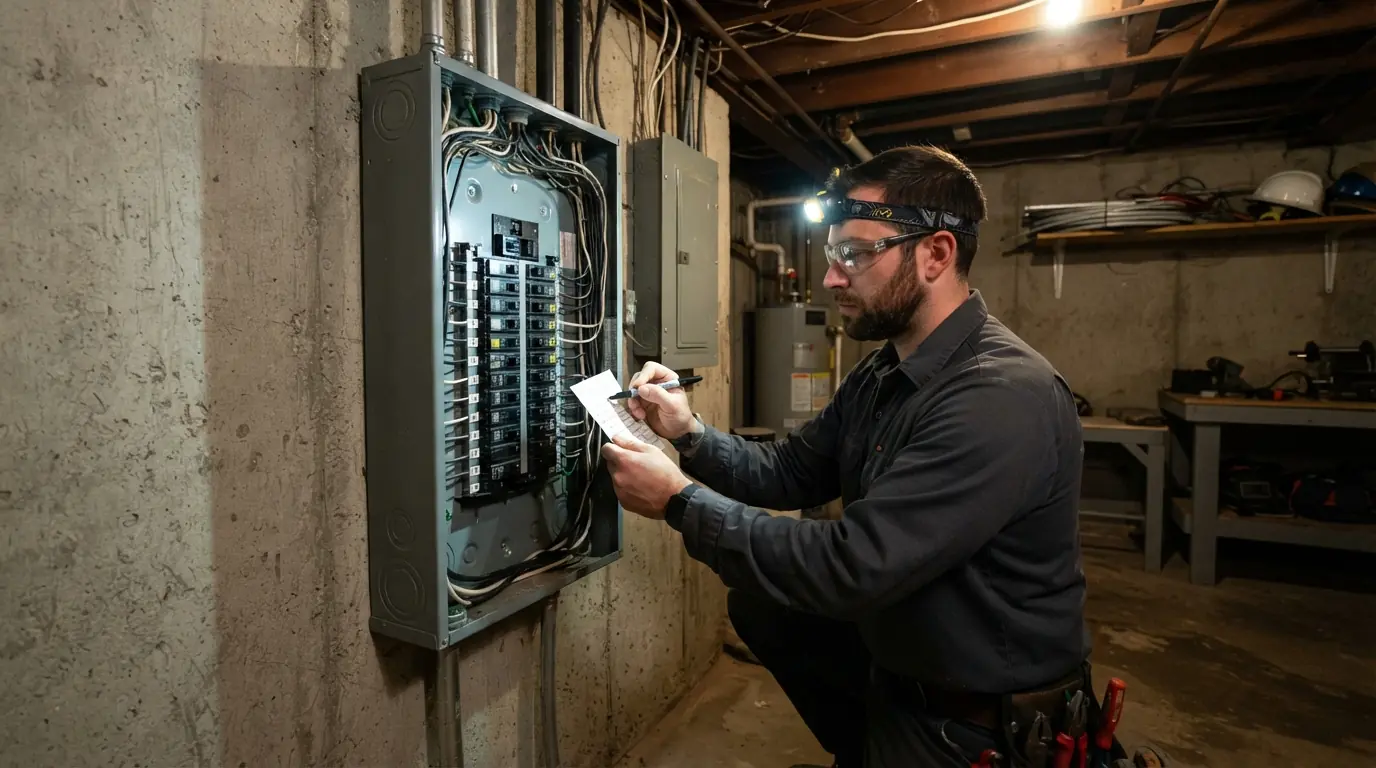
A proper diagnosis measures instead of guessing. A clamp meter on the circuit shows the actual current while the suspect loads run, which settles whether it is an overload. A thermal camera shows whether the breaker or its connection to the bus is running hot, and the panel is opened to look for loose lugs, double taps and scorching.
If the trip points to a short or a ground fault, the circuit is traced outlet by outlet to find the failed device, the damaged cable or the wet box. The result is a specific cause and a specific fix: a new breaker, a repaired connection, a replaced outlet, a dedicated circuit, or in some cases a panel that has reached the end of its life.
Services this guide covers
Related guides
Frequently asked questions
The trip itself is protection working. Repeated trips with nothing plugged in, heat or a burning smell are the dangerous signs.
No. The breaker has to match the wire. A bigger one lets the wire overheat.
Air conditioners and heat-wave voltage cuts push shared circuits past their limit.
Once after unplugging everything. If it trips again, find the cause or call.
Look for a tripped GFCI outlet feeding those outlets.
Yes. Worn breakers can trip early or fail to trip at all.