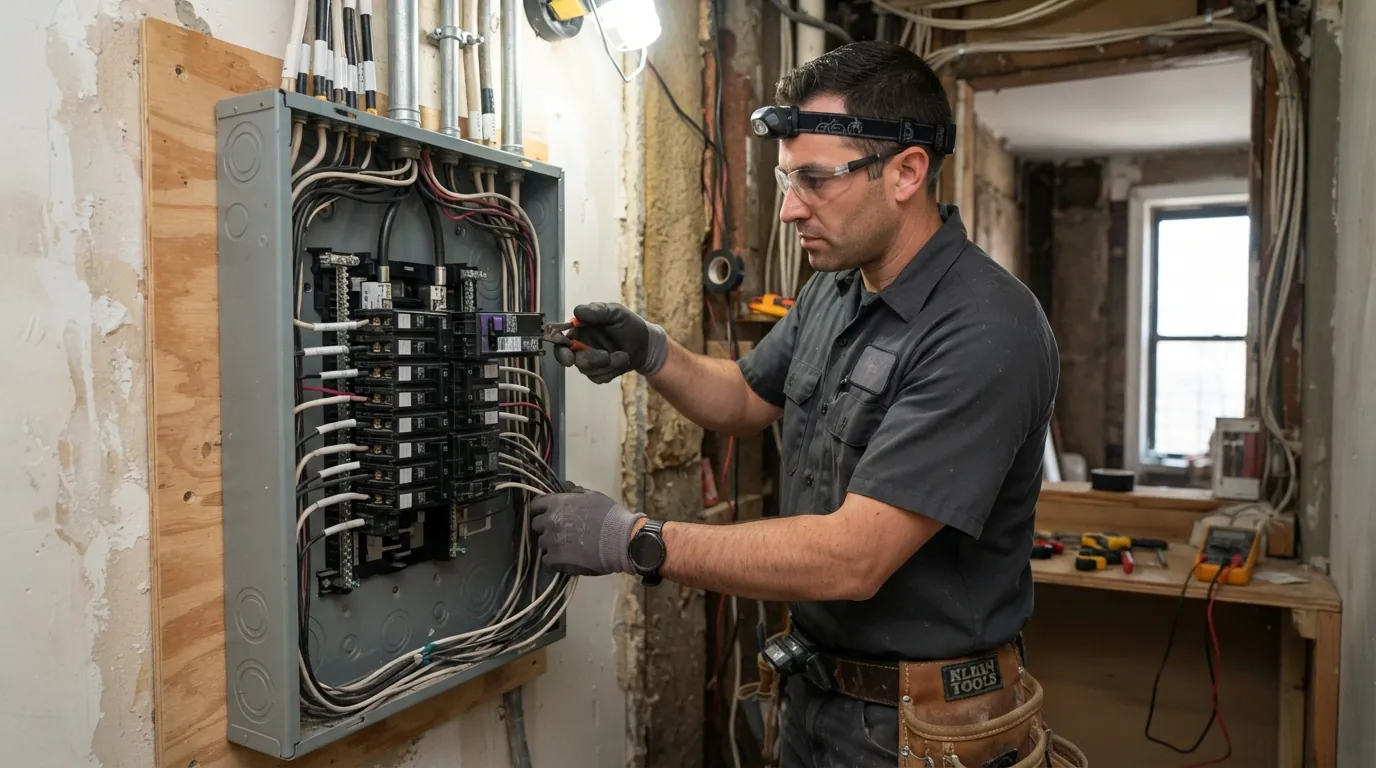
The 2025 New York City Electrical Code took full effect on December 21, 2025, replacing the 2011 code. It applies the city's amendments to the 2020 National Electrical Code, and it changed GFCI, AFCI and service requirements for work filed since that date. It does not require existing, legally installed wiring to be updated, but renovations, new circuits and panel or service work are designed and inspected to it.
What changed and when
For years the city's electrical work was governed by a code built on the 2011 national edition. On December 21, 2025, the 2025 New York City Electrical Code took full effect, applying the city's amendments to the 2020 National Electrical Code. That is nearly a decade of national changes arriving at once.
Filings made since that date fall under the new code, and the Department of Buildings has said the changes touch GFCI, AFCI and service requirements. Work designed under the old rules and filed after the switch can fail an inspection under the new ones.

What the 2020 national edition brought
The national edition the city built on expanded ground-fault (GFCI) protection to more locations and to more types of receptacles, including many 240-volt outlets in those locations. It continued the expansion of arc-fault (AFCI) protection on branch circuits in homes. It also added a surge-protection requirement for new and replaced dwelling services, and an outdoor emergency disconnect for one- and two-family houses.
The city adopted that edition with its own amendments, so not every national change applies here in the same form. Which ones apply to a given job is exactly what the electrician checks when designing and filing it.
What it does not change
The new code is not retroactive. Wiring that was legally installed under an earlier code does not have to be updated just because the code changed, and nobody will inspect your apartment because of it. The code applies to new work: new circuits, renovations, panel and service replacements and additions.
It can still affect existing wiring indirectly. Extending an old circuit, replacing a panel or renovating a kitchen can bring the parts you touch up to the current rules, so the scope of a job can grow a little beyond what was on the original list.
What it means for common jobs
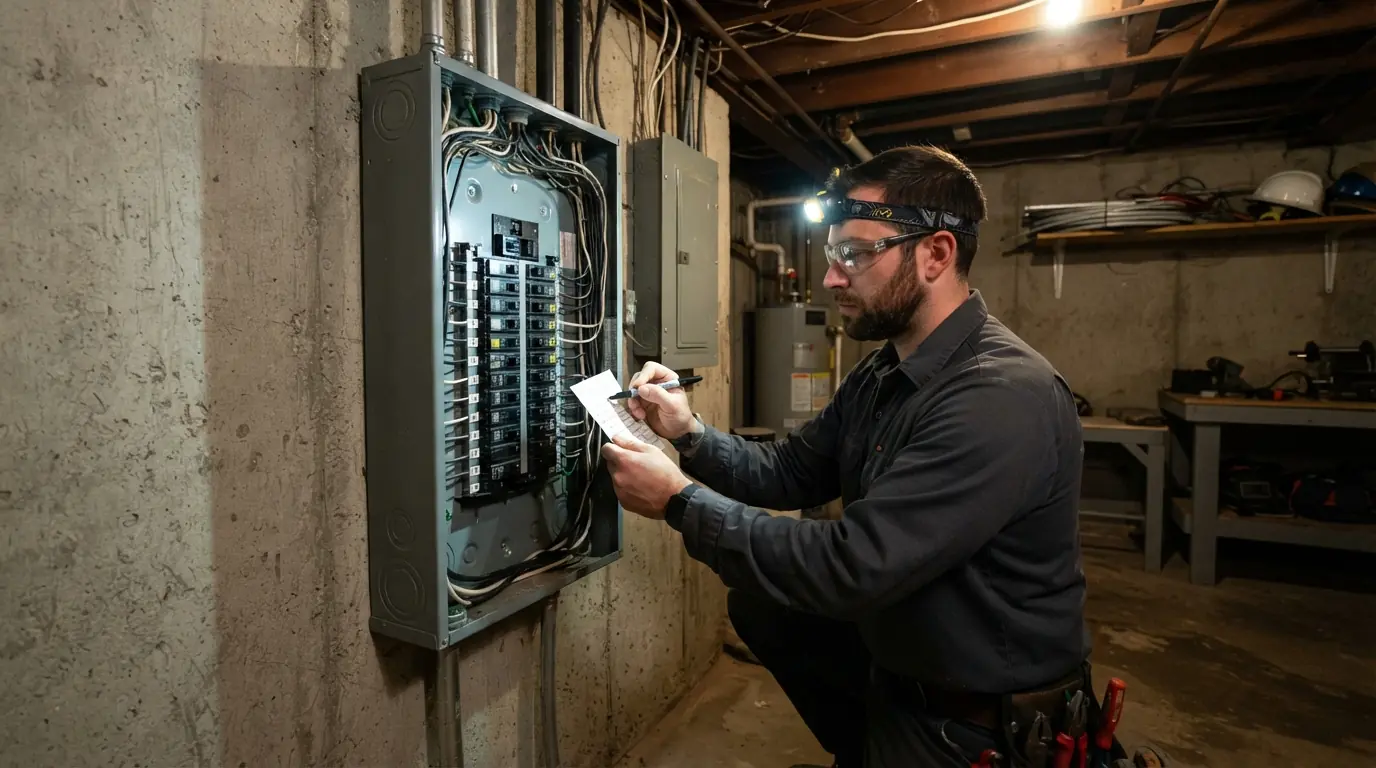
Kitchen and bath renovations are where most homeowners will notice it, through more GFCI protection and AFCI protection on the new circuits. Panel and service replacements may bring surge protection into the scope. Houses getting a new service may need the outdoor emergency disconnect, where the city's version of the code requires it.
None of this is dramatic on a single job, but it adds a few devices and a few hours. A quote prepared under the old assumptions may be low; ask whether it was designed to the 2025 code.
| Job | What to expect under the 2025 code |
|---|---|
| Kitchen or bath renovation | More GFCI and AFCI protection on new circuits |
| Panel or service replacement | Surge protection may be part of the scope |
| New service on a 1-2 family house | Possible outdoor emergency disconnect |
| Extending an old circuit | The extended portion meets current rules |
Permits filed around the switch
Jobs filed before December 21, 2025 were designed to the old code; jobs filed after, to the new one. If you had drawings prepared last year and are only now filing, the electrical scope may need revision before it goes in. It is better to catch that at the filing than at the inspection.
If you are correcting a violation on older work, the correction is filed now and is judged against the new code, which can change what the fix involves. Our violation correction page explains that process.
How to tell which code a job used
The filing records it. The DOB job for your work shows when it was filed, and the electrician can tell you which code the design follows. For a renovation in progress, ask directly: a contractor who planned the electrical before the switch should confirm the design was updated.
When you buy or sell, the code at the time of each permit is what matters for that work. Unpermitted work has no record, which is one more reason it causes trouble at a closing.
Questions to ask your electrician
A few direct questions tell you whether a quote reflects the current rules. Ask which code the design follows, whether the price includes the GFCI and AFCI protection the new circuits will need, and whether a panel or service replacement brings surge protection or an outdoor disconnect into the scope.
Ask, too, what happens if the inspector asks for something the quote did not include. A clear answer before work starts is worth more than a low number that grows at the inspection.
- Which code is this designed to?
- Does the price include required GFCI and AFCI protection?
- Does the panel or service work add surge protection?
- Is an outdoor disconnect required for this house?
- What happens if the inspector asks for more?
Services this guide covers
Related guides
Frequently asked questions
December 21, 2025, replacing the 2011 code.
No. It applies to new work, not existing legal wiring.
The 2020 National Electrical Code, with the city's amendments.
Yes. The city says GFCI, AFCI and service requirements changed.
Slightly, in some cases, for added protection devices.
They were designed to the old code; new filings follow the new one.