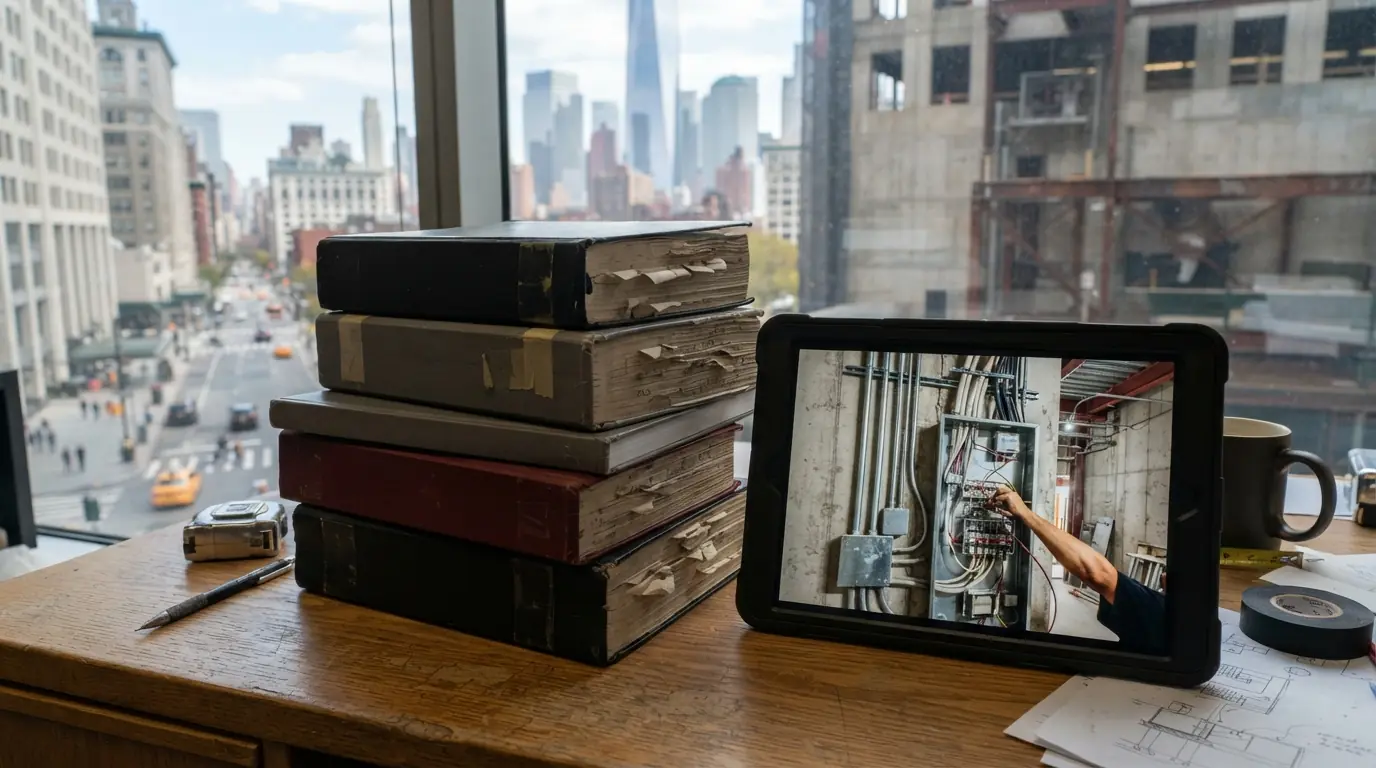
A large window or through-wall air conditioner should have its own circuit, sized to the unit's nameplate, with a receptacle that matches its plug. Through-wall units often run on 230 volts. Never use an adapter or extension cord, and treat a warm or scorched outlet as a reason to stop and call.
Why air conditioners trip breakers
An air conditioner's compressor draws a short surge of current every time it starts, several times its running current. On a circuit already carrying lights, a television and a phone charger, that surge pushes the total past the breaker's rating, and the breaker does its job.
The pattern is usually obvious once you look for it: the breaker trips a few seconds after the unit kicks on, mostly on the hottest afternoons, and resetting it works until the compressor cycles again. The fix is a circuit the unit does not share.
Window units and through-wall units
Small window units usually plug into an ordinary 120-volt outlet, while larger window units and most through-wall units run on 208 or 230 volts and use a plug with a different shape. The plug tells you what the unit needs, and the outlet has to match it exactly.
Through-wall sleeves are where mismatches happen most. A new unit goes into an old sleeve, the old receptacle does not fit the new plug, and someone reaches for an adapter. That adapter is often carrying more current than anything else in the apartment.
| Unit | Typical voltage | What to check |
|---|---|---|
| Small window unit | 120 volts | Its own circuit if it trips breakers |
| Large window unit | 120 or 230 volts | Plug shape and nameplate current |
| Through-wall unit | 208 or 230 volts | Sleeve receptacle matches the new plug |
Reading the nameplate and the plug
Every unit has a label listing its voltage and current, and sometimes a minimum circuit size and maximum breaker. Those numbers set the circuit: the wire size, the breaker and the receptacle. A unit that needs a 20-amp circuit should not be on a 15-amp one, even if the plug fits.
The plug's blade arrangement is a quick check. If the plug does not go straight into the outlet without an adapter, the outlet is wrong for that unit, and the fix is a new receptacle on a circuit sized for it.
What the building and the city require
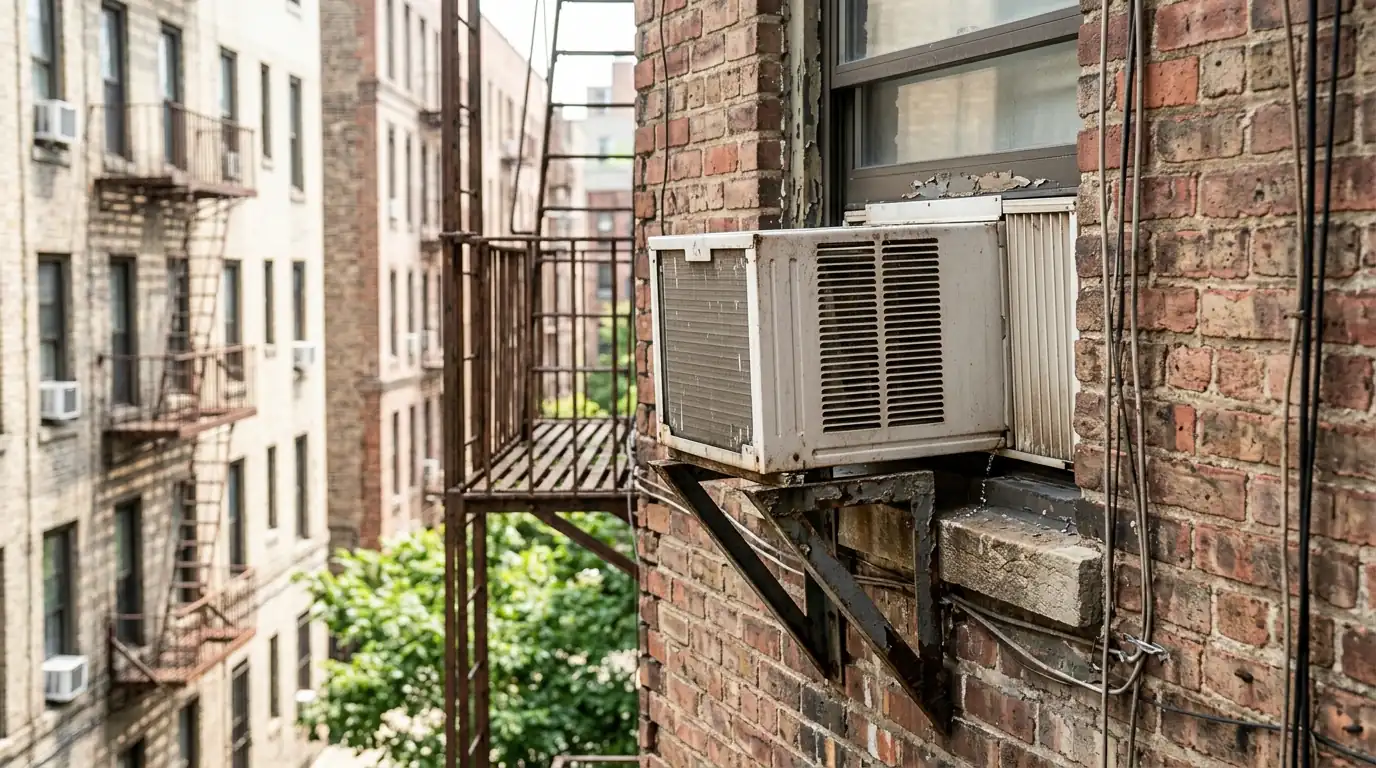
Department of Buildings guidance says window units must be supported from underneath with metal brackets or mounting rails, and in buildings six stories or taller they fall under the Local Law 11 facade inspection program. That is why many buildings control who installs air conditioners and how.
Co-ops and condos often add their own rules: approved unit types, through-wall sleeves instead of windows, and an approved electrician for any new circuit. A new circuit is permitted electrical work, so check with the managing agent before buying a unit the building or its riser cannot support.
When an outlet is a warning
An outlet behind an air conditioner should never be warm, discolored or loose. Heat at the outlet means a connection or the receptacle itself is overloaded, and it gets worse each summer as the contacts weaken.
Unplug the unit if you see any of these signs, and do not plug it into another outlet on the same wall as a workaround. The wiring behind a scorched outlet has usually been heating too.
- Scorch marks or a melted look on the outlet
- Plug or cord warm after the unit runs
- Outlet loose in the wall or plug falling out
- Burning smell near the unit
- Lights dimming each time the compressor starts
What a dedicated circuit involves
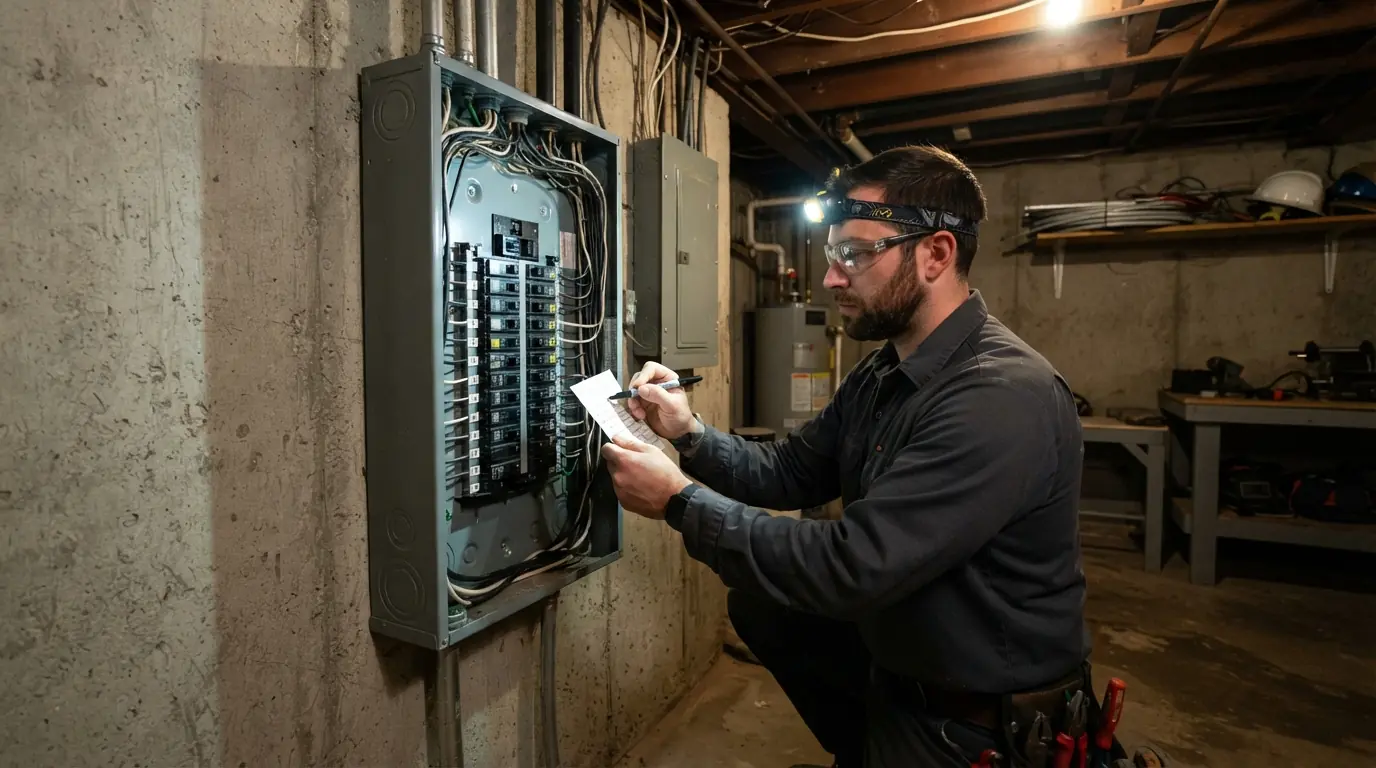
In a prewar apartment with plaster walls, a new air-conditioner circuit means finding space in the panel, confirming the apartment's service can carry the added load, and running new cable from the panel to the window or sleeve. Electricians fish cable through walls and ceilings where they can, and use surface raceway where the building prefers it.
If several units will run at once, the panel and service have to carry all of them together, not one at a time. In buildings with older risers, that is the question to settle before buying a second or third unit.
What you can do before calling
A few minutes of checking makes the visit faster and the estimate more accurate. None of it requires opening the panel or touching wiring.
Take a photo of each unit's nameplate and plug, note which breaker trips and what else was running, and look at the outlet behind each unit for heat damage. If you are in a co-op or condo, ask the managing agent whether the building has rules for air conditioners and new circuits.
- Photo of each unit's nameplate
- Photo of the plug and the outlet
- Which breaker trips, and when
- What else runs on that circuit
- The building's rules for AC units
Services this guide covers
Related guides
Frequently asked questions
Check the nameplate and the plug; 230-volt plugs have a different blade shape.
Small units sometimes can, but if the breaker trips, the unit needs its own circuit.
The compressor runs longer and starts more often, adding surges to an already loaded circuit.
No. If the plug needs an adapter, the outlet is wrong for the unit.
Yes. DOB guidance requires support from underneath, and Local Law 11 covers buildings six stories or taller.
Many will, with their approval process and an approved electrician.